
- Startups should optimize for design support, sampling speed, and scale-up reliability, not only the lowest mold price.
- For OEM plastic products, a supplier with DFM, tooling, and production under one roof usually lowers communication loss and launch delays.
- PC, ABS, and PP remain common material choices, but the right resin depends on impact strength, transparency, heat resistance, and cost targets.
- Good suppliers can show measurable control over tolerance, surface consistency, and repeatability, which matters more than generic sales claims.
- For 2026 sourcing, the safest choice is a manufacturer that can prove quality systems, export readiness, and stable lead-time management.
Choosing a plastic injection molding service for a startup is a technical and commercial decision, because the wrong tool design can turn a promising product into a costly delay. Injection molding becomes economical only when the design is ready for repeatable production, and that is why early-stage buyers should care about DFM, material selection, and mold strategy as much as unit price. In dimensional terms, many molded parts are expected to hold tolerances in the range of ±0.05 mm to ±0.10 mm for critical features depending on geometry and resin, while general plastic process capability is often assessed against standards and measurement plans rather than sales promises, including ASTM D4895-22 for polyethylene resin specifications and ISO-based inspection practices. For startups building plastic injection molding, custom plastic manufacturing, or OEM plastic products, the best supplier is the one that can validate manufacturability before committing you to a full tool.
What startups really need from a plastic injection molding service in 2026
The best service for a startup is the one that reduces uncertainty at every stage of the launch. A young company usually has three problems at once: the design is still changing, demand is not fully proven, and cash flow cannot absorb repeated tooling mistakes. That means the right supplier must do more than machine steel. It should translate product intent into manufacturable plastic parts, then help you move from prototype to pilot to production with minimal redesign.
For high-intent buyers searching for plastic injection molding, custom plastic manufacturing, or OEM plastic products, the real question is not “Who is cheapest?” but “Who can protect the launch schedule?” A credible partner should be able to explain gate location, wall-thickness balance, shrinkage, draft angle, weld lines, and ejection strategy in plain English. If the supplier cannot discuss these basics, the risk usually appears later as warpage, sink marks, flash, or assembly failure.
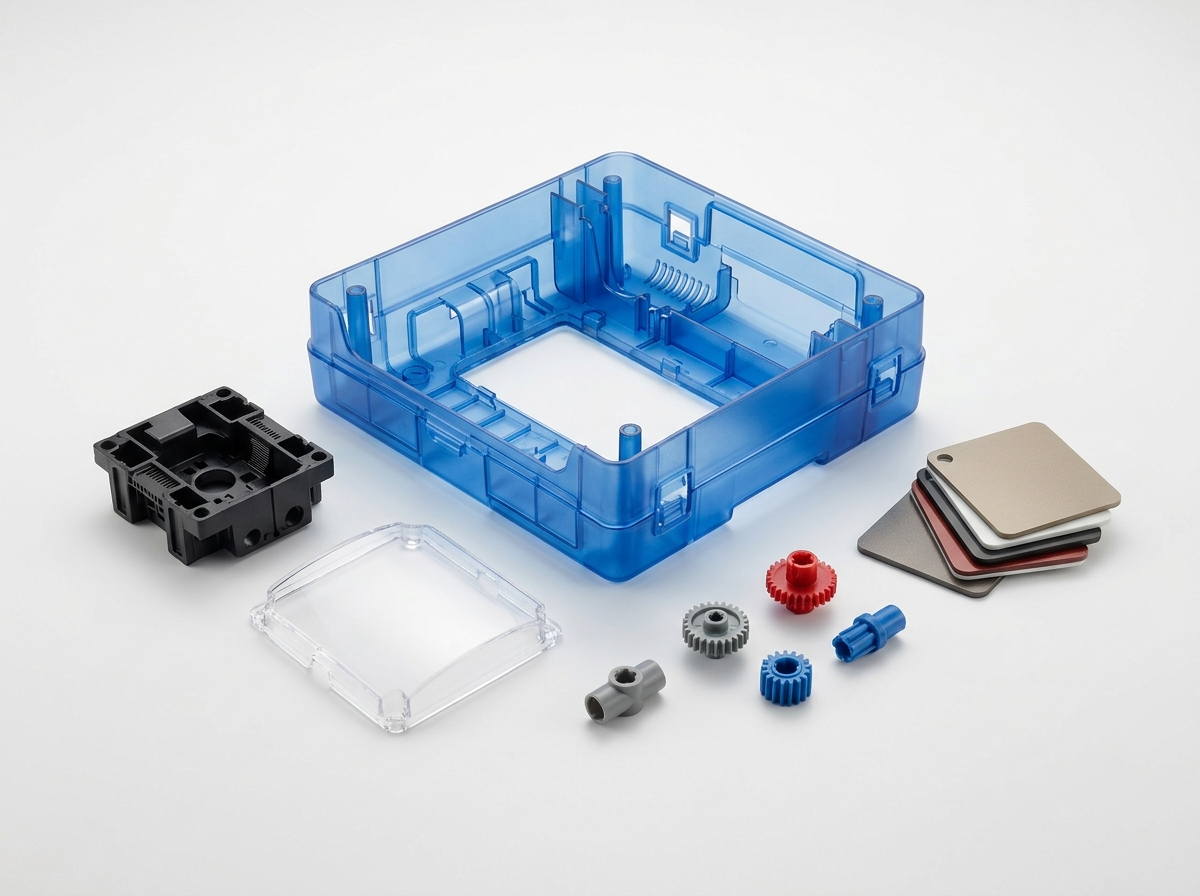
For startups in consumer electronics or appliances, a housing or cover often needs both cosmetic quality and structural fit. That is why many teams prefer an integrated provider with engineering review and production under one roof, such as a manufacturer offering plastic injection molding services, plastic mold development, and custom plastic parts in one workflow. When those capabilities are split across multiple vendors, every handoff adds time and increases the chance of tolerance drift.
How to compare plastic injection molding, custom plastic manufacturing, and OEM plastic products
These three phrases overlap in search, but they are not identical buying signals. Plastic injection molding describes the process. Custom plastic manufacturing describes the service model. OEM plastic products describes the commercial outcome. Understanding the difference helps startups choose a supplier that matches their stage, budget, and launch target.
| Buyer Need | Best Service Type | Typical Startup Risk | What to Ask |
|---|---|---|---|
| Functional prototype | Rapid custom plastic manufacturing | Overpaying for a production tool too early | Can you support low-volume sampling and design changes? |
| Launch-ready housing | Plastic injection molding with DFM | Warpage, fit issues, and cosmetic defects | What tolerances can you hold on critical dimensions? |
| Retail or export product | OEM plastic products with assembly support | Late-stage packaging and compliance delays | Do you provide labeling, packaging, and document support? |
From a sourcing perspective, startups should treat the mold as a production asset, not a disposable prototype expense. A well-designed tool can survive repeated cycles and support scale-up, while a poorly designed one can consume time with every corrective action. Many manufacturers track mold life in production cycles, and tool steels are selected based on expected volume, resin abrasiveness, and maintenance frequency. For high-volume programs, P20, H13, and S136 tool steels are common engineering references because they balance machinability, wear resistance, and polishing behavior.
For consumer products with visible surfaces, a startup should also ask whether the supplier can manage texturing, polish grades, and parting line control. If your brand sells through retail or crowdfunding, visual consistency can matter as much as mechanical fit. That is one reason many product teams look for plastic parts suppliers that can support both tooling and final production rather than a mold-only vendor.
Best plastic injection molding service types for startups by product scenario
The best service depends on the product category, not just the industry buzzwords. A PC device housing, a toy shell, and an industrial bracket all require different decisions on material, tooling, and quality control. Startups save money when they match the service model to the real use case.
| Product Scenario | Recommended Resin | Key Requirement | Why It Matters |
|---|---|---|---|
| Electronic enclosure | PC or PC/ABS | Impact strength and dimensional stability | Helps protect internal components and maintain fit |
| Home appliance cover | ABS or PP | Appearance and cost control | Balances surface quality and manufacturing efficiency |
| Industrial component | PA, POM, or reinforced resin | Strength and long-term reliability | Supports load-bearing and repeated use |
| Transparent protective part | PC | Clarity and impact resistance | Useful where visibility and safety both matter |
PC material is especially important for startups making protective housings, covers, and light-transmitting parts. Polycarbonate is widely used because it combines transparency with high impact resistance and good dimensional stability, which is why it is common in electronic and protective applications. If the part must resist cracking during shipping or user handling, PC often performs better than more brittle alternatives, though it may need careful gate and cooling design to control stress and appearance.
A startup in the appliance or consumer electronics space should also evaluate whether the supplier has experience with decorative surfaces, snap fits, and assembly tolerance stacks. These details are easy to overlook in a first quote, but they define whether the product is smooth to assemble or expensive to fix. For buyers comparing suppliers, a useful starting point is to review the company’s plastic housewares mold capability for consumer products and its plastic toys mold capability for shape-driven, high-volume items.
What makes a startup-friendly supplier different from a low-cost factory
A startup-friendly supplier reduces rework, while a low-cost factory often only reduces quoted price. That distinction matters because a cheap mold that cannot hold tolerance or run stably will usually cost more after launch. The best service providers separate themselves through engineering support, transparent communication, and practical feedback during sampling.
- Design review before quotation, not after tooling starts.
- Clear explanation of draft, wall thickness, ribs, and gate strategy.
- Sampling reports with measured critical dimensions, not only photos.
- Fast response to revision requests during DFM and trial runs.
- Stable export documentation and packaging support for cross-border buyers.
For overseas founders, communication quality can be just as important as tooling skill. If the project depends on English drawings, fast email response, and shipment coordination, a supplier with export experience lowers friction. That is why many teams prefer an about page that clearly shows industry scope, project support, and service process before they request a quote. In B2B sourcing, vague promises often hide process gaps; detailed technical answers usually indicate stronger capability.
When you evaluate a partner, ask whether they can support one-stop mold and part supply. This matters because tool changes, mold repair, and part production are connected. If the same supplier handles both, it can respond faster when a cavity needs polishing, a vent needs adjustment, or a packing issue affects cosmetic quality. The result is often better project continuity and fewer responsibility gaps.
Standards, tolerances, and quality data that startups should ask for
Good plastic injection molding is measurable. A serious supplier should be able to discuss part tolerances, inspection method, resin data, and process consistency using numbers rather than adjectives. For startup buyers, that is the difference between a confident launch and an expensive guess.
One useful reference point is ISO 20457:2018, which provides tolerance-related guidance for molded plastic parts and helps frame expectations for dimensional variation. Another practical technical reference is NIST calibrations and standards, which reinforces the importance of traceable measurement systems in production. If a supplier cannot explain how it measures parts, it is difficult to trust the quoted tolerance.
| Quality Question | Good Answer | Risk Signal | Why It Matters |
|---|---|---|---|
| How are critical dimensions checked? | CMM, caliper, gauge, or fixture-based inspection | Only visual checks | Visual inspection misses fit errors |
| What is the tolerance plan? | Defined by feature importance and resin behavior | “We can do it tight” without numbers | Unclear targets create disputes |
| How is material traceability managed? | Batch records and resin identification | No lot tracking | Traceability supports root-cause analysis |
| How is mold maintenance handled? | Scheduled cleaning, wear checks, and repair records | Reactive fixes only | Maintenance affects stability and life |
For production stability, many injection molding operations monitor cycle time, reject rate, and first-pass yield. Cycle time varies widely by part thickness, gate design, and cooling efficiency, but a well-designed small housing may run in under 30 seconds while a thicker structural part can require much longer cooling. Rather than chasing a universal “fast” number, startups should ask whether the supplier can document a stable cycle and repeatable output over a pilot run.
Standards also matter for resin selection. For polyethylene, ASTM D1248-22 provides classification guidance for polyethylene plastics, while other ASTM methods define material behavior and test procedures for different polymers. These references help buyers compare formulations in a controlled way instead of relying on generic grade names alone.
How startups should evaluate mold design before paying for production
The first mold decision often determines the success of the whole program. A startup should treat mold design as a manufacturing strategy, because gate placement, cooling layout, venting, and steel selection influence both quality and cost.
- Confirm the part function and the surface class before asking for a quote.
- Identify critical dimensions, snap features, and assembly interfaces.
- Ask for DFM feedback on draft angle, wall thickness, and undercuts.
- Request material options with pros and cons, not only one recommended resin.
- Verify whether the supplier can support trials, revisions, and mass production.
For complex geometry, a 3D mold strategy may be appropriate, especially when the design includes curved surfaces, asymmetrical features, or brand-defining shape elements. In that case, startups should work with a team that can turn a concept into a practical cavity layout without sacrificing mold release or cooling balance. This is particularly relevant when the product needs strong visual identity and cannot be simplified into a basic box shape.
Tooling decisions should also account for future revision risk. A startup product often changes after market feedback, so the mold should be designed with maintainability in mind. Replaceable inserts, accessible wear areas, and clear mold documentation can save weeks later. If the supplier only talks about initial machining and ignores maintenance, that is a warning sign.
Which supplier model is best for different startup budgets
There is no single best answer for every startup budget, but there is a best-fit model for each stage. Early validation should emphasize flexibility; funded scaling should emphasize repeatability; export programs should emphasize communication and logistics discipline.
| Startup Stage | Best Supplier Model | Main Goal | What to Avoid |
|---|---|---|---|
| Concept validation | Engineering-led custom plastic manufacturing | Fast learning and design correction | Overbuilding the tool too early |
| Pre-launch | Plastic injection molding with pilot production | Testing fit, finish, and packaging | Skipping trial data review |
| Scaling sales | OEM plastic products supplier | Stable delivery and repeatability | Changing suppliers without transition planning |
| Export expansion | One-stop mold plus part production partner | Reduce coordination and shipment risk | Using disconnected vendors for every step |
Many startups also benefit from using a supplier that can support multiple product families. If your roadmap includes housings, brackets, and accessories, a multi-category factory can reduce onboarding time for each new SKU. That is why some buyers review plastic electronic parts mold capability alongside broader tooling options before deciding.
For consumer-facing brands, unit cost should be evaluated alongside scrap, delays, and customer returns. A slightly higher quote can be better if it reduces assembly issues and shortens launch time. In practice, the cheapest mold is rarely the cheapest project.
Why process control matters more than a low quote
Process control is the hidden difference between a mold that works once and a mold that works every week. Startups often compare only the first quotation, but the real cost shows up in sampling rounds, correction loops, and post-launch support.
In molding, common defect sources include uneven cooling, poor venting, incorrect shrink assumptions, and inadequate clamp force. If the supplier can explain how it prevents sink marks, weld lines, short shots, and flash, that is a better sign than a low price alone. For products with cosmetic surfaces, defects can become customer-facing quality failures immediately after launch.
International buyers should also think about logistics. A well-run supplier can coordinate packing, labeling, and shipment timing so that tooling approval and product delivery do not drift apart. In global sourcing, that coordination often saves as much time as faster machining does.
For a startup, the ideal service provider behaves like an extension of the product team. It asks what the product must do, not only what the drawing shows. That mindset is what separates a strategic manufacturing partner from a generic vendor.
What to ask before you place your first mold order
The best questions are the ones that expose whether the supplier understands launch risk. A startup should use the first sales call to test engineering depth, delivery discipline, and post-trial support.
- Can you review our CAD and identify moldability risks before quotation?
- What resin do you recommend, and why not the cheaper alternative?
- How do you handle trial reports, dimensional checks, and revision feedback?
- Can you support low-volume sampling before full-scale production?
- What is your process for mold maintenance and future tool repair?
These questions matter because a startup’s first mold usually sets the template for future sourcing. If the supplier can answer clearly, back answers with data, and explain trade-offs in plain English, it is more likely to support long-term growth. If the answers stay vague, the buyer should assume the project will be difficult to manage later.
For many teams, the best plastic injection molding service in 2026 is the one that combines engineering review, material guidance, tooling, sampling, and production under one accountable workflow. That structure is especially valuable for custom plastic manufacturing and OEM plastic products, where launch timing and consistency matter as much as geometry.
FAQ: plastic injection molding service for startups
1. What is the best plastic injection molding service for a startup?
The best service is usually an engineering-led supplier that offers DFM, toolmaking, sampling, and production in one place. This reduces revision risk and shortens launch time.
2. Is plastic injection molding too expensive for startups?
Not always. It becomes cost-effective when the part volume is stable and the design is ready for repeatable production. The key is to avoid committing to a full-scale tool before the design is validated.
3. Which material is best for plastic product housings?
PC and PC/ABS are common for durable housings, especially when impact resistance and appearance matter. ABS and PP are also used when cost and finish are more important than transparency.
4. What tolerance can a molded plastic part hold?
It depends on geometry, resin, and tool quality. Critical features are often planned in the range of ±0.05 mm to ±0.10 mm, but the final target should be confirmed by design and inspection method.
5. How do I know if a supplier is reliable?
A reliable supplier gives clear DFM feedback, shows measurement methods, documents trial results, and supports communication in your required language and time zone.
6. When should I choose OEM plastic products instead of a mold-only vendor?
Choose OEM support when you need production stability, assembly, packaging, or export coordination in addition to the mold. That is usually better for a launch-focused startup.
7. What is the biggest mistake startups make when sourcing molds?
The biggest mistake is buying based on price alone and ignoring manufacturability, maintenance, and sampling quality. That often creates delays that cost more than the initial savings.
Post time: Jul-18-2026