
- Precision plastic mold quality affects fit, appearance, and assembly performance in electronics plastic parts.
- Dimension control, gate design, cooling balance, and material selection all influence final part stability.
- Electronics buyers should evaluate suppliers on mold design support, trial feedback, and production repeatability, not price alone.
- Standards such as ISO 20457:2018 and NIST length metrology guidance reinforce the importance of traceable measurement in precision manufacturing.
Precision plastic mold manufacturing is a decisive factor in electronics plastic parts because the final product must meet tight assembly tolerances, visual consistency, and repeatable mass-production performance; in many electronic assemblies, dimensional deviation of only a few hundredths of a millimeter can change how clips, bezels, buttons, connectors, or seals behave. For example, injection-molded plastics are commonly evaluated against shrinkage behavior, tooling accuracy, and process stability, while electronics housings often depend on stable surfaces and consistent wall thickness. In quality-oriented manufacturing, mold making is not just tooling work; it is the foundation of product reliability, and that is why procurement teams often compare injection mold solutions, plastic enclosure molds, and precision plastic parts before approving production.
Why Precision Plastic Mold Manufacturing Matters for Electronics Plastic Parts
Precision plastic mold manufacturing matters because electronic products fail fast when molded dimensions drift. Consumer devices are often designed with thin bezels, hidden clips, tight connector windows, and cosmetic outer shells, which means the mold must control both geometry and appearance. A stable injection mold reduces flash, sink marks, mismatched parting lines, and assembly interference, all of which can damage end-user perception.
In electronics, the challenge is not only making a part look right on day one. The real challenge is keeping it right across thousands or millions of cycles. Mold wear, cooling imbalance, inconsistent steel quality, and poor venting can all create variation. That is why precision mold manufacturing is closely tied to repeatability, not just initial sample approval.
For measurement discipline, manufacturing teams often align their internal inspection systems with recognized metrology practices. ISO 527 is widely used for tensile testing of plastics, while ASTM D638 defines standard tensile test methods for plastic specimens. Those standards matter because product teams need common reference points when comparing resin choices, validating design strength, or resolving disputes after trial runs.
Precision Plastic Mold Requirements for Electronics Housing and Functional Parts
Electronics plastic parts usually need more than basic dimensional control. They must survive assembly, shipping, thermal cycling, and user handling. That means the mold has to support thin-wall flow, controlled shrinkage, stable gate balance, and clean ejection. If a housing deforms after cooling, the finished product may no longer meet the design intent, even if the cavity itself looked perfect during machining.
PC material is a strong example. Polycarbonate is widely used for transparent or impact-resistant housings because it offers a useful balance of toughness and dimensional stability. In practical electronics work, PC is often selected for covers, lenses, protective shells, and parts that must combine clarity with strength. When PC is processed incorrectly, however, residual stress and poor cooling can lead to stress whitening or warpage, so mold design and process control become equally important.
For a precision plastic mold supplier, the quality discussion should include steel selection, polishing strategy, vent depth, gate location, cooling layout, and expected maintenance interval. A mold may be technically functional but still unsuitable for electronics if the surface class or assembly fit is not repeatable across production runs.
| Electronics Part Requirement | Typical Mold Focus | Why It Matters | Common Risk If Ignored |
|---|---|---|---|
| Cosmetic housing | Surface finish, parting line control | Brand appearance and light reflection | Visible marks, poor consumer perception |
| Snap-fit frame | Dimensional repeatability, edge definition | Assembly retention and serviceability | Loose fit or cracking |
| Connector cover | Tight tolerance, gate balance | Alignment with internal components | Interference and misalignment |
| Transparent shield | Polishing, venting, cooling balance | Clarity and stress control | Haze, warpage, sink marks |
How Injection Mold Design Controls Electronics Plastic Parts Quality
Injection mold design controls part quality because the mold determines how plastic fills, cools, shrinks, and ejects. In electronics projects, design errors often show up as assembly problems rather than obvious breakage. A part can look acceptable in isolation but fail when paired with screws, clips, seals, PCBs, or decorative lenses.
Cooling design is one of the most underestimated variables. Uneven cooling causes differential shrinkage, and differential shrinkage causes warpage. That is why mold makers carefully study wall thickness, rib placement, and heat removal paths before cutting steel. For precise housings, the cavity layout must support consistent cooling around bosses, corners, and functional features.
Mold designers also need to anticipate resin behavior. Data from resin suppliers and testing standards help establish baseline properties. For example, typical polycarbonate tensile strength values commonly fall in the range of about 55 to 75 MPa depending on grade and conditioning, as reported in material datasheets and tested under standard methods such as ASTM D638. Those numbers are not just academic; they help engineers estimate whether a clip, tab, or cover can withstand daily use.
| Design Variable | Typical Target Range | Effect on Electronics Parts | Source / Method |
|---|---|---|---|
| Dimensional inspection | Micrometer-level to sub-0.1 mm control | Fit and assembly accuracy | Metrology practice; dependent on feature size |
| Polycarbonate tensile strength | 55-75 MPa | Housing and clip durability | ASTM D638-tested datasheets |
| Injection mold repeatability | Stable across high cycle counts | Lower variation in mass production | Process validation |
| Surface quality | Visual uniformity without sink or flash | Consumer acceptance | Cosmetic inspection |
Precision Plastic Mold vs Standard Mold: What Electronics Buyers Should Compare
Precision molds differ from standard molds mainly in control, not just cost. A standard mold may be suitable for simple, noncritical parts, while a precision plastic mold is built for tighter fit, more reliable appearance, and more stable mass production. That difference becomes obvious in electronics, where hidden tolerances often decide whether a product feels premium or problematic.
The buyer should compare more than quoted tool steel and cavity count. They should ask how the supplier handles design review, trial reports, maintenance access, and dimensional correction after the first samples. A supplier that can explain shrinkage compensation, gate strategy, and sampling feedback usually provides more real value than one that only offers the lowest tooling price.
For high-volume electronics projects, production consistency can matter as much as speed. Industry studies and factory experience consistently show that early mold optimization reduces downstream rework, especially when projects involve tight deadlines, international shipping, or multiple component interfaces. In procurement terms, a mold that takes slightly longer to develop may still be the lower-risk option if it reduces repeated sampling.
| Comparison Item | Standard Mold | Precision Plastic Mold | Buyer Impact |
|---|---|---|---|
| Dimensional control | General-purpose | Tight feature control | Better fit and assembly |
| Surface consistency | Acceptable for basic parts | Higher cosmetic stability | Stronger brand presentation |
| Trial optimization | Limited correction loop | Structured feedback and tuning | Lower launch risk |
| Maintenance planning | Basic wear response | Planned tool life support | Reduced downtime |
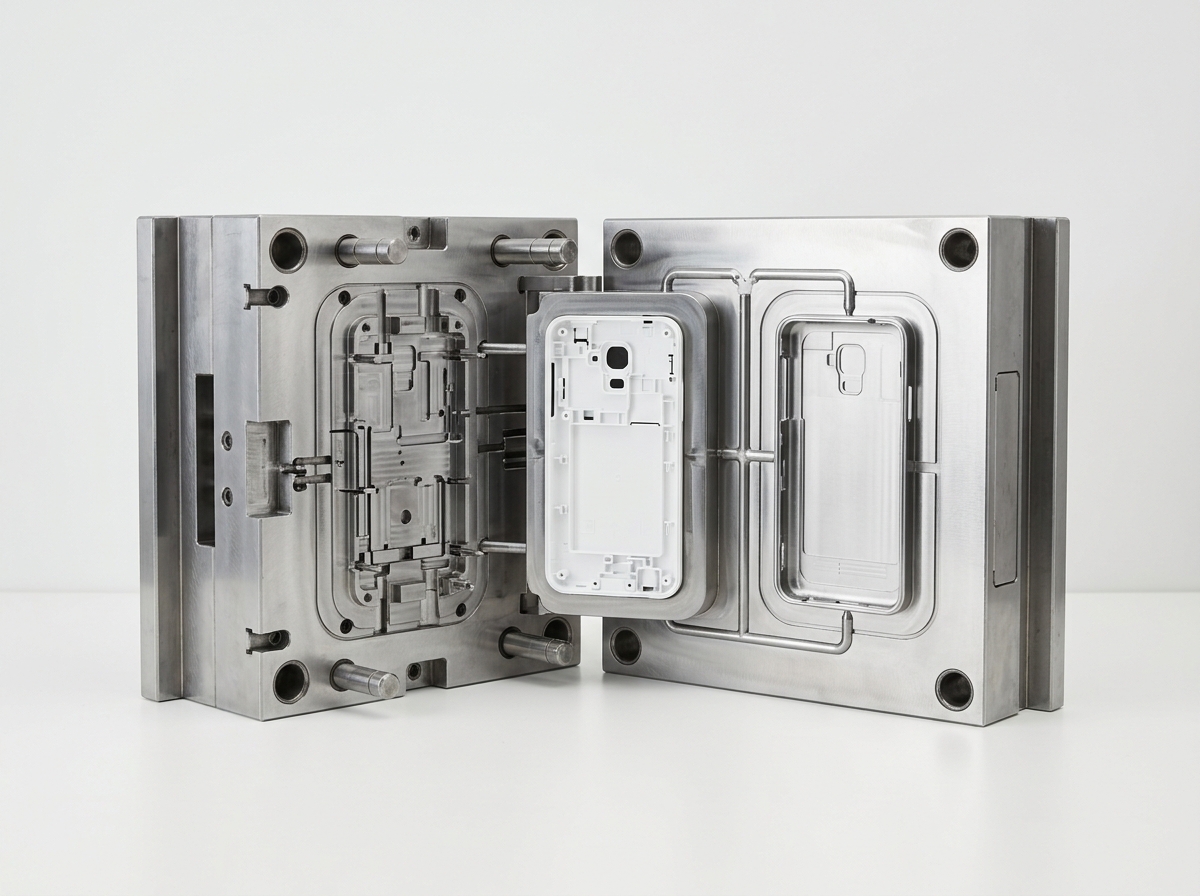 Materials, Standards, and Testing That Support Reliable Electronics Plastic Parts
Material choice is inseparable from mold precision because the resin determines shrinkage, strength, and appearance behavior. Electronics buyers often choose PC, ABS, PC/ABS, PA, or PP depending on impact resistance, stiffness, heat resistance, or cost targets. Each material behaves differently in the cavity, so the same mold geometry can produce different outcomes if the resin changes.
Standards help teams reduce ambiguity during review. ISO 20457:2018 provides a framework for determining the accuracy of injection moulding machines, which matters because machine capability affects final repeatability. For product testing, engineers also use established material methods such as ASTM D790 for flexural properties and ASTM D256 for impact resistance. These standards help procurement teams compare supplier claims with measurable results.
In real projects, buyers should request material data sheets, trial samples, and inspection reports rather than relying on verbal assurances. A supplier that can show process data, dimension records, and corrective action notes is usually better prepared for export-oriented or multi-SKU programs.
- Confirm resin grade and conditioning state before judging part quality.
- Check whether test methods match the property being claimed.
- Review part geometry for thickness variation and stress concentration.
- Ask how the supplier handles mold correction after trial shots.
When Electronics Buyers Need a Custom Plastic Mold Manufacturer
Custom mold manufacturing becomes necessary when off-the-shelf parts cannot meet geometry, branding, or assembly requirements. Electronics products often include custom openings, hidden bosses, integrated clips, and decorative contours that do not fit generic tooling. In those cases, a custom plastic mold manufacturer converts product intent into a manufacturable tool set.
This is especially important for OEM and ODM programs because design changes may continue during prototyping. The best suppliers do not just cut steel; they help evaluate part feasibility, draft angle, wall thickness, gate position, and ejection strategy. That support shortens the path from concept to production.
For buyers evaluating a supplier like OEM and ODM mold services, the key question is whether the factory can support both development and mass production. One-step sourcing can reduce communication loss, simplify accountability, and help align mold development with finished part delivery.
Supplier Selection Checklist for Precision Plastic Mold Projects
The right supplier is the one that reduces project risk, not just unit price. For electronics plastic parts, procurement teams should verify design support, inspection capability, trial responsiveness, and delivery discipline. A capable supplier should be able to explain why a geometry is risky and how to fix it before tooling begins.
They should also be able to support different product categories. A supplier that handles home appliance molds, consumer electronics molds, and industrial molds is often better equipped to manage varied tolerance, appearance, and durability requirements across multiple programs.
In export-oriented sourcing, communication speed matters as much as machining skill. Clear English documentation, timely trial updates, and transparent correction feedback reduce the chances of delay. That is why cross-border buyers often judge a supplier by response quality during sampling rather than by a website promise.
- Ask for mold flow or feasibility review before tool release.
- Request first article inspection data for critical dimensions.
- Confirm maintenance, spare parts, and repair support.
- Check whether the supplier can handle multiple SKUs and repeat orders.
Common Failure Modes in Precision Plastic Mold Manufacturing for Electronics
Most electronics molding failures are predictable if the team knows where to look. The common problems are warpage, sink marks, flash, short shots, weak snap-fits, and cosmetic defects. These issues often come from a mix of design, tooling, and processing errors rather than one isolated cause.
Warpage usually indicates uneven cooling or stress imbalance. Sink marks often signal thick sections or poor packing. Flash suggests parting line or clamp issues. Short shots may point to poor venting, insufficient injection pressure, or incorrect gate design. If the supplier can identify the root cause early, the mold can often be corrected before launch damage spreads into production.
For electronics products, the risk is that the defect is small but visible. A tiny gap around a display frame may not break the product, but it can lower customer confidence. That is why precision plastic mold manufacturing is about perceived quality as much as technical function.
Why One-Step Mold and Part Supply Can Reduce Project Risk
One-step mold and part supply reduces handoff risk because the same team understands both tooling intent and manufacturing output. When the mold maker also supports finished parts, the feedback loop is shorter, especially for new product launches or urgent replenishment orders.
That structure is useful when development timelines are compressed. If the supplier can manage design review, mold build, sampling, and part production under one coordination system, buyers spend less time resolving blame between separate vendors. For projects with multiple variants, that can be the difference between stable launch and costly delay.
It also helps with lifecycle support. A mold eventually needs maintenance, cavity polishing, or component replacement. Suppliers that provide parts and tooling together are usually better positioned to keep the program running without major interruption.
FAQ on Precision Plastic Mold Manufacturing for Electronics Products
Why is precision plastic mold manufacturing important for electronics products?
It is important because electronic products depend on accurate fit, cosmetic consistency, and repeatable assembly performance. Small mold errors can create gaps, flash, warpage, or weak snap-fits.
What materials are commonly used for electronics plastic parts?
PC, ABS, PC/ABS, PA, and PP are common choices. PC is often selected for impact resistance, clarity, and dimensional stability in housings and protective covers.
How do buyers judge whether a mold is truly precision-grade?
They should look for documented inspection data, stable trial results, careful gate and cooling design, and clear correction feedback after sampling.
Which standards are most useful in mold and part evaluation?
Useful references include ISO 20457:2018, ASTM D638, ASTM D790, and ASTM D256.
What causes warpage in electronics plastic parts?
Warpage usually comes from uneven cooling, residual stress, or wall thickness imbalance. Good mold design and stable processing are the main countermeasures.
Why do custom molds matter for OEM and ODM electronics?
Because OEM and ODM products often require unique geometry, brand-specific appearance, and precise internal interfaces that standard molds cannot deliver.
What should a buyer ask before approving a supplier?
Ask about feasibility review, trial process, maintenance support, inspection records, delivery control, and whether the supplier can handle both tooling and part production.

Post time: Aug-13-2026