
Introduction
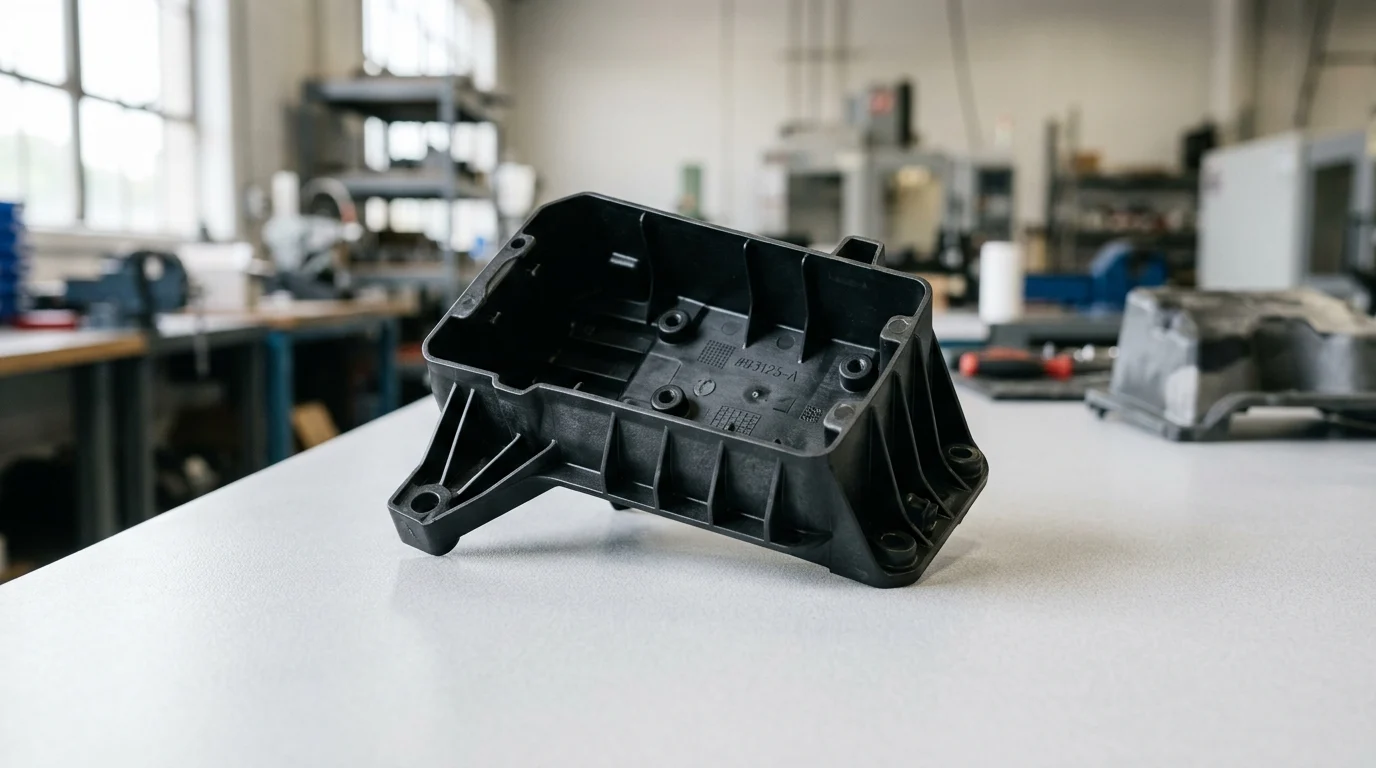
ABS injection molding has become a go-to process for consumer plastic products because it combines durability, surface quality, and manufacturing efficiency in a way few materials can match. From appliance housings and electronic enclosures to toys and automotive interior parts, ABS supports complex shapes, tight tolerances, and consistent large-scale output at a competitive cost. Its balanced mechanical properties and strong cosmetic performance also make it well suited for products that must look polished while handling everyday wear. This article explains what makes ABS so practical in injection molding, where its advantages matter most, and why manufacturers continue to choose it for high-volume consumer applications.
Why ABS Injection Molding Is Popular for Consumer Products
Acrylonitrile Butadiene Styrene (ABS) stands as one of the most ubiquitous thermoplastic polymers in the modern manufacturing landscape. Bridging the gap between standard commodity plastics and high-performance engineering resins, ABS injection molding provides an optimal balance of structural integrity, aesthetic versatility, and processability. For manufacturers of consumer goods, this material represents a reliable foundation for scaling production from initial market testing to high-volume global distribution.
The fundamental appeal of ABS lies in its highly predictable behavior under injection molding conditions. Because it transitions smoothly into a low-viscosity melt and solidifies with minimal internal stress, it allows engineers to achieve remarkably tight dimensional tolerances—often as precise as ±0.01 mm to ±0.05 mm depending on part geometry and mold quality. This predictability makes it a cornerstone material for products requiring exact fits, complex assemblies, and premium consumer-facing finishes.
How ABS supports commercial goals
From a commercial standpoint, ABS accelerates time-to-market while strictly controlling unit economics. The raw material is highly accessible on the global market, with bulk commodity pricing typically ranging from $1.50 to $2.50 per kilogram. This relatively low material cost, combined with the resin’s ability to be molded rapidly, allows brands to maintain aggressive profit margins even on complex consumer goods.
Furthermore, ABS supports secondary commercial objectives such as brand differentiation. Because the material readily accepts colorants prior to molding and serves as an excellent substrate for post-molding operations like painting, metallization, and pad printing, companies can produce multiple product SKUs from a single mold. This versatility significantly reduces the capital expenditure required to launch varied product lines, directly supporting lean inventory and agile marketing strategies.
Consumer product categories that rely on ABS
The versatility of ABS has cemented its dominance across several high-volume consumer product categories. In the consumer electronics sector, it is the standard choice for computer keyboards, mouse housings, television bezels, and remote controls. These applications rely heavily on the material’s ability to provide a rigid, protective shell that insulates sensitive internal circuitry from everyday impacts and electrical interference.
Beyond electronics, ABS is heavily utilized in household appliances, personal care devices, and the toy industry. The iconic interlocking bricks produced by major toy manufacturers are perhaps the most famous application, demonstrating the material’s capacity for high-precision, repeatable molding over millions of cycles. Manufacturers looking to explore the full range of ABS injection molding capabilities often find that the material’s broad applicability simplifies their supply chain by allowing a single resin type to serve multiple product categories.
Material and Process Advantages of ABS Injection Molding
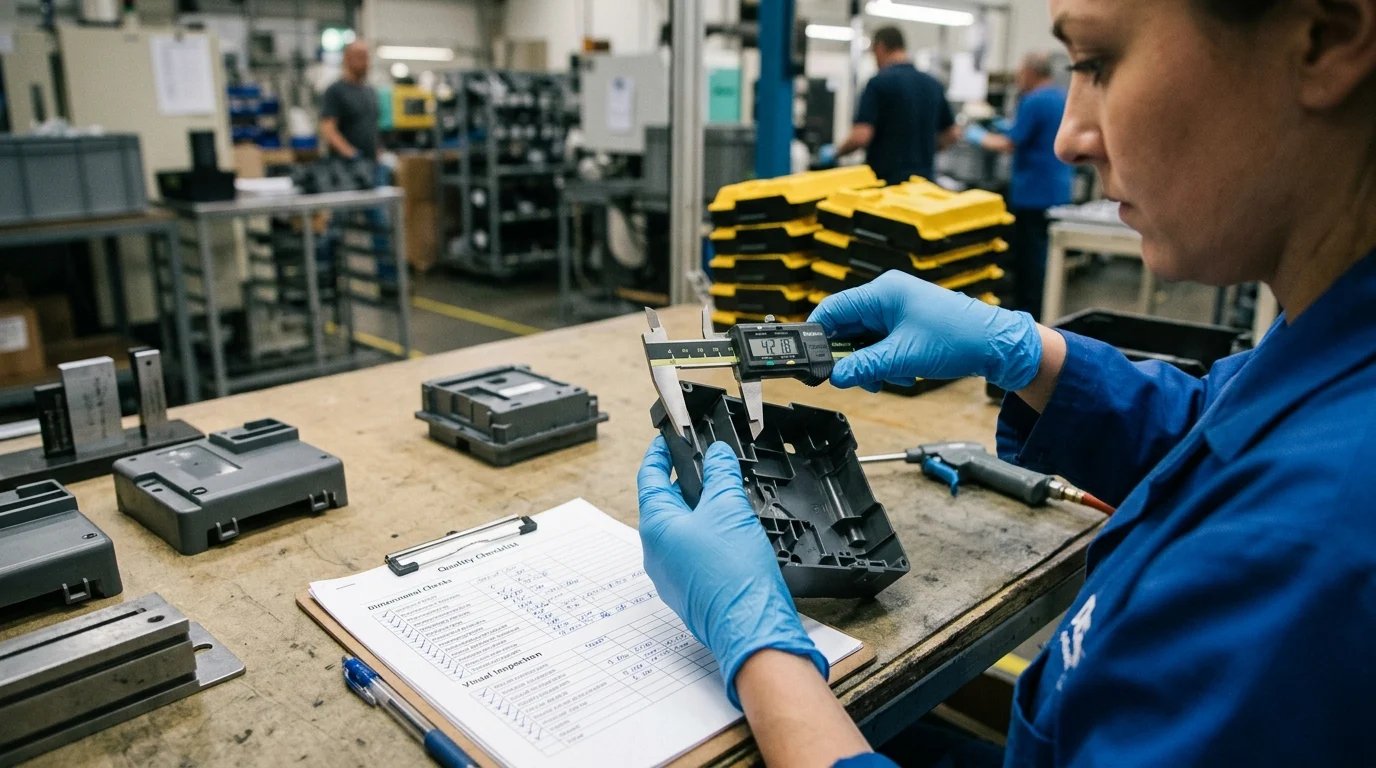
The unique performance profile of ABS is derived from its terpolymer structure, which combines three distinct monomers. Acrylonitrile contributes chemical resistance and thermal stability; butadiene provides elastomeric toughness and impact resistance; and styrene delivers rigidity, a glossy finish, and excellent flow characteristics during the molding process. By tweaking the ratios of these three components, polymer chemists can create specialized ABS grades tailored to specific manufacturing requirements.
When processed correctly, standard grade ABS exhibits a tensile strength of approximately 40 to 50 MPa and a flexural modulus of around 2.3 GPa. These metrics indicate a material that resists deformation under load but possesses enough inherent flexibility to absorb sudden shocks without fracturing. This precise material behavior is what makes ABS highly favorable for consumer goods that undergo daily wear and tear.
Impact resistance, dimensional stability, and surface finish
Impact resistance is arguably the most celebrated physical property of ABS. The butadiene rubber phase distributed throughout the styrene-acrylonitrile matrix acts as a microscopic shock absorber, stopping crack propagation upon impact. This makes the material highly suitable for handheld devices prone to being dropped. Additionally, ABS boasts excellent dimensional stability. With a low and highly predictable volumetric shrinkage rate of 0.4% to 0.9%, engineers can design molds with high confidence that the final cooled part will match the intended CAD dimensions.
Surface finish is another critical advantage. ABS naturally replicates the texture of the mold cavity with high fidelity. A highly polished steel mold will yield a mirror-like glossy finish on the ABS part, while a chemically etched mold can produce consistent matte or leather-like textures. Because the material does not suffer from excessive flow marks when gated properly, it significantly reduces the need for secondary surface finishing, lowering overall production costs.
ABS compared with polypropylene, polycarbonate, and other plastics
When evaluating polymers for consumer products, engineers frequently compare ABS against other common thermoplastics like Polypropylene (PP) and Polycarbonate (PC). Polypropylene is generally less expensive and offers superior fatigue resistance (ideal for living hinges), but it suffers from higher shrinkage (1.0% to 2.0%) and lacks the premium rigidity of ABS. Polycarbonate, conversely, offers vastly superior impact strength and optical clarity but costs significantly more and requires higher processing temperatures, which can increase tooling wear and cycle times.
| Material | Typical Cost ($/kg) | Shrinkage Rate | Tensile Strength (MPa) | Key Manufacturing Advantage |
|---|---|---|---|---|
| ABS | $1.50 – $2.50 | 0.4% – 0.9% | 40 – 50 | Excellent balance of cost, finish, and stability |
| Polypropylene (PP) | $1.00 – $1.50 | 1.0% – 2.0% | 25 – 35 | Low cost, high chemical resistance, living hinges |
| Polycarbonate (PC) | $3.00 – $4.50 | 0.5% – 0.7% | 60 – 70 | Extreme impact resistance, optical clarity |
This comparative matrix highlights why ABS is often the default choice. It occupies the “Goldilocks zone” of injection molding plastics—it is stronger and more dimensionally stable than cheaper commodity resins, yet far more cost-effective and easier to process than high-end engineering thermoplastics.
Production, Quality, and Cost in ABS Injection Molding
Transitioning an ABS product from digital design to physical production requires a deep understanding of injection molding dynamics. The process parameters must be tightly controlled to ensure consistent part quality and optimal cycle times. Standard ABS resins typically require a melt temperature between 210°C and 270°C, alongside a mold temperature maintained precisely between 40°C and 80°C.
Failure to respect these thermodynamic boundaries can result in material degradation, excessive internal stress, or incomplete mold filling. Consequently, manufacturers must employ sophisticated molding machines with precise pressure and temperature feedback loops to maintain the integrity of the ABS polymer chains during the high-shear injection phase.
Design and processing factors that affect cycle time
Cycle time is the primary driver of operational expenditure in injection molding. For ABS parts, cooling time often accounts for 50% to 70% of the total cycle. The most critical design factor influencing this cooling phase is wall thickness. Standard ABS consumer parts are typically designed with a nominal wall thickness of 1.5 mm to 3.0 mm. Thicker walls not only consume more material but exponentially increase the time required for the core of the plastic to solidify, thereby reducing hourly production yields.
Processing factors such as injection speed and holding pressure also play a vital role. ABS is moderately viscous; injecting it too slowly can cause premature freezing in the runners, while injecting it too quickly can induce shear-heating that burns the material. A well-optimized cycle balances rapid injection with adequate holding pressure to pack out the mold, ensuring the part achieves its full density before the gate freezes.
Common quality risks and how to prevent them
Despite its processability, ABS is susceptible to several common injection molding defects if design and processing rules are ignored. Sink marks are a primary risk, occurring when thick internal sections (like heavy ribs or bosses) cool and shrink slower than the outer skin, pulling the surface inward. To prevent this, engineers must ensure that structural ribs are no thicker than 50% to 60% of the adjoining wall thickness.
Warpage is another significant quality risk, typically resulting from uneven cooling or excessive residual stress. Because ABS is an amorphous polymer, it shrinks uniformly in the direction of flow and transverse to flow, which helps mitigate warp compared to semi-crystalline plastics. However, poor gate placement or inadequate mold cooling channels can still cause the part to distort post-ejection. Proper mold flow analysis during the design phase is critical to mitigating these risks before cutting steel.
Cost factors and manufacturing trade-offs
The cost structure of ABS injection molding is divided into initial capital expenditure (tooling) and ongoing operational expenditure (piece price). Production-grade steel molds capable of yielding 100,000 to 1,000,000+ shots typically range from $5,000 for simple, single-cavity tools to well over $50,000 for complex, multi-cavity molds with side actions and hot runner systems. The trade-off is that once the tooling investment is made, the per-part cost drops precipitously.
Manufacturers must balance the desire for complex part features against tooling costs. Adding undercuts or complex side-geometry requires sliding cams or lifters in the mold, which increases both the upfront tooling cost and the ongoing maintenance requirements. Engaging early with ABS injection molding specialists can help identify areas where slight design modifications can eliminate the need for complex mold mechanisms, resulting in massive cost savings at scale.
Practical Requirements for Choosing ABS Injection Molding
Specifying ABS for a consumer product is not merely a matter of mechanical preference; it requires a holistic evaluation of the product’s lifecycle, operating environment, and regulatory obligations. While ABS is highly versatile, it has distinct limitations that must be accounted for during the specification phase. For instance, standard ABS lacks inherent UV resistance. Without protective additives or specialized coatings, prolonged exposure to direct sunlight can cause the material to yellow, become brittle, and lose up to 50% of its initial impact strength over a few years.
Therefore, choosing ABS is an exercise in matching material capabilities to practical product realities. From the assembly line to the end-user’s hands, every touchpoint dictates how the resin should be formulated, molded, and finished.
Product requirements such as appearance, durability, and assembly
Product requirements dictate the specific grade of ABS utilized. For consumer electronics enclosures, aesthetics and durability are paramount. The material must survive standard consumer drop tests—often from heights of 1.0 to 1.5 meters onto hard surfaces—without shattering or exposing internal components. High-impact grades of ABS are formulated specifically to pass these rigorous testing standards.
Assembly requirements also heavily influence the decision to use ABS. The material is exceptionally well-suited for secondary assembly operations. It can be easily joined using ultrasonic welding, solvent bonding (using MEK or acetone), or mechanical fasteners. Its rigidity allows for the design of robust snap-fit joints, which eliminate the need for screws and significantly reduce manual assembly time and labor costs on the factory floor.
Compliance, sustainability, and supply chain considerations
In today’s manufacturing environment, compliance and sustainability are non-negotiable. For consumer electronics and appliances, flammability regulations often mandate the use of flame-retardant (FR) materials. Standard ABS is combustible, but FR-ABS grades are formulated with specialized additives to achieve stringent UL94 V-0 flammability ratings, ensuring the plastic self-extinguishes within 10 seconds of ignition.
On the sustainability front, ABS is fully recyclable and typically categorized under Resin Identification Code 7 (or 9 in some jurisdictions). Industrial scrap and post-consumer ABS can be ground, melted, and repurposed. High-quality mechanically recycled ABS can retain approximately 80% of its virgin tensile strength, making it a viable option for internal components or eco-conscious product lines, provided it complies with RoHS and REACH directives regarding restricted substances.
A step-by-step process for evaluating ABS for your product
Evaluating ABS for a new product requires a structured, step-by-step approach to minimize risk and optimize manufacturability. The process begins with defining the exact thermal, mechanical, and aesthetic specifications the part must meet. Next, engineers must apply strict Design for Manufacturing (DFM) principles tailored specifically to ABS shrinkage and flow characteristics.
| Design Feature | Recommended Value for ABS | Consequence of Non-Compliance |
|---|---|---|
| Wall Thickness | 1.5 mm – 3.0 mm | Sink marks, warpage, or increased cycle time |
Further reading:
When ABS Injection Molding Is the Right Choice
Key Takeaways
- The most important conclusions and rationale for ABS injection molding
- Specs, compliance, and risk checks worth validating before you commit
- Practical next steps and caveats readers can apply immediately
Frequently Asked Questions
Why is ABS injection molding so popular for consumer products?
ABS combines impact strength, dimensional stability, good surface finish, and cost efficiency, making it ideal for high-volume consumer housings, appliance parts, and toys.
What consumer products are commonly made with ABS injection molding?
Typical ABS applications include remote controls, keyboard housings, TV bezels, small appliance shells, personal care devices, and toy components requiring repeatable precision.
How accurate can ABS injection molded parts be?
Well-designed ABS molds can often hold tolerances around ±0.01 mm to ±0.05 mm, depending on part geometry, tool quality, and process control.
Can ABS parts be customized for brand appearance?
Yes. ABS accepts colorants well and supports painting, metallization, and pad printing, helping brands create multiple SKUs from one mold.
Can Plastic Metal Mold help with ABS injection molding projects?
Yes. Plastic Metal Mold can support ABS molded product development, from mold building to production, especially for consumer plastic parts needing reliable finish and fit.

Post time: Jun-19-2026