
Introduction
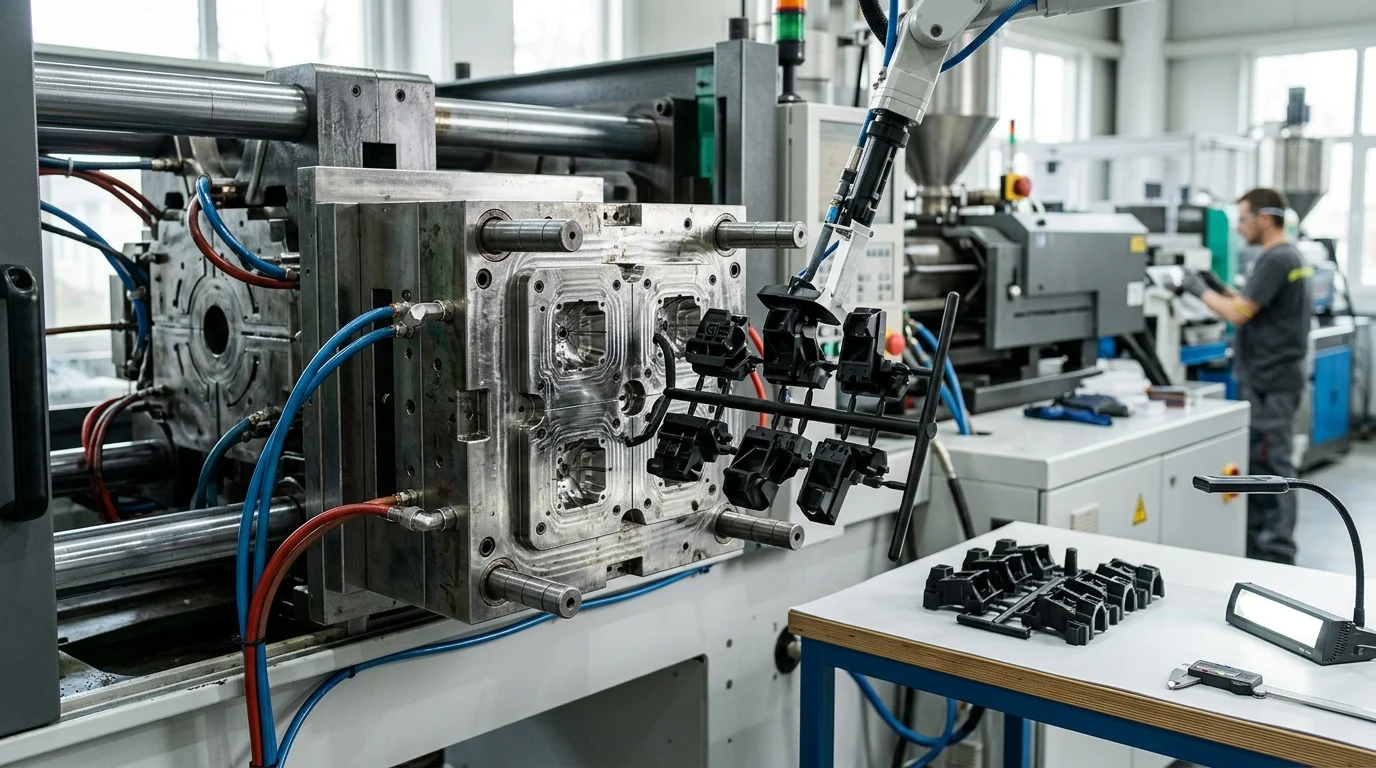
For global brands, custom plastic injection molding is often less about making parts and more about controlling cost, quality, and scale across complex product lines. Standard components can limit design freedom, material choice, and manufacturing efficiency, especially when volumes rise and tolerances tighten. A custom approach allows companies to match tooling, resin, geometry, and production planning to exact product requirements while reducing assembly steps and improving consistency. This article explains why that matters commercially, how custom molding supports global supply chains, and what advantages brands gain in performance, unit economics, and long-term manufacturing flexibility.
Why Global Brands Rely on Custom Plastic Injection Molding
In the highly competitive landscape of global manufacturing, original equipment manufacturers (OEMs) face relentless pressure to optimize production economics while maintaining exacting product standards. For complex polymer components, generic off-the-shelf solutions rarely meet the strict dimensional, material, or aesthetic requirements of modern applications. As a result, global brands increasingly turn to custom plastic injection molding to achieve precise control over the entire product lifecycle.
Custom molding is not merely a fabrication method; it is a strategic procurement decision. By engaging specialized partners, enterprises can consolidate multi-part assemblies into single molded components, significantly reducing downstream labor and assembly costs. This approach provides the scalability necessary to support global distribution networks while safeguarding proprietary intellectual property through dedicated, custom-machined tooling.
Strategic fit for global manufacturing
The strategic value of custom molding becomes apparent when analyzing total cost of ownership (TCO) at scale. While initial capital expenditure for custom steel tooling is substantial, the per-unit cost drops precipitously as production volumes increase. For most global brands, the break-even point for custom injection molded parts typically falls between 10,000 and 50,000 units, depending on part complexity and material selection.
Furthermore, custom molding facilitates supply chain resilience. By owning the custom molds, OEMs can geographically diversify their production, transferring tooling between vetted global facilities to mitigate regional geopolitical risks or logistical bottlenecks. This asset-centric strategy ensures uninterrupted production of critical components.
Best product categories for custom molding
Not all polymer components require custom engineering, but certain product categories demand it due to stringent performance parameters. In the medical device sector, custom molding is critical for producing surgical instruments, drug delivery systems, and diagnostic housings that require biocompatible materials and extreme precision, often achieving tolerances as tight as +/- 0.01 mm.
Similarly, the automotive and consumer electronics industries rely heavily on custom plastic injection molding. Automotive manufacturers utilize custom molding for lightweighting initiatives, replacing heavy metal brackets with high-strength glass-filled nylon components. Consumer electronics brands leverage this process to achieve ultra-thin wall designs and flawless cosmetic finishes, integrating overmolding techniques to enhance ergonomics and device durability.
Capabilities of High-Value Custom Plastic Injection Molding Services
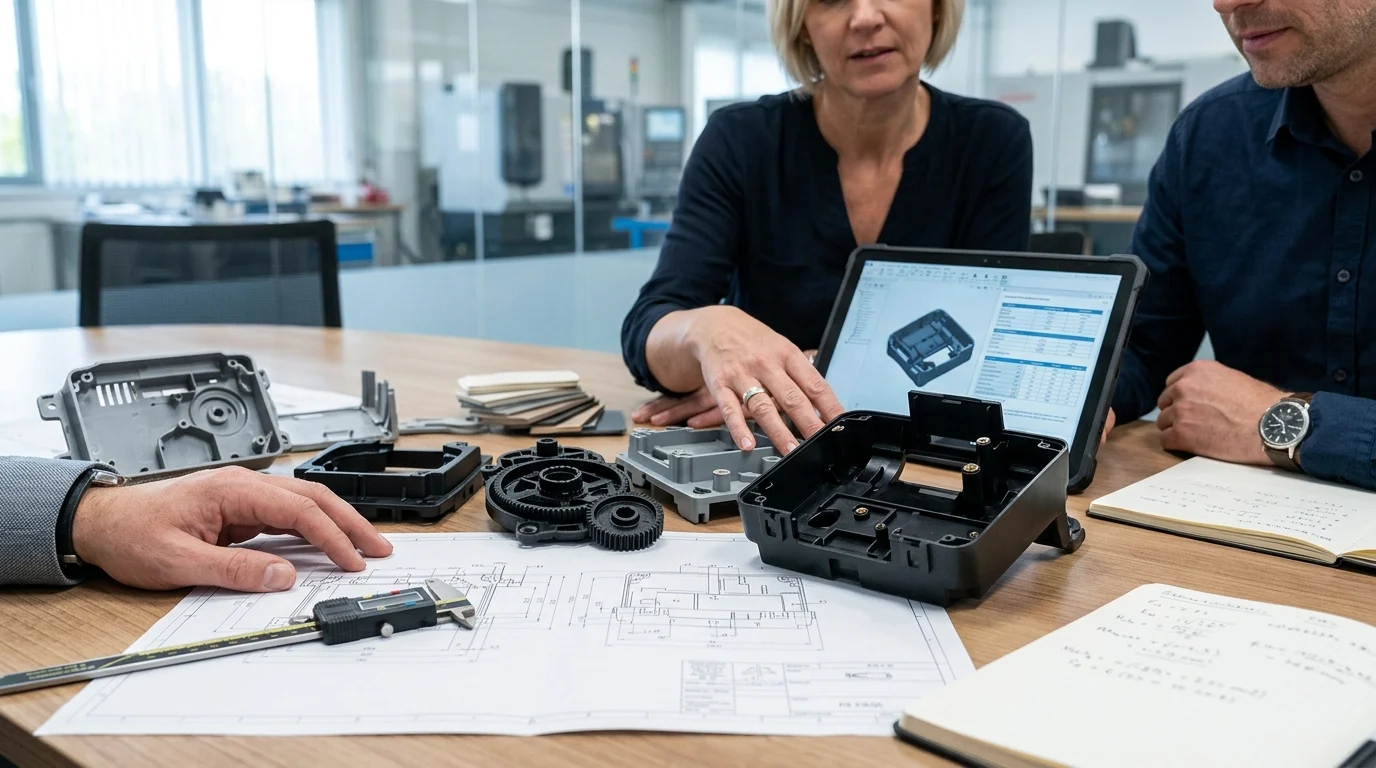
The distinction between a low-tier parts supplier and a high-value manufacturing partner lies in comprehensive engineering capabilities. Top-tier molding facilities operate as extensions of an OEM’s internal engineering team, providing end-to-end solutions that span from initial concept validation to high-volume commercialization. These capabilities ensure that parts are not only functional but optimized for efficient, defect-free mass production.
Design, tooling, and manufacturing expertise
High-value injection molding begins long before raw resin enters the press. Expert partners employ rigorous Design for Manufacturability (DFM) protocols and advanced mold flow analysis software to predict and eliminate potential defects like sink marks, weld lines, and warpage. This predictive engineering prevents costly tooling modifications and accelerates time-to-market.
Tooling expertise is equally critical. Premium suppliers utilize multi-axis CNC machining and electrical discharge machining (EDM) to craft complex mold geometries. They advise on optimal steel grades—such as P20 for medium runs or hardened H13 for abrasive resins—ensuring the tooling aligns with the product’s anticipated lifecycle. For global brands requiring uninterrupted high-volume output, partners often engineer SPI Class 101 molds, which are guaranteed for 1,000,000 or more cycles with minimal maintenance.
Quality control and production metrics
Consistent part quality is the hallmark of a premier custom plastic injection molding partner. High-value facilities implement rigorous quality control architectures, utilizing automated Coordinate Measuring Machines (CMM) and vision inspection systems to verify dimensional accuracy in real-time.
Advanced statistical process control (SPC) is used to monitor production stability. Leading molders target a Process Capability Index (Cpk) of 1.33 or higher, indicating a highly capable process where 99.99% of parts fall within specified tolerance limits. Real-time monitoring of injection pressure, melt temperature, and cooling rates ensures that every cycle replicates the validated master sample.
Custom vs standard molding services
Understanding the operational differences between custom and standard molding services is vital for effective procurement. Standard molding relies on pre-existing tooling and generic designs, whereas custom molding is entirely bespoke.
| Feature | Custom Injection Molding | Standard Injection Molding |
|---|---|---|
| Tooling Investment | High (Dedicated OEM asset) | Low to None (Supplier owned) |
| Design Flexibility | Unlimited (Bespoke geometries) | Rigid (Pre-defined catalogs) |
| Lead Time (Initial) | 4 to 12 weeks (Tool fabrication) | Off-the-shelf or 1-2 weeks |
| Volume Suitability | High volume (10,000+ units) | Low to medium volume |
| IP Protection | High (OEM owns the mold) | Low (Publicly available parts) |
For enterprise-level manufacturing, the high initial investment in custom molding is rapidly offset by the ability to dictate exact material specifications, integrate brand-specific aesthetics, and achieve superior unit economics at scale.
Why Supply Chain, Compliance, and Regional Sourcing Matter
In an era characterized by global logistical volatility and tightening environmental regulations, the selection of a custom molding partner extends beyond technical competency. Procurement leaders must evaluate suppliers through the lens of supply chain stability, regulatory compliance, and regional economic factors. A technically flawless component is of little value if the supplier cannot guarantee uninterrupted delivery or fails to meet international compliance standards.
Supplier stability and capacity planning
Supplier stability is fundamentally tied to capacity planning and financial health. Global brands require partners with diverse machine fleets capable of accommodating fluctuating demand signals. A robust facility typically operates a wide range of injection presses, spanning from 50-ton machines for micro-components up to 3,000-ton presses for large automotive or industrial enclosures.
Furthermore, top-tier molders implement redundant manufacturing systems and maintain strategic safety stock of critical raw materials. This proactive capacity planning ensures that unexpected spikes in OEM demand or localized supply chain disruptions do not result in catastrophic line-down situations for the brand.
Regulatory, traceability, and sustainability requirements
Navigating the complex web of global manufacturing regulations is a critical competency for custom molding partners. Depending on the target industry, suppliers must adhere to strict quality management systems, such as ISO 13485 for medical devices or IATF 16949 for automotive components. These frameworks mandate exhaustive lot traceability, ensuring that any field failures can be tracked back to the exact resin batch and production shift.
Additionally, environmental compliance is non-negotiable. Suppliers must provide comprehensive documentation proving adherence to RoHS (Restriction of Hazardous Substances) and REACH directives. To support these requirements, industry-leading partners often make their compliance certifications and material data sheets readily accessible via a centralized download portal. From a quality standpoint, best-in-class molders maintain stringent internal standards, frequently achieving external defect rates of fewer than 50 Parts Per Million (PPM).
Total landed cost factors
Regional sourcing decisions dramatically impact the Total Landed Cost (TLC) of injection molded parts. TLC calculations must incorporate not only the raw piece price and tooling amortization but also freight costs, import tariffs, inventory carrying costs, and the financial risk of extended supply chains.
For example, while offshore tooling might offer a 30% reduction in upfront capital expenditure, extended ocean freight transit times (often 30 to 45 days) require the OEM to hold higher buffer inventories. Conversely, nearshoring strategies may present higher initial piece prices but allow for just-in-time (JIT) delivery, reducing warehousing costs and improving working capital efficiency. Sophisticated procurement teams model these variables to determine the optimal geographic footprint for their custom molding operations.
How to Select a Custom Plastic Injection Molding Partner
Identifying and onboarding a capable custom plastic injection molding partner is a high-stakes endeavor that requires cross-functional alignment between engineering, quality assurance, and procurement teams. A structured qualification process minimizes risk and ensures that the selected supplier possesses the technical bandwidth, financial stability, and operational maturity to support long-term commercial objectives.
Supplier qualification steps
The qualification process should begin with a comprehensive desktop audit, evaluating the supplier’s ISO certifications, equipment lists, and historical performance data. This is followed by a detailed Request for Information (RFI) that probes the supplier’s core competencies, such as specific material expertise (e.g., molding high-temperature PEEK or executing complex two-shot molding).
For shortlisted candidates, an on-site or virtual facility audit is mandatory. Auditors must assess the cleanliness of the manufacturing floor, the rigor of the tooling maintenance programs, and the implementation of automated quality control systems. A critical indicator of a mature supplier is a documented preventative maintenance schedule for both injection presses and customer-owned molds.
Key questions for procurement and engineering
To accurately gauge a supplier’s operational fit, procurement and engineering teams must ask highly specific, metric-driven questions during the vetting phase. Engineering teams should inquire about the standard lead time for T1 (first out of tool) samples, which typically ranges from 4 to 8 weeks depending on mold complexity. They must also verify the supplier’s in-house tooling modification capabilities to handle inevitable design revisions.
Procurement teams must clarify commercial terms. Critical questions include: What is the Minimum Order Quantity (MOQ) or Minimum Run Value (MRV)? How are resin price fluctuations indexed and passed through? What are the specific terms regarding mold ownership, transferability, and end-of-life archiving? Clear answers to these questions prevent costly contractual disputes later in the product lifecycle.
Decision matrix for supplier shortlisting
To objectify the selection process, enterprise procurement teams utilize weighted decision matrices. This analytical tool scores potential partners against prioritized criteria, removing subjective bias from the sourcing decision.
| Evaluation Criteria | Weight (%) | Metric / Indicator |
|---|---|---|
| Technical Capability | 30% | DFM expertise, in-house tooling, press tonnage range |
| Quality & Compliance | 25% | ISO certifications, historical PPM, Cpk targets |
| Total Cost | 20% | Piece price, tooling cost, amortization terms |
| Supply Chain & Logistics | 15% | Geographic location, lead times, inventory programs |
| Financial Stability | 10% | Years in business, capacity utilization, credit rating |
By systematically applying this matrix, global brands can confidently identify the custom plastic injection molding partner that offers the optimal balance of technical execution and commercial viability.
Key Takeaways for Decision-Makers
The decision to invest in custom plastic injection molding represents a pivotal moment in a product’s commercialization journey. It is a commitment that transitions an organization from prototyping and low-volume assembly into highly optimized, scalable mass production. For decision-makers, success hinges on viewing the molding supplier not as a transactional vendor, but as an integral node in the strategic manufacturing network.
Balancing cost, speed, compliance, and scalability
Ultimately, executive leadership must balance four competing priorities: cost, speed, compliance, and scalability. While aggressive cost-down targets are standard, they must not compromise material compliance or product durability. Speed-to-market is vital, yet rushing the DFM and tooling phases inevitably leads to sub-optimal cycle times and elevated defect rates during mass production.
By partnering with high-value molding experts, brands can navigate these trade-offs effectively. A well-executed custom molding strategy typically yields a full Return on Investment (ROI) for high-cavitation tooling within 12 to 18 months, driven by drastically reduced unit costs and minimized assembly labor. By prioritizing robust supplier qualification, strict quality metrics, and resilient regional sourcing, global brands ensure their custom molded components deliver sustained competitive advantage in the marketplace.
Further reading:
Key Takeaways
- The most important conclusions and rationale for custom plastic injection molding
- Specs, compliance, and risk checks worth validating before you commit
- Practical next steps and caveats readers can apply immediately
Frequently Asked Questions
When does custom plastic injection molding become more cost-effective than standard molding?
Usually at medium to high volumes. Many OEMs see break-even around 10,000–50,000 units, depending on part complexity, resin, and tooling life.
What should global brands look for in a custom injection molding partner?
Choose a supplier with DFM support, mold flow analysis, precision tooling, SPC/CMM inspection, and scalable production. NBPM-Plastic highlights end-to-end design, tooling, and manufacturing capabilities.
Which products are best suited for custom plastic injection molding?
It fits parts needing tight tolerances, custom materials, complex geometry, or premium finishes, such as medical housings, automotive brackets, and consumer electronics components.
How does custom molding help reduce total production cost?
It can combine multiple parts into one molded component, cutting assembly labor, reducing defects, and lowering per-unit cost once tooling is amortized over larger runs.
Why is mold ownership important for global supply chains?
Owned custom molds protect IP and give brands flexibility to move tooling between approved factories, helping reduce disruption from logistics delays or regional risks.
Post time: Jun-10-2026