
Introduction
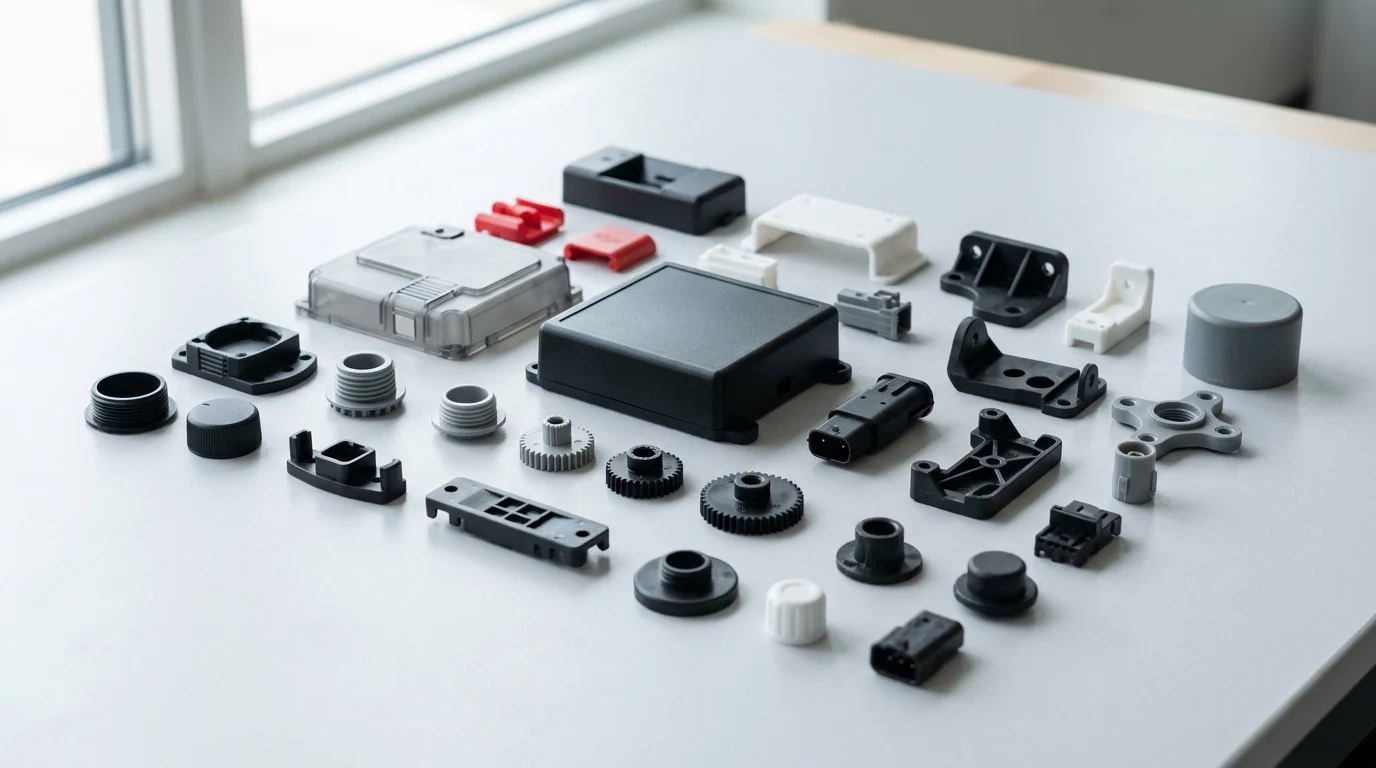
In consumer electronics, product success depends as much on manufacturing execution as on design. OEM plastic molding services help brands turn complex housings, internal frames, and cosmetic parts into high-volume, production-ready components with the precision, speed, and consistency modern launches demand. They also reduce the burden of tooling investment, process control, and scale-up, allowing device makers to focus on engineering, software, and market timing. This article explains why OEM molding matters, where it adds the most value, and how it supports faster development, better fit and finish, and more reliable mass production.
Why OEM Plastic Molding Matters for Consumer Electronics
The consumer electronics industry operates under relentless pressure to deliver innovative, aesthetically pleasing, and highly functional devices. To achieve mass-market scale, manufacturers heavily rely on specialized OEM plastic molding services. Producing high-fidelity enclosures, internal chassis, and structural components requires precise execution, often at volumes exceeding 100,000 units per month. Outsourcing this capability allows electronics brands to focus on core competencies like software development and hardware architecture while leveraging the capital equipment and specialized expertise of manufacturing partners.
Short product cycles and launch pressure
Consumer electronics are defined by aggressively short product life cycles, often ranging from 6 to 12 months for devices like smartphones, wearables, and audio peripherals. This compression leaves virtually no room for manufacturing delays. OEM partners mitigate schedule risks through rapid tooling processes and parallel engineering. By utilizing standardized mold bases and automated CNC machining, top-tier molders can deliver T1 (first test) samples in as little as 15 to 20 days. This rapid turnaround is critical for meeting rigid retail launch windows and seasonal consumer demand.
Enclosure quality, fit, and finish
The physical enclosure is the primary interface between the user and the device, meaning structural integrity and cosmetic perfection are non-negotiable. Modern electronic assemblies frequently utilize snap-fit joints, requiring dimensional tolerances as tight as ±0.05 mm to prevent creaking, gaps, or structural failure during drop tests. OEM molding services utilize scientific molding principles to ensure that polymer melt flow, cooling rates, and pack pressures are optimized. This level of control minimizes warpage and ensures that multi-part assemblies mate flawlessly straight out of the mold.
Brand impact and user perception
A device’s perceived value is intrinsically linked to its tactile and visual characteristics. Premium consumer electronics rely on specialized surface finishes—such as VDI 3400 textures, high-gloss SPI A-1 polishes, or soft-touch overmolding—to differentiate themselves in a crowded market. Substandard molding resulting in visible weld lines, sink marks, or flash immediately degrades the brand’s premium positioning. Dedicated molding partners possess the advanced tooling and process controls necessary to execute these high-end cosmetic requirements consistently across hundreds of thousands of units.
Core Requirements for OEM Plastic Molding
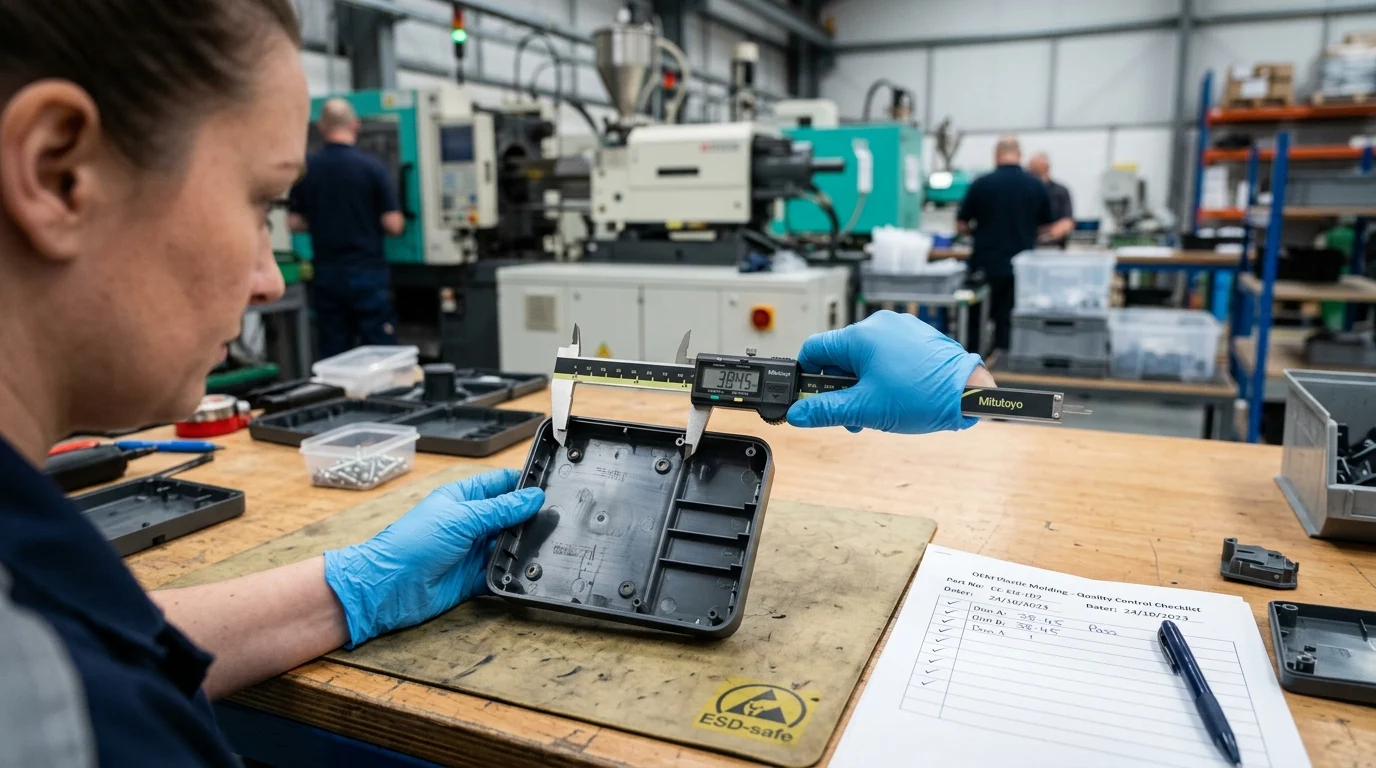
Transitioning from a digital CAD file to a physical component requires a deep understanding of polymer science and mechanical engineering. OEM plastic molding providers must navigate complex geometric requirements while managing machine clamping forces that typically range from 50 to over 1,500 tons. Fulfilling the core requirements for consumer electronics demands rigorous material tracking, advanced mold design, and the capacity to handle integrated secondary operations.
Performance requirements in consumer electronics
Electronic components operate in demanding environments, requiring plastics that can withstand localized heat generation, resist chemical exposure, and survive physical impacts. Many devices must comply with stringent safety standards, necessitating the use of resins with a UL94 V-0 flammability rating. Additionally, internal chassis components often require glass-filled polymers for rigidity or specialized additives to provide electromagnetic interference (EMI) shielding, ensuring the device passes FCC or CE emissions testing protocols.
Material selection, mold design, and tolerance control
The synergy between material behavior and mold architecture dictates final part quality. Common consumer electronics resins like polycarbonate (PC), acrylonitrile butadiene styrene (ABS), and PC/ABS blends each possess unique shrinkage rates and thermal properties. Tooling engineers must design molds with conformal cooling channels to manage these thermal dynamics, ensuring uniform cooling and cycle times under 30 seconds. For precision internal components, such as camera lens mounts, molders must maintain micro-tolerances of ±0.02 mm.
| Material | Key Properties | Typical CE Application |
|---|---|---|
| PC/ABS Blend | High impact resistance, excellent aesthetic finish | Laptop housings, smartphone cases |
| TPU (Thermoplastic Polyurethane) | Flexibility, soft-touch feel, abrasion resistance | Wearable straps, overmolded grips |
| Glass-Filled Nylon (PA66+GF) | Extreme structural rigidity, high thermal resistance | Internal chassis, structural brackets |
Manufacturing scope and buyer expectations
Consumer electronics brands expect their manufacturing partners to deliver fully finished sub-assemblies rather than raw molded parts. This requires a broad manufacturing scope that encompasses secondary operations such as ultrasonic welding, heat staking, pad printing, and UV coating. Furthermore, buyers must align their volume expectations with the supplier’s capacity. While mass production runs yield the lowest piece price, custom OEM projects typically require minimum order quantities (MOQs) starting between 5,000 and 10,000 units to amortize setup costs effectively.
OEM Molding vs Other Sourcing Options
Hardware companies must carefully evaluate their manufacturing strategy to optimize capital allocation and operational agility. While some large-scale manufacturers operate captive molding facilities, the vast majority of consumer electronics brands rely on outsourced OEM molding. Understanding the financial and operational trade-offs between internal production, OEM partnerships, and low-volume prototyping methods is essential for maintaining competitive profit margins. Setting up a single automated injection molding cell can require a capital expenditure (CapEx) exceeding $250,000, making outsourcing a highly attractive alternative.
OEM molding vs in-house production
Establishing an in-house plastic molding facility requires significant investments in machinery, facility infrastructure, and specialized personnel. For most consumer electronics brands, this represents an inefficient use of capital that could otherwise fund research and development. Partnering with an established OEM provides immediate access to state-of-the-art equipment and a deep bench of engineering talent. As detailed on an experienced provider’s about page, a dedicated molding facility operates with economies of scale, absorbing the overhead of 24/7 production schedules, maintenance, and quality control systems that would burden a brand attempting to mold in-house.
Key trade-offs in cost, speed, and control
The decision to utilize OEM molding hinges on balancing upfront investment against unit costs and production speed.
| Sourcing Model | Upfront Setup Cost | Per-Unit Cost (At Volume) | Scalability & Speed |
|---|---|---|---|
| In-House Molding | Extremely High ($1M+) | Low | High, but requires internal CapEx scaling |
| OEM Plastic Molding | Moderate to High (Tooling) | Very Low | Excellent; rapid scaling via supplier capacity |
| 3D Printing / Urethane Casting | Low | Very High | Poor; strictly limited to prototyping or low volumes |
How to compare sourcing models
Comparing sourcing models requires a comprehensive total cost of ownership (TCO) analysis. While rapid prototyping is cost-effective for the first 100 units, the unit economics quickly invert as demand scales. The break-even point between soft tooling (aluminum molds for bridge production) and hardened steel molds (SPI Class 101) typically occurs between 10,000 and 25,000 units. OEM partners assist in this transition by offering scalable tooling strategies, allowing brands to launch with lower-cost bridge tools before committing to high-cavitation steel molds for mass production.
Risk Management in Quality, Compliance, and Supply Chain
Managing a global consumer electronics supply chain involves navigating complex regulatory landscapes and mitigating the financial risks of defective products. A single batch of out-of-spec enclosures can halt an entire assembly line, resulting in missed shipments and cascading financial losses. World-class OEM molders implement rigorous quality management systems designed to push defect rates below 500 parts per million (PPM), ensuring a predictable and compliant flow of materials.
Regulatory and customer compliance requirements
Consumer electronics are subject to strict environmental and safety regulations globally. OEM molding partners must provide full traceability for all raw materials to ensure compliance with directives such as RoHS (Restriction of Hazardous Substances) and REACH. The use of counterfeit or non-compliant resins can result in product recalls or import bans. Manufacturers rely on their molding partners to maintain comprehensive material data sheets and certifications. Referencing official downloadable specifications and compliance documentation is a standard requirement during the vendor qualification process.
Tooling maintenance and defect prevention
The longevity and consistency of injection molded parts are directly tied to the condition of the tooling. High-volume consumer electronics demand SPI Class 101 molds, which are engineered from hardened steel to guarantee a lifespan exceeding 1,000,000 cycles. However, even the highest-quality molds require meticulous preventive maintenance. Top-tier OEM partners implement strict maintenance schedules—cleaning vents, lubricating ejector pins, and inspecting cooling channels—to prevent flashing, short shots, and other defects that arise from tool wear.
Supplier audits, pilot runs, and quality metrics
Risk mitigation requires a structured approach to quality validation before mass production begins. This involves executing engineering verification, design verification, and production verification testing (EVT/DVT/PVT) phases. During these pilot runs, OEM molders provide first article inspection (FAI) reports to verify that all critical dimensions meet the CAD specifications. Furthermore, statistical process control (SPC) is utilized to track production stability, with manufacturers expecting a process capability index (Cpk) greater than 1.33 to ensure the molding process is highly repeatable and statistically unlikely to produce defects.
How to Choose the Right OEM Plastic Molding Partner
The success of a consumer electronics product is inextricably linked to the capabilities of its manufacturing partners. Selecting the right OEM plastic molding provider is not merely a transactional purchasing decision; it is a strategic alignment that impacts product quality, time-to-market, and long-term profitability. Buyers must look beyond initial piece price quotes and evaluate suppliers based on operational resilience, technological capability, and a proven track record of on-time delivery rates exceeding 98%.
Supplier qualification criteria
Robust supplier qualification begins with a quantitative assessment of the molder’s infrastructure. Key criteria include the range of injection machine tonnages available, which dictates the size and complexity of parts they can produce. Buyers should verify ISO 9001 certifications for quality management and, if applicable, ISO 14001 for environmental management. Additionally, assessing the supplier’s capability to perform secondary operations in-house—such as automated painting lines or robotic assembly—reduces logistical complexities and minimizes the risk of damage during transit between multiple subcontractors.
Step-by-step evaluation process
The evaluation process should follow a systematic progression from request for information (RFI) to request for proposal (RFP), culminating in on-site or virtual audits. A critical step in this process is the design for manufacturability (DFM) review. A highly capable OEM partner will proactively analyze the CAD models to identify potential molding issues, such as thick sections prone to sink marks or undercuts requiring expensive slide mechanisms. A thorough DFM collaboration can routinely reduce manufacturing costs by 15% to 30% while simultaneously improving part quality and cycle times.
Long-term strategic fit
Consumer electronics brands must prioritize long-term strategic fit over short-term savings. This involves evaluating the supplier’s capacity to scale operations seamlessly as product demand grows. Geographic location plays a vital role in supply chain resilience, influencing shipping lead times, freight costs, and tariff exposure. Furthermore, robust intellectual property (IP) protection protocols—including secure data transfer and compartmentalized production floors—are vital when manufacturing proprietary hardware. Establishing a strong, transparent partnership ensures that both the brand and the OEM molder are aligned in navigating the dynamic challenges of the consumer electronics market.
Further reading:
Key Takeaways
- The most important conclusions and rationale for OEM plastic molding
- Specs, compliance, and risk checks worth validating before you commit
- Practical next steps and caveats readers can apply immediately
Frequently Asked Questions
Why should electronics brands use OEM plastic molding services?
OEM molding speeds launch timelines, controls quality at scale, and reduces tooling and production risk for housings, chassis, and precision internal parts.
What materials are commonly used for consumer electronics plastic parts?
PC/ABS is common for housings, TPU for soft-touch grips or straps, and glass-filled nylon for rigid internal brackets and chassis parts.
How fast can OEM molders deliver first test samples?
With rapid tooling and parallel engineering, experienced suppliers can often provide T1 samples in about 15 to 20 days, depending on part complexity.
What tolerances matter most in consumer electronics molding?
Snap-fit and cosmetic parts often need about ±0.05 mm, while precision components like lens mounts may require tighter control near ±0.02 mm.
What should buyers confirm with an OEM plastic molding supplier like NBPM Plastic?
Check tooling capability, material traceability, cosmetic finishing, tolerance control, and support for secondary operations or sub-assembly before mass production.

Post time: Jun-12-2026