
- Low-volume injection molding is ideal when you need 100 to 10,000 parts before committing to mass production.
- A China plastic mold factory is most valuable when it offers DFM support, trial runs, and fast engineering feedback.
- Tooling decisions should be based on part geometry, material, tolerance targets, and expected product life cycle.
- For transparent or impact-resistant housings, materials like PC are commonly selected for their balance of clarity and toughness.
- One-stop mold and molding supply can reduce supplier switching, sample delays, and communication loss.
Choosing a China plastic mold factory for low-volume production orders often makes sense when the project needs low volume injection molding, short lead times, and a reliable path from prototype to pilot production. In metrology and machining, tolerances in the range of ±0.005 mm are commonly used as a reference point for precision work under controlled conditions, and mold quality must support that level of repeatability where the part design requires it. For mold design and acceptance, standards such as ISO 20457:2018 provide a useful framework for precision and dimensional control, while a well-run supplier should also align with the practical requirements of NIST standards and measurements guidance. If your project includes housings, covers, or functional plastic assemblies, the right plastic mold partner should help you reduce risk, not just quote a tool.
Why a China plastic mold factory is attractive for low-volume injection molding
The strongest reason buyers choose a China plastic mold factory is flexibility across tooling, sampling, and production. A project rarely starts with perfect data; it usually begins with a drawing, a sample, or a product concept that still needs engineering refinement. In that situation, a supplier that can review gate location, draft angle, rib thickness, and ejection strategy before cutting steel can save time and avoid costly revisions. For low-volume injection molding, this matters more than chasing the lowest unit price, because one poor tooling decision can offset any savings on parts.
Low-volume orders also benefit from supplier concentration. When one team handles mold design, trial molding, and finishing, fewer handoffs are required. That usually improves responsiveness during first article issues, cosmetic correction, and dimensional tuning. If the product has an external shell or enclosure, you can often move faster by working with a factory experienced in plastic housing mold programs rather than a general job shop that lacks housing-specific experience.
For a buyer, the practical question is not whether China is cheaper in theory. The real question is whether the supplier can lower total project cost through engineering support, rapid samples, and stable repeatability.
What low-volume injection molding actually solves for buyers
Low-volume injection molding solves the risk gap between prototype and mass production. A molded part may look correct in CAD, but it can still fail in the real world because of shrinkage, weld lines, sink marks, or assembly interference. Small production runs allow you to test market response, validate fit, and check field performance before committing to a large mold investment or a high-cavity tool.
This approach is especially useful in electronics, small appliances, and industrial accessories. For example, a transparent PC enclosure may need impact resistance, optical clarity, and stable dimensions for snap-fit assembly. Polycarbonate is widely used for these applications because it combines toughness and transparency, and material data from ASTM D638 testing is often part of the qualification process for tensile performance. If the part will be installed in a device with visible surfaces, low-volume molding lets you verify gloss, texture, and gate vestige before full launch.
For many projects, the order quantity is not the only constraint. The more important variables are how quickly the supplier can modify steel, how accurately it can sample the first shots, and how well it can reproduce the same result on the next run.
Where a plastic mold factory adds value beyond toolmaking
A plastic mold factory adds value when it supports the entire development chain instead of only making steel. That means design review, DFM suggestions, mold flow considerations, trial reports, and molding process control. Buyers often underestimate how much of the final part quality comes from process stability rather than mold geometry alone.
For low-volume orders, this integrated model matters because the project may not have enough margin for multiple vendor changes. If the factory can produce both the tool and the molded parts, the team can correlate defects with root causes faster. For example, a short shot may be caused by gate size, but it can also come from resin drying, barrel temperature, or venting. A supplier with molding capability can troubleshoot the full process instead of guessing from tool photos alone.
This is also where one-stop sourcing helps. If you need a tool, test shots, and packaged parts for shipment, working through a custom plastic parts workflow can simplify coordination and reduce administrative delay. For startups and OEM buyers, that can be more valuable than a small price difference on the quotation.
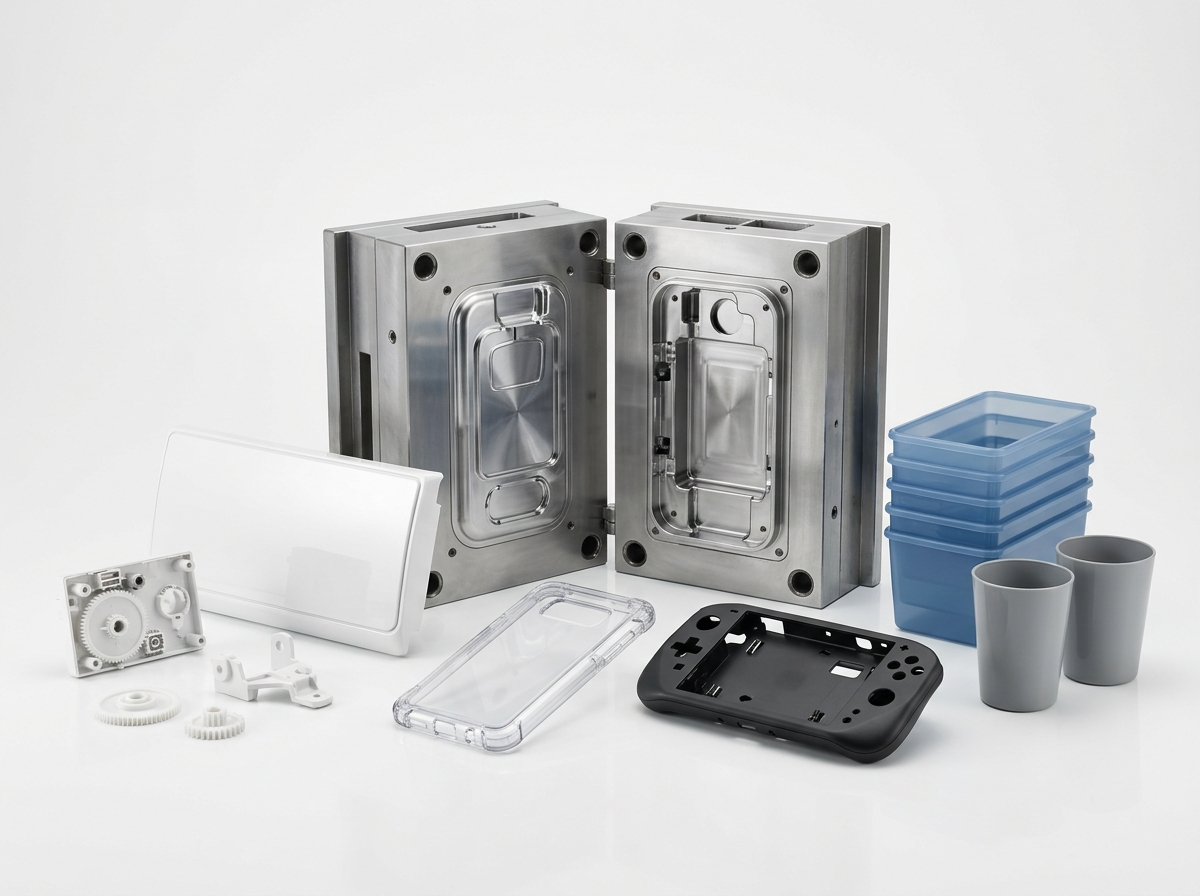 Comparison of low-volume injection molding options
| Option | Typical order range | Tooling cost level | Lead time | Best use case |
|---|---|---|---|---|
| Prototype machining | 1 to 50 parts | Low | Days to 2 weeks | Concept validation and fit check |
| Soft tooling | 50 to 1,000 parts | Moderate | 2 to 6 weeks | Pilot launch and market testing |
| Production steel mold | 1,000 to 10,000+ parts | Higher | 4 to 10 weeks | Stable low-volume supply with room to scale |
This comparison shows why many buyers prefer a China plastic mold factory for early commercial stages. Soft tooling and low-cavity production tools can bridge the gap between expensive prototypes and full-scale manufacturing. For a product with uncertain demand, that is often the most efficient path.
How to evaluate a China plastic mold factory for low-volume production
The best supplier is the one that can prove engineering discipline, not just quotation speed. Before sending an RFQ, buyers should assess communication quality, DFM depth, sample management, and the factory’s ability to support the intended industry. A supplier serving home appliances may understand appearance and assembly better, while one focused on industrial equipment may be stronger in structural reliability and lifecycle stability.
Look carefully at the factory’s response to drawings and samples. A serious engineer should ask about material selection, expected annual demand, surface finish, tolerance-critical features, and assembly method. For example, if you need a shell with snap fits and a clear front window, the factory should discuss rib ratio, wall thickness, and sink risk rather than only promising fast delivery.
If your product line includes enclosures or covers, review whether the supplier has relevant electronic housing mold experience. If the part must survive repeated use or higher load, check whether the supplier can support more robust structural designs through a industrial parts mold program.
| Evaluation item | What to ask | Good sign | Risk signal |
|---|---|---|---|
| Engineering support | Will you provide DFM comments? | Specific wall, draft, and gate suggestions | Only price and delivery response |
| Sampling | How many trial shots before approval? | Documented sample report with photos and measurements | No measurement records |
| Material control | How is resin dried and traced? | Defined storage and process logs | Unclear material handling |
| Communication | Who owns the project timeline? | Single project contact in English | Multiple unclear contacts |
Why product category matters in low-volume plastic mold selection
Product category changes mold strategy more than many buyers expect. A cosmetic housing, a toy component, and a machine cover may all be plastic parts, but they do not share the same priorities. In consumer electronics, appearance and assembly tolerance often dominate. In home appliances, the part must survive repeated handling and maintain alignment with neighboring components. In industrial equipment, long-term stability and replacement continuity become more important than a polished first impression.
For a transparent or semi-transparent cover, PC material is often selected because it balances clarity and impact resistance. For a simple utility item, the focus may shift to cost and throughput. In sports or footwear-related components, weight and wear resistance may matter more than gloss. The mold should reflect these priorities in steel choice, cooling design, and surface treatment.
That is why a supplier with broad category experience can outperform a narrow tooling shop. If the factory has worked on home appliance mold projects and consumer enclosures, it is more likely to understand the trade-off between appearance, assembly, and durability.
Material, tolerance, and process data that affect low-volume injection molding
Material and tolerance targets determine whether a low-volume run succeeds or becomes a rework project. For example, PC is widely used in protective housings because it offers transparency and impact resistance, but it also demands careful drying and process control. In data sheets commonly used in engineering qualification, polycarbonate often shows tensile strength values around the 60 MPa range under standard test conditions, which makes it suitable for functional covers and guards. The exact grade must always be confirmed with the supplier’s technical data sheet and test method.
Dimensional control is equally important. ISO-based geometry and tolerancing practices help define what the factory must hold, and precision parts may require control tighter than standard commercial tolerances. A mold that cannot maintain consistent cavity balance, cooling, and ejection will create variation that shows up during assembly. In practical terms, the buyer should specify which dimensions are critical, which are cosmetic, and which can be relaxed to save cost.
| Decision variable | Common engineering target | Impact on tooling | Buyer takeaway |
|---|---|---|---|
| Wall thickness | Uniform where possible, often 1.5 to 3.0 mm for housings | Affects sink and cooling | Keep sections consistent |
| Draft angle | Typically 1 to 3 degrees depending on texture | Reduces ejection marks | Plan it early |
| Critical tolerance | Project-dependent, often tighter on mating features | Raises machining and inspection cost | Mark dimensions clearly |
| Material drying | Required for hygroscopic resins like PC | Prevents splay and brittleness | Ask for process control records |
These parameters are not abstract. They directly affect trial yield, surface quality, and assembly success. If your product has a visible shell, the wrong combination of material and geometry can destroy the commercial value of the design.
When low-volume injection molding is better than prototype-only methods
Low-volume injection molding is better than prototype-only methods when the product must be judged as a real manufacturing part, not just a geometric sample. 3D printing is useful for concept validation, but it cannot fully replicate surface finish, shrink behavior, or production-grade snap-fit performance. A molded part, by contrast, reflects the same gate, cooling, and packing behaviors that will appear in later mass production.
This is especially important when the product is expected to enter retail, B2B distribution, or export channels. Buyers need actual packaging dimensions, actual part stiffness, and actual cosmetic quality to forecast returns and assembly time. In those cases, the mold is not just a manufacturing tool. It is also a market validation asset.
If your roadmap includes product family expansion, starting with a low-volume tool can also reduce redesign waste. A modular approach lets you evaluate one SKU, then apply lessons to related parts without restarting from zero.
Practical purchasing checklist before you place a low-volume order
The smartest low-volume buyers treat the RFQ as a technical review, not only a price request. That helps prevent missed assumptions and later disputes. Before approving a project, confirm the following points with the factory:
- Is the part for appearance, structure, or both?
- Which dimensions are critical for fit or function?
- What resin grade is required, and why?
- Will the project need texture, polishing, or painting?
- How many samples are included before approval?
- Can the supplier support future volume growth?
For projects that may evolve from a single housing to a broader product platform, a supplier with a plastic mold components capability can also help with replacement parts and lifecycle support. That matters when the tool must stay usable after the first shipment, not just through launch week.
What a good low-volume sourcing outcome looks like
A good outcome is not simply receiving parts on time. It is receiving parts that match the drawing, assemble correctly, and can be reproduced without re-explaining the project every time. In a well-managed low-volume program, the factory documents the tool condition, trial settings, inspection points, and packing requirements. That gives the buyer a stable base for the next order.
For many companies, the real value of a China plastic mold factory is project continuity. Once the mold is validated, the same supplier can usually support repeat runs, spare parts, and design updates with lower friction than starting over with a new vendor. That continuity can be worth more than a small first-order discount.
In that sense, low-volume injection molding is not a compromise. It is a controlled, lower-risk path to commercial manufacturing.
FAQ
What order quantity counts as low-volume injection molding?
Low-volume injection molding commonly covers roughly 100 to 10,000 parts, depending on part size, complexity, and tooling strategy. The exact boundary depends on whether the project needs pilot production, market testing, or short-run supply.
Why do buyers choose a China plastic mold factory for small orders?
Buyers choose a China plastic mold factory because it can combine mold making, sampling, and molding in one workflow, which often reduces lead time and communication loss. The result is usually better total project control for small to mid-size runs.
Is low-volume injection molding cheaper than 3D printing?
For a single prototype, 3D printing is usually cheaper. For repeated parts, low-volume injection molding often becomes more economical because the per-part cost drops as the run size increases and the part quality becomes more production-like.
What materials are common for plastic mold housings?
Common housing materials include PC, ABS, PP, and blends depending on impact, appearance, and cost requirements. PC is often used when transparency and toughness are important, while ABS is frequently used for general-purpose enclosures.
How do I reduce risk when ordering a low-volume mold?
Reduce risk by defining critical dimensions, sharing samples or CAD data early, confirming material grade, and asking for DFM feedback before steel cutting. A clear sample approval process is often the difference between a stable pilot run and repeated rework.
Can a low-volume mold later support mass production?
Yes, if the mold is designed with future volume in mind. A tool can be built as a bridge solution first and then upgraded, or duplicated, once demand proves stable.
What should I ask before choosing a plastic mold supplier?
Ask about engineering support, sample reporting, tolerance control, material handling, English communication, and lead time. Those answers reveal whether the factory is capable of handling real production work, not just quoting it.
Post time: Jul-25-2026