
Introduction
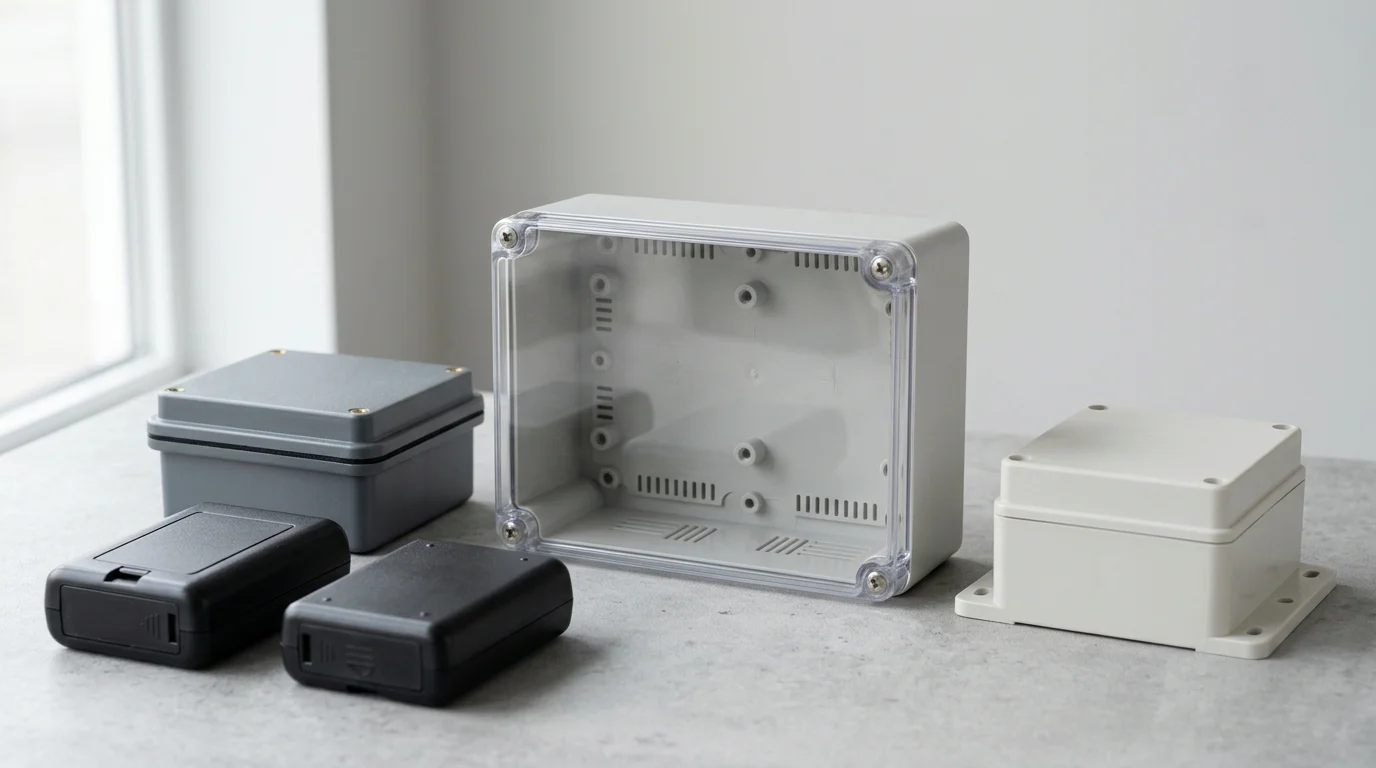
As smart home devices shrink in size while taking on more sensors, radios, and processing power, the enclosure becomes a core engineering decision rather than a cosmetic shell. Custom plastic enclosures help manufacturers control fit, heat management, impact resistance, and protection against dust or moisture, all while supporting the look and feel users associate with quality. They also make it easier to optimize internal layouts, mounting features, and production efficiency for specific products instead of forcing compromises around generic housings. Understanding their role shows why enclosure design directly affects reliability, usability, and brand perception in connected home hardware.
Why custom plastic enclosures matter for smart home devices
The rapid expansion of the smart home ecosystem has placed unprecedented demands on hardware design. As devices become smaller, more complex, and more integrated into daily life, the exterior casing can no longer be an afterthought. Custom plastic enclosures have emerged as a critical component in the successful deployment of connected home technology. These specialized housings do more than simply hold circuit boards; they govern thermal dynamics, protect sensitive sensors, and define the user’s tactile experience.
With device miniaturization pushing internal spatial tolerances to strict margins—often requiring precision down to +/- 0.05 mm—off-the-shelf solutions frequently fall short. Custom molding allows engineers to dictate exact internal standoffs, snap-fits, and cable routing paths, ensuring that complex smart home assemblies remain compact and structurally sound.
Impact on reliability and brand perception
Reliability in consumer electronics begins with the exterior barrier. Smart home devices are frequently exposed to environmental stressors such as humidity, dust, and accidental impacts. A custom enclosure allows manufacturers to design specific ingress protection features, such as integrated elastomer gaskets or ultrasonic welding joints, to achieve IP54 to IP67 ratings. This level of protection prevents premature hardware failure caused by moisture or particulate intrusion.
Beyond functional reliability, the enclosure heavily dictates brand perception. The tactile feel, weight distribution, and visual finish of a product communicate its quality to the consumer. A high-end thermostat or security camera housed in a poorly fitting, generic casing will undermine the perceived value of the underlying software and electronics. Custom tooling ensures seamless parting lines, precise color matching, and premium surface textures that align with brand identity.
Smart home categories that benefit most
Certain product categories inherently demand specialized enclosures to function correctly. Outdoor security cameras and smart doorbells, for instance, require housings molded from UV-stabilized polymers capable of resisting sun degradation for 5 to 10 years without becoming brittle. These devices also require optically clear, scratch-resistant lens covers seamlessly integrated into the main body.
Similarly, smart plugs and in-wall lighting relays face strict spatial and thermal challenges. They must fit within standard electrical junction boxes while safely housing high-voltage components. Custom enclosures for these categories are engineered with precise wall thicknesses to maximize internal volume while maintaining the structural rigidity required for repeated plugging and unplugging.
What makes an effective plastic enclosure
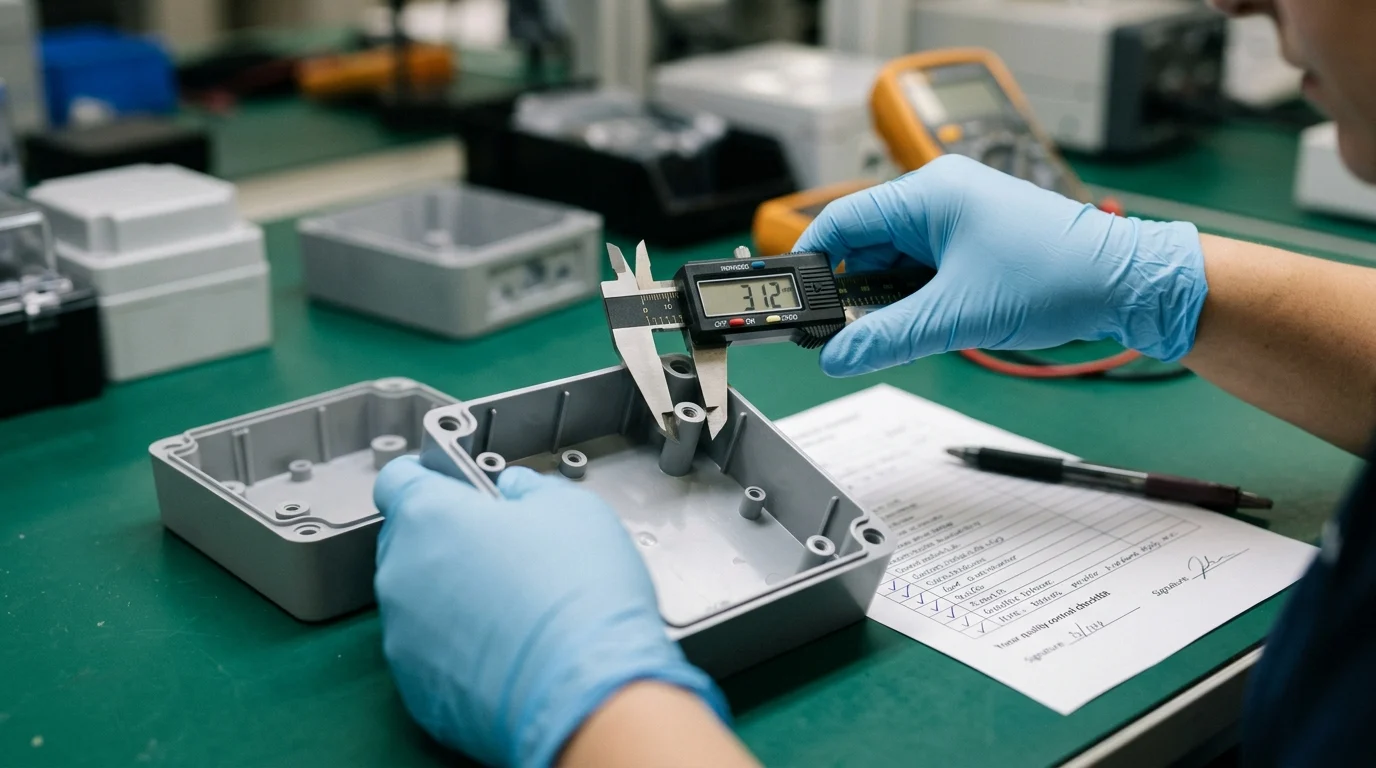
Designing an effective housing requires balancing mechanical strength, aesthetic appeal, and the specific operational needs of the internal electronics. A well-engineered enclosure acts as a passive participant in the device’s functionality, facilitating connectivity and heat management while protecting the core components.
Key functional requirements
Modern IoT devices integrate multiple radios, including Wi-Fi, Zigbee, Bluetooth, and Thread. The primary functional requirement of the enclosure is radio frequency (RF) transparency. The plastic must not cause significant signal attenuation, which would reduce the device’s range and reliability. Engineers must carefully select polymers and avoid metallic paints that could interfere with antenna radiation patterns.
Thermal dissipation is another critical functional requirement. Smart home hubs and video processing doorbells generate substantial heat. Effective enclosures incorporate strategic venting, internal heat sink mounts, or thermally conductive plastics to maintain internal operating temperatures below the critical 85°C threshold. Failure to manage this heat can lead to processor throttling or shortened battery lifespans.
Material, wall thickness, and surface finish
Selecting the right polymer is critical for both manufacturing and end-use performance. Acrylonitrile Butadiene Styrene (ABS) is frequently used for indoor devices due to its excellent moldability and impact resistance. For devices requiring higher heat resistance or structural rigidity, Polycarbonate (PC) or PC/ABS blends are preferred. Wall thickness typically ranges from 1.5 mm to 3.0 mm; thinner walls risk warping and poor structural integrity, while thicker walls increase material costs and cooling times during injection molding.
Surface finish dictates both the aesthetic and functional properties of the device exterior. Options range from high-gloss polishes to heavy matte textures, defined by standards like the VDI 3400 or SPI finish scales. A textured finish (e.g., SPI-C1) can hide minor molding defects and resist fingerprints, making it ideal for high-touch smart home interfaces.
| Material | Impact Strength | Heat Deflection Temp | RF Transparency |
|---|---|---|---|
| ABS | Moderate | ~90°C | Excellent |
| Polycarbonate (PC) | High | ~135°C | Good |
| PC/ABS Blend | High | ~110°C | Very Good |
Custom vs standard housings
One of the most critical decisions in hardware development is choosing between designing a custom enclosure and utilizing a standard, off-the-shelf housing. This decision impacts the entire product lifecycle, from initial capital expenditure to final market positioning. While standard enclosures offer a low barrier to entry, custom housings provide the differentiation required in a crowded smart home market.
Core trade-off criteria
The primary trade-offs revolve around initial capital, time to market, and design flexibility. Standard enclosures require zero upfront tooling costs and can be procured in days, making them attractive for rapid prototyping or low-volume niche products. However, they force the electrical engineering team to design the Printed Circuit Board (PCB) to fit predefined dimensions, often leading to wasted internal space or compromised component placement.
Custom tooling, conversely, requires significant Non-Recurring Engineering (NRE) costs, with steel injection molds typically ranging from $5,000 to $50,000+ depending on complexity, cavitation, and mold life requirements. Additionally, the custom route adds 4 to 12 weeks to the development timeline for mold fabrication and validation. However, it allows for complete design freedom, ensuring the enclosure perfectly wraps around the optimized electronics.
| Criterion | Standard Enclosures | Custom Enclosures |
|---|---|---|
| Upfront Tooling Cost | $0 | $5,000 – $50,000+ |
| Time to Market | Days/Weeks | 4-12 Weeks |
| Design Flexibility | Low (Fixed dimensions) | High (Fully tailored) |
| Unit Cost at Scale | High | Low |
When custom enclosures deliver better ROI
The return on investment (ROI) for custom tooling becomes highly favorable as production volumes increase. The tipping point varies by product, but custom enclosures generally deliver better ROI when annual production volumes exceed 10,000 units. At this scale, the lower per-unit cost of custom injection molding rapidly amortizes the initial tooling investment.
Beyond pure volume, custom enclosures deliver better ROI when product differentiation is a core value proposition. In the smart home sector, where devices are prominently displayed in living spaces, aesthetic uniqueness directly drives consumer purchasing decisions. A custom design that perfectly integrates a proprietary sensor array or features a unique physical interface will capture more market share than a generic box, justifying the tooling investment through higher sales velocity.
Sourcing, compliance, and production considerations
Transitioning from a validated CAD model to mass production introduces a new set of logistical and regulatory challenges. A successful smart home product launch relies heavily on the capabilities of the manufacturing partner and strict adherence to international safety standards. Engaging with experienced providers of plastic enclosures ensures that these production and compliance hurdles are managed effectively.
How to evaluate enclosure suppliers
Selecting the right manufacturing partner requires evaluating their technical capabilities, quality control systems, and production capacity. Look for facilities with ISO 9001 certification, which demonstrates a commitment to consistent quality management. It is crucial to assess their defect rate thresholds; top-tier manufacturers consistently maintain defect rates below 1.5% (1500 PPM).
Furthermore, evaluate the supplier’s tooling guarantees. A reliable partner will specify the expected mold life—typically ranging from 100,000 shots for softer aluminum tools to over 1,000,000 shots for hardened steel molds (such as P20 or H13 steel)—and take responsibility for maintenance within that lifecycle.
Regulatory and market requirements
Smart home hardware must pass stringent international safety and environmental regulations before entering the market. Flammability is a primary concern for devices connected to mains power. Enclosures must often be molded from resins that achieve a UL 94 V-0 flammability rating, meaning burning stops within 10 seconds on a vertical specimen.
Additionally, components must comply with RoHS (Restriction of Hazardous Substances) and REACH directives to ensure they do not contain restricted toxic materials. For high-voltage applications like smart relays, the plastic must possess a high Comparative Tracking Index (CTI), typically requiring a rating above 400V to prevent electrical tracking across the polymer surface.
Steps to reduce development risk
Mitigating risks before cutting steel for molds is essential to control costs and prevent delays. The first step is comprehensive prototyping using SLA (Stereolithography) or SLS (Selective Laser Sintering) 3D printing to validate physical fit, assembly sequences, and ergonomics.
Following physical validation, rigorous Design for Manufacturing (DFM) reviews and mold flow analysis must be conducted. Mold flow simulation software predicts how molten plastic will fill the cavity, identifying potential issues like weld lines, air traps, or sink marks. Addressing these issues in the digital phase prevents costly tool modifications that can run into thousands of dollars and delay the launch by weeks.
How to choose the right enclosure strategy
Finalizing an enclosure strategy requires a holistic view of the product’s intended market, its technical requirements, and the company’s financial runway. The decision matrix is rarely straightforward, demanding careful alignment between engineering constraints and business objectives. Consulting with experts in plastic enclosures early in the development cycle can provide crucial guidance in navigating these complex choices.
Decision criteria for product fit
Engineers must evaluate the physical constraints and environmental realities of the product. If the device requires a highly customized PCB footprint to accommodate wide-angle camera lenses or specialized PIR motion sensors, standard enclosures are immediately disqualified. The physical architecture dictates the strategy.
Environmental exposure is another strict decision criterion. Devices destined for harsh environments—such as smart irrigation controllers facing temperature swings from -20°C to 50°C—require specific resin blends and custom-engineered sealing mechanisms that are rarely available in off-the-shelf catalogs. The functional requirements inherently drive the need for custom tooling.
Balancing performance, cost, and scalability
A successful hardware launch balances immediate capital constraints with long-term profitability. Startups with limited funding often utilize standard enclosures for initial beta testing and crowdfunding campaigns, allowing them to validate market demand with minimal upfront cost. However, a transition plan to custom tooling should be mapped out for subsequent production runs.
Ultimately, the strategy must align with the Total Cost of Ownership (TCO) over a projected 3-to-5-year product lifecycle. Financial models should target specific Bill of Materials (BOM) allocations, with the enclosure typically representing 10% to 15% of the total hardware cost at scale. By accurately forecasting volume and prioritizing the features that drive consumer adoption, hardware teams can confidently commit to the enclosure strategy that maximizes both performance and profitability.
Further reading:
Key Takeaways
- The most important conclusions and rationale for plastic enclosures
- Specs, compliance, and risk checks worth validating before you commit
- Practical next steps and caveats readers can apply immediately
Frequently Asked Questions
Why are custom plastic enclosures better than off-the-shelf housings for smart home devices?
They fit exact PCB layouts, snap-fits, and cable paths, helping compact assemblies meet tight tolerances and improving reliability, finish quality, and overall product appearance.
Which plastic materials are commonly used for smart home enclosures?
ABS suits many indoor devices, while PC or PC/ABS blends are better for higher heat and rigidity. Outdoor products often need UV-stabilized polymers for long-term durability.
How do custom enclosures help with Wi-Fi, Zigbee, and Bluetooth performance?
They use RF-friendly plastics and avoid metallic coatings near antennas, reducing signal loss and helping maintain stable wireless range and device responsiveness.
What wall thickness is typical for injection-molded plastic enclosures?
A common range is 1.5 mm to 3.0 mm. This balances strength, moldability, cooling time, and cost while reducing warping risk.
Can Plastic Metal Mold support precise custom enclosure manufacturing?
Yes. Plastic Metal Mold highlights precision capability down to +/-0.05 mm, which is useful for smart home products needing accurate internal standoffs, snap-fits, and compact layouts.

Post time: Jun-17-2026