
Introduction
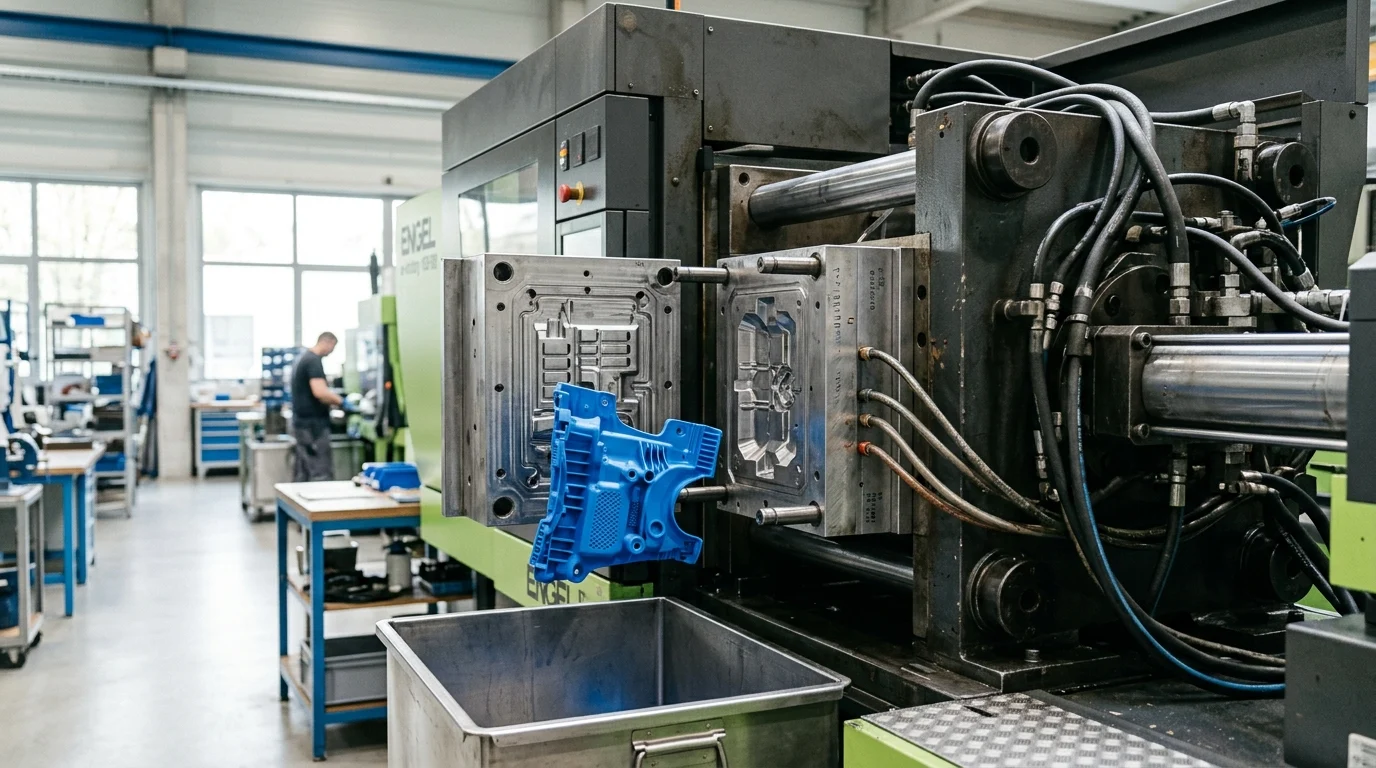
By 2026, plastic injection molding remains one of the most important production methods for industries that need tight tolerances, fast cycle times, and cost-efficient volume manufacturing. Its role is expanding as companies push for lighter components, more complex part designs, and greater automation across supply chains. This article examines which industries depend on injection molding most heavily, why their demand is growing, and what technical and commercial factors make the process so valuable. Readers will gain a clearer view of where molding delivers the strongest advantage, from large-scale consumer markets to highly regulated industrial applications.
Why Plastic Injection Molding Matters More to Industrial Buyers
As industrial supply chains evolve toward 2026, manufacturing processes must balance high-volume efficiency with stringent performance criteria. The demand for scalable, repeatable part production has elevated the strategic importance of advanced manufacturing techniques for procurement professionals and engineers alike.
Evaluating plastic injection molding is no longer just about calculating piece-part costs; it requires a comprehensive understanding of lifecycle tooling investments, material science, and process optimization.
Cost Pressure, Lightweighting, and Design Complexity
Industrial buyers face relentless pressure to reduce both component costs and overall assembly weight. Lightweighting has become a non-negotiable directive, particularly as metal-to-plastic conversion can yield weight reductions of 30% to 50% without compromising structural integrity.
Furthermore, modern molding capabilities allow for the consolidation of multiple machined metal components into a single complex plastic geometry. This design complexity reduces secondary assembly operations, lowers the bill of materials (BOM), and ultimately compresses the production timeline.
Key 2026 Market Shifts Affecting Evaluation
Several critical market shifts are reshaping how buyers evaluate molding operations in 2026. Escalating energy costs and labor shortages are driving manufacturers toward fully automated, lights-out production cells. Consequently, buyers must assess a supplier’s level of automation, as robotic part extraction and automated optical inspection (AOI) can reduce cycle times by 15% to 20%.
Additionally, the amortization of tooling costs remains a primary financial focus. With Class 101 molds designed for over 1,000,000 cycles, the initial capital expenditure—often ranging from $15,000 to $80,000—must be justified by long-term volume stability and minimized maintenance downtime.
Which Industries Rely Most on Plastic Injection Molding in 2026

By 2026, the dependency on high-volume polymer processing is heavily concentrated in sectors where precision, regulatory compliance, and scale intersect. These industries drive innovation in resin formulations and process controls.
Automotive, EV, and Mobility
The automotive sector, particularly the electric vehicle (EV) market, remains a dominant consumer of molded components. In the pursuit of extended battery range, OEMs rely heavily on engineered polymers to replace traditional metal brackets, battery enclosures, and interior structural components.
Plastics now account for approximately 15% to 20% of an EV’s total vehicle weight. The demand for specialized resins that offer high dielectric strength, thermal management properties, and flame retardancy (such as UL94 V-0 rated polycarbonates) has surged, making precision molding indispensable to modern mobility.
Medical Devices, Diagnostics, and Pharma Packaging
In the healthcare sector, the stakes for quality control dictate rigorous manufacturing standards. Medical devices, diagnostic equipment, and pharmaceutical packaging require production environments that meet ISO 13485 standards and often utilize Class VIII cleanrooms.
Components like surgical instruments, wearable drug delivery devices, and microfluidic cartridges demand exceptional dimensional stability. In this sector, manufacturers target defect rates of under 50 Parts Per Million (PPM), necessitating advanced scientific molding methodologies and real-time cavity pressure monitoring.
Consumer and Industrial Products
Beyond specialized sectors, consumer electronics and industrial products rely on molding for durable, aesthetically flawless enclosures and intricate internal mechanisms. High-volume runs exceeding 500,000 units annually are standard, requiring multi-cavity tooling and rapid cycle times.
| Industry | Common Resins | Typical MOQ | Primary Driver |
|---|---|---|---|
| Automotive & EV | PA66, PBT, PC/ABS | 25,000 units | Lightweighting & Thermal Management |
| Medical Devices | PEEK, COP, Medical-grade PC | 10,000 units | Biocompatibility & Sterilizability |
| Consumer Electronics | ABS, PC, PMMA | 50,000 units | Aesthetics & Impact Resistance |
| Industrial Gear | POM, Nylon, PPS | 15,000 units | Wear Resistance & Structural Strength |
This high-volume output relies heavily on robust mold designs and optimized cooling channels to maintain consistent part geometry across millions of cycles.
How to Compare Plastic Injection Molding Across Applications
Comparing molding applications requires a deep dive into the specific operational environments and regulatory frameworks of the end products. Buyers must align their sourcing strategy with the exact technical requirements of their respective industries.
Part Requirements by Sector
Part requirements vary drastically across sectors. A consumer appliance housing may tolerate dimensional variations of ±0.005 inches, focusing primarily on surface finish and color matching. In contrast, aerospace and medical components often require tight tolerances of ±0.001 to ±0.002 inches.
These stringent requirements dictate the choice of resin, the complexity of the mold, and the necessary tonnage of the injection press. High-temperature resins like PEEK or Ultem, common in aerospace, require specialized equipment capable of maintaining extreme barrel and mold temperatures.
Industry Comparison by Volume and Compliance
Understanding the interplay between production volume and compliance is essential for accurate cost forecasting and supplier selection.
| Sector | Regulatory Standard | Defect Tolerance | Avg. Tooling Life Expectancy |
|---|---|---|---|
| Medical | FDA CFR 21 / ISO 13485 | < 50 PPM | 1,000,000+ cycles (Class 101) |
| Automotive | IATF 16949 | < 100 PPM | 500,000 – 1,000,000 cycles |
| Industrial | ISO 9001 | < 500 PPM | 250,000 – 500,000 cycles |
| Consumer | RoHS / REACH | < 1,000 PPM | 100,000 – 250,000 cycles |
Sectors with strict compliance mandates necessitate higher upfront investments in mold validation (IQ/OQ/PQ processes) and extensive documentation, which can extend lead times but drastically reduce long-term production risks.
When Injection Molding Beats CNC
Procurement teams frequently weigh the benefits of molding against CNC machining. CNC machining excels in low-volume scenarios, typically under 500 to 1,000 units, where avoiding upfront tooling costs is advantageous.
However, the crossover point where plastic injection molding becomes more economical usually occurs between 2,000 and 5,000 units, depending on part complexity. At volumes of 10,000+ units, the economies of scale take over, driving the per-part cost down to fractions of a dollar, whereas CNC per-part costs remain relatively static over high volumes.
How Buyers Should Assess Sourcing, Compliance, and Production Risk
Mitigating risk in the supply chain requires rigorous supplier evaluation, a clear understanding of geographic logistics, and uncompromising adherence to regulatory documentation.
How to Qualify a Supplier
Qualifying a supplier goes beyond reviewing a quote. Buyers must evaluate the facility’s machine tonnage range—typically spanning from 50 tons for micro-molding to 1,500+ tons for large automotive panels—to ensure capacity aligns with the product portfolio.
Furthermore, assessing a supplier’s internal tooling maintenance capabilities, financial stability, and historical overall equipment effectiveness (OEE) provides insight into their ability to sustain high-yield production over the multi-year lifecycle of a program.
Regional Manufacturing and Logistics Risks
The decision between domestic, nearshore, and offshore manufacturing heavily impacts logistics and lead times. Offshore tooling often presents a 30% to 40% cost reduction but can extend mold-building lead times to 6 to 10 weeks, plus an additional 3 to 4 weeks for ocean freight.
Conversely, localized production minimizes transit risks and tariffs, offering greater supply chain resilience. In 2026, many industrial buyers are adopting a hybrid approach: sourcing complex, high-maintenance molds domestically while directing lower-complexity, high-volume commodity parts to cost-competitive overseas regions.
Critical Compliance and Documentation Issues
Compliance documentation is the backbone of risk mitigation. Suppliers must provide comprehensive material certifications, ensuring resins comply with RoHS, REACH, or specific FDA regulations.
Traceability down to the raw material lot number is critical. A robust quality management system (QMS) must track process parameters—such as injection pressure, melt temperature, and cooling time—for every batch, ensuring that any deviations are caught before non-conforming parts enter the supply chain.
How to Decide Whether Plastic Injection Molding Is the Right
Ultimately, selecting the optimal manufacturing process requires a systematic evaluation of part geometry, anticipated production volumes, and specific material performance criteria.
Decision Criteria: Geometry, Volume, and Material
The technical feasibility of molding is heavily dependent on geometry. Optimal designs feature uniform wall thicknesses—typically between 1.2mm and 3.0mm—to prevent sink marks and warping during the cooling phase. Adequate draft angles of 1 to 2 degrees are mandatory to ensure clean ejection from the mold cavity.
Volume dictates the tooling investment strategy. A $50,000 multi-cavity hardened steel tool is justified for high volumes, while a $5,000 aluminum tool may suffice for bridge production. For comprehensive design rules, engineers often reference specialized plastic injection molding technical documentation to align part features with process capabilities.
Key Takeaways for Industrial Buyers
For industrial buyers looking toward 2026, the focus must shift from unit cost to Total Cost of Ownership (TCO). This encompasses tooling longevity, defect rates, logistics, and the strategic value of the supplier partnership.
By rigorously aligning technical specifications with vendor capabilities and regulatory requirements, procurement professionals can secure resilient, cost-effective, and high-quality supply chains capable of supporting the next generation of industrial and consumer innovation.
Further reading:
Key Takeaways
- The most important conclusions and rationale for plastic injection molding
- Specs, compliance, and risk checks worth validating before you commit
- Practical next steps and caveats readers can apply immediately
Frequently Asked Questions
Which industries rely most on plastic injection molding in 2026?
Automotive and EV, medical devices and pharma packaging, consumer electronics, and industrial equipment lead demand due to volume, precision, and compliance needs.
Why is injection molding especially important for EV components?
It helps reduce vehicle weight, combine multiple parts into one, and support flame-retardant, electrically insulating materials used in battery and interior systems.
What should buyers compare when sourcing injection molded parts?
Check tooling life, automation level, resin suitability, dimensional stability, defect rate targets, and whether the supplier can support your required annual volume.
What production volumes usually justify injection molding?
It is most cost-effective for medium to high volumes, often starting around 10,000 to 50,000 units depending on tooling cost, part complexity, and material.
Can NBPM Plastic support industry-specific injection molding needs?
Yes, NBPM Plastic can help evaluate resin options, tooling strategy, and production requirements for automotive, medical, consumer, and industrial plastic parts.
Post time: Jun-14-2026