
Introduction
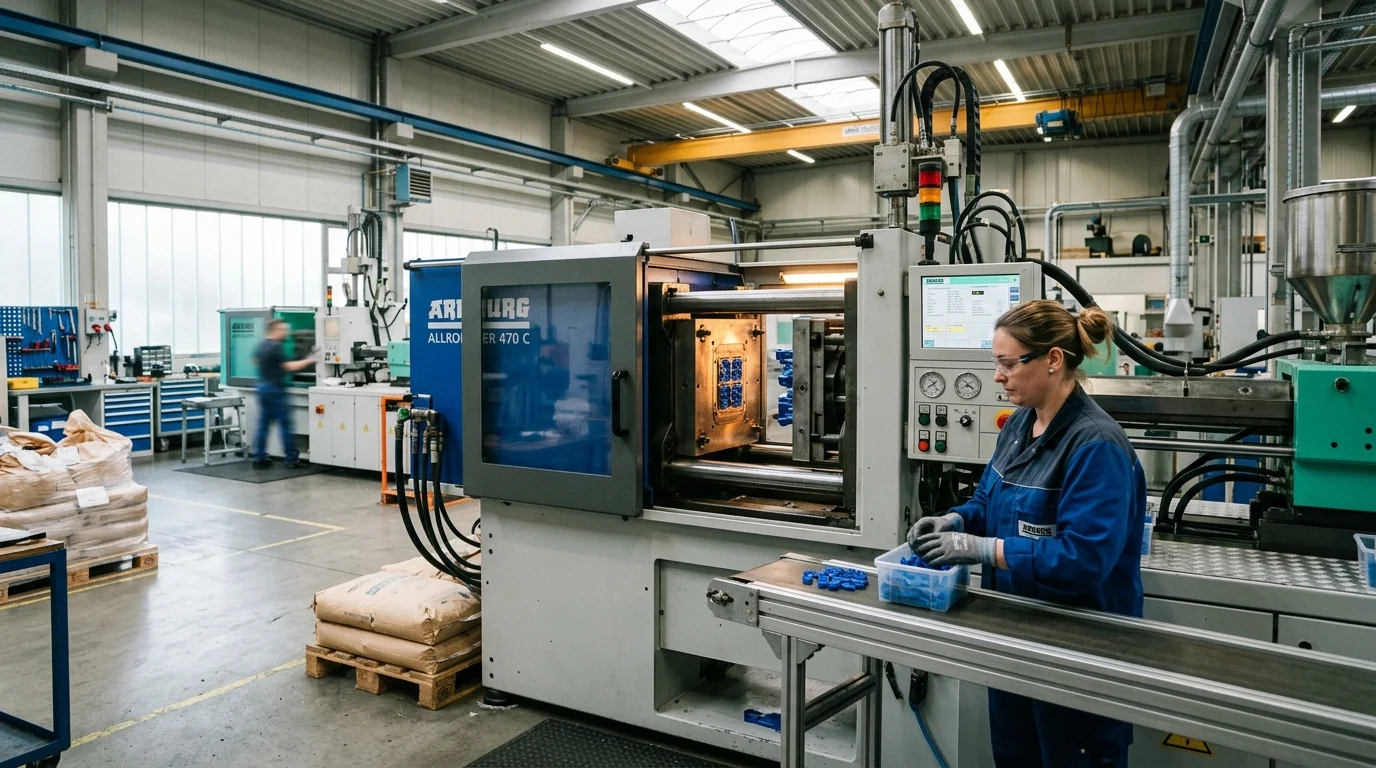
Choosing a plastic injection factory affects far more than part production: it shapes tooling quality, unit cost, lead times, and the consistency of every shipment. A capable supplier can help refine designs for manufacturability, control defects, and scale output without disrupting delivery schedules, while a weak one can create expensive delays and quality problems. This article explains the practical criteria that matter most when evaluating a factory, including engineering support, mold capability, quality systems, material expertise, production capacity, and communication. By the end, you will have a clear framework for comparing suppliers and identifying a partner that can support both launch and long-term growth.
Why the Right Plastic Injection Factory Matters
Partnering with a professional plastic injection factory is one of the most consequential decisions a hardware company can make. The chosen manufacturing partner dictates not only the physical realization of a design but also the long-term unit economics and market readiness of the product. An inadequate supplier can derail product launches, whereas a highly capable partner accelerates time-to-market and scales seamlessly alongside business growth.
Impact on total cost and product quality
The financial implications of selecting the right plastic injection factory extend far beyond the initial piece-price quote. Tooling represents a significant capital expenditure, often ranging from $10,000 for simple, single-cavity prototype molds to well over $100,000 for complex, multi-cavity hardened steel production molds. A sophisticated manufacturing partner will optimize mold cooling channels and runner systems, which can reduce cycle times by 15% to 20%. Over a production run of millions of parts, saving just two seconds per cycle translates into massive cost reductions and higher output yields.
Business risks of choosing the wrong supplier
Conversely, settling for an unverified supplier introduces severe business risks. Factories lacking rigorous process controls often struggle with consistency, leading to defect rates exceeding 3% and subsequent supply chain bottlenecks. Beyond part quality, intellectual property (IP) theft remains a critical vulnerability if the factory does not enforce strict non-disclosure frameworks and compartmentalized production. Furthermore, a manufacturer with poor financial health may face unexpected bankruptcy or raw material lockouts, instantly halting product lines and causing devastating stockouts during peak retail seasons.
Key Factory Capabilities to Evaluate
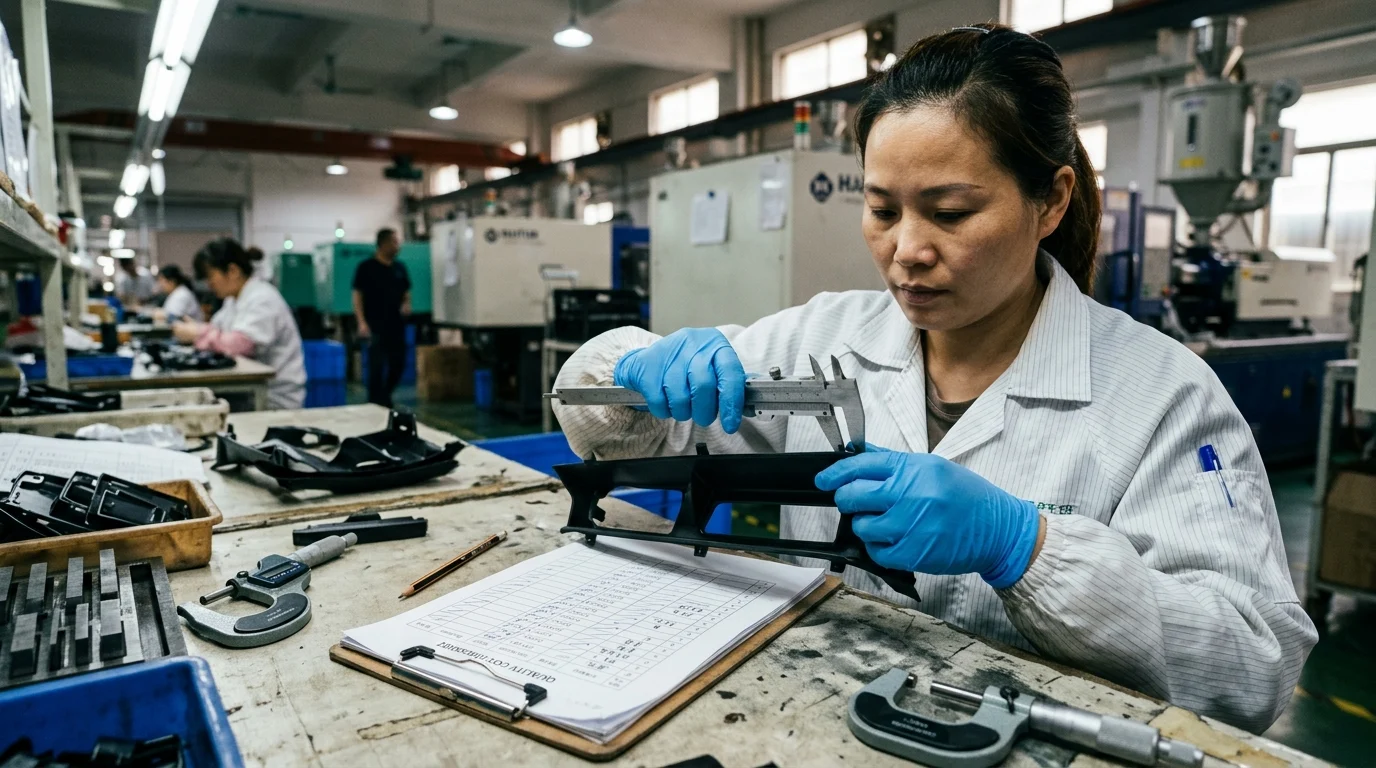
A thorough evaluation of a factory’s technical infrastructure separates premier manufacturers from rudimentary job shops. Buyers must verify that the facility’s hardware and engineering resources align directly with the specific requirements of the product portfolio.
Molding, tooling, materials, and secondary operations
The core of any injection molding operation is its press fleet. Evaluating the machine tonnage—which typically ranges from 50 tons for small precision components to 3,000+ tons for large automotive fascias—ensures the factory can handle the required part dimensions. Additionally, buyers should assess material handling systems, such as desiccant dryers and automated blenders, which are critical for processing engineering-grade resins. Secondary operations, including ultrasonic welding, insert molding, and automated pad printing, are also essential for producing fully finished products without relying on third-party subcontractors.
| Machine Tonnage | Typical Part Weight Range | Example Applications |
|---|---|---|
| 50 – 150 Tons | 0.1 oz – 4 oz | Connectors, gears, medical valves |
| 200 – 400 Tons | 4 oz – 16 oz | Consumer electronics housings, small tools |
| 500 – 1,000 Tons | 1 lb – 4 lbs | Appliance panels, automotive interior trim |
| 1,500+ Tons | 5 lbs+ | Bumpers, large storage bins, pallets |
Engineering support and design for manufacturability
Early-stage engineering support is a hallmark of a professional supplier. Design for Manufacturability (DFM) reviews help identify problematic geometries before steel is cut, saving thousands of dollars in tool modification costs. Competent engineers will mandate minimum draft angles of 1 to 2 degrees to prevent part ejection issues and ensure wall thickness uniformity to mitigate sink marks and warpage. This collaborative engineering phase drastically reduces the lead time from initial design to the first viable prototype.
Production capacity, maintenance, and automation
Consistent output relies heavily on production capacity and equipment maintenance. Top-tier factories monitor their Overall Equipment Effectiveness (OEE), targeting benchmarks above 85% to ensure maximum uptime. Preventative maintenance schedules for both the injection presses and the molds are vital; a mold rated for 1,000,000 shots will only reach that lifespan with regular cleaning and lubrication. Furthermore, the integration of 3-axis or 6-axis robotics for part extraction minimizes human handling errors and standardizes cycle times.
Quality Systems and Compliance Checks
Technical capability must be governed by stringent quality management systems. A professional facility builds quality into the manufacturing process rather than relying on final sorting to catch defective parts.
Quality control, inspection, and traceability
Advanced quality control requires specialized metrology equipment. Coordinate Measuring Machines (CMM) and optical vision systems verify that complex geometries remain within tight tolerances, often down to +/- 0.05 mm. Traceability is equally critical; a robust system will track every batch of finished goods back to the specific resin lot and machine operator. During production, acceptable quality limit (AQL) standards—frequently set at AQL 1.0 for major defects and 0.65 for critical tolerances—dictate the sampling frequency and inspection rigor required to release a batch.
Certifications and regulatory compliance
Regulatory compliance serves as an objective baseline for factory reliability. General manufacturing operations should hold at minimum an active ISO 9001 certification. Specialized industries require stricter oversight, such as ISO 13485 for medical devices or IATF 16949 for automotive components. Buyers must also verify that the factory adheres to environmental and chemical regulations, such as RoHS and REACH, ensuring that no banned substances contaminate the final plastic parts. Reviewing formal download portals and documentation caches for up-to-date certificates is a mandatory due diligence step.
| Certification | Industry Focus | Key Requirement |
|---|---|---|
| ISO 9001 | General Manufacturing | Standardized quality management systems |
| ISO 13485 | Medical Devices | Traceability, risk management, and sterile controls |
| IATF 16949 | Automotive | Defect prevention and supply chain variation reduction |
| ISO 14001 | Environmental | Waste reduction and environmental impact management |
Using a supplier scorecard for comparison
To objectively compare multiple facilities, procurement teams should implement a standardized supplier scorecard. This matrix quantifies factory performance across several weighted categories. A standard distribution might allocate 40% to quality history and defect rates, 30% to total landed cost, 20% to on-time delivery performance, and 10% to communication and technical support. By reducing subjective impressions to hard numerical scores, buyers can confidently defend their sourcing decisions and benchmark factory progress year over year.
Commercial and Supply Chain Review
The commercial framework binding the buyer and the factory dictates the financial viability of the production run. Clear contracts and resilient supply chains are just as critical as the physical molding capabilities.
Tooling ownership, pricing, and order terms
Tooling ownership is a frequent point of contention in injection molding agreements. Contracts must explicitly state that the buyer retains full ownership of the mold and can transfer it at will, preventing “hostage” situations. Standard payment terms for tooling typically follow a 50/30/20 structure: 50% upfront, 30% upon approval of T1 samples, and 20% after the final production run validation. Additionally, buyers must negotiate Minimum Order Quantities (MOQs). While a high-volume factory might demand an MOQ of 50,000 units, specialized custom molders may accept runs as low as 1,000 units, albeit at a higher piece price.
Supply resilience and raw material sourcing
Supply chain resilience ensures production continues during macroeconomic disruptions. Factories must demonstrate reliable raw material sourcing networks, particularly for highly specified engineering resins like PEEK or custom-compounded polycarbonates. Best-in-class manufacturers establish buffer stock agreements, maintaining 30 to 60 days of raw material inventory to insulate against sudden petrochemical shortages, port strikes, or shipping bottlenecks.
Domestic, nearshore, and offshore logistics differences
Geographic location heavily influences logistics, lead times, and total landed costs. Offshore manufacturing generally offers lower piece prices but introduces transit times of 4 to 6 weeks via ocean freight, along with potential tariff burdens. Nearshore options reduce transit to 1 to 2 weeks and allow for easier site visits, while domestic production offers transit times measured in days and highly responsive communication. Buyers must calculate the total landed cost—factoring in freight, duties, and the cost of capital tied up in inventory—rather than relying solely on the factory’s Ex Works (EXW) quote.
How to Make the Final Supplier Decision
Transitioning from the evaluation phase to a final partnership requires practical validation. Paper audits and initial quotes must be backed by physical evidence of capability and a clear understanding of long-term value.
Factory audits, sampling, and qualification steps
The qualification process involves rigorous factory audits and systematic sampling. After tooling is cut, the factory produces T1 (first trial) samples. These rarely meet all cosmetic and dimensional requirements but prove the mold functions under pressure. Subsequent T2 and T3 iterations refine the process parameters until First Article Inspection (FAI) approval is achieved. During this phase, buyers should request statistical process control data; a Process Capability Index (Cpk) greater than 1.33 indicates that the factory’s injection process is stable and highly capable of remaining within specification limits during mass production.
Balancing price, technical fit, and long-term reliability
Ultimately, the final decision requires balancing upfront pricing against technical fit and long-term reliability. Focusing exclusively on the lowest quote is a well-documented procurement trap. A supplier offering a piece price that is 10% cheaper may ultimately cost the business 20% more in the long run due to excessive downtime, high scrap rates, and delayed product launches. By holistically evaluating a factory’s engineering depth, quality management systems, and commercial transparency, hardware teams can secure a manufacturing partner capable of scaling with their business for years to come.
Further reading:
Key Takeaways
- The most important conclusions and rationale for plastic injection factory
- Specs, compliance, and risk checks worth validating before you commit
- Practical next steps and caveats readers can apply immediately
Frequently Asked Questions
What capabilities should a professional plastic injection factory have?
Check press tonnage range, in-house tooling, DFM support, engineering-grade material handling, and secondary operations like insert molding or printing.
Why is DFM review important before mold production?
DFM catches draft, wall-thickness, and ejection issues early, reducing mold rework, defects, and delays before steel is cut.
How can I verify a factory’s quality control system?
Ask about inspection equipment, in-process checks, traceability, defect-rate records, and whether quality is controlled during production, not only at final sorting.
What production factors affect cost and delivery most?
Cycle time, mold design, maintenance, automation, and uptime matter most. Efficient cooling and stable processes lower unit cost and improve delivery reliability.
What should buyers check on nbpm-plastic.com when evaluating a supplier?
Review the About page, machine tonnage and product scope, downloadable DFM resources, and whether services cover tooling, molding, and finishing in one factory.
Post time: Jun-12-2026