
Introduction
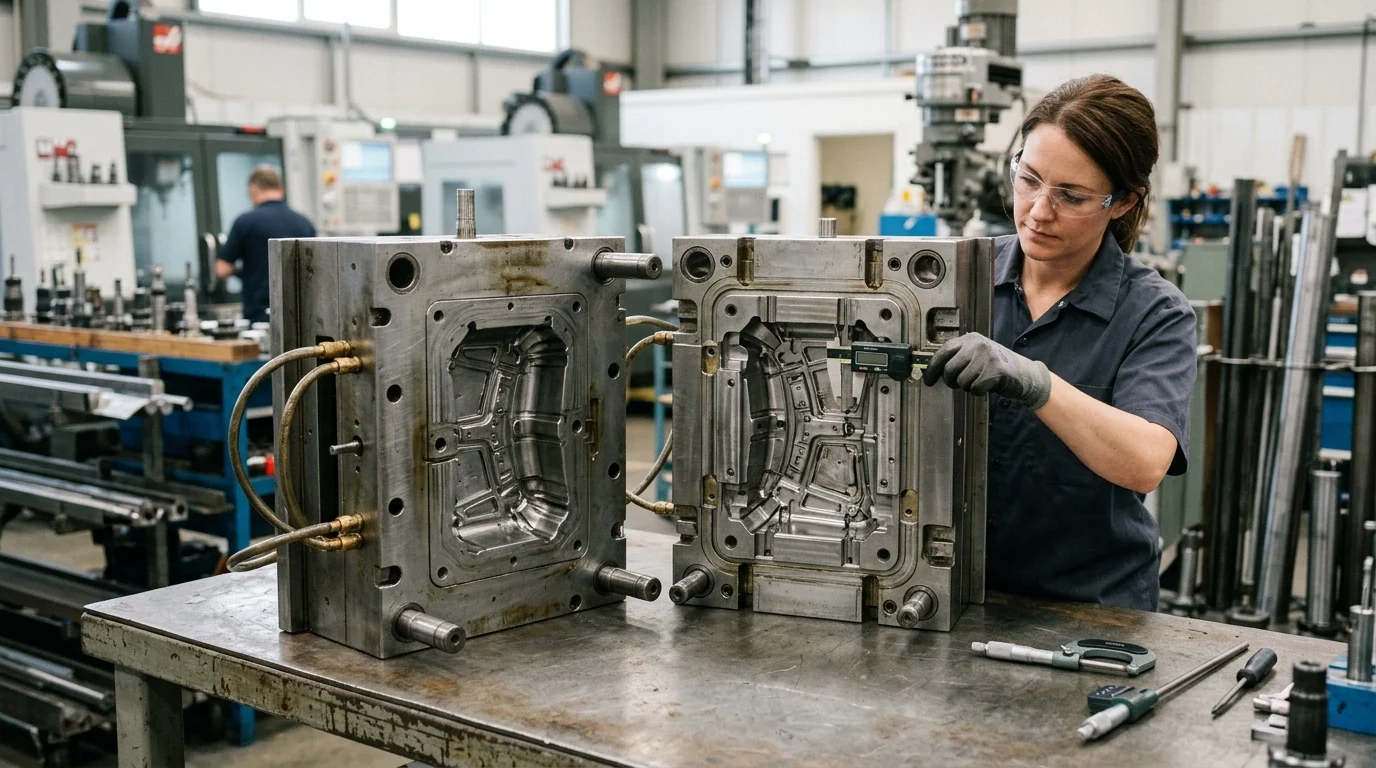
For OEM teams entering a new product cycle in 2026, the mold behind each plastic part often determines whether launch plans stay on budget, on schedule, and at quality targets. Beginners need a practical view of how mold manufacturing works before approving tooling, because choices made early in design affect cost, lead time, manufacturability, and future production scale. This article explains the basics that matter most: how part geometry influences tool complexity, what drives quoting and timelines, where common risks appear, and how to evaluate a supplier with fewer surprises during sampling and mass production.
Why Plastic Mold Manufacturing Matters for OEM Projects
For Original Equipment Manufacturers (OEMs) launching new hardware in 2026, securing reliable production infrastructure is a foundational step. At the core of most consumer and industrial hardware is the tooling required to shape polymer components. This infrastructure represents a significant upfront capital expenditure and sets the baseline for product quality, scalability, and long-term profitability.
Understanding the nuances of plastic mold manufacturing enables procurement and engineering teams to align their financial constraints with technical requirements, ensuring that the transition from digital CAD files to physical products occurs smoothly.
Cost, speed, and complexity drivers
Tooling typically accounts for 60% to 80% of the initial capital expenditure for a new plastic product launch. The cost is driven heavily by the complexity of the part design, the expected production volume, and the geographic location of the toolmaker. Lead times for standard tooling range from 4 to 12 weeks, making it one of the longest critical-path items in a product development schedule.
Complexity drivers such as side actions, lifters, and overmolding capabilities add distinct layers of engineering time and machining hours. For example, a simple two-plate mold for a flat enclosure might cost $5,000 and take 30 days to mill, whereas a multi-cavity tool with hot runners and complex slider mechanisms for a medical device housing can easily exceed $40,000 and require 10 weeks of fabrication.
Common beginner assumptions
A pervasive assumption among beginners is that the cheapest mold quotation will automatically result in the most cost-effective project. In reality, under-engineered molds frequently suffer from poor thermal management, leading to extended cooling times. A cycle time that balloons from 15 seconds to 45 seconds drastically inflates the per-unit part cost during mass production.
Another common misconception is that a completed mold is universally compatible with any injection machine globally. Tooling is built to specific machine tonnages, tie-bar spacing, and locating ring dimensions. Failing to specify the intended production facility’s exact machine parameters before steel is cut can result in costly modifications ranging from $1,000 to $3,000 just to make the tool operational.
Key Plastic Mold Manufacturing Specifications
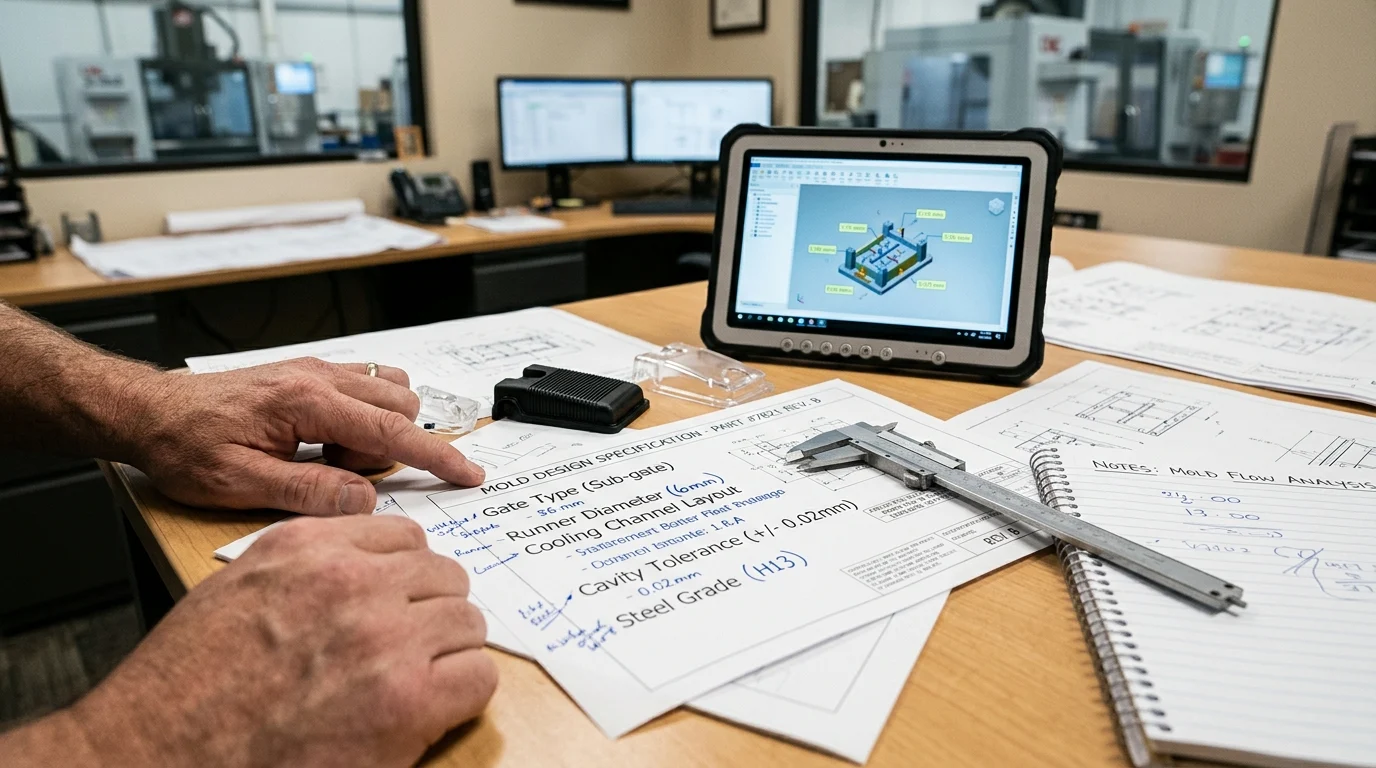
Translating a product concept into a physical mold requires rigorous specification management. Technical oversights during this phase compound into severe defects during high-volume manufacturing.
Design inputs, resin, and tolerances
The baseline for any mold build is a robust 3D CAD model and a defined resin choice. Different polymers exhibit varying shrink rates as they cool; for instance, standard ABS shrinks between 0.4% and 0.8%, while semi-crystalline materials like POM (Delrin) can shrink between 1.5% and 2.0%. The toolmaker must scale the mold cavity to account for this exact shrinkage.
Tolerance specifications dictate the precision of the mold machining. While a standard commercial tolerance of +/- 0.05 mm is achievable with conventional CNC milling, tighter tolerances of +/- 0.01 mm for aerospace or medical components necessitate slower, high-precision Electrical Discharge Machining (EDM), which increases tooling costs by 20% to 40%.
Steel, cavity count, and runner systems
The selection of tool steel and the design of the runner system dictate the tool’s lifespan and the project’s material efficiency. Multi-cavity molds increase upfront costs but drastically lower the unit price by producing multiple parts per cycle.
| Specification Element | Standard Option | Premium Option | Cost Impact | Typical Application |
|---|---|---|---|---|
| Core/Cavity Steel | P20 (Pre-hardened) | H13 or S136 (Hardened) | +30% to +50% | P20 for <100k shots; H13 for 1M+ shots |
| Runner System | Cold Runner | Hot Runner | +$2,000 to $10,000+ | Hot runners eliminate plastic waste in high volumes |
| Cavity Count | Single Cavity | Multi-Cavity (e.g., 4, 8, 16) | Varies linearly | High-volume consumer goods |
Prototype vs production molds
OEMs must decide whether to invest in prototype tooling or proceed directly to production tooling. Prototype molds, often classified as Class 103 or Class 104 tools, are machined from aluminum or mild steel. They are designed to survive 1,000 to 10,000 cycles, offering a fast and inexpensive way to validate a market before committing heavy capital.
Conversely, Class 101 production molds are built from hardened steel to withstand over 1,000,000 cycles without degrading. While prototype tooling can be fabricated in as little as 10 to 15 days, production-grade plastic mold manufacturing demands rigorous cooling channel optimization and surface treatments, pushing lead times beyond 8 weeks.
How to Evaluate Plastic Mold Manufacturing Suppliers
The supplier selection process requires a balance of technical auditing, financial negotiation, and strategic geographic positioning. A supplier’s ability to cut steel is secondary to their ability to engineer a flawless process.
Technical and DFM capabilities
A capable supplier will never accept a CAD file without conducting a Design for Manufacturability (DFM) review. This process utilizes mold flow simulation software to predict how molten plastic will fill the cavities, identifying potential sink marks, weld lines, or trapped air before machining begins.
OEMs should expect a comprehensive DFM report that suggests draft angle adjustments (typically recommending 1 to 2 degrees minimum) and wall thickness uniformities. Engaging suppliers with strong in-house DFM capabilities can reduce post-trial defect rates by 15% to 30%, saving weeks of rework.
Quotes, ownership, and revisions
Tooling quotations must be meticulously itemized. Beginners often encounter hidden fees if terms regarding mold ownership and export readiness are not negotiated upfront. The contract must explicitly state that the OEM owns the intellectual property and the physical mold upon final payment.
Furthermore, standard contracts should include clauses for tool revisions. It is standard industry practice to include 1 to 3 rounds of minor T1 (first trial) revisions within the initial quoted price. Without this clause, suppliers may charge exorbitant hourly rates for necessary tuning adjustments.
Domestic vs offshore sourcing
The decision between domestic and offshore sourcing hinges on budget constraints and timeline flexibility. Offshore mold makers, particularly in industrial hubs across Asia, can often produce tooling at a 30% to 50% discount compared to Western counterparts due to lower labor overhead and localized steel supply chains.
However, offshore sourcing introduces logistical delays. If the mold is intended for export to a domestic injection facility, ocean freight adds 4 to 6 weeks to the timeline. Domestic sourcing offers superior intellectual property protection and faster iterative communication, which is crucial for highly complex or classified OEM projects.
Quality, Compliance, and Logistics Risks
Once a supplier is selected and manufacturing commences, OEMs must implement strict oversight to mitigate risks related to part quality, regulatory compliance, and long-term asset maintenance.
Quality control and trial milestones
The trial phase is governed by standardized milestones: T0, T1, and T2. The T0 trial is the first time plastic is shot into the mold, usually yielding incomplete parts used solely to check machine function. The T1 trial is the critical milestone where OEMs receive the first complete samples. T1 parts typically achieve 80% to 90% dimensional accuracy.
OEMs must physically or virtually inspect these samples against the original 2D drawings. Approval of T1 or T2 samples locks the mold design. Buyers should request comprehensive inspection reports, often available through specific plastic mold manufacturing client portals, detailing the Coordinate Measuring Machine (CMM) data for critical dimensions.
Compliance and traceability requirements
For OEMs in regulated sectors such as automotive, medical, or food services, the mold and the resulting parts must meet strict compliance standards. Suppliers must operate under ISO 9001:2015 quality management systems as a baseline. Medical device components may further require ISO 13485 certification and cleanroom molding environments.
Traceability is equally critical. The toolmaker must provide authentic steel certificates verifying the grade of the metal used, alongside Material Safety Data Sheets (MSDS) and RoHS/REACH compliance declarations for the injected resins to prevent legal liabilities during product distribution.
Shipping, maintenance, and spare parts
Molds are heavy industrial assets; a standard multi-cavity tool can weigh over 1,500 kg. If the tool is being exported, it requires specialized vacuum sealing and custom wooden crating to prevent rust and impact damage during transit.
Once in production, preventative maintenance is mandatory. A standard maintenance schedule involves cleaning parting lines and greasing ejector pins every 10,000 cycles, with a major teardown and inspection every 50,000 cycles. OEMs should negotiate a spare parts package with the initial build, securing extra ejector pins, springs, and O-rings to minimize downtime during mass production.
A Practical OEM Decision Process
Navigating the complexities of tooling procurement requires a standardized, objective framework to evaluate options, mitigate risks, and finalize supplier partnerships.
Step-by-step sourcing process
A disciplined sourcing protocol begins with a mutual Non-Disclosure Agreement (NDA), followed by distributing a detailed Request for Quote (RFQ) to three to five vetted suppliers. The RFQ must include 3D CAD files, 2D drawings with tolerances, annual volume projections, and resin specifications.
Upon receiving quotes, the OEM conducts a DFM review with the top two candidates. Once a supplier is chosen, the tooling kickoff is initiated with a deposit. The process then moves through the T1 and T2 trial phases, culminating in final sample approval and the commencement of pilot production runs.
Warning signs in supplier selection
Beginners must be vigilant for supplier red flags. A major warning sign is a supplier who refuses to share the 3D mold design files for independent review, which often indicates outsourced engineering or substandard cooling layouts.
Unorthodox payment terms are another red flag. The industry standard payment structure is typically 40% to 50% upfront, 30% upon delivery of T1 samples, and the final 20% to 30% upon final sample approval. Suppliers demanding 100% upfront payment pose a severe financial risk and should be avoided.
Final decision criteria
The final decision should never be based on tooling cost alone. A holistic evaluation matrix ensures that the chosen partner aligns with the OEM’s long-term commercial goals.
| Evaluation Criteria | Recommended Weight | Key Performance Indicator (KPI) |
|---|---|---|
| Technical Capability | 35% | Quality of DFM report, in-house machinery, tolerances achieved |
| Total Cost of Ownership | 30% | Tooling cost + projected unit part cost + maintenance fees |
| Lead Time Reliability | 20% | Historical on-time delivery rate, realistic Gantt chart provision |
| Communication & Support | 15% | English proficiency, response time, willingness to revise designs |
By prioritizing total cost of ownership and technical transparency over initial sticker price, OEMs can build resilient supply chains. Investing in high-quality tooling infrastructure ultimately reduces per-unit costs, minimizes production bottlenecks, and secures a competitive advantage in the 2026 hardware market.
Further reading:
Key Takeaways
- The most important conclusions and rationale for plastic mold manufacturing
- Specs, compliance, and risk checks worth validating before you commit
- Practical next steps and caveats readers can apply immediately
Frequently Asked Questions
What files should beginners send for a plastic mold quote?
Provide 3D CAD files, 2D drawings with tolerances, resin grade, finish needs, and annual volume. On NBPM projects, these details help confirm shrinkage, cavity layout, and mold feasibility early.
How do I choose between a prototype mold and a production mold?
Use a prototype mold for testing or low volumes up to about 10,000 shots. Choose hardened steel production tooling when your OEM project needs stable quality and long service life.
Why isn’t the lowest mold price always the best option?
A cheaper mold can increase cycle time, scrap, and maintenance costs. Compare cooling design, steel grade, expected mold life, and support after sampling before approving a supplier.
What machine details must be confirmed before mold manufacturing starts?
Confirm injection machine tonnage, tie-bar spacing, locating ring size, nozzle specs, and ejection requirements. This avoids costly mold modifications after steel cutting and speeds production startup.
How does resin choice affect mold design?
Each plastic has different shrinkage, flow, and temperature behavior. Finalize the exact resin grade early so the toolmaker can size cavities correctly and reduce warpage, flash, or dimensional issues.
Post time: Jun-14-2026