
- Injection molding is the most efficient choice for repeatable e-commerce products with stable demand.
- OEM plastic products are best when you need brand-owned specs, packaging, and consistent reorders.
- Custom plastic products become more profitable when tooling cost is spread across enough units.
- Material choice affects clarity, impact resistance, stiffness, and shipping durability.
- One-stop mold and finished-part supply reduces coordination risk and shortens launch timelines.
Plastic product manufacturing is often the most cost-effective path for e-commerce sellers because it converts a digital concept into a repeatable, shippable product with measurable tolerances and predictable unit economics; for example, injection molding can hold dimensional accuracy in the range of about ±0.005 mm on precision systems, while general commercial tolerances are typically wider depending on geometry and material, as reflected in ISO 20457:2018 and related molding practice. If you are comparing OEM plastic products, custom plastic products, and hybrid development services, the real question is not which process is cheaper on paper, but which supplier can protect your launch schedule, reduce defect risk, and support reorder stability across channels. For sellers in consumer electronics, home goods, toys, or accessories, the best-fit service is usually one that combines injection mold development, plastic housings, and custom plastic parts under one production plan.
Why plastic product manufacturing services matter for e-commerce sellers
Plastic product manufacturing matters because e-commerce winners need repeatability more than novelty.
Online sellers often start with design appeal, but scale depends on manufacturing discipline: stable dimensions, low scrap, predictable lead times, and packaging that survives freight handling. In many injection-molded programs, the tooling cost is front-loaded while the per-unit cost falls sharply once volume rises, which is why OEM plastic products can outperform small-batch hand assembly after the first successful launch. In practical terms, sellers are not buying a part; they are buying a production system.
That system becomes critical when a product needs to pass through listing photos, customer reviews, warehouse handling, and repeat replenishment. A cosmetic flaw that is acceptable in a prototype can become a return driver at scale. For that reason, the strongest plastic product manufacturing services are usually those that include design-for-manufacturing review, mold steel selection, gate and vent planning, and process-window control before mass production begins.
What plastic product manufacturing services are best for e-commerce sellers?
The best services are the ones that match your product’s launch stage, sales velocity, and quality risk.
For most e-commerce sellers, the highest-value service stack is:
- DFM review to identify wall thickness, draft, undercuts, and assembly risks.
- Prototype or pilot tooling to validate fit, finish, and packaging before full investment.
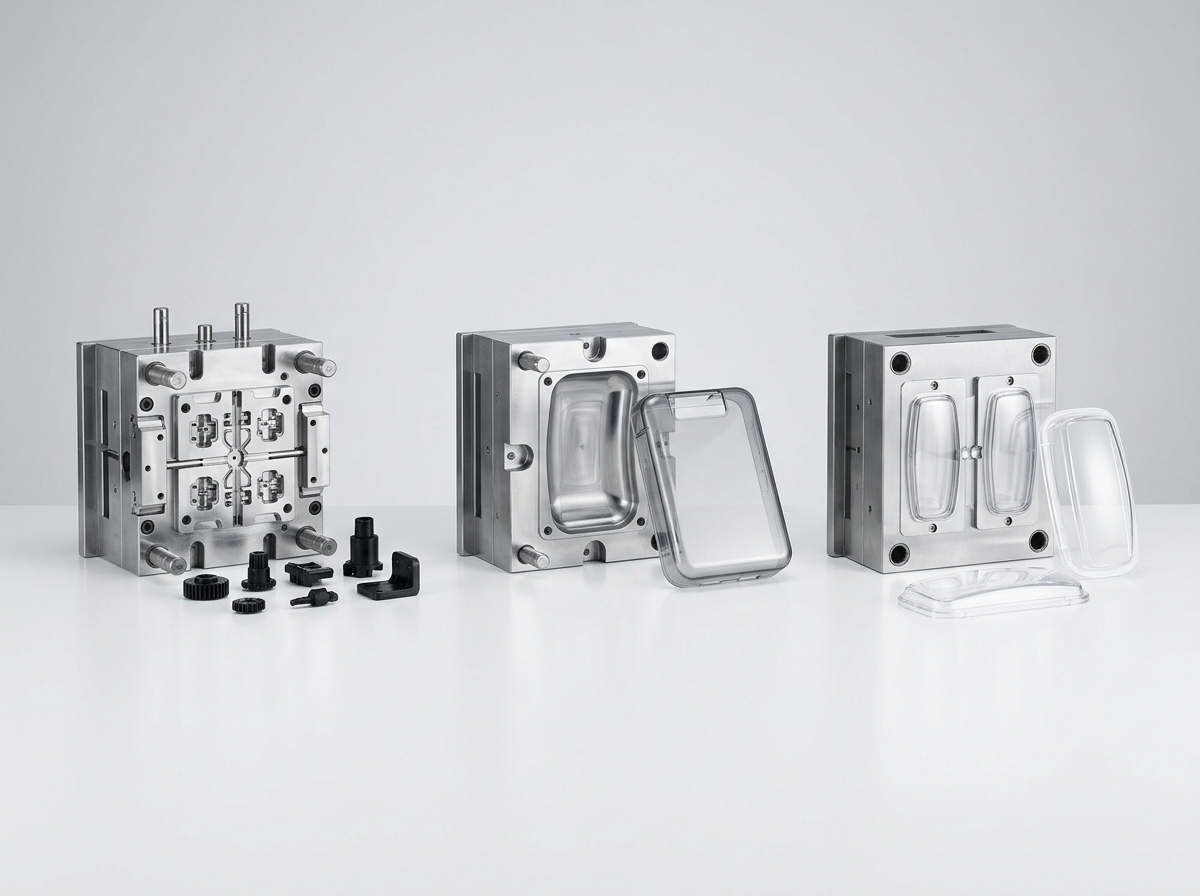
- Injection mold development for repeatable OEM plastic products.
- Mass production support with process parameters locked for reorder stability.
- Inspection and export packing to protect margin and reduce arrival defects.
When sellers ask whether they need a factory, supplier, or ODM partner, the answer depends on design ownership. If you already own the design, OEM plastic products are usually the best route. If you need concept support, a supplier with engineering input can reduce risk. If the part is highly differentiated, custom plastic products with tooling development are usually better than buying generic stock items.
| Service type | Best for | Typical lead time | Typical commercial value |
|---|---|---|---|
| DFM review | Early-stage launch risk reduction | 2 to 7 days | Lower redesign and tooling correction cost |
| Prototype tooling | Fit, feel, and market testing | 1 to 3 weeks | Faster validation before mass tooling |
| Injection molding | Repeatable OEM plastic products | 4 to 8 weeks for tooling, then production | Best unit economics at scale |
| Assembly and packaging | Retail and marketplace readiness | Depends on SKU complexity | Lower fulfillment friction |
 OEM plastic products vs custom plastic products for marketplace growth
OEM plastic products are usually the safer choice when the selling proposition is already proven.
For marketplace sellers, OEM means you control the specification, branding, packaging, and reorder plan while the supplier manufactures to your requirements. This works well for repeat SKUs such as housings, organizers, clips, covers, and protective shells. Custom plastic products are a better fit when the design must be unique enough to support a new product category, patent strategy, or stronger brand differentiation.
A useful rule is simple: if the product must look and feel like a branded consumer item, OEM plastic products are enough; if the product must solve a unique user problem or fit a specific device, custom plastic products usually deserve the tooling investment. Sellers who skip this distinction often end up overpaying for customization that the market did not need, or underinvesting in differentiation that the market expected.
| Decision factor | OEM plastic products | Custom plastic products |
|---|---|---|
| Design ownership | You provide the spec | You define unique geometry |
| Tooling complexity | Moderate | Moderate to high |
| Brand differentiation | Medium | High |
| Launch risk | Lower | Higher, but potentially more defensible |
| Best channel fit | Reorder-driven e-commerce | Innovation-led e-commerce |
Why injection molding is the core process behind scalable plastic product manufacturing
Injection molding is the backbone of scalable plastic product manufacturing because it produces consistent parts at high cycle efficiency.
The process works by heating polymer pellets, injecting the melt into a cavity, cooling the part, and ejecting it under controlled conditions. The strength of the method is not just speed; it is repeatability. For a seller, repeatability protects listing quality, reduces returns, and stabilizes supplier performance across multiple production runs.
For consumer products, cycle time often matters as much as geometry. A simple part may run in seconds, while a thicker or more complex housing can require much longer cooling time. In high-volume programs, a few seconds per cycle can materially change annual throughput. That is why mold design, cooling layout, and material choice directly affect your landed cost.
Where tight dimensional control matters, process capability should be discussed early. Standards such as ASTM D955 are commonly used to understand molding shrinkage, and NIST resources are useful for traceable measurement practices when you need reliable inspection and calibration discipline. For a seller, the practical takeaway is that precision is not accidental; it is engineered into the mold, resin, and process window.
How to choose materials for plastic product manufacturing
Material choice determines whether a product feels premium, durable, clear, flexible, or easy to ship.
For e-commerce sellers, material selection is often the fastest way to avoid customer complaints. A transparent protective product may need polycarbonate because of its clarity and impact resistance. A rigid organizer may be better in ABS or PP depending on cost and stiffness. A snap-fit housing needs a resin that can tolerate repeated flexing without cracking. Material grade matters as much as material family.
Polycarbonate is a strong choice for housings and protective parts because it combines transparency and impact resistance, while consumer electronics often benefit from dimensional stability and visual quality. In contrast, everyday utility products may prioritize low cost and fast cycle time over premium surface appearance. The right supplier should explain why a resin is chosen, not just quote the cheapest option.
| Material | Main strength | Common use | Commercial tradeoff |
|---|---|---|---|
| PC | Transparency and impact resistance | Clear covers, protective housings | Higher resin cost |
| ABS | Balanced strength and finish | Consumer electronics shells | Moderate heat resistance |
| PP | Low density and good chemical resistance | Storage items, caps, utility parts | Lower surface rigidity |
| PA | Strength and fatigue resistance | Mechanical clips, load-bearing parts | Moisture sensitivity |
Which product categories benefit most from custom plastic products?
Some categories gain far more from custom plastic products than others.
Consumer electronics usually need precise assembly interfaces, snap fits, and attractive surface finish. Home appliances often require better structural rigidity and stable fit across multiple subassemblies. Toys and lifestyle products usually depend on visual appeal, safe edges, and color consistency. Industrial accessories often demand long-term supply stability and stronger structural reliability.
That is why one-size-fits-all sourcing rarely works. A jewelry box, a remote-control shell, and a machine cover may all be plastic, but the manufacturing priorities are different. The best plastic product manufacturing partner can translate those priorities into mold design and production controls rather than forcing you into a generic template.
For sellers building a multi-SKU catalog, a plastic enclosure line and a plastic mold parts supply plan can support faster SKU expansion because the same design logic, material rules, and inspection methods can be reused across variants.
How to evaluate a supplier for OEM plastic products
The best supplier is the one that reduces launch risk before it shows up in customer reviews.
When comparing suppliers, e-commerce sellers should look beyond quotation price. Engineering support, response speed, sample iteration, packaging quality, and after-sales responsibility are often more important than a small difference in unit cost. A supplier that can communicate clearly in English, share mold status, and manage export logistics is usually more valuable than a cheaper quote from a source that is hard to coordinate.
Use this checklist before placing a tooling order:
- Ask for DFM feedback before final approval.
- Confirm resin grade, color control, and surface finish requirements.
- Request sample acceptance criteria in writing.
- Clarify mold ownership, maintenance, and spare parts strategy.
- Verify packaging method for long-distance shipping.
For e-commerce, supply continuity matters because stockouts destroy ranking momentum. A capable supplier should support both tooling and replenishment rather than treating them as separate jobs. If you need a single sourcing partner, a one-stop mold development and production path can simplify coordination and reduce handoff loss.
What quality metrics should e-commerce sellers ask for?
Quality metrics matter because visual defects and fit issues become returns quickly.
Ask for measurable criteria such as dimensional tolerance, warpage limits, gate mark control, color consistency, and surface finish class. For high-visibility products, even small cosmetic imperfections can hurt conversion and reviews. Sellers should also confirm inspection methods: AQL sampling, first article checks, and packing verification.
When a supplier says a part is “good,” ask them to show the number behind the statement. A stronger answer would include measured dimensions, sample approval records, and a written acceptance standard. This is especially important for custom plastic products with clips, hinge features, or mating surfaces.
| Quality metric | Why it matters | Typical seller risk if ignored |
|---|---|---|
| Dimensional tolerance | Fit and assembly | Loose parts or non-fitting components |
| Surface finish | Customer perception | Bad reviews and lower conversion |
| Color consistency | Brand presentation | Visible mismatch across batches |
| Packaging integrity | Shipping survival | Damage during fulfillment |
How to think about cost, volume, and ROI
Tooling is the main financial hurdle, but it is also the source of long-term margin improvement.
Injection molding usually makes sense when the product has repeat demand and enough volume to absorb the tool investment. At low demand, 3D printing or simpler manufacturing may be better for validation. At stable demand, custom tooling reduces unit cost, improves quality consistency, and supports brand-specific design. Sellers should model cost over the full product life, not just the first purchase order.
In practical planning, many e-commerce teams compare three scenarios: short-run validation, first production batch, and repeat replenishment. The first batch may look expensive because tooling sits on top of unit cost, but later batches often become much more attractive. That is the economics of plastic product manufacturing: the upfront engineering work creates downstream efficiency.
According to the U.S. Small Business Administration, inventory, product development, and operations planning are core parts of a sustainable product business model; for sellers, that means manufacturing should be treated as a strategic system, not a one-time purchase decision. See SBA business guidance for broader planning context.
Practical sourcing scenarios for e-commerce sellers
The best manufacturing service depends on the seller’s growth stage.
Scenario 1: New private-label launch. Start with DFM, prototype tooling, and a modest first batch. The goal is to validate market fit before scaling the mold.
Scenario 2: Winning SKU with rising demand. Move into hardened tooling, tighter quality controls, and packaging optimization. The goal is to protect reviews and availability.
Scenario 3: Multi-SKU expansion. Standardize materials, finishes, and supplier communication so you can add variants without rebuilding the supply chain every time.
Scenario 4: Replacement or accessory business. Prioritize fit accuracy, steady reorder capability, and documentation. Customers buying accessories are often less forgiving of mismatch than first-time buyers.
Best-fit services by seller need
The right service package should match your commercial goal, not just your product drawing.
| Seller goal | Best service mix | Why it works |
|---|---|---|
| Launch a new product | DFM + prototype tooling + pilot run | Reduces design mistakes before full spend |
| Scale a bestseller | Injection mold + process control + packaging | Improves consistency and throughput |
| Build a branded line | OEM plastic products + custom plastics + assembly | Supports repeatable brand identity |
| Expand accessory SKUs | Custom plastic parts + modular mold strategy | Speeds variant creation |
Conclusion: the best plastic product manufacturing choice is the one that lowers total risk
The best plastic product manufacturing services for e-commerce sellers are the ones that balance design flexibility, tooling discipline, repeat quality, and export readiness.
If your demand is proven, OEM plastic products through injection molding are usually the strongest option. If your brand needs differentiation or a device-specific fit, custom plastic products are worth the investment. If you want fewer handoffs and faster problem-solving, a one-stop mold-and-production partner is often the most efficient route. The right supplier should help you reduce defects, shorten launch time, and keep your reorder pipeline stable.
In short, the best choice is not the cheapest quote or the loudest promise. It is the supplier that can turn your product idea into a stable, scalable, and review-safe manufacturing system.
FAQ
What plastic product manufacturing service is best for a first-time e-commerce seller?
A first-time seller usually benefits most from DFM review, prototype tooling, and a small pilot run before full production. This sequence lowers risk and helps confirm market fit.
Are OEM plastic products better than custom plastic products?
Neither is always better. OEM plastic products are ideal for repeatable, specification-driven items, while custom plastic products are better when the product needs unique geometry or stronger differentiation.
Why is injection molding so common in plastic product manufacturing?
Injection molding is common because it supports repeatability, high throughput, and consistent quality once the mold and process are validated.
What materials are best for plastic housings?
PC, ABS, and PP are common choices depending on impact resistance, finish, cost, and thermal needs. PC is often preferred when transparency and toughness matter.
How do I reduce quality risk when sourcing plastic parts?
Ask for DFM feedback, written acceptance criteria, sample approval, inspection records, and packaging verification before mass production begins.
When should I invest in custom tooling?
Custom tooling makes sense when the product has enough demand to justify the upfront cost and when the design provides clear commercial differentiation.
What should a good plastic manufacturing supplier provide besides parts?
A strong supplier should provide engineering input, sampling support, process control, quality inspection, and export-friendly packaging.
Post time: Aug-24-2026