
Industrial plastic injection projects succeed when the supplier can manage both tooling and molding with consistent process control. This matters most for electronics housings, functional parts, and other components that must meet tight tolerances.
Outline
- What industrial plastic injection projects need from a supplier
- Which service types fit different product categories
- How to compare tooling, trial, and production capability
- Where to buy and how to evaluate suppliers
- FAQ on selection, lead time, and quality control
What Plastic Manufacturing Services Are Best for Industrial Plastic Injection Projects?
Industrial plastic injection projects are best served by plastic manufacturing services that cover design support, mold making, trial molding, and repeatable production. A single-source workflow reduces handoff risk and helps teams move from concept to stable output faster.
For buyers comparing plastic manufacturing services, the most important factor is not only machine capacity but also engineering depth. Suppliers should be able to review part geometry, recommend gate and vent locations, and identify risks before tooling begins.
Why End-to-End Plastic Manufacturing Services Usually Perform Best
End-to-end service is the most practical model for industrial plastic injection because it links design decisions to production results. When one team handles tooling and molding, it is easier to control fit, surface quality, and process repeatability.
This approach is especially useful for OEM and ODM programs where drawings, samples, or concepts may change during development. It also supports faster iteration when trial parts reveal shrinkage, warpage, or assembly issues.
Comparison Table: Service Models for Industrial Plastic Injection Projects
| Service model | Best for | Main advantage | Main limitation |
|---|---|---|---|
| Tooling only | Teams with in-house molding | Clear focus on mold quality | More supplier coordination needed |
| Molding only | Existing molds and stable parts | Fast production start | Limited design support |
| End-to-end service | New industrial projects | Fewer handoffs and better control | Requires broader supplier capability |
According to NIST, manufacturing quality depends heavily on measurement, process control, and repeatability, which is why integrated service models often reduce project risk. For industrial buyers, that usually means fewer surprises after trial molding and fewer delays before launch.
Main Product Categories That Match Industrial Plastic Injection Needs
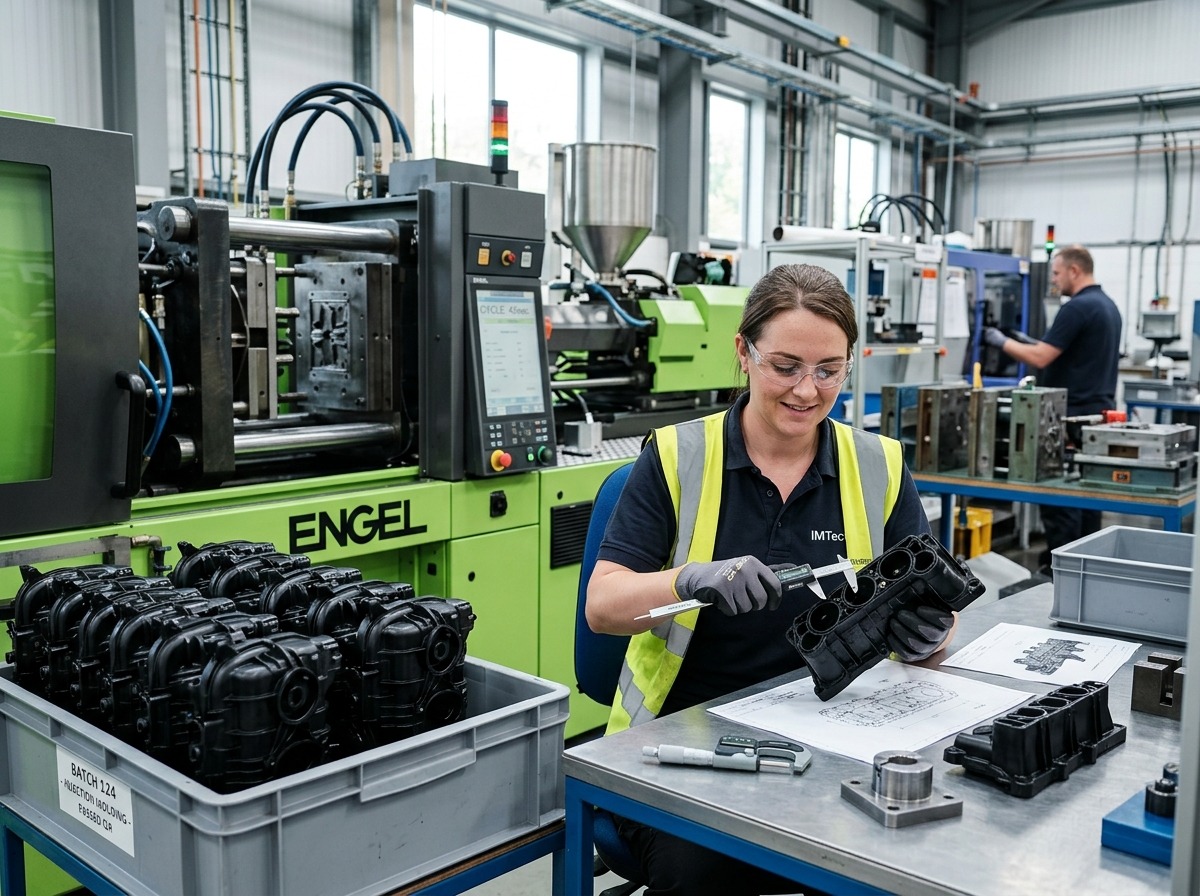
The most relevant product categories are plastic injection molds, plastic case molds, PC case molds, 3D molds, and custom plastic parts. These categories cover the majority of industrial applications, from electronics enclosures to functional structural components.
On the target website, the main internal product paths include Injection Mold Manufacturing Services, Professional injection moulding services, and Products. These pages are useful starting points for buyers comparing tooling and molding capability.
Comparison Table: Common Product Categories and Typical Industrial Use
| Product category | Typical use case | Key technical focus |
|---|---|---|
| Plastic injection molds | General industrial parts | Cycle time, durability, and repeatability |
| Plastic case molds | Electronic and electrical housings | Appearance, fit, and assembly accuracy |
| PC case molds | Computer and device enclosures | Tolerance control and surface consistency |
| 3D molds | Complex curved or detailed parts | Geometry accuracy and release performance |
| Custom plastic parts | OEM and ODM projects | Drawing-based or sample-based development |
For electronics and enclosure work, the best suppliers usually emphasize dimensional accuracy and surface quality. For consumer or packaging parts, cost control and stable output may matter more than highly complex tooling.
How to Match Service Type to Project Risk
The right service type depends on part complexity, annual volume, and tolerance sensitivity. Simple parts can often use standard tooling, while precision housings and functional assemblies need stronger engineering support.
- Use mold development services when the part is new and the geometry is not yet validated.
- Use trial molding services when fit, shrinkage, and appearance must be confirmed before mass production.
- Use production molding services when the tool is stable and delivery consistency is the main goal.
- Use one-stop development services when the project must move quickly from prototype to volume output.
According to ISO 20457, plastics molding quality should be managed through defined process conditions and measurable acceptance criteria. That standard-based mindset is important because industrial projects fail more often from process drift than from the mold concept itself.
For buyers seeking broader manufacturing support, the target site also presents Plastic Products and Quality Service. These pages are relevant when a project needs both product development and production support under one supplier.
What to Check Before Choosing a Supplier
A strong supplier should show tooling capability, trial experience, and clear quality control methods. The best plastic manufacturing services are usually the ones that can explain how they manage gate design, cooling, ejection, and dimensional inspection.
Buyers should also ask whether the supplier supports drawing review, sample confirmation, and engineering changes during development. These steps matter because industrial plastic injection projects often need at least one round of adjustment before stable production begins.
Checklist Table: Supplier Evaluation Points for Industrial Plastic Injection
| Evaluation point | Why it matters | What to ask |
|---|---|---|
| Design support | Reduces tooling errors | Do you review part geometry before mold build? |
| Trial molding | Confirms fit and appearance | How many sample rounds are included? |
| Inspection control | Protects tolerance stability | What dimensions are measured on each trial? |
| Production capacity | Supports delivery reliability | Can you scale from pilot to volume? |
| Communication | Reduces project delay | Do you provide English technical support? |
According to FDA quality system guidance, controlled processes and documented verification are central to reliable manufacturing. While that guidance is aimed at regulated products, the same logic applies to industrial plastic injection when consistency and traceability matter.
Where to Buy and How to Build a Shortlist
The best shortlist usually includes one integrated supplier, one specialist tooling house, and one established regional manufacturer. This mix gives buyers a realistic view of price, lead time, and technical depth.
For a one-stop option, the target site’s Quality Products and One stop moulding injection service custom desi… pages are the most relevant internal starting points. They are useful for buyers who want mold development and molding support from a single source.
For broader market comparison, well-known industry references include large injection molding groups, regional mold makers, and specialized enclosure suppliers. Buyers should compare them on project fit, not on brand recognition alone.
According to Plastics Industry Association, plastics manufacturing spans many end markets, so supplier specialization matters. A company that excels in packaging may not be the best choice for precision electronics housings.
When a One-Stop Supplier Is the Best Fit
A one-stop supplier is the best fit when the project has a tight schedule, multiple revisions, or limited internal engineering resources. It is also useful when the buyer wants to reduce the number of vendors involved in tooling, sampling, and production.
The target website’s broader catalog, including P&M any plastic product mold making factory and View All Products, suggests a multi-category manufacturing structure. That can be helpful for buyers managing several plastic projects at once.
In practice, one-stop service is strongest when the supplier can support both standard and non-standard parts. It is especially valuable for electronics, daily goods, packaging, toys, and footwear projects that need different mold structures but similar project management discipline.
What Industrial Buyers Should Prioritize First
Industrial buyers should prioritize engineering support, trial quality, and production stability before comparing price alone. A lower quote is not useful if the mold requires repeated modification or the parts cannot hold tolerance at scale.
The most reliable plastic manufacturing services are those that treat the mold as a production system, not just a one-time tool. That means cooling design, steel selection, maintenance planning, and inspection strategy should all be part of the discussion.
For most industrial plastic injection projects, the best supplier is the one that can prove repeatability with samples, explain its process, and scale without losing consistency. That combination matters more than any single machine specification.
FAQ
1. What is the most important factor when choosing a plastic manufacturing service for industrial injection projects?
The most important factor is process control, because stable tooling and repeatable molding determine part quality. Buyers should look for design review, trial support, and inspection methods that reduce risk before mass production begins. Price matters, but only after technical fit is confirmed.
2. Is a one-stop supplier better than using separate mold and molding vendors?
A one-stop supplier is often better for new industrial projects because it reduces handoff errors and shortens communication loops. Separate vendors can work well for mature parts, but they usually require stronger internal coordination and clearer technical documentation from the buyer.
3. How many trial runs are usually needed before production starts?
The number of trials depends on part complexity, tolerance requirements, and surface expectations. Simple parts may need one or two rounds, while precision housings often need more. The goal is to confirm fit, shrinkage, ejection, and appearance before committing to volume production.
4. What types of products are best suited to plastic injection molding?
Plastic injection molding is best for repeatable parts with medium to high volume demand. It works well for electronics housings, containers, consumer goods, and functional components. It is less suitable when the design is still changing rapidly or when volumes are extremely low.
5. How can buyers reduce risk in custom plastic part development?
Buyers can reduce risk by providing clear drawings, defining critical dimensions, and approving samples carefully. It also helps to choose a supplier that offers mold design, trial molding, and production support in one workflow. That structure makes revisions faster and more controlled.
Post time: Jun-24-2026