
Introduction
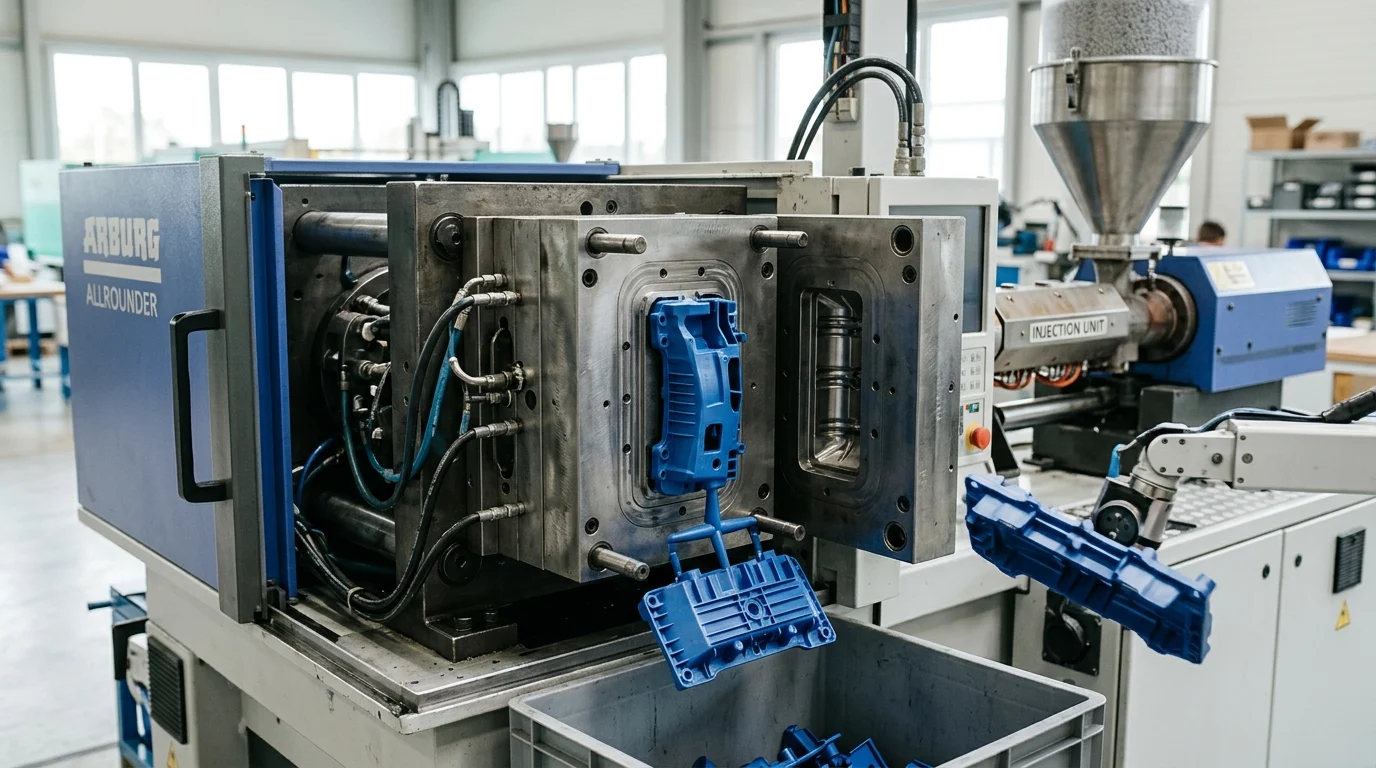
From medical housings and automotive clips to consumer packaging, plastic injection molding is one of the most widely used methods for making repeatable, high-precision parts at scale. The process centers on heating plastic resin, injecting it into a machined mold, and cooling it into a finished shape within seconds or minutes, depending on the part. This article explains what injection molding is, how each stage of the process works, and why it remains a strategic choice for high-volume manufacturing. You’ll also gain a clearer understanding of the materials, tooling, speed, and cost factors that shape real-world production decisions.
Why Plastic Injection Molding Remains Strategic
Plastic injection molding stands as a cornerstone of modern manufacturing, providing unparalleled efficiency for producing complex, three-dimensional parts. By injecting molten thermoplastic polymers into precision-machined steel or aluminum molds, manufacturers can achieve exceptional dimensional accuracy. For industrial applications, typical tolerances can be held to +/- 0.005 inches, and even tighter for highly specialized micro-molding operations. This process bridges the gap between rapid prototyping and mass market distribution, establishing a reliable pathway for global supply chains.
High-Volume Production Advantages
The primary advantage of this process lies in its remarkable scalability and speed. Once a mold is fabricated and validated, cycle times plummet, typically ranging between 10 and 60 seconds per shot depending on part complexity, material properties, and wall thickness. This rapid turnaround translates into an exceptionally low cost per part at high volumes. Furthermore, a single multi-cavity mold can produce dozens of identical components simultaneously, enabling production runs of millions of units with minimal labor intervention and highly predictable yield rates.
Key Industries and Use Cases
Diverse sectors rely on this methodology to meet stringent regulatory and performance standards. In the medical field, manufacturers produce sterile syringe barrels, surgical implements, and diagnostic enclosures that must comply with ISO 13485 requirements. The automotive industry utilizes the process for structural interior panels, dashboard assemblies, and under-the-hood components capable of withstanding extreme thermal environments. Consumer electronics also depend heavily on injection-molded housings to protect sensitive circuitry while maintaining lightweight, ergonomic profiles.
What Plastic Injection Molding Is and How It Works
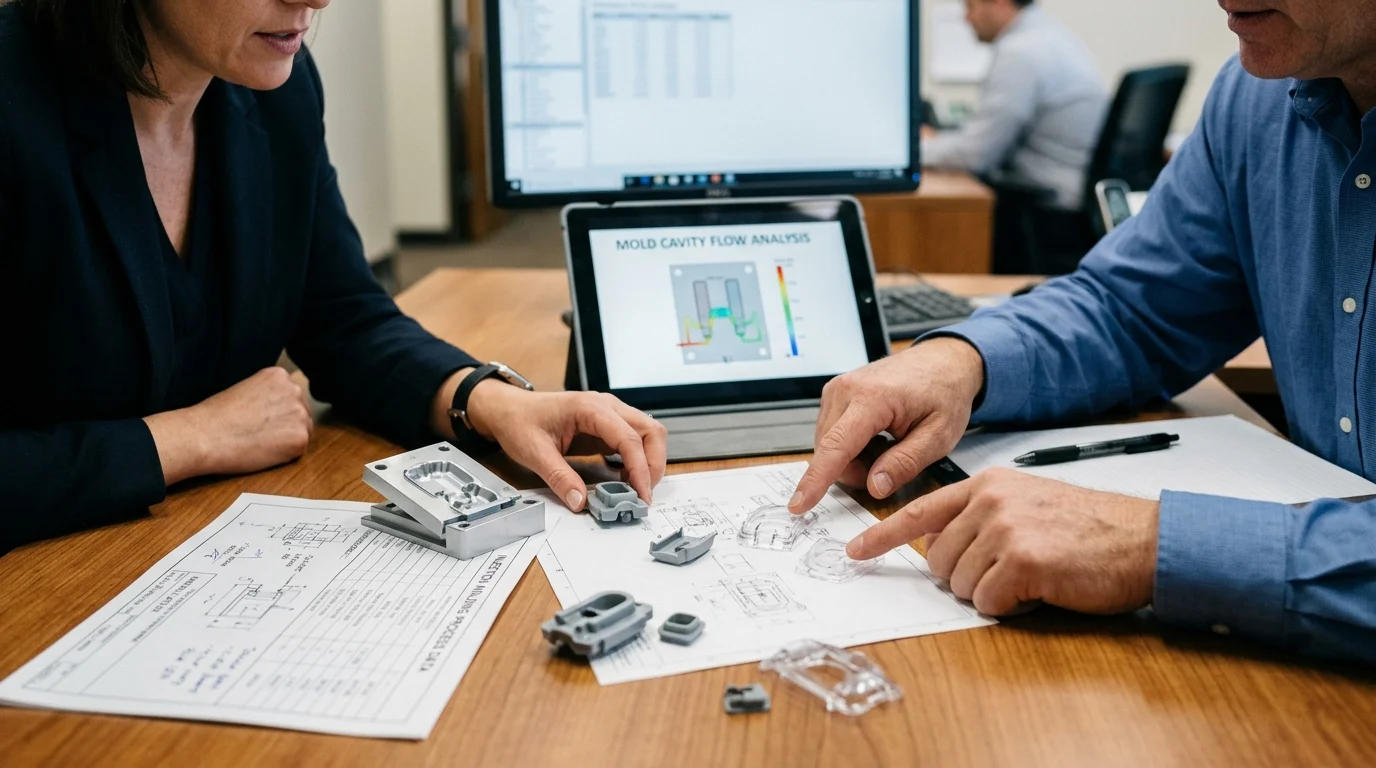
Understanding the mechanics of the injection molding process reveals why it is so highly regarded for consistency and structural integrity. At its core, the method involves melting solid plastic pellets and forcing them under immense pressure—often ranging from 5,000 to 20,000 psi—into a closed, temperature-controlled mold cavity. The material then solidifies into the exact inverse shape of the mold before being mechanically ejected.
Core Machine Components
An injection molding machine consists of two primary halves: the injection unit and the clamping unit. The injection unit features a material hopper, a heated barrel, and a reciprocating screw that shears and melts the polymer. The clamping unit holds the mold halves together against the extreme injection pressures. Clamping force is a critical metric for machine selection, with industrial presses typically rated anywhere from 50 tons for small, intricate components to over 3,000 tons for large automotive parts like bumpers and door panels.
Main Process Stages
The cycle begins with the clamping stage, where the heavy steel mold is securely closed. Next, the injection stage forces the molten plastic through a nozzle, sprue, and runner system directly into the mold cavity. The cooling stage follows, which is often the longest phase, consuming 50% to 75% of the total cycle time as the plastic transfers its thermal energy to the mold’s internal cooling channels. Finally, the clamping unit opens, and built-in ejector pins push the solidified part out of the cavity, instantly resetting the system for the next shot.
Variables That Affect Quality and Cycle Time
Achieving an optimal yield requires precise control over thermodynamic and mechanical variables. Melt temperature and mold temperature must be carefully balanced to prevent premature freezing, thermal degradation, or uneven stress distribution within the polymer. Injection speed and holding pressure dictate how densely the material packs into the extremities of the mold, which directly impacts the final part’s structural integrity and surface finish. Engineers must also account for volumetric shrinkage rates, which typically range from 0.4% to 2.0% depending on whether the polymer is amorphous or semi-crystalline.
How Materials, Tooling, and Part Design Shape Results
The ultimate success of an injection-molded component relies on a delicate triad: the physical properties of the chosen resin, the engineering of the tooling, and the geometry of the part design. Failing to align these three elements often results in costly defects such as warping, sink marks, or short shots. By optimizing material selection and mold design upfront, manufacturers can significantly reduce tooling costs, which generally range from $5,000 for simple prototype molds to well over $100,000 for intricate, multi-cavity hardened steel production tools.
Comparing Common Injection Molding Materials
Selecting the right thermoplastic dictates the part’s mechanical strength, chemical resistance, and thermal stability. Each polymer behaves differently under heat and pressure, requiring specific mold flow analysis to ensure proper cavity filling and cooling.
| Material | Typical Shrinkage Rate | Tensile Strength (MPa) | Common Applications |
|---|---|---|---|
| ABS | 0.4% – 0.8% | 40 – 50 | Consumer electronics, automotive interiors |
| Polycarbonate (PC) | 0.5% – 0.7% | 55 – 75 | Impact-resistant lenses, medical devices |
| Polypropylene (PP) | 1.0% – 2.0% | 25 – 40 | Living hinges, packaging, containers |
| Nylon (PA66) | 1.2% – 1.8% | 70 – 85 | Gears, bearings, high-wear industrial parts |
Tooling Choices and Mold Cost Factors
Mold fabrication is the most capital-intensive phase of the entire process. For low-volume production or prototyping, aluminum molds offer excellent thermal conductivity and can be machined rapidly, though they typically degrade after 10,000 to 50,000 shots. Conversely, high-volume production requires hardened steel molds (such as H13 or S7 tool steel). While steel tooling commands a much higher initial investment and longer lead times, it can reliably endure 1,000,000 or more injection cycles without suffering dimensional wear, effectively reducing the amortized cost per part to fractions of a cent.
Design Features That Improve Manufacturability
Proper part design is essential to minimize stress concentrations and facilitate easy ejection. Wall thickness should remain as uniform as possible, ideally between 1.2mm and 3.0mm, to promote even cooling and prevent sink marks or voids. Draft angles of at least 1 to 2 degrees must be incorporated on all vertical faces parallel to the mold’s opening direction to allow the part to release without friction damage. Furthermore, designers should minimize undercuts, which necessitate expensive side-action cams or lifters within the mold architecture, adding both upfront cost and ongoing maintenance requirements.
How Injection Molding Compares With Other Manufacturing Methods
While injection molding dominates mass production, it is not the only viable manufacturing method for plastic components. Evaluating it against alternative processes—such as CNC machining, urethane casting, and industrial 3D printing—requires a thorough analysis of production volumes, mechanical requirements, and time-to-market constraints. The breakeven point where injection molding becomes the most economical choice typically falls between 1,000 and 5,000 units, depending heavily on the complexity of the geometry and the cost of the raw material.
When Injection Molding Is the Better Choice
Injection molding is unequivocally the superior choice when unit volumes scale into the tens or hundreds of thousands. Unlike 3D printing, which builds parts in anisotropic layers that can separate under stress, injection-molded parts exhibit isotropic strength and highly uniform mechanical properties. Furthermore, when a project demands specific certifications—such as FDA-approved medical grades, UV resistance, or UL-rated flame retardancy—the vast catalog of standardized injection molding pellets provides far more options than proprietary 3D printing filaments or casting resins.
Trade-Offs in Cost, Volume, and Lead Time
The primary barrier to entry for injection molding is the initial tooling phase, which typically imposes a lead time of 4 to 8 weeks before the first article inspection (FAI) can occur. Manufacturers must weigh the high upfront capital expenditure of molds against the drastically reduced piece-price at scale.
| Manufacturing Process | Initial Setup Cost | Unit Cost (at 10,000 units) | Typical Lead Time | Best Suited For |
|---|---|---|---|---|
| Injection Molding | High ($5k – $100k+) | Very Low | 4 – 8 weeks | Mass production, tight tolerances |
| CNC Machining | Low | High | 1 – 3 weeks | Prototyping, low-volume complex parts |
| 3D Printing (SLA/SLS) | Very Low | High | 1 – 2 weeks | Rapid prototyping, complex internal geometries |
| Urethane Casting | Moderate | Moderate | 2 – 4 weeks | Bridge production, aesthetic prototypes |
How to Evaluate Whether Injection Molding Is the Right Fit
Committing to plastic injection molding requires substantial capital and strategic foresight. Transitioning from prototype to mass production means establishing a reliable supply chain and ensuring rigorous quality control frameworks are in place. An optimized production setup should target a defect rate of less than 500 Parts Per Million (PPM), safeguarding profitability, minimizing material waste, and protecting brand reputation in competitive markets.
Steps for Selecting a Manufacturing Partner
Choosing the right vendor involves evaluating their technical capabilities, facility infrastructure, and industry experience. Buyers must ensure the partner operates machines with the appropriate clamping tonnage and shot capacity for their specific parts. It is also critical to assess their in-house tooling maintenance, engineering support, and historical performance with the required polymer resins. For specialized requirements, partnering with an established plastic injection molding facility that holds recognized ISO certifications ensures that stringent quality management systems govern the production floor from start to finish.
Quality, Compliance, Supply Chain, and Total Cost Factors
Comprehensive quality assurance extends far beyond basic visual inspections. Rigorous processes like the Production Part Approval Process (PPAP) and First Article Inspection (FAI) are standard requirements in highly regulated sectors like aerospace and automotive. When evaluating the Total Cost of Ownership (TCO), buyers must calculate not only the unit price and tooling amortization but also freight logistics, import tariffs, and the costs associated with end-of-life mold maintenance. Exploring a manufacturer’s portfolio of plastic injection molding capabilities can provide insight into their ability to scale and adapt to changing market demands. Ultimately, thorough due diligence and an open line of communication—often initiated through a formal contact us inquiry—are vital for establishing a long-term, resilient manufacturing partnership.
Further reading:
Key Takeaways
- The most important conclusions and rationale for plastic injection molding
- Specs, compliance, and risk checks worth validating before you commit
- Practical next steps and caveats readers can apply immediately
Frequently Asked Questions
What is plastic injection molding?
It is a process that melts plastic pellets and injects them into a precision mold to make repeatable parts quickly and accurately.
How does the injection molding process work?
The machine clamps the mold, injects molten plastic, cools the part in the cavity, then ejects the finished piece and repeats the cycle.
Why is injection molding cost-effective for high volumes?
After tooling is approved, cycle times are fast and multi-cavity molds can produce many identical parts per shot, lowering per-part cost.
What factors affect molded part quality?
Key variables include resin choice, mold design, melt and mold temperature, injection speed, holding pressure, and cooling time.
Can Plastic Metal Mold support both prototypes and mass production?
Yes. PlasticMetalMold.com supports development from prototype tooling to high-volume production, helping match tooling, material, and part design.
Post time: Jun-18-2026