
- 2026 buying decisions will center on speed, consistency, and lower project risk, not just lowest unit price.
- OEM plastic manufacturing will be judged by design support, tooling validation, and repeatable output across SKUs.
- High-growth demand will come from enclosure parts, structural components, and multi-material plastic products.
- Buyers will increasingly expect documented process control, traceable quality checks, and export-ready communication.
Custom plastic manufacturing is becoming a strategic sourcing choice because product teams need a faster path from CAD file to production-ready parts, especially when tolerances, appearance, and assembly performance matter. In precision molding, dimensional control is often evaluated against process capability benchmarks such as ISO 2768 for general tolerances, while tool qualification and inspection plans are commonly aligned with documented metrology methods from ISO 20457:2018. For global buyers, this matters because a molded housing that is off by even a small amount can delay assembly, create cosmetic rejects, or force expensive redesign. The most competitive suppliers in 2026 will combine engineering support, stable tooling, and export communication, while offering product categories such as injection molds, plastic housings, and custom plastic parts for buyers who need scalable OEM plastic manufacturing.
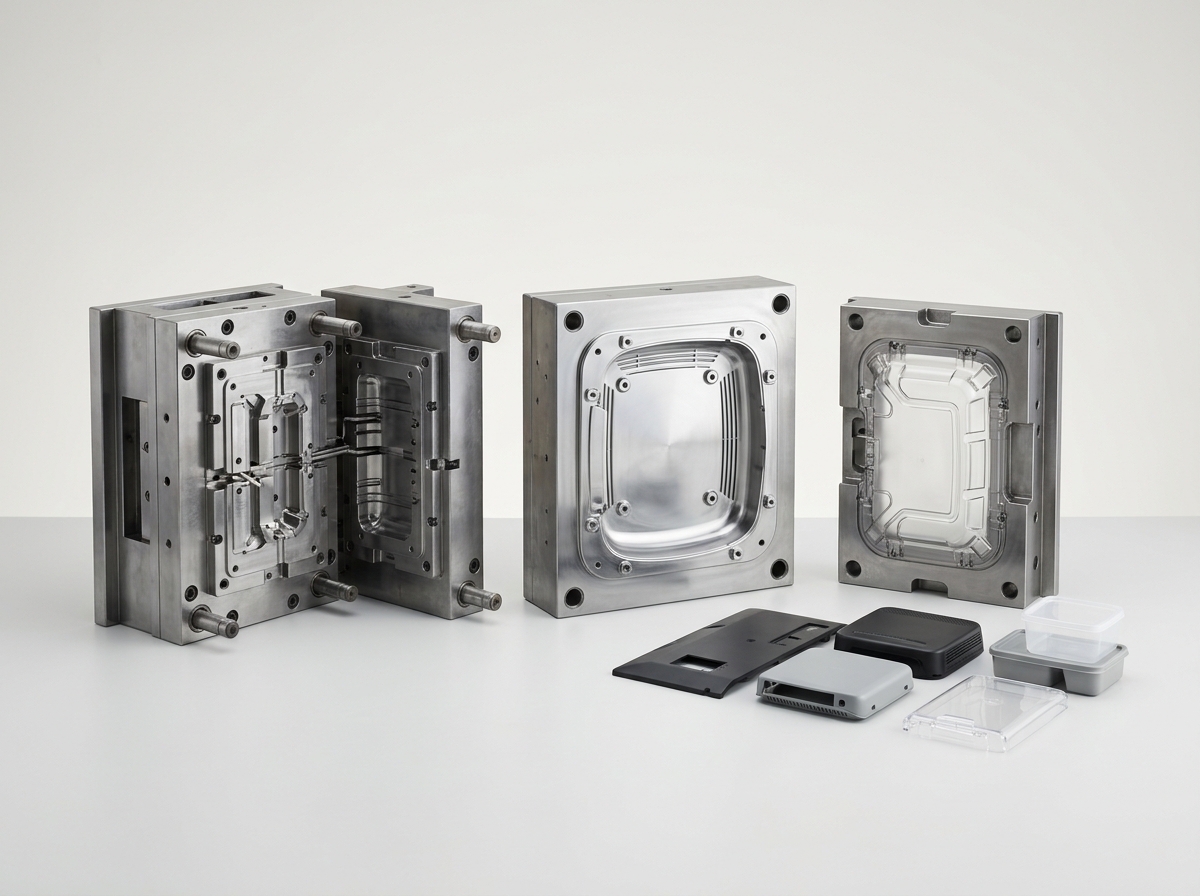 Why custom plastic manufacturing will matter more in 2026
The strongest demand driver in 2026 is the need to launch and localize products faster without sacrificing fit, finish, or repeatability.
Global buyers are under pressure to shorten sourcing cycles while supporting more SKUs, shorter product refreshes, and tighter cost control. In that environment, custom plastic manufacturing is no longer just a fabrication service; it is part of the product development system. Teams need suppliers that can review drawings, flag undercuts, gate locations, wall thickness issues, and draft angle risks before steel is cut. That is especially important for OEM plastic manufacturing projects where a design change late in the program can cascade into tooling rework, schedule slips, and inventory waste.
This is also why buyers increasingly prefer suppliers who can support both tooling and parts. A one-stop workflow reduces handoffs between design, mold build, sampling, and mass production. For buyers managing different product families, it is often more efficient to source from a factory that can cover automotive plastic parts, household plastic products, and electronic housings rather than splitting each category across multiple vendors.
From a production standpoint, the technical appeal of injection molding remains strong because once the mold is validated, output can scale with high repeatability. NIST’s dimension and measurement guidance is widely used to support accurate inspection planning, and that matters for molded parts that must assemble without secondary fitting. Buyers should read custom plastic manufacturing as a risk-management decision: the supplier who documents the process well often delivers fewer surprises later.
| Buyer priority | Why it matters in 2026 | Typical evidence requested |
|---|---|---|
| Engineering support | Reduces tooling and rework risk | DFM comments, CAD review, sample reports |
| Dimensional stability | Improves assembly and lowers reject rate | Inspection records, tolerance plan, gauge method |
| Lead-time control | Supports launches and replenishment | Prototype schedule, mold timeline, shipment plan |
| Export readiness | Reduces cross-border communication errors | English drawings, packing list, compliance files |
Which OEM plastic manufacturing solutions global buyers will prioritize
Buyers in 2026 will focus on solutions that solve both product performance and supply-chain complexity.
The first priority is still injection molding for high-volume, repeatable parts. Plastic injection molds remain the backbone of custom plastic manufacturing because they support consistent geometry, stable cycle times, and wide material compatibility. For structural or enclosure components, buyers often ask for PC, ABS, PC-ABS, PP, and PA-based options depending on impact resistance, temperature resistance, and cosmetic needs. PC is especially common for transparent or protective parts because it combines clarity and impact strength, which is why it is frequently used in electronic and safety-related housings.
The second priority is design flexibility. 3D mold structures and complex surface capability are important when branding, ergonomics, or differentiated styling matter. In those cases, the supplier must understand draft control, knit line placement, rib design, and wall thickness uniformity. A visually attractive part that cannot eject cleanly or maintain shrink balance is not a viable OEM plastic manufacturing solution.
The third priority is category breadth. Buyers who source multiple plastic products from the same supplier gain procurement efficiency, especially when the supplier can support appliance parts, toy parts, and sports products. That breadth matters because the 2026 buyer is often building a portfolio, not a single part number.
| Solution type | Best-fit use case | Key technical focus | Common material examples |
|---|---|---|---|
| Injection molding | High-volume custom plastic parts | Cycle stability, mold life, repeatability | PP, ABS, PC, PA |
| Plastic housings | Electronics and appliances | Fit, appearance, snap features | PC, PC-ABS, ABS |
| Complex 3D mold design | Branded or ergonomic products | Surface quality, undercut handling | PC, ABS, TPE blends |
| Multi-category OEM supply | Multi-SKU procurement | Documentation, logistics, coordination | Mixed polymer portfolios |
How buyers should evaluate custom plastic manufacturing suppliers
The best supplier is the one that lowers total project risk, not the one that only promises the lowest quote.
In practical sourcing, buyers should compare suppliers on four layers: engineering response, process control, quality evidence, and delivery discipline. Engineering response means the supplier can identify issues in part geometry before tooling starts. Process control means the supplier can explain how molding parameters, such as melt temperature, packing pressure, and cooling time, are stabilized. Quality evidence means the supplier provides inspection reports, not just visual approvals. Delivery discipline means they can manage sample dates, mold completion, and export shipment without repeated escalation.
For a global buyer, communication quality is often a hidden cost. If a supplier cannot read and respond to drawing revisions quickly, the project can stall even when the mold shop itself is capable. That is why export-oriented company capability matters: it affects revision tracking, sample approval, and post-tooling support. Buyers also need clarity on who owns the process after first article approval, because unresolved change control becomes expensive during ramp-up.
In many programs, the most useful question is not “Can you make this part?” but “Can you make this part ten thousand times with the same fit and finish?” That is the real test of OEM plastic manufacturing.
- Ask for DFM feedback before mold release.
- Confirm material grade and target property range.
- Review sample acceptance criteria in writing.
- Require inspection data for critical dimensions.
- Verify tooling maintenance and spare-part support.
Material and performance choices for plastic products in 2026
Material selection will remain one of the biggest differentiators between a functional part and a failed program.
For enclosure and protective applications, polycarbonate is still a preferred choice because it offers impact resistance and dimensional stability. For cost-sensitive consumer items, polypropylene often wins because it balances weight, toughness, and processing efficiency. For cosmetic housings that need better surface finish and rigidity, ABS remains common. For engineering parts that require stronger heat and wear performance, PA-based materials are often selected, sometimes with glass fiber reinforcement depending on load requirements.
The key is to match the resin to the product environment, not just to the price target. A household device may fail prematurely if the wrong material is selected for heat, UV exposure, or hinge fatigue. Likewise, a toy or leisure product may require a different balance of impact, surface quality, and regulatory compliance than an industrial cover. Buyers should also remember that surface appearance depends not only on resin grade but on mold polish, venting, cooling balance, and gate design.
According to the ASTM D638 test method for tensile properties of plastics, mechanical qualification is not guesswork; it depends on a defined specimen geometry and controlled test conditions. In sourcing terms, that means a supplier should be able to explain how material data translates into actual molded part performance.
| Material | Typical strength focus | Typical use case | Buyer watchout |
|---|---|---|---|
| PC | Impact and clarity | Transparent covers, protective parts | Stress cracking if poorly designed |
| ABS | Appearance and rigidity | Consumer housings, trim parts | Heat resistance is limited versus engineering resins |
| PP | Lightweight and cost control | Household items, caps, containers | Lower stiffness than ABS or PC |
| PA | Wear and structural duty | Industrial components, clips, gears | Moisture absorption can affect dimensions |
What technical benchmarks matter in custom plastic manufacturing
Technical benchmarks matter because they convert sales claims into measurable project criteria.
In molded parts, the buyer should care about dimensional tolerance, surface consistency, and process repeatability. Depending on the part class, tolerances may be referenced to general tolerance standards or tighter project-specific limits. For critical fits, a typical project may require tolerances around ±0.005 mm to ±0.02 mm in localized features, but the actual achievable range depends on size, resin, and tool design rather than a universal promise. Buyers should ask how the supplier measures those dimensions, how often they sample, and what the acceptance plan is for drift during production.
Process capability is also essential. Even if a first sample looks perfect, the question is whether the part stays stable after hundreds or thousands of cycles. Tool steel choice, gate layout, cooling circuit design, and maintenance discipline all affect long-run quality. The supplier should be able to explain cycle time, cavity balance, and wear protection for core and cavity surfaces.
Where electrical or industrial enclosure parts are concerned, the physical interface is often more important than the cosmetic one. A cover that closes neatly, resists vibration, and protects internal components can be more valuable than one that merely looks polished. That is why buyers should treat custom plastic manufacturing as an engineering program, not just a purchasing line item.
| Benchmark | Why it matters | Buyer question |
|---|---|---|
| Dimensional tolerance | Fit and assembly | Which features are critical and how are they inspected? |
| Cycle time | Unit cost and throughput | What is the estimated cycle per cavity? |
| Tool life | Long-term supply stability | What maintenance interval and spare parts are planned? |
| Material traceability | Consistency and compliance | Can the supplier link resin batch to shipped parts? |
How OEM plastic manufacturing supports different buyer scenarios
Different industries buy the same molding technology for very different reasons.
Consumer electronics buyers tend to prioritize precise fit, clean surfaces, and reliable snap features. Home appliance buyers often need stronger structure, heat resistance, and better appearance consistency on large visible panels. Industrial buyers care more about reliability, long supply continuity, and durability under use. For toys and leisure products, shape expression and color stability often matter as much as mechanical performance. For footwear-related components, lightweight design and wear resistance become more important than purely cosmetic goals.
This is why the most effective OEM plastic manufacturing suppliers build application knowledge, not just machine capacity. A supplier who understands the difference between an external housing and a load-bearing bracket can reduce downstream failures. Buyers sourcing from a supplier with broad category coverage can also standardize documentation and quality expectations across product families. That can simplify procurement for programs spanning consumer electronics parts, home appliance parts, and industrial parts.
For global purchasing teams, this broader capability is a major advantage because it reduces vendor fragmentation and makes scaling easier when one product line expands into several SKUs.
What global buyers will ask suppliers before placing orders
Pre-order questions are becoming more technical because buyers want fewer surprises after tooling begins.
The most common questions now focus on whether the supplier can support drawing review, prototype validation, production ramp-up, and spare-part continuity. Buyers should ask what information is required up front: 2D drawings, 3D files, material targets, cosmetic requirements, assembly environment, and annual volume estimates. The better the input, the lower the risk of mold redesign. Where compliance is involved, buyers may also need documentation aligned with broader product requirements from government or standards bodies, especially when parts are used in regulated sectors.
For example, NIST guidance on measurement and calibration practices reinforces why inspection consistency matters in production settings. If a supplier’s metrology process is weak, a part may pass one inspection and fail another simply because the measurement method changed. That is unacceptable in export-oriented custom plastic manufacturing.
- Confirm annual volume and forecast variation.
- Define cosmetic and functional acceptance separately.
- Ask for mold flow or DFM review when complexity is high.
- Set first-sample and final-approval milestones.
- Clarify packaging and freight requirements before mass production.
How to choose a supplier for plastic products without overpaying for risk
The cheapest quote can become the most expensive project if the supplier cannot control outcomes.
A smart sourcing team compares total cost, not just piece price. Total cost includes tooling changes, sample iterations, shipping delays, rework, and potential field failure. A supplier with stronger engineering support may quote higher initially but reduce the likelihood of late-stage redesign. That tradeoff is particularly important for high-visibility plastic products where cosmetic defects can damage brand perception and generate returns.
Buyers should also evaluate after-sales support. A reliable custom plastic manufacturing partner should be able to provide tooling maintenance guidance, spare component replacement, and responsive feedback if production issues appear after ramp-up. For long-term projects, this service layer can be as important as the mold itself. If a mold is technically sound but difficult to support across time zones, the sourcing advantage disappears quickly.
The best purchasing decision in 2026 will favor suppliers that combine technical depth, transparent communication, and stable delivery systems. That combination is what turns a plastic part from a one-time order into a scalable supply program.
FAQ
What is custom plastic manufacturing used for?
It is used to turn a buyer’s design into molded parts that can be produced repeatedly at scale, especially for housings, structural components, and branded product parts.
Why do global buyers prefer OEM plastic manufacturing?
OEM plastic manufacturing helps buyers control design, material choice, and product identity while keeping production scalable and consistent.
Which materials are most common for plastic products?
PC, ABS, PP, and PA are common choices because they cover impact resistance, appearance, cost control, and structural performance.
What should buyers check before ordering injection molds?
They should check DFM support, tolerance targets, sample approval steps, mold maintenance plans, and shipping readiness.
How do buyers reduce risk in custom plastic manufacturing?
They reduce risk by defining requirements clearly, requesting inspection data, reviewing material suitability, and choosing suppliers with export experience.
What makes a supplier better for 2026 projects?
Suppliers that offer engineering feedback, reliable quality documentation, and stable delivery are better positioned for fast-moving global programs.
Can one supplier handle multiple plastic products?
Yes. Multi-category suppliers are often preferred because they can support more than one product line, reduce vendor switching, and simplify procurement.
Post time: Aug-19-2026