
Plastic injection molding remains one of the most scalable ways to produce repeatable plastic parts. In 2026, buyers are prioritizing lower scrap, better tolerances, and shorter launch timelines.
Outline
- What is changing in plastic injection molding in 2026
- The five trends shaping tooling, production, and sourcing
- How buyers should evaluate suppliers and projects
- Where to source molds, parts, and development support
What Plastic Injection Molding Trends Matter Most in 2026?
Plastic injection molding trends in 2026 are centered on efficiency, compliance, and design-for-manufacture discipline. The market is moving away from generic tooling decisions and toward project-specific engineering choices.
For manufacturers, the practical question is no longer whether a part can be molded, but whether it can be molded consistently, sustainably, and at competitive total cost. That shift affects tooling, material selection, inspection, and supplier qualification.
Trend 1: Sustainability Is Moving from Messaging to Process Control
Sustainability is now a production requirement, not just a reporting topic. The U.S. EPA describes sustainable plastics management as a lifecycle approach, while the DOE highlights plastics innovation as a route to reduce waste and improve circularity.
In practice, this means more projects are using recycled content, recyclable-by-design resins, and lower-scrap process windows. The engineering implication is simple: mold design must support stable filling, easy demolding, and fewer rejects.
Comparison Table: Sustainability Priorities in Modern Injection Projects
| Priority | What Buyers Ask | What Suppliers Must Control |
|---|---|---|
| Material circularity | Can recycled or recyclable resin be used? | Drying, melt stability, and contamination control |
| Scrap reduction | Can rejects be minimized during ramp-up? | Gate design, venting, and process repeatability |
| Lifecycle impact | Can the part support lower waste over time? | Wall thickness, part count, and assembly simplification |
Trend 2: Dimensional Accuracy Is Becoming a Procurement Filter
Dimensional control is one of the strongest buying criteria in 2026. ISO 20457 specifically addresses tolerances and acceptance conditions for molded plastic parts, which reflects how important geometry has become in procurement and quality review.
This matters most for electronics housings, PC enclosures, and functional components with snap fits or sealing features. When tolerances are tight, the mold is only one part of the equation; material shrinkage, cooling balance, and inspection methods matter just as much.
Key Specifications for Tolerance-Driven Projects
| Project Factor | Why It Matters | Typical Risk if Ignored |
|---|---|---|
| Wall thickness uniformity | Reduces sink marks and warpage | Assembly mismatch or cosmetic defects |
| Cooling layout | Improves shrink consistency | Dimensional drift across cavities |
| Acceptance criteria | Defines pass/fail conditions clearly | Late-stage disputes and rework |
For buyers, this trend means that a mold supplier should be able to discuss tolerance stack-up, not just tooling price. That is especially important for high-fit parts and multi-component assemblies.
Trend 3: Automation and Monitoring Are Raising the Baseline
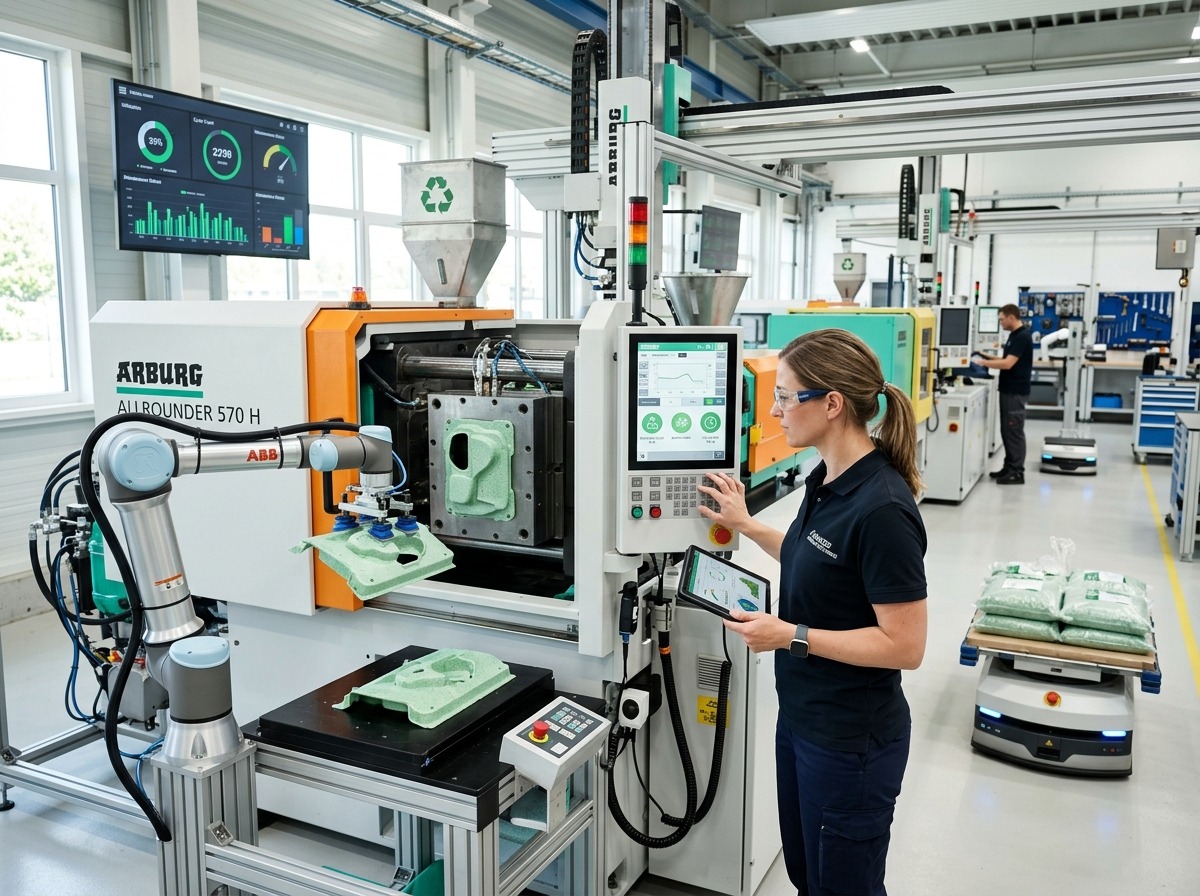
Automation is becoming standard because it improves consistency and reduces manual variation. NIST notes that manufacturing measurement science and production monitoring help suppliers demonstrate quality and build trust across the supply chain.
In injection molding, this trend shows up as machine data capture, in-process inspection, robotic part removal, and faster response to drift. According to industry estimates, better process monitoring can reduce unplanned downtime and shorten troubleshooting cycles, especially during pilot runs.
The practical result is that buyers increasingly expect traceability. They want to know which machine, cavity, resin lot, and process window produced each sample or batch.
Trend 4: Faster Development Cycles Are Reshaping Supplier Selection
Speed is now a competitive advantage because product launch windows are shorter. OEM and ODM teams increasingly want one partner to handle design support, tooling, trial runs, and production transfer.
This is why one-stop development models are gaining traction. A supplier that can move from drawing review to mold making and trial production with fewer handoffs reduces schedule risk and communication loss.
For example, teams sourcing professional injection moulding services often care less about a single low quote and more about how quickly the project can reach stable samples. The same logic applies to plastic case mold programs for electronics and consumer devices.
 Development Workflow Table: What Happens Before Mass Production
| Stage | Main Goal | Buyer Decision Point |
|---|---|---|
| Requirement review | Confirm geometry, function, and target volume | Approve feasibility and budget |
| DFM and mold design | Reduce risk before steel is cut | Check parting line, gate, and ejection strategy |
| Trial and correction | Validate appearance and fit | Approve samples or request revisions |
| Production ramp-up | Stabilize output and quality | Release for repeat orders |
Trend 5: Multi-Category Manufacturing Is More Valuable Than Single-Process Capacity
Multi-category capability is becoming more important because buyers want fewer suppliers. A factory that can support housings, boxes, custom parts, and complex shapes is easier to qualify for long-term procurement.
This is especially relevant for companies that need both standard and non-standard parts. A supplier with broad tooling experience can support product families, not just one-off parts. For buyers comparing options, plastic product capabilities and customized plastic injection mold manufacturer pages are useful starting points when evaluating scope.
That broader capability matters because electronics, packaging, toys, footwear, and daily goods all have different requirements. A single supplier that understands those differences can reduce sourcing friction and simplify project management.
How Buyers Should Evaluate a Plastic Injection Project in 2026
A good project review in 2026 should focus on technical fit, not just unit price. The best suppliers can explain material behavior, part geometry, mold life, and sample approval criteria in plain English.
- Ask for a clear DFM review before tooling starts.
- Confirm tolerance targets and inspection methods early.
- Review cooling, venting, and ejection strategy for complex parts.
- Check whether the supplier can support trial, revision, and ramp-up.
- Verify whether the factory can handle both prototypes and mass production.
For electronics enclosures, the most important questions usually involve fit, appearance, and functional openings. For daily goods and packaging, the focus shifts toward cost, throughput, and repeatability.
Where to Buy Plastic Injection Molding Services and Related Products
Buyers looking for a broad service scope can start with the target site’s core categories, including Injection Mold Manufacturing Services, Professional injection moulding services, and Plastic Products. These pages are most relevant when the project needs both tooling and molded output.
For more specialized sourcing, the site also covers case molds, custom parts, and broader product development support. If the project involves a housing, enclosure, or custom structural part, the internal product pages can help narrow the technical scope before requesting a quotation.
Outside this site, buyers often compare against established global suppliers and local mold shops based on certification, lead time, and engineering support. The right choice depends on part complexity, annual volume, and the need for design collaboration.
What the 2026 Trend Line Means for Procurement Teams
The 2026 trend line points to fewer surprises and more engineering discipline. Teams that define requirements early, validate tolerances carefully, and choose suppliers with process visibility are more likely to reach stable production.
In other words, the winning strategy is not chasing the cheapest mold. It is selecting a manufacturing partner that can support the full path from concept to repeatable output.
FAQ
1. What is the biggest plastic injection molding trend in 2026?
The biggest trend is the combination of sustainability and process control. Buyers want recyclable or lower-waste solutions, but they also expect stable dimensions, traceability, and fewer defects. That means tooling decisions are increasingly tied to lifecycle performance, not only part price.
2. Why are tolerances more important now?
Tolerances matter more because many molded parts are now functional, not just cosmetic. Electronics housings, snap-fit components, and enclosure parts must assemble reliably. ISO 20457 reflects this shift by giving molded parts a clearer framework for dimensional acceptance.
3. How does automation help injection molding projects?
Automation improves repeatability, reduces operator variation, and supports faster inspection. It also makes it easier to identify process drift before it creates scrap. For buyers, this usually means better sample consistency and more predictable ramp-up to production.
4. What should buyers request before approving a mold?
Buyers should request a DFM review, tolerance targets, material assumptions, and a trial plan. They should also confirm how samples will be measured and what counts as an acceptable result. These steps reduce revision cycles and make project responsibility clearer.
5. Which industries are most affected by these trends?
Electronics, packaging, daily goods, toys, and footwear are all strongly affected. These sectors rely on repeatable parts, controlled appearance, and cost-efficient production. As a result, they are adopting tighter quality systems and more integrated supplier relationships.
Post time: Jun-21-2026