
- Plastic surface finish should match the part’s use case, not just its appearance target.
- Matte and textured finishes usually hide molding variation better than gloss finishes.
- Injection molding finish selection affects tooling cost, cycle consistency, and reject rate.
- For housings, electronic enclosures, and industrial covers, finish choice should support both branding and assembly performance.
- Material choice, gate location, and draft angle all influence the final surface result.
For custom plastic parts, the best plastic surface finish is the one that satisfies cosmetic expectations without creating avoidable mold risk, and that is especially true in injection molding, where surface appearance is shaped by tool steel, texture depth, and process control. Surface roughness standards such as ISO 1302 help define how surface characteristics are specified, while dimensional consistency in mold tooling is often evaluated against standards such as ISO 286-1. For procurement teams, this means the finish decision should be made early, before tooling is cut, because the wrong choice can increase rework, scrap, and lead time.
How to choose the best plastic surface finish for custom plastic parts
The best finish starts with the product’s real-world touch points. A handheld consumer device needs a different finish strategy than an internal structural bracket or an industrial enclosure.
If the part is visible to the end user, the surface has to manage fingerprints, gloss uniformity, knit lines, and visual matching across multiple cavities. If the part is hidden inside an assembly, the decision should prioritize mold release, cost control, and dimensional reliability.
In practice, most custom plastic parts fall into one of four finish priorities: cosmetic appearance, tactile feel, scratch masking, or functional release behavior. A manufacturer that understands these priorities can recommend the correct mold texture before production begins.
| Finish type | Typical visual effect | Best use case | Risk profile |
|---|---|---|---|
| High gloss | Reflective, premium look | Optical covers, display parts | Shows scratches, sink marks, and flow lines |
| Semi-gloss | Balanced shine | Electronics housings, appliance panels | Moderate defect visibility |
| Matte | Low reflection, soft appearance | Consumer enclosures, handheld devices | Texture may vary with mold wear |
| Textured | Patterned, high grip | Tool grips, industrial covers | Texture depth can complicate release |
Why injection molding surface finish changes part quality
Injection molding surface finish is not a coating decision alone; it is the result of how the mold cavity, plastic resin, and process parameters interact.
A polished cavity can produce a mirror-like surface, but that same cavity may reveal flow hesitation, gas trapping, or weld lines if the gate design is poor. By contrast, a textured cavity can reduce the visibility of minor defects while also helping with grip and handling.
This is why experienced mold teams review material selection, wall thickness, gate placement, venting, and draft angle together. For example, a material like PC is often selected for transparent or impact-resistant housings because it combines toughness with dimensional stability, making it suitable for electronic and protective covers. In many applications, PC is also paired with a controlled finish to preserve the part’s optical or premium feel.
Surface specification should also support the production process. According to the U.S. National Institute of Standards and Technology, metrology and surface measurement practices must be repeatable to support manufacturing quality control; see NIST Precision Measurement. That matters because what looks acceptable in a sample may fail under a structured inspection plan if gloss, roughness, or haze are not defined clearly.
Common plastic surface finish options for custom plastic parts
The most practical finish choice depends on whether the part needs to look premium, stay cost-efficient, or survive heavy handling.
For consumer electronics and appliance housings, matte or fine-textured finishes are often preferred because they hide fingerprints and small assembly variations. For transparent windows or light-transmitting components, polishing is usually required, but it must be balanced against higher tooling sensitivity.
Below is a decision-oriented view of common finish approaches.
| Finish option | Typical benefit | Typical limitation | Relative tooling impact |
|---|---|---|---|
| Polished | Best clarity and premium appearance | High defect visibility | High |
| Bead-blasted texture | Good scratch hiding | Can create uneven sheen on complex shapes | Medium |
| EDM texture | Consistent controlled pattern | Requires careful process matching | Medium to high |
| Light matte finish | Low glare and stable visual appearance | Less premium shine | Low to medium |
When buyers ask for a “better” finish, the real question is usually “better for what objective.” A matte finish is often better for a handheld product because it improves grip and hides minor wear. A polished finish is better for a display lens because light transmission and appearance matter more than scratch masking.
Material, texture depth, and mold design all affect the final surface finish
The same finish specification can look different on PC, ABS, PP, or glass-filled materials because resin flow and shrink behavior change the cavity outcome.
PC is often chosen for custom plastic parts that need transparency and impact resistance, but it also demands tighter process control if the goal is a clean surface. Glass-filled materials can improve stiffness, yet fiber orientation may influence gloss consistency and visible flow behavior. That is why finish selection should always be tied to the material grade, not treated as a late-stage cosmetic add-on.
Draft angle also matters. A textured finish often needs more draft than a smooth finish to allow clean ejection without scuffing. If the draft is insufficient, even a technically correct texture can be damaged during mold release, which leads to shiny drag marks or localized whitening.
For standardization, surface roughness is commonly specified using parameters such as Ra. The engineering goal is to define what level of finish is acceptable on the drawing, rather than relying on subjective language like “nice surface” or “good appearance.” That is one reason product teams should align finish notes with recognized drawing conventions such as ISO 1302.
When a textured plastic surface finish is the best choice
A textured finish is often the best choice when the part will be handled frequently or when cosmetic uniformity matters more than reflective gloss.
Industrial covers, appliance panels, handheld controllers, and many consumer electronics housings benefit from subtle texture because it reduces fingerprint visibility and gives the product a more durable perception. Texture can also help hide knit lines and small molding variations that would be obvious on a glossy surface.
However, texture depth must be controlled carefully. Deep patterns may trap dirt, increase cleaning difficulty, or create release problems in undercut-heavy geometries. In a high-volume injection molding program, that means texture should be validated with a real pilot run, not just approved from a 2D render.
- Use fine texture when the part needs a premium but non-reflective look.
- Use medium texture when grip and scratch masking are top priorities.
- Avoid aggressive texture on thin-wall parts unless draft and venting are proven.
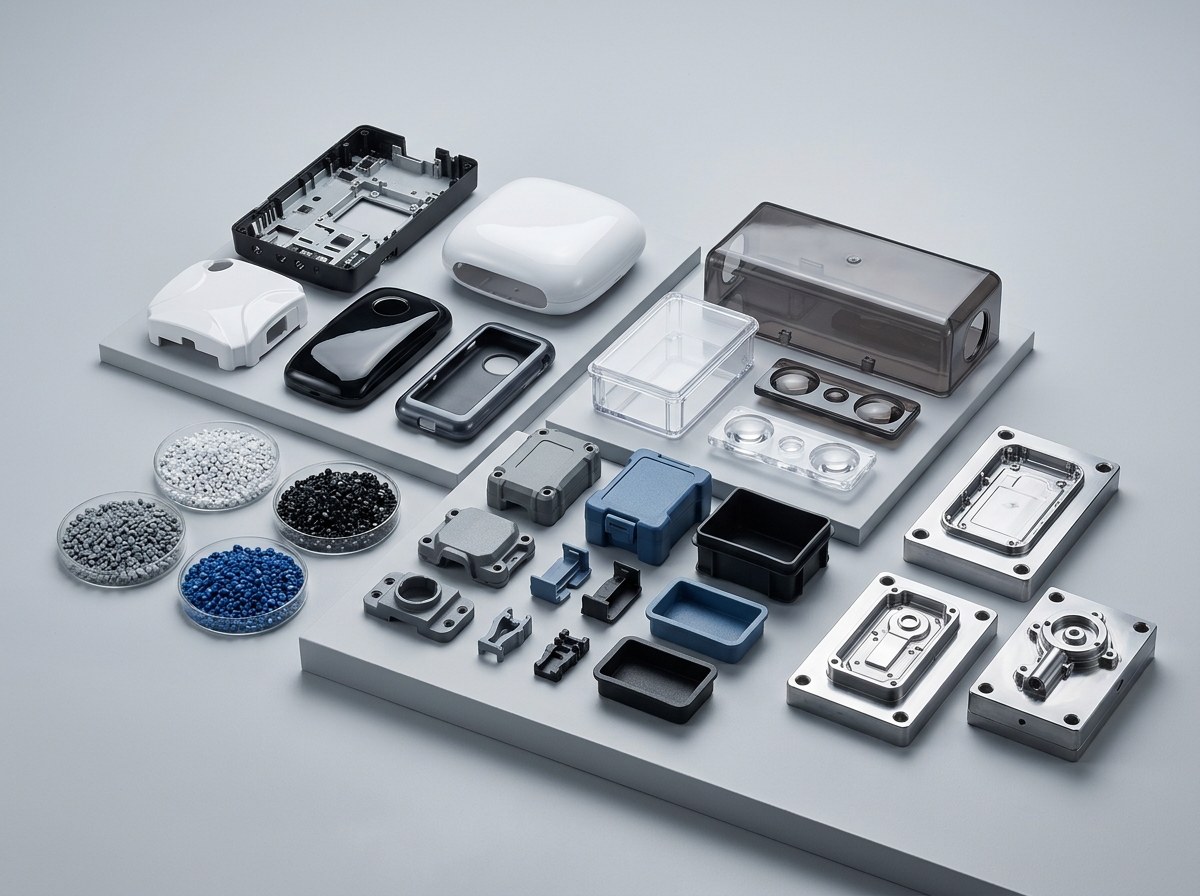
Surface finish and cost trade-offs in injection molding
Higher cosmetic standards usually increase tooling complexity, inspection effort, and rejection risk.
A polished cavity takes more labor to produce and maintain. A deeply textured cavity may require better venting and more precise release design. In both cases, the finish level can influence cycle stability and maintenance intervals because worn tool surfaces can create visible part-to-part variation.
That is why sourcing teams should evaluate finish not only by unit appearance, but also by lifecycle cost. A low-gloss finish that reduces scrap by avoiding cosmetic rejects can be more economical than a more expensive premium gloss that looks better but is harder to hold consistently.
For dimensional decision-making, the relevant idea is tolerance discipline. ISO tolerance systems such as ISO 286-1 help buyers and engineers communicate fit expectations clearly, which reduces disputes when the surface finish also affects assembly feel.
| Decision factor | Low-finish-cost choice | High-finish-cost choice | Typical consequence |
|---|---|---|---|
| Visibility | Matte | Polished | Higher defect visibility with gloss |
| Tooling labor | Light texture | Mirror polish | More polishing time for gloss surfaces |
| Assembly handling | Fine texture | Smooth polish | Texture improves grip during assembly |
| Maintenance | Moderate | High | Polished cavities often require stricter upkeep |
What buyers should ask before approving a plastic surface finish
Approving the finish too early is one of the most common reasons custom plastic parts miss expectations.
Buyers should ask whether the finish is intended to hide manufacturing variation, support branding, improve grip, or meet a functional need such as release or cleaning. They should also ask whether the sample is molded in the final material, because a surface that looks good in prototype resin can behave differently in production resin.
For projects involving electronics or appliance housings, it is also smart to confirm whether the finish must match other parts in a family of products. A slight change in gloss between two panels may be acceptable in isolation, but it can look inconsistent in a full assembled product.
- Ask for the finish standard, not just a verbal description.
- Confirm the final resin grade and color masterbatch.
- Check whether texture affects draft, ejection, or assembly fit.
- Review the finish under the actual lighting environment.
If the product is part of a larger enclosure program, it can help to review the broader manufacturing scope on the plastic injection molds page, compare structure-focused options on the plastic shell molds page, and assess complex geometry support through the 3D molds page. For buyers planning a complete package, the custom plastic parts page is the most direct reference point for finish, material, and production alignment.
How to specify the right finish in an RFQ
A strong RFQ makes the finish measurable, repeatable, and costed correctly.
Instead of writing “good surface finish,” include the target gloss level, texture family, visible side, and any cosmetic class requirements. If the part has two visible sides, define both sides separately, because the visible A-side often needs a different finish than the hidden B-side.
It is also useful to specify where finish matters most: outer cover only, finger-contact areas only, or the entire part. That helps the supplier avoid over-processing hidden surfaces that do not affect the user experience.
| RFQ field | Recommended detail | Why it matters |
|---|---|---|
| Finish type | Matte, semi-gloss, polished, or texture family | Prevents subjective interpretation |
| Visible area | A-side, B-side, or all surfaces | Controls cost and inspection scope |
| Material | Example: PC, ABS, PP, or blended grade | Finish result depends on resin behavior |
| Acceptance criteria | Scratches, gloss variation, knit line limits | Reduces quality disputes |
Best surface finish choices by application
The best finish changes by industry because the user expectation changes.
For consumer electronics, a fine matte or low-sheen texture often works best because it supports a premium but practical feel. For household appliances, semi-gloss or medium texture is common because it balances cleanability and appearance. For industrial parts, durability and scratch masking usually matter more than visual shine.
Medical and precision applications can require tighter cosmetic control, but the finish must still be compatible with cleaning and the intended resin. In those cases, process validation matters as much as visual approval.
- Electronics housings: fine matte or controlled semi-gloss.
- Appliance covers: semi-gloss or moderate texture.
- Industrial enclosures: texture that hides wear and supports grip.
- Transparent covers: polished or high-clarity finish with strict process control.
For organizations sourcing from a manufacturing partner, the most useful question is not “Which finish is best in general?” but “Which finish minimizes risk for this specific geometry, resin, and launch schedule?” That is where one-stop support can matter, especially when tooling, samples, and mass production need to stay synchronized.
FAQ about the best surface finishes for custom plastic parts
What is the most common finish for custom plastic parts?
A fine matte or light texture is the most common choice because it hides cosmetic variation and reduces fingerprint visibility while staying practical for injection molding.
Is a glossy plastic surface always better?
No. Gloss can look premium, but it also reveals scratches, flow lines, sink marks, and weld lines more easily than matte or textured finishes.
Does plastic surface finish affect molding cost?
Yes. Higher-polish finishes and deeper textures typically increase tooling labor, validation effort, and maintenance requirements.
Which finish is best for electronics housings?
Fine matte or controlled semi-gloss is often best because it balances appearance, grip, and defect masking on visible enclosure parts.
Can the same finish be used on all custom plastic parts?
No. The best finish depends on geometry, material, visible side, assembly requirements, and the product’s handling environment.
How should finish be written in a drawing?
Use measurable specifications such as finish family, visible side, and acceptance criteria, and align the notation with recognized standards such as ISO 1302.
What should I check before approving a sample?
Confirm the final resin, lighting condition, gloss consistency, visible defects, and whether the sample reflects production tooling rather than a prototype process.
In short, the best surface finish for custom plastic parts is the one that matches the part’s function, material, and commercial objective. In injection molding, the finish is never just cosmetic; it is part of the manufacturing strategy. When buyers define the finish early, write it clearly in the RFQ, and validate it on the final material, they usually get better appearance, lower risk, and more predictable mass production.

Post time: Jul-20-2026