
- Food-grade packaging is not just about the resin; tooling design, process control, and contamination prevention matter just as much.
- Rigid containers, closures, and thin-wall packaging often require different molding strategies, cavity counts, and cooling plans.
- For procurement teams, the best supplier is the one that can prove compliance, repeatability, and stable mass-production output.
- Real sourcing decisions should be based on measurable criteria such as dimensional tolerance, cycle time, and material documentation.
Food grade plastic injection molding for packaging is a manufacturing decision, not only a material choice, and the best outcomes usually come from programs that pair the right polymer with a validated mold and a controlled process window. For packaging buyers, the practical question is whether the part can meet food-contact expectations, run efficiently at scale, and maintain consistent wall thickness, seal performance, and appearance. In packaging engineering, those targets are often evaluated alongside documented compliance to FDA food contact substance guidance, dimensional tolerances that can be as tight as ±0.005 mm in precision molding contexts, and process control frameworks such as ISO 20457:2018.
What food-grade plastic injection molding means for plastic packaging
Food-grade plastic injection molding means the packaging part, the resin, the tooling, and the production environment are all selected to reduce contamination risk and support food-contact use. That distinction matters because a package can be technically moldable yet still fail procurement checks if the resin lacks the right declaration, the mold traps residue, or the process introduces colorant, lubricant, or regrind risk. In packaging, buyers usually need more than a molded part; they need a repeatable system that can support compliance documents, stable delivery, and predictable unit cost.
The most common packaging applications include caps, closures, tubs, trays, lids, jars, and tamper-evident components. These parts often have different mechanical priorities. A closure may need precise thread geometry and seal integrity, while a thin-wall container may prioritize fast fill, short cooling time, and high-volume consistency. A supplier offering plastic injection mold solutions and plastic shell mold development can help buyers compare part geometry, resin choice, and tooling strategy before the project enters mass production.
Best resin options for food grade plastic injection molding
The best resin for food packaging depends on product temperature, barrier needs, transparency, and mechanical load. There is no universal winner, because a dairy tub, condiment cap, and reusable storage container are not asking the same thing from the material.
| Resin | Typical packaging use | Strengths | Key limitation |
|---|---|---|---|
| PP | Tubs, lids, closures | Good chemical resistance, low density, broad processing window | Lower stiffness than some alternatives |
| PE | Caps, squeeze-friendly containers | Impact resistance, moisture resistance, cost efficiency | Lower heat resistance |
| PET | Clear jars, rigid food containers | Transparency, stiffness, good surface appearance | Processing sensitivity and drying control |
| PC | Reusable containers, premium transparent parts | High impact strength, dimensional stability | Higher cost and stricter processing control |
PP is one of the most common choices for food packaging because it offers a favorable balance of cost, processability, and chemical resistance. PE is often selected when impact resistance and squeeze behavior are important. PET is widely used when clarity and rigidity are required, while PC can be relevant for premium or reusable packaging where transparency and toughness matter. In the product context of 3D mold development, complex packaging shapes may also benefit from advanced tooling evaluation before resin lock-in.
Material selection should also consider the food-contact declaration path. In the United States, the FDA regulates food contact substances through a framework that includes notifications and compliance expectations for intended use. In the European market, packaging buyers often rely on Regulation (EC) No 1935/2004 and associated migration controls. If a program spans export markets, the resin specification should be checked against the target region before the tool is cut.
For technical validation, food-contact packaging teams often assess migration, heat exposure, and cleaning resistance. Packaging used for warm-fill or hot-fill applications must handle more thermal stress than a standard dry-food container. That is why process engineers and buyers should ask whether the part needs only room-temperature food contact or whether it will face sterilization, microwave heating, or repeated washing.
How to choose the right plastic injection molding solution for packaging
The best solution is the one that matches product geometry, production volume, and compliance burden. A straightforward container may need a simple single-cavity mold, while a high-volume cap program may justify a multi-cavity hot-runner design. The choice changes not only the tooling cost but also the scrap rate, cycle time, and inspection strategy.
| Packaging format | Recommended molding approach | Primary focus | Typical buyer concern |
|---|---|---|---|
| Caps and closures | Multi-cavity, high-repeat tooling | Thread accuracy and seal consistency | Leak risk and dimensional drift |
| Rigid food tubs | Thin-wall optimized molding | Fill balance and cooling control | Warping and weight variation |
| Clear jars | High-polish cavity finishing | Appearance and clarity | Haze, flow lines, and scratches |
| Reusable containers | Material stability and robust gate design | Impact and long-term use | Cracking and stress whitening |
For a sourcing team, the right question is not simply “Can you mold it?” but “Can you mold it repeatedly at the quality level my market needs?” That is where one-stop supply can help. A supplier that can support automatic lathe-supported component production for related tooling parts and project coordination and communication can reduce handoff loss between design, trial, and delivery. In packaging projects, fewer handoffs often mean fewer misunderstandings about tolerance, cosmetic requirements, and lead time.
When evaluating suppliers, buyers should ask for mold flow analysis, gate location logic, cooling design, and a sample approval plan. For food packaging, the process window matters because unstable melt temperature or uneven cooling can cause sink marks, warpage, and sealing inconsistency. A technically strong supplier will explain how the mold is designed to reduce trapped air, minimize weld lines, and maintain part-to-part repeatability.
 Food safety, compliance, and validation in plastic packaging
Compliance is the backbone of food-grade plastic injection molding, and it should be documented before production begins. A packaging part intended for food contact may need declarations about resin composition, additive limits, and intended-use conditions. Depending on the market, buyers may also need migration test support or material traceability records.
One useful benchmark is ISO 20457:2018, which addresses tolerances and acceptance conditions for injection-molded parts in relation to dimensional verification. For packaging buyers, that does not replace food-contact regulation, but it does give a quality framework for judging whether a part can hold its dimensions across production. In food packaging, small dimensional drift can affect lid fit, closure torque, or seal compression.
Another practical point is cleanliness. Packaging molds should be built and maintained so that residue, rust, and lubricant carryover are minimized. Food-grade programs often use designated cleaning routines, dedicated material handling, and controlled storage for raw resin and mold components. If a supplier cannot clearly explain its traceability flow, that is a risk signal for brand owners and importers.
| Validation item | Why it matters | Typical check method | Buyer decision impact |
|---|---|---|---|
| Material declaration | Confirms food-contact suitability | Supplier documentation review | High |
| Dimensional stability | Affects fit and sealing | First article inspection and SPC | High |
| Migration or compliance support | Supports regulatory acceptance | Third-party or supplier-backed records | High |
| Process repeatability | Reduces scrap and variation | Run-at-rate trial | High |
For global programs, the strongest suppliers understand that compliance is not a single certificate. It is a chain of evidence that includes resin selection, tool condition, process records, and shipping documentation. That chain is especially important for export-oriented projects where packaging must satisfy customer audits and regional import requirements.
Why tool design decides packaging quality more than most buyers expect
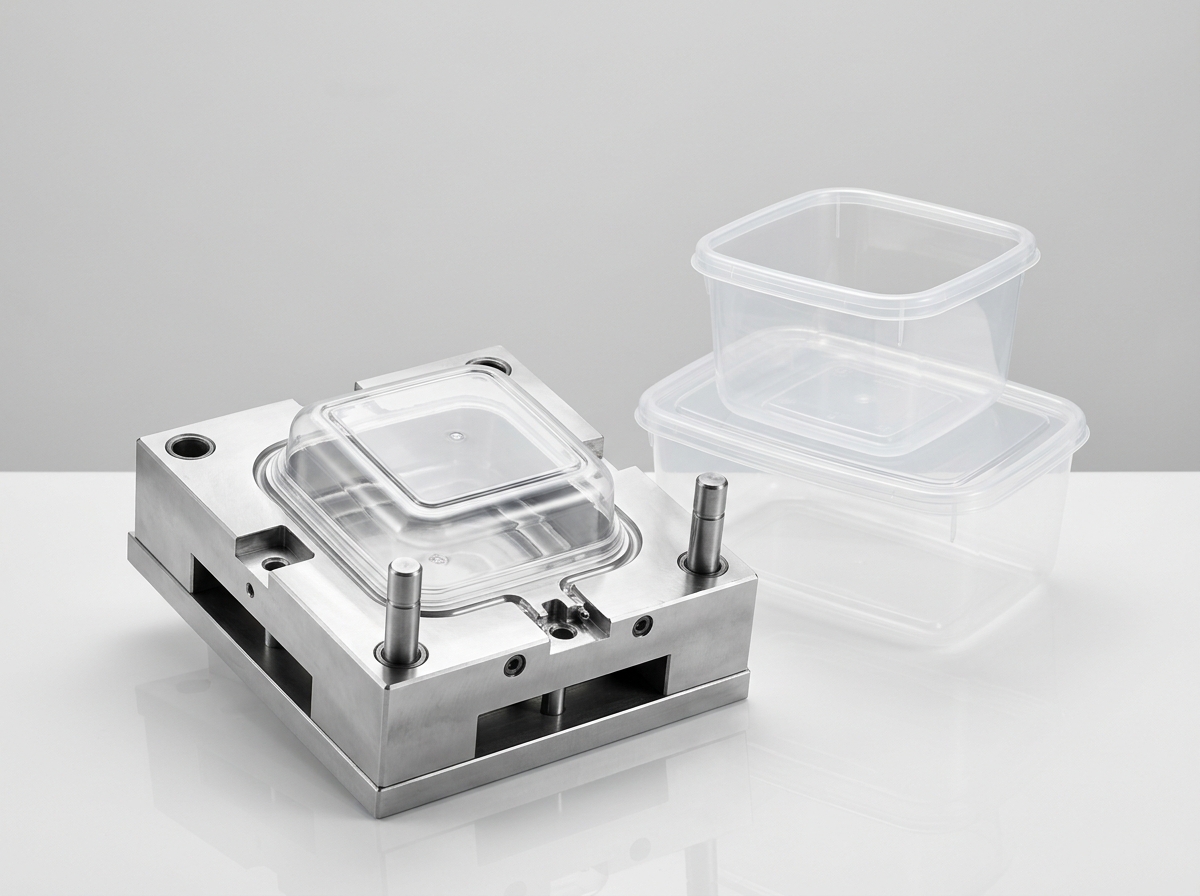
Tool design often determines whether a food packaging project becomes stable or troublesome. Even a good resin can produce poor packaging if the mold design cannot support balanced flow, sufficient venting, and predictable cooling. Packaging parts are especially sensitive because cosmetic defects and seal variation are easy to see and hard to ignore.
Hot-runner systems can reduce sprue waste and improve cycle consistency on multi-cavity packaging jobs. Cold-runner tools may be acceptable for lower volumes or simpler parts, but they often create more material waste and require more trimming. Cooling layout is equally important because uneven cooling can lead to warpage, ovality, and inconsistent lid closure.
For projects with differentiated shapes or premium branding, a supplier experienced in mill-turn machining for precision tooling components can improve the quality of inserts, cavity details, and wear-prone surfaces. That becomes relevant when the packaging design includes fine thread profiles, snap-fit features, or complex texture zones. In these cases, the mold is not just a production tool; it is a quality-control instrument.
Buyers should also pay attention to steel selection, vent depth, and ejection design. The right ejector layout reduces part deformation, and the right surface finish helps with release and appearance. If the packaging must stay visually clean, high polish on the cavity face can reduce visible defects. If the product is a utility container, durability and cycle time may matter more than mirror finish.
Cost, cycle time, and sourcing trade-offs in plastic packaging
Packaging buyers usually compare tooling cost against unit cost, lead time, and volume flexibility. The cheapest tooling quote is not always the lowest total cost, especially if the mold has poor cooling, unstable dimensions, or frequent maintenance needs.
Cycle time is one of the most important cost drivers in food-grade packaging. A few seconds saved per cycle can make a major difference in annual output when the project runs in high volumes. Industry estimates often show that optimizing cooling and runner design can materially improve throughput, but the exact gain depends on part thickness, resin, and cavity count. For that reason, buyers should ask for a cycle-time target during quotation, not after trial.
| Cost factor | What drives it | What to ask the supplier |
|---|---|---|
| Tooling cost | Cavity count, steel grade, finish level | Is the mold built for pilot run or mass production? |
| Unit cost | Cycle time, scrap, automation level | What is the expected stable output per hour? |
| Quality cost | Inspection, rework, warranty exposure | How are cosmetic and sealing defects controlled? |
| Logistics cost | Packing, shipping volume, lead time | Can the supplier support consolidated delivery? |
For buyers who need custom packaging development, working with a supplier that can move from drawings to samples quickly can reduce time-to-market. That is especially relevant for seasonal food launches, private-label projects, and co-packing programs. The business value is not only lower cost per part but also lower schedule risk.
One practical procurement approach is to request three numbers for every quote: target cycle time, expected dimensional tolerance range, and estimated mold life under the proposed maintenance plan. A quotation that does not address those points may look cheaper, but it is often missing the information needed for a real sourcing decision.
Packaging applications where food-grade plastic injection molding works best
Food-grade plastic injection molding works best when the packaging needs consistent geometry, repeatable closure behavior, and scalable output. It is a strong fit for caps, lids, condiment containers, reusable meal boxes, and rigid protective packaging for shelf-stable foods. It is less ideal when the product requires very deep barrier properties that are better served by multilayer structures or specialized films.
For consumer brands, the best use cases often combine functional and visual requirements. A clear food container may need premium appearance and impact resistance. A dairy lid may need easy snapping and tamper evidence. A dry-food bin may need stackability, stiffness, and long service life. The molding solution should reflect the real usage scenario rather than a generic packaging concept.
Packaging programs also benefit from supplier depth. A partner that can support custom plastic parts and replacement plastic components can help when the packaging system includes auxiliary clips, sealing elements, or spare parts tied to the same production platform. That reduces procurement fragmentation and can simplify inventory planning.
In retail and export channels, packaging buyers should also think about shelf impact. Good packaging is not only safe and functional; it also needs to remain consistent through transport, warehouse handling, and consumer use. If the part is part of a brand system, even small inconsistencies in gloss, fit, or transparency can affect perceived quality.
How procurement teams should evaluate a food-grade plastic injection molding supplier
The best supplier is the one that can prove process discipline, not just machining capability. A packaging buyer should evaluate design support, food-contact documentation, trial responsiveness, and mass-production stability in the same review.
- Ask for resin traceability and food-contact documentation before RFQ shortlisting.
- Review mold design details such as gate position, venting, and cooling layout.
- Request a sample approval plan with dimensional checkpoints and cosmetic criteria.
- Confirm the stable cycle time, expected scrap rate, and run-at-rate output.
- Check whether the supplier can support ongoing maintenance and spare parts.
Supplier communication is another hidden variable. For export projects, English documentation quality, response speed, and shipping coordination often matter as much as machine capacity. A technically capable supplier that cannot manage documentation can slow launch approval and create avoidable compliance friction.
That is why many buyers prefer solution-driven manufacturers over generic factories. A solution-driven partner can explain the trade-off between food-grade resin performance, tooling cost, and volume efficiency in plain language, while still maintaining the technical rigor expected in packaging engineering.
Practical comparison of food-grade packaging solutions
Different packaging problems call for different molding solutions, and the best choice depends on what failure would be most expensive in your market.
| Decision scenario | Best-fit solution | Why it wins | Risk if ignored |
|---|---|---|---|
| High-volume closure program | Multi-cavity injection mold | Lower unit cost and consistent fit | Leakage and lead-time pressure |
| Clear premium container | High-polish transparent resin process | Appearance and brand value | Haze and cosmetic rejection |
| Reusable food box | Tough, stable resin with robust mold cooling | Durability and warp resistance | Cracking or deformation |
| Export packaging program | Documentation-led supplier model | Compliance and traceability | Border or audit delays |
For many buyers, the winning choice is a supplier that can combine engineering support, traceable materials, and repeatable manufacturing under one roof. If your packaging project also involves adjacent product lines, choosing a partner with broader mold experience can reduce development time and improve consistency across SKUs.
Conclusion: the best food-grade plastic injection molding solution is the one you can scale
The best food-grade plastic injection molding solution for packaging is the one that balances compliance, function, and production stability at scale. If the resin is suitable, the tooling is designed for the part geometry, and the process is validated with measurable criteria, the result is packaging that is safer to source, easier to approve, and more predictable to manufacture. For buyers, the smartest decision is usually not the lowest upfront quote, but the supplier and process model that can hold dimensions, protect food-contact integrity, and deliver stable output over time.
FAQ
What is the most common resin for food-grade plastic injection molding in packaging?
PP is one of the most common choices because it offers a good balance of cost, chemical resistance, and processability for lids, tubs, and closures.
How do I know if a packaging part is food grade?
You should ask for material declarations, intended-use confirmation, and any migration or compliance documentation required for your target market.
Is plastic injection molding suitable for clear food packaging?
Yes, it is suitable when transparency, polish, and dimensional control are important, but the resin and process must be chosen carefully to avoid haze and distortion.
What affects cycle time in food packaging molding?
Cooling design, wall thickness, cavity count, runner type, and resin behavior all affect cycle time.
Why is mold design so important for food packaging?
Mold design controls fill balance, venting, cooling, and ejection, which directly influence appearance, fit, and consistency.
Can food-grade packaging use recycled material?
It may be possible in some applications, but it depends on regulatory requirements, end-use, and the available compliance documentation.
What should I ask a supplier before placing a food packaging order?
Ask about resin traceability, food-contact documentation, dimensional tolerance, cycle time, mold maintenance, and sample approval procedures.
Post time: Aug-14-2026