
- One-stop injection mold and plastic product manufacturing reduces supplier switching, which lowers coordination risk and saves schedule time.
- It is especially valuable for consumer electronics, home appliances, industrial covers, and multi-SKU product programs that need stable repeatability.
- Integrated DFM, tooling, sampling, and production improve root-cause analysis when fit, finish, or warpage issues appear.
- Verified standards and measurement methods matter: plastic part quality should be checked against defined tolerance and inspection criteria, not subjective approval.
- The best supplier is not only a mold builder; it is a process owner that can move from drawing review to production-ready parts with clear traceability.
One-stop injection mold and plastic product manufacturing services matter because the economics of plastic part sourcing are often lost in the interfaces, not the machining. For example, dimensional verification, tool trials, and repeatability checks should be aligned with standards such as ISO 20457:2018 for plastics and ISO 20457 testing context, while surface and fit decisions for electronic housings often depend on realistic production targets rather than prototype assumptions. In consumer-facing projects, this integrated approach helps teams move from CAD to usable parts faster, with fewer reworks and clearer accountability across tooling, molding, and finishing.
Why One-Stop Injection Mold and Plastic Product Manufacturing Reduces Project Risk
One-stop injection mold and plastic product manufacturing reduces risk by collapsing multiple technical decisions into one controlled workflow.
When mold design, resin selection, sampling, and mass production are handled by different vendors, the buyer becomes the middleman for every mismatch. A gate location that works on paper may create weld lines on a cosmetic housing. A wall thickness that looks acceptable in CAD may produce sink marks on a PC enclosure. A one-stop supplier can adjust the tool, process window, and inspection method together, which is usually faster than negotiating across separate companies.
This matters most in projects where the plastic part is not just a component but a visible product surface. Electronic housings, appliance panels, and industrial covers often need repeatable appearance, assembly fit, and structural reliability. If the supplier understands the final application from the beginning, the mold steel selection, draft angle, rib design, and cooling layout can all be optimized for real production behavior, not just prototype success.
The strongest sourcing advantage is continuity. The same engineering team that reviews the drawing is also responsible for trial results, corrective actions, and production stability. That continuity is often the difference between a quick pilot launch and a costly late-stage redesign.
Injection Mold Services and Plastic Product Manufacturing: What Buyers Actually Gain
Buyers gain speed, consistency, and clearer cost control when injection mold services and plastic product manufacturing are integrated.
The first gain is schedule compression. A mold-only supplier may finish tooling and then hand the project to another molder who discovers process issues later. A one-stop partner can perform design-for-manufacturing review before steel is cut, which helps catch undercuts, thin walls, ejector marks, and parting-line conflicts early. That reduces trial iterations and can shorten the path to stable production.
The second gain is quality ownership. If a housing shows warpage or a snap-fit fails, the same team can inspect the mold, review molding parameters, and compare the issue against the product drawing. That is much easier than proving whether the problem came from tooling, resin drying, or assembly handling when each step belongs to a different vendor.
The third gain is commercial clarity. Buyers often need a single quote that covers tooling, sampling, production, finishing, packaging, and export readiness. One-stop sourcing simplifies total landed cost analysis because the buyer can compare one integrated offer instead of stitching together hidden charges from several suppliers.
For companies launching a new product line, this integrated model is especially useful when supplier management time is limited. It lets procurement teams focus on part performance, approval timing, and long-term supply reliability rather than daily coordination between disconnected vendors.
| Buyer concern | Multi-vendor workflow | One-stop workflow | Typical impact |
|---|---|---|---|
| Design changes | Several handoffs | Single engineering loop | Faster feedback and fewer revision cycles |
| Tool trial ownership | Split responsibility | Unified accountability | Clearer root-cause analysis |
| Sampling to production | Transfer delay risk | Direct ramp-up | Shorter launch schedule |
| Communication | Multiple contacts | One project owner | Lower misunderstanding risk |
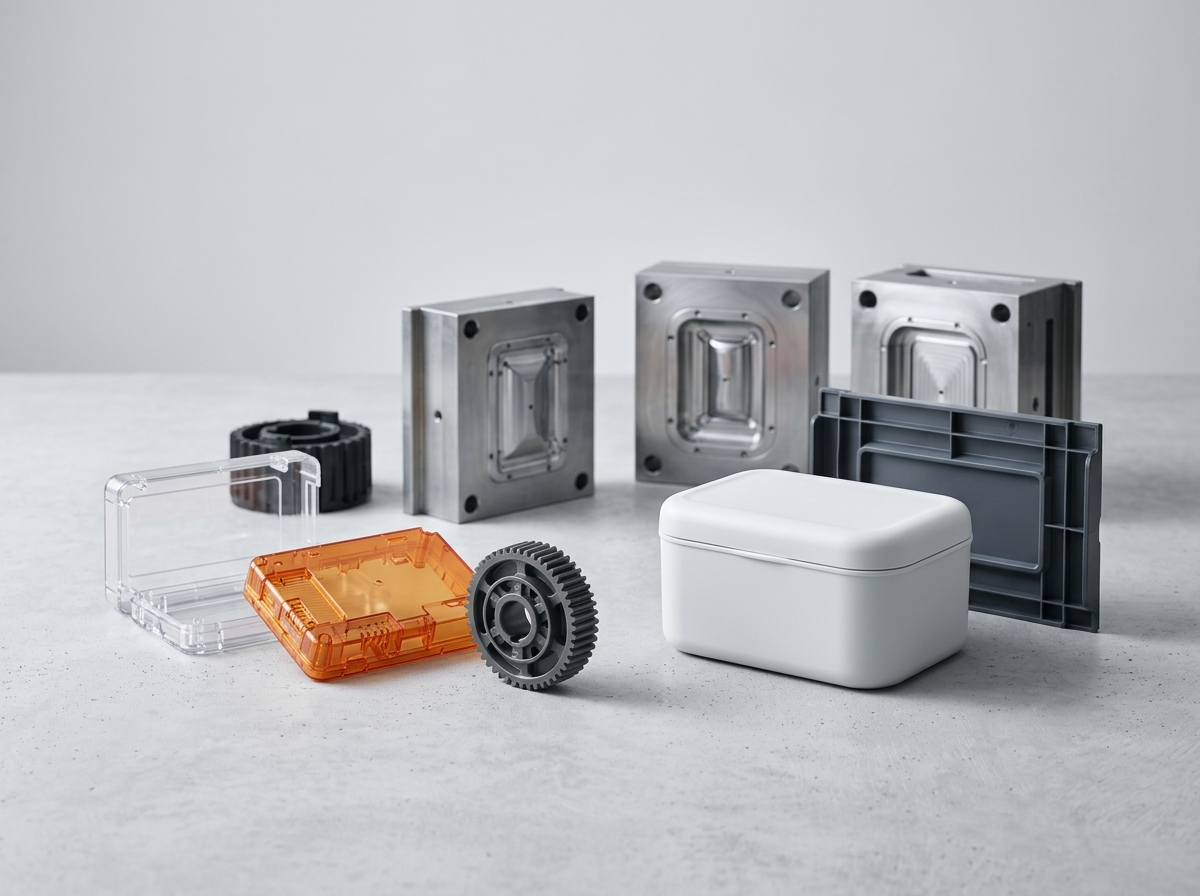 Injection Mold, Plastic Product Manufacturing, and the Standards That Protect Quality
Quality becomes more predictable when plastic product manufacturing is tied to measurable standards instead of subjective approval.
For plastic parts, tolerancing and verification should start with a defined measurement plan. In practice, many projects reference ISO-based drawing conventions and acceptance criteria so that dimensional checks, flatness, and fit are judged consistently. For inspection systems, NIST resources on measurement traceability are useful because they remind buyers that repeatable metrology matters as much as tool precision.
For material selection, the resin grade must match the end use. PC is widely used for transparent or impact-resistant housings because it combines toughness with dimensional stability. In electrical and electronic applications, flammability considerations may also be relevant, and buyers often ask whether a material aligns with UL 94 requirements or equivalent product safety targets depending on the market. The point is not to choose the most expensive polymer; it is to choose the one that supports the part’s geometry, appearance, and service environment.
Tool quality also affects throughput. Mold design decisions such as gate type, cooling circuit layout, and venting directly influence cycle time and cosmetic consistency. Even small changes in cooling efficiency can improve process stability because temperature control drives shrinkage behavior. In mass production, that stability is often more valuable than marginal material savings.
| Quality factor | Why it matters | Example control point | Reference |
|---|---|---|---|
| Dimensional accuracy | Fit and assembly | Critical-to-fit features | Drawing tolerances and inspection plan |
| Material choice | Impact, transparency, stability | PC for housings | Supplier material datasheet |
| Process repeatability | Appearance consistency | Drying and melt temperature | Validated process window |
| Measurement traceability | Reliable acceptance | CMM or gauge calibration | NIST |
When One-Stop Manufacturing Is the Best Fit for Injection Mold Projects
One-stop manufacturing is best for projects that need speed, repeatability, and coordinated engineering support.
Consumer electronics is a classic example. Housings for routers, chargers, smart devices, and accessories often need clean parting lines, controlled snap-fit strength, and stable cosmetic finish. These products usually have short launch windows, so any delay in mold modification or sampling can affect retail timing.
Home appliance programs also benefit because they often require consistent fit across multiple components. A cover, bezel, button frame, and internal bracket may all need to align within the same assembly stack-up. If one supplier makes the mold and another runs production, accountability can become unclear when assembly problems appear.
Industrial components are another strong match. These parts may not need glossy cosmetics, but they often need long service life, stable supply, and strong structural reliability. A one-stop partner can maintain tooling, replace worn inserts, and keep process parameters aligned over the life of the program.
One-stop manufacturing is also valuable for custom plastic parts that go through frequent iterations. If the buyer expects engineering changes, branding updates, or SKU expansion, the supplier’s ability to adapt tooling and production without restarting the sourcing process can save both time and cost.
How a One-Stop Supplier Supports Plastic Housing Mold and 3D Mold Development
Plastic housing mold projects benefit most when the supplier can turn concept geometry into production-ready tooling quickly.
Housing parts are unforgiving because they combine appearance, assembly, and structural performance. A minor error in draft angle can create ejection marks. A hidden rib conflict can weaken a clip. A poor cooling layout can lead to warpage across a visible surface. That is why buyers should ask whether the supplier can review wall thickness, gate placement, boss design, and assembly interfaces before tooling starts.
For more complex shapes, 3D mold development is often the right route. Curved surfaces, asymmetrical bodies, and visually distinctive product shells require more careful planning than simple rectangular enclosures. In those cases, one-stop suppliers are useful because they can connect modeling choices to molding reality. The result is usually fewer surprises during trial production.
Buyers can also evaluate whether the supplier has separate support for plastic injection molds, injection molded parts, and custom plastic parts. That structure matters because it signals whether the company can handle both tooling and part delivery instead of only one side of the project.
For buyers comparing providers, a supplier with plastic housing mold capability is often better positioned to solve fit and appearance issues early, while a broader 3D mold workflow may be better for differentiated product design and rapid product development.
What to Ask Before Choosing One-Stop Injection Mold and Plastic Product Manufacturing Services
The right supplier is the one that can prove process control, not just show equipment photos.
- Ask for DFM feedback examples, including how wall thickness, ribs, and draft angles were adjusted before tooling.
- Ask what inspection equipment is used for first article and production checks, and whether calibration records are available.
- Ask how mold modifications are handled after trial, including response time and responsibility for corrective actions.
- Ask whether the supplier supports material selection for PC, ABS, PP, PA, or glass-filled grades based on product requirements.
- Ask how production consistency is maintained across batches, especially for visible parts and tight-assembly components.
These questions matter because procurement risk usually appears after the first samples, not before. A vendor can quote a low tooling price and still create expensive delays if trial loops, unclear communication, or unstable molding parameters push the project off schedule. In one-stop sourcing, buyers should pay attention to the quality of the engineering conversation, not just the size of the machine list.
As a practical rule, the best suppliers speak in terms of process windows, dimensional control, and end-use requirements. If a partner can connect the drawing to the production plan in clear language, they are more likely to deliver stable results.
Cost, Lead Time, and Quality: The Real Business Case for One-Stop Manufacturing
The strongest business case for one-stop manufacturing is usually total cost of ownership, not just tool price.
In plastic product manufacturing, the visible quote is only part of the cost. Buyers also pay for communication time, sample revisions, shipping coordination, inspection delays, and the opportunity cost of a missed launch window. When one supplier owns the full chain, many of these hidden costs shrink because decisions happen inside one project loop.
Lead time also improves because engineering changes do not need to cross organizational boundaries. If the mold needs venting improvement or the gate position needs adjustment, the same team can move from analysis to modification more quickly. That speed can be especially important for seasonal products and promotions.
Quality benefits are equally important. A stable one-stop supplier can archive tooling history, process settings, and part approval data so that future batches match the original sample more closely. That historical continuity is valuable for replacement parts, long-life programs, and export accounts that require documentation discipline.
| Business factor | What one-stop improves | Buyer outcome |
|---|---|---|
| Total cost | Fewer handoffs and less rework | More predictable landed cost |
| Lead time | Direct engineering-to-production flow | Faster launch readiness |
| Quality control | Unified responsibility | Stronger traceability |
| After-sales support | Tool maintenance and spares | Lower downtime risk |
How to Evaluate a One-Stop Injection Mold and Plastic Product Manufacturing Partner
The best evaluation method is to test whether the supplier can think like a product engineer and a production owner at the same time.
Start with the drawing review. A strong supplier will ask about application, assembly constraints, expected volume, resin choice, appearance targets, and export destination. That shows they are designing for use, not just for manufacturability in isolation.
Next, review the sampling plan. Stable suppliers usually define what will be checked at trial, who signs off on changes, and how deviations are documented. This is especially important for custom plastic product manufacturing because each revision can affect fit, texture, and part strength.
Finally, examine post-launch support. Tool maintenance, spare parts, and repeat-order management matter more than many buyers expect. A one-stop supplier with a maintenance mindset can extend mold life and reduce downtime risk, which is often the hidden profit lever in repeated programs.
If you are sourcing in a cross-border environment, ask how the supplier handles English communication, document response time, packaging labels, and shipping coordination. Those capabilities are not “extras”; they are part of delivery reliability for export-focused buyers.
Conclusion: Why One-Stop Injection Mold and Plastic Product Manufacturing Wins in Real Purchasing Decisions
One-stop injection mold and plastic product manufacturing wins because it aligns engineering, quality, and supply chain control inside one responsibility structure.
For buyers, that means fewer supplier interfaces, clearer accountability, faster problem solving, and a better chance of moving from design intent to stable mass production without repeated handoff losses. The model is especially strong for housings, consumer electronics, appliance parts, industrial covers, and custom plastic parts that must combine appearance, fit, and repeatability.
The smartest purchasing decision is not choosing the lowest quote in isolation. It is choosing a supplier that can prove process control, communicate clearly, and support the project from first review to repeat production. That is where one-stop manufacturing creates its real value.
FAQ
What is one-stop injection mold and plastic product manufacturing?
It is a service model where the same supplier handles mold design, tooling, trial production, mass molding, inspection, and often packaging or export coordination.
Why is one-stop manufacturing better for custom plastic parts?
It reduces handoffs, lowers communication risk, and makes it easier to correct design or process issues before production scales up.
Is one-stop sourcing good for plastic housing mold projects?
Yes. Housing projects need stable fit, appearance, and structural performance, which are easier to control when one team owns both the mold and the molding process.
How does one-stop manufacturing improve quality control?
It keeps DFM, tool trials, and production checks in one workflow, so the same team can trace defects back to tooling, material, or process settings faster.
What materials are commonly used in plastic product manufacturing?
Common materials include PC, ABS, PP, PA, and glass-filled grades, selected according to impact resistance, appearance, stiffness, and service environment.
What should buyers ask before choosing a supplier?
Ask about DFM support, inspection methods, trial response time, material selection guidance, and long-term mold maintenance.
When is one-stop manufacturing most valuable?
It is most valuable when deadlines are tight, the product has visible surfaces or tight assemblies, or the buyer needs repeatable long-term supply.
Post time: Jul-24-2026