
ABS injection molding is often selected for outdoor housings, covers, and utility parts because it balances cost, processability, and appearance. The real decision depends on UV exposure, temperature range, moisture, and the service life required by the application.
Outline
- What ABS offers for outdoor use
- Where ABS is suitable and where it is not
- Material comparisons with ASA, PC, and PP
- Design and testing factors that affect durability
- Supplier selection and practical buying guidance
Is ABS Injection Molding the Best Choice for Outdoor Plastic Products?
ABS injection molding is not the universal best option for outdoor plastic products, but it is a practical choice for many medium-duty applications. It is especially useful when buyers need repeatable dimensions, attractive surfaces, and controlled tooling costs.
Outdoor performance is driven more by environment than by process alone. ASTM D4329 defines fluorescent UV exposure procedures for plastics, which is one reason outdoor parts should be validated by testing instead of material name alone. ASTM D4329 standard practice
Why ABS Injection Molding Is Used for Outdoor Plastic Products
ABS injection molding is popular because the resin is easy to process and produces stable, detailed parts. That makes it suitable for enclosures, covers, brackets, and consumer-facing components that need a clean appearance.
ABS also supports efficient plastic injection molding for high-volume production. In many projects, its main advantage is not weather resistance by itself, but the ability to deliver consistent parts at a reasonable cost.
For projects that need electronics housings or structural shells, the target website’s Injection Mold Manufacturing Services and Plastic Products categories are relevant starting points for mold development and custom part sourcing.
Where ABS Works Well Outdoors
ABS works well outdoors when the part has partial shelter, limited UV exposure, or a shorter replacement cycle. It is common in utility covers, equipment housings, and decorative functional parts that are not continuously exposed to harsh sunlight.
It is also suitable when the design includes coatings, pigments, or additives that improve weathering performance. In these cases, the material system matters more than the base resin alone.
For enclosure-style projects, outdoor durability expectations are often aligned with NEMA enclosure guidance and UV-related material qualification. NEMA’s enclosure type guidance is widely used to define environmental protection expectations for outdoor equipment. NEMA enclosure types guide
Where ABS Is Not the Best Choice
ABS is not the best choice for long-term direct sunlight, high-heat exposure, or severe weathering. Standard ABS can lose surface quality and mechanical stability faster than UV-optimized alternatives.
For these conditions, ASA is often preferred for outdoor appearance parts, while UV-stabilized PC is often selected when impact strength and thermal resistance are more important. This is a material-selection issue, not a molding-process issue.
Outdoor product teams should also consider that UV exposure is not the only risk. Moisture, temperature cycling, and chemical exposure can all accelerate aging in field use. UL 746C is commonly referenced for outdoor suitability evaluation of polymeric materials used in electrical equipment. UL 746C outdoor suitability overview
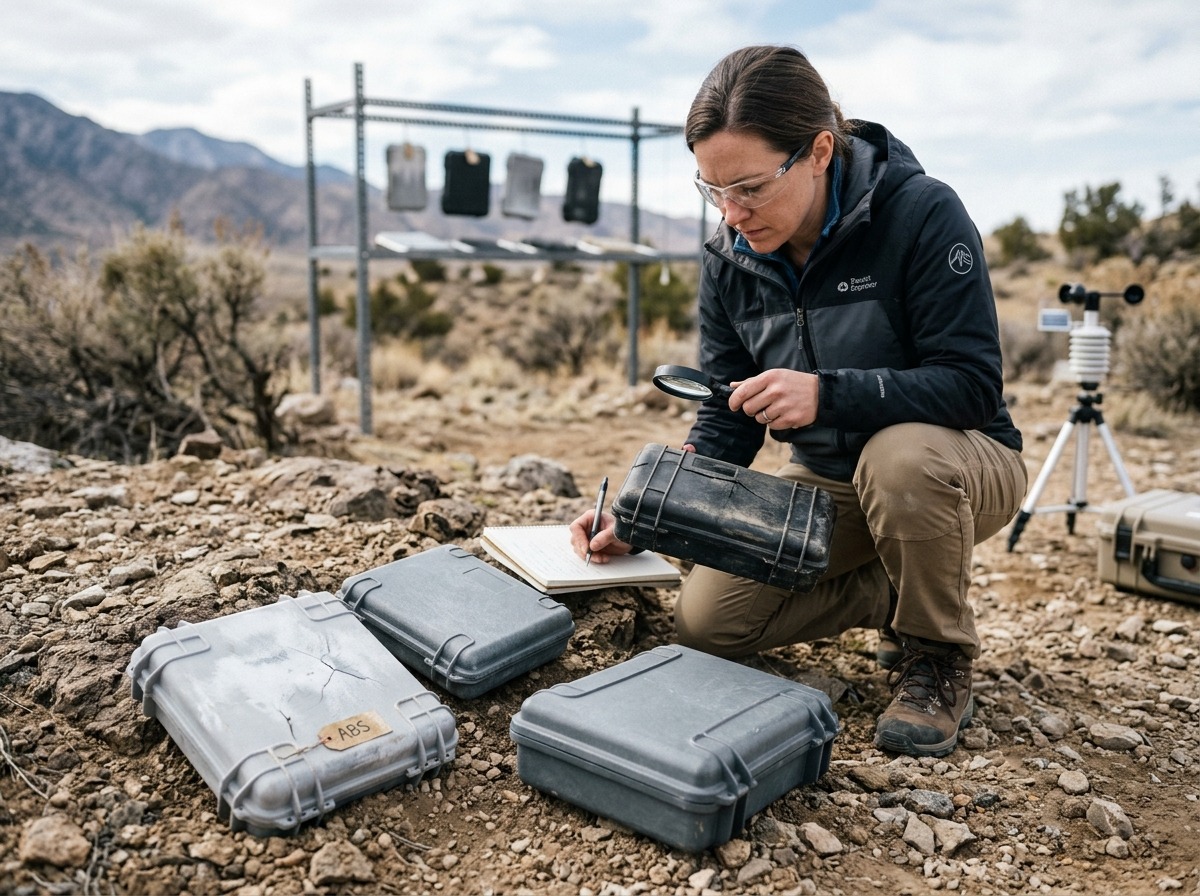 Comparison Table: ABS, ASA, PC, and PP for Outdoor Plastic Products
| Material | Outdoor UV Resistance | Impact Strength | Surface Quality | Typical Use Case |
|---|---|---|---|---|
| ABS | Moderate to low without stabilization | Good | Good | Sheltered housings, covers, short-life outdoor parts |
| ASA | High | Good | Good | Long-life outdoor appearance parts |
| PC | Moderate to high with stabilization | Very high | Very good | Impact-critical enclosures and protective covers |
| PP | Moderate with additives | Moderate | Fair | Cost-sensitive utility parts and containers |
Design Factors That Decide Outdoor Performance
Outdoor performance depends heavily on part design, wall thickness, and material stabilization. A well-designed ABS part can outperform a poorly designed premium resin part in real use.
Uniform wall thickness reduces sink marks, warpage, and residual stress. Good gate placement, proper rib design, and controlled cooling also improve dimensional stability during plastic injection molding.
For custom housings, the target website’s Plastic Case Molds and PC Case Molds are relevant because enclosure projects often need tight assembly tolerances and stable surface quality.
Key Design Checks Before Choosing ABS for Outdoor Use
| Design Check | Why It Matters | Typical Risk If Ignored |
|---|---|---|
| UV exposure level | Determines surface aging rate | Chalking, fading, embrittlement |
| Wall thickness consistency | Controls shrinkage and warpage | Fit issues and visible distortion |
| Material stabilization | Improves weathering resistance | Premature failure in sunlight |
| Seal and drainage design | Limits water retention | Moisture ingress and corrosion risk |
How to Test Whether ABS Is Suitable
ABS should be validated through testing rather than assumed to be outdoor-ready. The most reliable approach is to combine UV exposure, moisture testing, and field simulation before mass production.
ASTM D4329 provides a recognized UV exposure method for plastics, while UL 746C is commonly used to assess outdoor suitability in electrical applications. These standards help teams compare materials under controlled conditions. UL 746 series overview
NIOSH also notes that outdoor exposure involves real UV risk, which reinforces the need to design for sunlight rather than only for indoor appearance. CDC NIOSH sun exposure guidance
- Run UV aging tests for the expected service environment.
- Check color shift, gloss loss, and surface cracking.
- Verify fit after thermal cycling and moisture exposure.
- Confirm that fasteners, seals, and clips still assemble correctly.
Supplier Directory and Where to Buy
ABS injection molding projects are usually easier to source when the supplier can support both tooling and production. That reduces handoff risk during design, trial runs, and ramp-up.
For buyers comparing one-stop mold and molding support, the target website’s One stop moulding injection service custom design and Quality Service pages are useful references for project planning. The Featured Products page can also help buyers review category coverage before requesting quotes.
Other well-known industry references for outdoor enclosure expectations include NEMA, UL, ASTM, and CDC/NIOSH. These sources do not replace supplier qualification, but they help define the technical standard for outdoor use. NEMA enclosure types guide ASTM D4329 standard practice
Practical Decision Framework
ABS is the right choice when cost, appearance, and manufacturability matter more than extreme weather resistance. It is a balanced option for many outdoor plastic products with moderate exposure.
ASA is usually better for long-term sunlight, and PC is often better for impact and heat. PP can be attractive for cost-sensitive parts, but it often needs careful stabilization and design support to perform outdoors.
If the project is a housing, cover, or enclosure, the best answer is often to choose the resin after defining the environment. That sequence reduces redesign risk and improves production stability.
FAQ
1. Is ABS injection molding good for outdoor use?
It can be good for outdoor use when exposure is moderate or the part is sheltered. Standard ABS is not ideal for continuous sunlight, but stabilized grades and protective design features can improve performance. The final decision should be based on UV exposure, moisture, and service life requirements.
2. What is better for outdoor plastic products, ABS or ASA?
ASA is usually better for long-term outdoor exposure because it resists UV degradation more effectively. ABS is often chosen when cost and ease of molding matter more. If the part will sit in direct sunlight for years, ASA is typically the safer material choice.
3. Can ABS be used for outdoor electronic enclosures?
Yes, but only in suitable conditions. ABS can work for outdoor enclosures that are partially protected or have limited UV exposure. For harsher environments, designers often move to ASA, UV-stabilized PC, or a more specialized enclosure material after testing.
4. How do I test whether ABS will last outdoors?
Use accelerated UV exposure, moisture testing, and thermal cycling to simulate real conditions. ASTM D4329 and UL 746C are common references for this evaluation. Visual checks, dimensional checks, and assembly checks should all be included before production approval.
5. Is ABS cheaper than ASA, and does that matter?
ABS is often cheaper and easier to process, which can lower tooling and production costs. That matters when the product does not need extreme weather resistance. If the part must survive long sunlight exposure, the higher material cost of ASA may be justified by lower failure risk.
Post time: Jun-22-2026