
Introduction
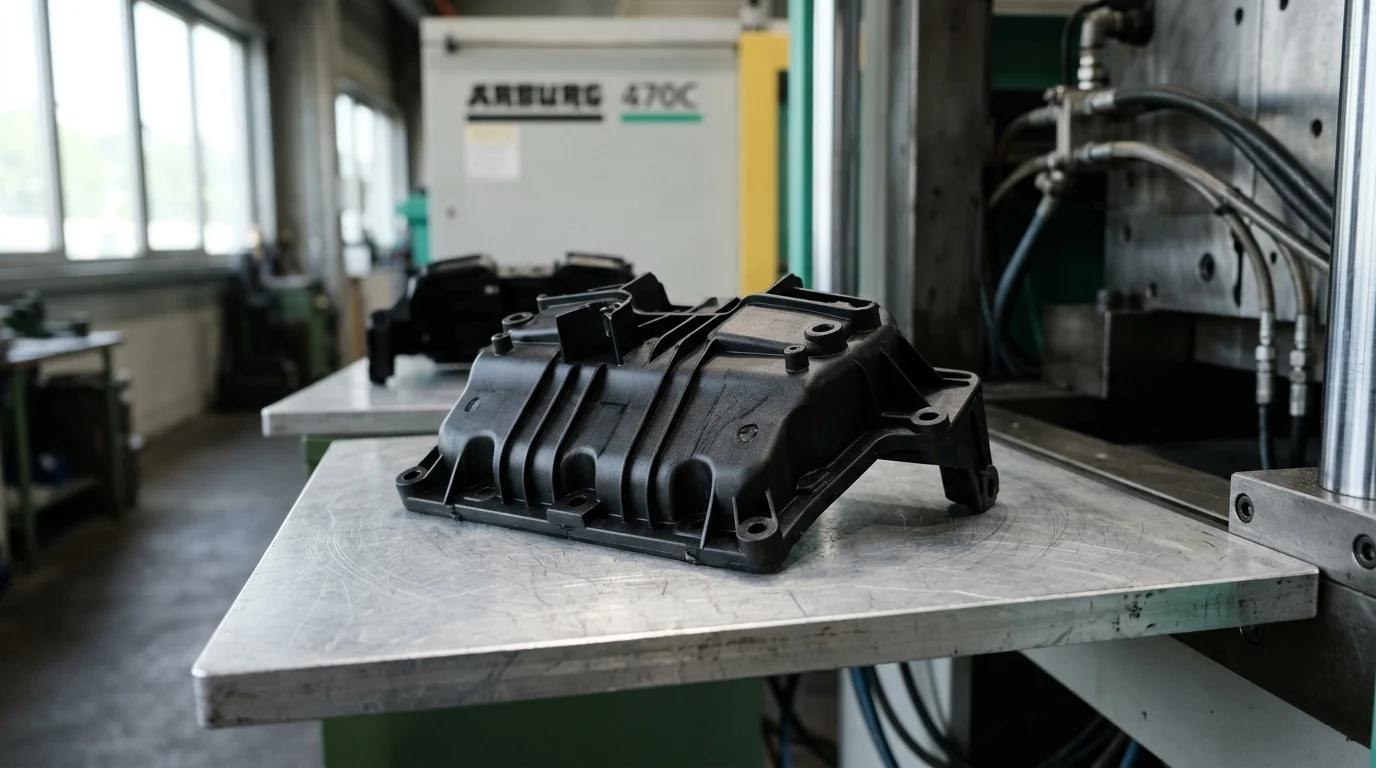
Automotive manufacturers use custom ABS injection molding to produce plastic components that must be light, durable, and consistent at scale. The process combines the material advantages of ABS—impact resistance, dimensional stability, and good surface finish—with tooling and part design tailored to specific vehicle requirements. This makes it especially useful for interior trim, housings, panels, and other parts that need both functional performance and visual quality. Understanding how custom ABS molding supports cost control, weight reduction, finishing options, and production efficiency helps clarify why it remains a practical choice for modern automotive applications.
How ABS Injection Molding Creates Value in Automotive
The automotive industry constantly seeks manufacturing processes that balance structural integrity, aesthetic versatility, and weight reduction. As vehicle architectures evolve to accommodate electric vehicle (EV) platforms and stricter fuel efficiency mandates, custom polymer fabrication has become indispensable. Among the various thermoplastic processes available, ABS injection molding stands out as a critical method for manufacturing high-volume, dimensionally stable automotive components.
Why ABS remains a preferred automotive plastic
Acrylonitrile Butadiene Styrene (ABS) offers a unique triad of properties derived from its constituent monomers: acrylonitrile provides chemical resistance and thermal stability, butadiene ensures impact toughness, and styrene delivers a rigid, easily machinable matrix. This combination results in a thermoplastic with a relatively low density of approximately 1.04 to 1.07 g/cm³, making it significantly lighter than traditional die-cast metal parts.
Furthermore, ABS is highly receptive to secondary finishing processes. It is one of the few automotive plastics that can be easily electroplated, painted, or textured directly out of the mold. This aesthetic flexibility allows automotive designers to achieve premium metallic finishes on interior trims or grilles without the weight penalty or high manufacturing costs associated with actual metal components.
What commercial pressures drive custom ABS molding
Automakers face mounting pressure to improve fuel economy, extend EV battery ranges, and optimize complex global supply chains. Every gram of weight saved in a vehicle’s interior or non-structural exterior translates directly to efficiency gains. By replacing heavier materials with ABS, engineers can achieve weight reductions of 15% to 30% per component.
Commercially, the drive toward custom injection molding is heavily influenced by the need for economies of scale. While initial tooling investments can be substantial, the per-unit cost drops precipitously when production volumes exceed 50,000 to 100,000 units. The rapid cycle times of ABS molding—often ranging from 30 to 60 seconds per part—allow Tier 1 suppliers to meet the aggressive just-in-time (JIT) delivery schedules demanded by major Original Equipment Manufacturers (OEMs).
Material and Performance Requirements for ABS Automotive Parts
Meeting the rigorous demands of the automotive sector requires a deep understanding of polymer science and specific application environments. Automotive parts are subjected to extreme temperature fluctuations, UV exposure, and mechanical stress, necessitating careful material selection and performance validation.
Which ABS properties matter most in automotive use
The mechanical and thermal properties of ABS dictate its suitability for vehicular applications. Tensile strength is a primary metric, with standard automotive-grade ABS typically exhibiting values between 40 and 50 MPa. Impact resistance is equally critical, especially for parts located in crash zones or high-traffic interior areas; a standard Izod impact strength of 200 to 400 J/m is generally required to prevent shattering upon blunt force.
Thermal stability is another vital parameter. Automotive interiors can experience severe greenhouse effects when parked in direct sunlight. Consequently, ABS grades selected for these environments must possess a Heat Deflection Temperature (HDT) of at least 85°C to 100°C at 1.8 MPa, ensuring the parts do not warp, sag, or lose their dimensional integrity under sustained thermal loads.
Which automotive components are best suited to ABS
Given its versatile surface finish capabilities and strong mechanical profile, ABS is predominantly utilized for interior and non-structural exterior applications. Inside the cabin, it is the material of choice for dashboard components, center console housings, instrument clusters, and steering column covers. Its ability to absorb impact safely makes it ideal for these passenger-facing areas.
On the vehicle’s exterior, ABS is frequently molded into mirror housings, wheel covers, radiator grilles, and light bezels. For exterior parts exposed to harsh weather and sunlight, manufacturers often use specialized ABS blends or apply UV-resistant coatings to prevent the polymer matrix from degrading or yellowing over the vehicle’s lifespan.
How to compare ABS with alternative materials
Engineers frequently evaluate ABS against alternatives like Polypropylene (PP) and Polycarbonate (PC) during the design phase. While PP is cheaper and offers better chemical resistance, it lacks the dimensional stability and premium finish capabilities of ABS. Conversely, PC offers superior heat resistance and impact strength but is significantly more expensive and harder to process.
| Material | Density (g/cm³) | Tensile Strength (MPa) | Heat Deflection Temp (°C) | Relative Cost | Best Use Case |
|---|---|---|---|---|---|
| ABS | 1.05 | 40 – 50 | 85 – 100 | Medium | Interior trims, plated grilles |
| Polypropylene (PP) | 0.90 | 25 – 35 | 60 – 80 | Low | Hidden structural parts, bumpers |
| Polycarbonate (PC) | 1.20 | 60 – 70 | 130 – 140 | High | Headlight lenses, high-heat zones |
By blending materials—such as creating a PC/ABS alloy—manufacturers can bridge the gap, achieving the high heat resistance of Polycarbonate while maintaining the processability and cost-effectiveness of ABS.
Design, Tooling, and Quality Control in Custom ABS Injection Molding
Transforming raw resin into flawless automotive components requires precise engineering. The interaction between part geometry, mold architecture, and processing parameters determines the ultimate success of ABS injection molding runs.
Which design practices reduce sink, warpage, and defects
Part design is the first line of defense against manufacturing defects like sink marks, warpage, and voids. For ABS parts, maintaining a uniform wall thickness is paramount; typical automotive wall thicknesses range from 1.5 mm to 3.0 mm. If transitions between different thicknesses are unavoidable, they must be gradual to prevent uneven cooling rates that cause internal stresses and warpage.
To provide structural rigidity without thickening the main walls, designers utilize ribs. Best practices dictate that rib thickness should not exceed 60% of the nominal wall thickness to prevent sink marks on the visible (A-surface) of the part. Additionally, applying a draft angle of 1.0 to 2.0 degrees on vertical faces ensures smooth ejection from the mold, reducing the risk of scuffing or drag marks on aesthetic components.
How tooling and mold flow decisions improve part quality
Mold design directly influences cycle times and dimensional stability. Tooling engineers utilize mold flow analysis software to simulate the injection process, optimizing gate size and placement. For large automotive panels, multiple gating points or hot runner systems may be employed to ensure the cavity fills evenly before the ABS melt begins to freeze.
Cooling channel layout is equally critical. Since ABS has a relatively low thermal conductivity, efficient conformal cooling channels must be machined into the tool to extract heat rapidly and uniformly. High-volume automotive molds are typically machined from hardened H13 or P20 tool steel, heat-treated to 48-52 HRC, ensuring the tooling can withstand hundreds of thousands of cycles without dimensional degradation or flash formation.
What process control and quality metrics manufacturers should track
Consistent part quality relies on strict adherence to processing parameters. Manufacturers must continuously monitor the melt temperature, which for ABS generally falls between 210°C and 250°C. If the temperature exceeds this threshold, the butadiene rubber phase can degrade, severely compromising the part’s impact strength. Mold temperatures are typically maintained between 40°C and 80°C to optimize surface finish and minimize molded-in stress.
Quality control metrics in automotive molding are stringent. Suppliers track the Overall Equipment Effectiveness (OEE) and aim for reject rates below 0.5%. Critical dimensions are verified using Coordinate Measuring Machines (CMM), and visual inspections are conducted under standardized lighting to detect flow lines, splay, or color inconsistencies. Process capability indices (Cpk) of 1.33 or higher are generally mandated for critical part dimensions.
Cost, Compliance, and Supply Chain Factors Buyers Should Review
Procurement in the automotive supply chain extends beyond technical specifications. Buyers must navigate a complex matrix of capital expenditures, regulatory compliance, and logistical realities to ensure a stable and cost-effective supply of custom molded parts.
How tooling, resin selection, and volume affect total cost
The financial viability of a custom molded part is heavily front-loaded by tooling costs. A complex multi-cavity steel mold for an automotive dashboard component can range from $20,000 to well over $80,000, depending on the required surface finishes and cam actions. However, as production volumes scale, tooling amortization becomes a fraction of the part price.
Resin selection also drives variable costs. While standard general-purpose ABS is cost-effective, specialized automotive grades—such as high-heat, UV-stabilized, or low-gloss variants—can carry a price premium of 15% to 30%. Buyers must balance the strict engineering requirements with material costs, often referencing supplier technical data via ABS injection molding catalogs to verify performance-to-cost ratios.
| Cost Driver | Low Volume (<10,000 units) | High Volume (>100,000 units) | Primary Strategy for Optimization |
|---|---|---|---|
| Tooling Amortization | High ($2.00 – $8.00/part) | Low ($0.20 – $0.80/part) | Invest in hardened steel for long-term ROI |
| Resin Cost | Standard market rate | Discounted bulk rate | Consolidate resin grades across multiple parts |
| Cycle Time Overhead | Moderate impact | High impact | Optimize cooling channels to shave seconds off cycle |
Which compliance and validation requirements apply to automotive parts
Automotive components must adhere to strict international standards. Suppliers must operate under an IATF 16949 certified Quality Management System, which mandates rigorous defect prevention, variation reduction, and continuous improvement protocols specific to the automotive supply chain.
Furthermore, environmental and safety compliance is non-negotiable. ABS components must comply with REACH and RoHS directives, ensuring they are free from hazardous heavy metals and restricted flame retardants. For interior parts, flammability standards such as FMVSS 302 or UL94 (typically requiring an HB rating) must be validated through independent laboratory testing to ensure passenger safety in the event of a fire.
What sourcing and logistics criteria help evaluate suppliers
Evaluating a supplier’s logistical capabilities is critical for maintaining JIT manufacturing schedules. Buyers should scrutinize standard lead times; a typical timeline requires 4 to 8 weeks for tool fabrication and initial T1 sampling, followed by 2 to 4 weeks for production runs and transit.
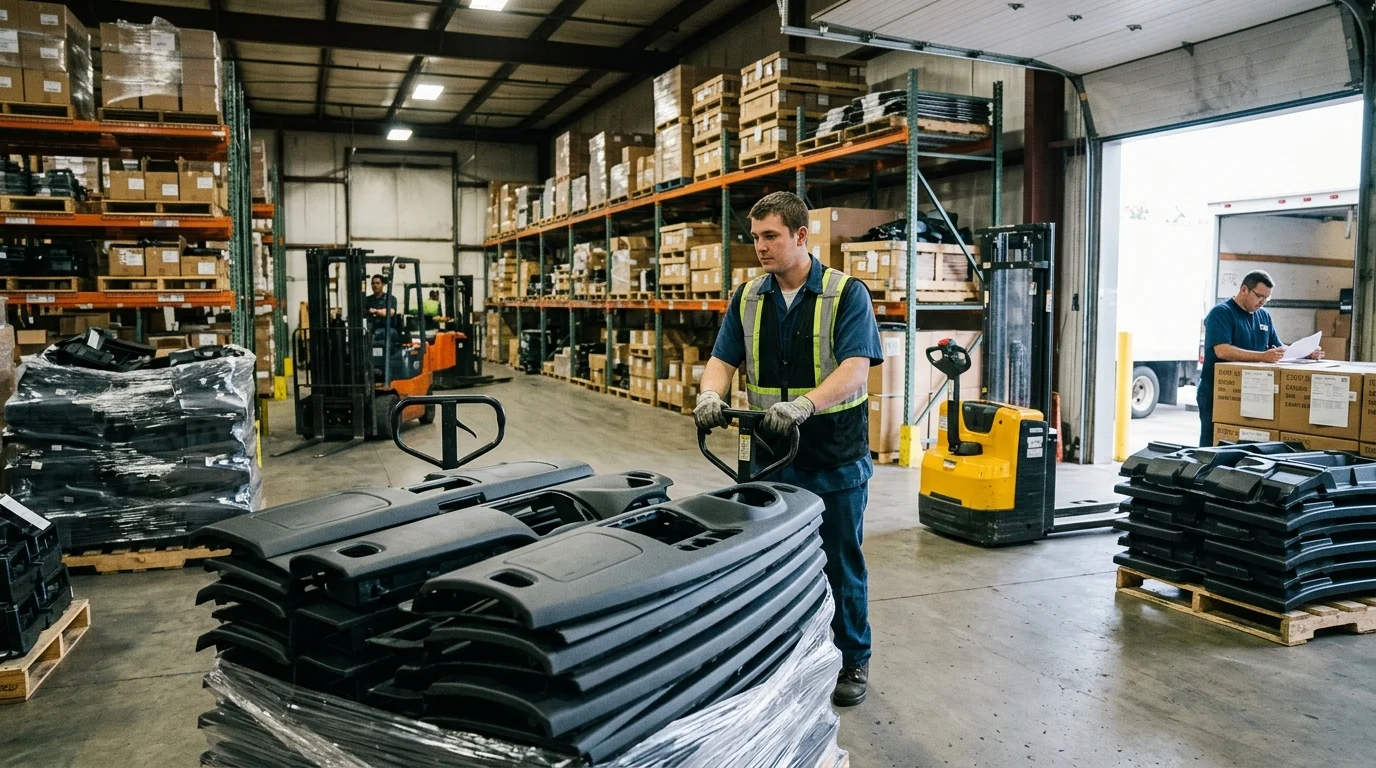
Geographic proximity to the OEM assembly plant reduces freight costs and mitigates supply chain disruptions. However, many buyers employ a dual-sourcing strategy, balancing domestic suppliers for rapid turnaround and engineering support with overseas manufacturers for high-volume, cost-sensitive components. Effective suppliers also offer value-added logistics, such as vendor-managed inventory (VMI) or custom protective packaging to prevent scuffing of aesthetic ABS parts during transit.
How OEMs and Tier Suppliers Should Decide on Custom ABS
Strategic sourcing of injection-molded components requires a comprehensive evaluation framework. OEMs and Tier 1 suppliers must align their engineering needs with the specific core competencies of their chosen manufacturing partners.
Which supplier evaluation steps support better sourcing decisions
Thorough supplier evaluation begins with a capacity and capability audit. OEMs should assess the tonnage range of the supplier’s injection molding presses—automotive parts can require anywhere from 50 tons for small interior clips to over 1,500 tons for large grilles or console assemblies. The availability of advanced machinery, such as electric presses that offer high precision and repeatability, is a strong indicator of a supplier’s technical maturity.
Beyond primary molding, buyers should evaluate a supplier’s secondary operations. Because ABS is frequently painted, plated, or assembled with other components, partnering with a manufacturer that offers in-house ultrasonic welding, pad printing, or automated assembly lines can significantly reduce supply chain complexity and lower the total cost of ownership (TCO). A robust supplier audit will also verify historical OEE metrics, aiming for sustained equipment effectiveness above 85%.
When custom ABS injection molding is the right choice
Custom ABS injection molding is the optimal choice when a project demands a high volume of parts that require excellent dimensional stability, impact resistance, and superior aesthetic finishes. It is particularly advantageous for interior cabin components and exterior trims where the weight of metal is prohibitive and the surface finish capabilities of cheaper plastics like PP fall short.
Ultimately, when production volumes justify the initial tooling investment, and the component design is optimized for manufacturability, ABS molding provides an unmatched balance of performance and economy.
Further reading:
Key Takeaways
- The most important conclusions and rationale for ABS injection molding
- Specs, compliance, and risk checks worth validating before you commit
- Practical next steps and caveats readers can apply immediately
Frequently Asked Questions
Why is ABS injection molding widely used for automotive parts?
It combines low weight, impact strength, dimensional stability, and easy finishing. That makes ABS suitable for dashboards, grilles, mirror housings, and other high-volume automotive components.
Which automotive components are best suited to custom ABS molding?
ABS works best for interior trims, center consoles, instrument housings, steering column covers, wheel covers, grilles, and light bezels where appearance, toughness, and stable dimensions matter.
How does custom ABS molding help reduce vehicle weight?
ABS is lighter than many metal alternatives, often cutting component weight by about 15% to 30%. This can support better fuel efficiency and improved EV driving range.
What ABS properties should be checked for automotive applications?
Focus on impact resistance, tensile strength, heat deflection temperature, UV resistance, and surface finish needs. For interior heat exposure, grades around 85°C to 100°C HDT are commonly preferred.
Can NBPM Plastic support custom ABS injection molding for automotive parts?
Yes, NBPM Plastic provides custom plastic manufacturing and injection molding support. You can review molding capabilities and product options through nbpm-plastic.com before starting a project.

Post time: Jun-11-2026