
Packaging is often the first physical touchpoint between a brand and a customer. When the structure, finish, and usability are designed well, it can influence perceived quality before the product is even opened.
What follows is a practical explanation of how custom plastic products support packaging design, where they add customer appeal, and what buyers should evaluate before moving into production.
What Are Custom Plastic Products?
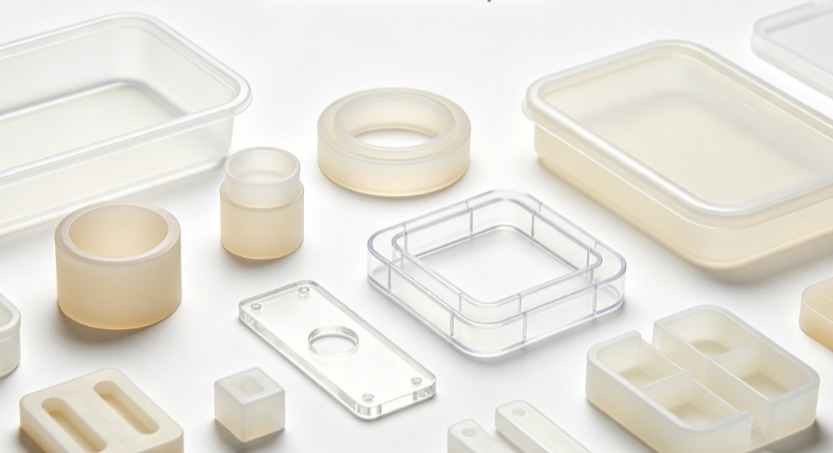
Custom plastic products are molded or formed plastic items made to a buyer’s drawing, sample, or concept. In packaging, they include containers, lids, trays, inserts, shells, display parts, and protective housings that are tailored to a specific product and brand requirement.
For B2B buyers, the term usually covers OEM plastic products developed for repeat production rather than off-the-shelf stock items. That distinction matters because packaging performance depends on fit, wall thickness, sealing, appearance, and process stability, not just shape.
How Custom Plastic Products Enhance Brand Packaging Design
Custom plastic products strengthen packaging design by aligning form, function, and brand identity in one engineered part. A package can be made to match product dimensions, support retail display, improve transport safety, and present a cleaner visual profile than generic packaging.
They also allow brands to control details that customers notice quickly, such as surface gloss, transparency, color consistency, snap-fit closure feel, and logo placement. These details are small individually, but together they shape how premium or reliable the package appears.
Packaging engineering also benefits from better process control. Injection-molded packaging parts can be designed for repeatability, which is important when a brand needs consistent appearance across thousands of units. P&M’s injection mold manufacturing services and plastic products pages reflect this type of project-based development model.
From a standards perspective, packaging materials should be selected and tested with the end use in mind. ASTM notes that plastics standards are used to specify and evaluate physical, mechanical, and chemical properties of plastic products, which supports quality control in packaging applications.
Comparison Table: Generic Packaging vs Custom Plastic Packaging
| Aspect | Generic Packaging | Custom Plastic Packaging |
|---|---|---|
| Brand identity | Limited differentiation | Supports unique shape, texture, and color |
| Product fit | Often approximate | Designed to match exact dimensions |
| Protection | Standard protection level | Can be optimized for shock, sealing, and stacking |
| Customer appeal | Functional but common | More memorable and premium-looking |
| Production consistency | Depends on supplier stock | Controlled through dedicated tooling and process settings |
Why Customer Appeal Improves With Better Packaging Design
Customer appeal improves when packaging feels intentional, easy to use, and visually coherent. People often judge product quality from the package’s structure, opening experience, and perceived durability, especially in retail, electronics, and gift-oriented categories.
Clear product presentation is one of the strongest advantages of custom plastic packaging. Transparent lids, formed inserts, and shaped trays can display the product neatly while keeping it secure, which reduces handling damage and improves shelf impact.
Packaging also affects trust. A well-fitted closure, clean edge finish, and stable stacking behavior suggest manufacturing discipline. In contrast, loose-fitting or inconsistent packaging can make even a good product seem lower value.
For food-adjacent or contact-sensitive packaging, compliance matters as much as appearance. FDA states that it regulates substances that come into contact with food, including packaging materials and containers, and it provides guidance for food-contact substances and recycled plastics used in food packaging.
Table: Common Packaging Functions and Their Design Impact
| Packaging Function | Design Choice | Customer Impact |
|---|---|---|
| Protection | Ribs, thicker corners, internal supports | Lower breakage risk |
| Display | Clear walls, shaped windows, smooth surfaces | Better product visibility |
| Convenience | Snap-fit lids, easy-open features | Better user experience |
| Branding | Embossed logos, custom color, matte finish | Stronger brand recognition |
| Logistics | Stackable geometry, uniform dimensions | Lower shipping and storage waste |
Where OEM Plastic Products Fit in the Packaging Workflow
OEM plastic products fit best when a brand needs packaging that must be repeated, controlled, and scaled. They are especially useful for electronics, daily goods, toys, footwear accessories, and retail packaging where shape and fit affect both function and presentation.
In practice, the workflow begins with requirements, then moves to structure design, mold design, trial runs, revision, and mass production. This sequence is important because packaging problems often appear during trial molding, not during concept review.
Trial validation should confirm dimensions, appearance, demolding, filling, shrinkage, and assembly behavior. NIST research on injection molding highlights that tolerance allocation and process specification are closely linked, which is why packaging parts should not be designed without considering process variation.
For brands that need one supplier across several product types, P&M’s PC case mold and plastic case mold pages are relevant examples of enclosure-focused development. These categories matter because packaging and product housing often share the same engineering logic: fit, protection, and appearance.
Comparison Table: Packaging Materials and Typical Use Cases
| Material Type | Typical Strength | Common Packaging Use |
|---|---|---|
| PP | Lightweight and chemical resistant | Containers, lids, reusable packaging |
| ABS | Good rigidity and surface quality | Display shells, protective covers |
| PC | High impact resistance and clarity | Transparent housings, premium packaging parts |
| PE | Flexible and durable | Closures, soft-touch packaging components |
Design Factors That Influence Packaging Appeal
Packaging appeal depends on a few repeatable design factors rather than decoration alone. The most important are geometry, surface finish, color control, tactile feel, and how well the package supports the product inside.
- Geometry should match the product closely and avoid wasted space.
- Surface finish should support the intended brand position, from matte utility to glossy premium.
- Color consistency should remain stable across production lots.
- Closure design should feel secure without being difficult to open.
- Structural details should support stacking, shipping, and shelf display.
These factors are especially important in plastic packaging because the material can be shaped precisely and reproduced at scale. That makes design decisions visible to customers in every unit, not just in the first sample.
Environmental expectations also affect packaging decisions. EPA states that sustainable management of plastics requires considering the full lifecycle of the material, and its plastics pages emphasize reuse, recycling, and responsible end-of-life planning.
How to Choose a Supplier for Custom Plastic Packaging
The best supplier is the one that can translate a packaging concept into stable production with minimal revision cycles. Buyers should evaluate engineering support, mold capability, trial response time, quality control, and whether the supplier can handle both tooling and molding.
A one-stop supplier is often more efficient for packaging projects because it reduces handoffs between design, mold making, and molding. P&M’s professional injection moulding services and OEM plastic molding services pages show the type of integrated workflow many buyers look for.
Buyers should also ask for sample confirmation criteria before production starts. That includes dimensions, sealing performance, surface quality, color tolerance, and packaging drop or transport requirements when relevant.
Supplier Evaluation Checklist for Packaging Projects
- Can the supplier review drawings and suggest manufacturable changes?
- Does the supplier offer mold design, trial, and production in one workflow?
- Can the supplier document material selection and quality checks?
- Does the supplier support repeat orders with stable lead times?
- Can the supplier handle packaging-specific details such as transparency, sealing, and appearance consistency?
Where to Buy and How to Compare Suppliers
The most practical buying approach is to compare suppliers by product category, not by price alone. For packaging-related projects, useful internal starting points include the main site, plastic injection molds, and plastic products molds. These pages help buyers map packaging needs to the right manufacturing route.
For broader supplier benchmarking, buyers often compare one-stop mold makers with established industry suppliers that focus on packaging tooling, injection molding, or contract manufacturing. The key is to verify whether the supplier can support the exact packaging geometry, material, and production volume required.
Conclusion
Custom packaging works best when it is treated as an engineering task, not only a visual one. The right design can improve shelf appeal, protect the product, simplify logistics, and make the brand feel more reliable at the moment of purchase.
For brands planning a new launch or packaging refresh, the next step is to define the product dimensions, target appearance, material requirements, and production volume before requesting quotes. That makes supplier comparison faster and reduces the risk of costly revisions later.
FAQ
1. Why do custom plastic products improve packaging more than standard packaging? They improve packaging because they can be designed around the exact product size, brand image, and shipping requirement. That usually creates better fit, stronger shelf presence, and a more polished customer experience than generic stock packaging.
2. Are custom plastic products suitable for food packaging? They can be suitable when the material, process, and end use meet the relevant safety requirements. FDA regulates food-contact substances and provides guidance for food packaging and recycled plastics, so buyers should confirm compliance before production.
3. What should buyers check before approving a packaging sample? Buyers should check dimensions, closure performance, appearance, color consistency, and whether the package protects the product in transit. If the package is stackable or display-facing, those functions should also be tested before mass production starts.
4. How does injection molding help packaging consistency? Injection molding helps because it supports repeatable part geometry and stable production once the mold and process are set correctly. NIST research shows that tolerances and process parameters are closely connected, so trial validation is essential.
5. What is the main advantage of one-stop mold and molding service? The main advantage is fewer handoffs between design, tooling, and production. That can reduce communication errors, shorten lead time, and make it easier to move from sample approval to stable mass production without changing suppliers.
Post time: Jun-23-2026