
For cross-border sellers, the real value is not just making a part. It is making the right part, in the right material, with stable dimensions and predictable lead time.
Why Cross-Border E-Commerce Brands Rely on Custom Plastic Parts
Custom plastic parts solve the gap between a generic catalog item and a market-ready product. Cross-border brands often need housings, trays, closures, brackets, and accessories that fit a private label strategy, Amazon FBA packaging rules, or a specific retail presentation.
They also reduce the risk of sourcing mismatches. A standard component may look similar, but small differences in wall thickness, snap-fit geometry, or surface finish can affect assembly, shipping durability, and customer reviews. In practice, that makes custom development a supply-chain decision, not only a design choice.
What Buyers Usually Need From OEM Plastic Products
OEM plastic products are most valuable when they support repeatable production and clear technical requirements. The best projects start with drawings, samples, or a concept brief, then move through mold design, trial runs, and production validation.
- Stable dimensions for assembly and packaging.
- Consistent appearance for brand presentation.
- Material selection matched to use, cost, and compliance.
- Scalable tooling for low-volume custom tooling or mass production.
According to NIST, measurement science and standards help improve industrial competitiveness, which is directly relevant when buyers need repeatable part quality across batches. For plastic performance and testing, ASTM plastics standards are widely used to define material and product requirements. For food-contact packaging, the U.S. FDA explains that packaging materials and substances are regulated for safety when they contact food.
 How Plastic Manufacturing Supports Faster Product Launches
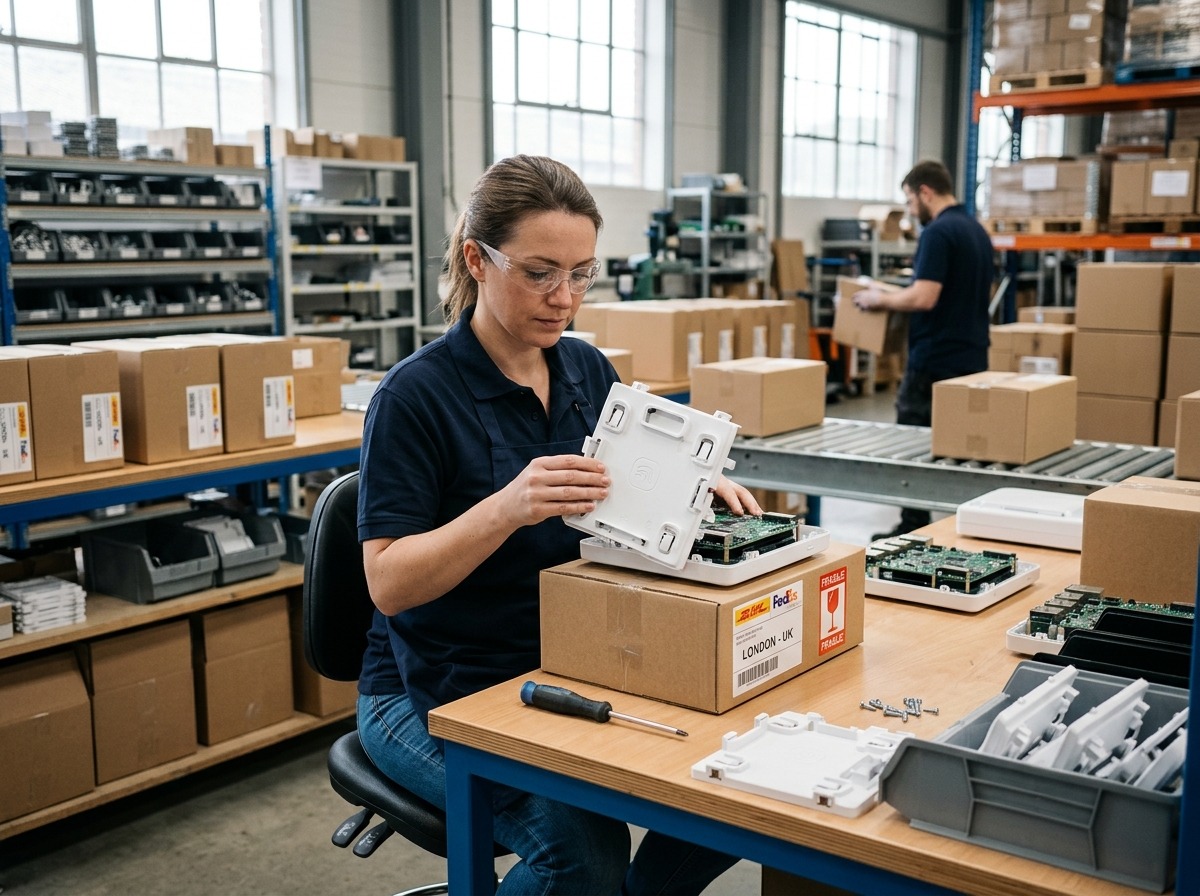
Plastic manufacturing helps brands shorten the path from concept to sellable inventory. Once the mold is approved, the same tool can produce thousands of consistent parts, which is useful for replenishment, seasonal launches, and SKU expansion.
That speed matters in cross-border commerce because launch windows are short and demand can shift quickly. Industry lead-time discussions commonly place prototype molds in the 2 to 6 week range, while production tooling often takes longer depending on complexity and revisions. Those ranges are estimates, but they show why early DFM review is critical.
Comparison Table: Standard Sourcing vs Custom Plastic Development
| Decision Factor | Standard Off-the-Shelf Part | Custom Plastic Part |
|---|---|---|
| Fit and assembly | May require adaptation | Designed for the target product |
| Brand identity | Limited differentiation | Supports private label positioning |
| Tooling cost | Lower upfront cost | Higher initial investment |
| Long-term unit economics | Less efficient at scale | Better for repeat orders |
| Launch control | Dependent on market stock | Controlled by the buyer |
Which Product Categories Matter Most for Cross-Border Sellers
Different product categories need different mold strategies. Electronics sellers usually care about housings and functional openings, while home-goods brands focus on cost, durability, and repeatability.
At a manufacturing site such as the main factory homepage, the most relevant categories typically include injection mold manufacturing, plastic case molds, PC case molds, 3D molds, and custom plastic products. These categories cover the most common B2B needs for housings, containers, and functional parts.
Comparison Table: Common Cross-Border Use Cases and Mold Priorities
| Use Case | Typical Part Type | Main Mold Priority | |
|---|---|---|---|
| Amazon FBA accessories | Trays, inserts, clips | Dimensional consistency | |
| Private label electronics | Enclosures, covers, bezels | Appearance and assembly fit | |
| Packaging and storage | Boxes, lids, containers | Wall thickness balance | |
| Consumer goods | Handles, caps, small shells | Cycle time and cost control | |
| Complex branded items | Curved or detailed shells | 3D mold capability |
For buyers comparing suppliers, useful internal resources include injection moulding services, professional injection moulding services, and customized mold manufacturing. These pages help map product needs to the right development path.
What Makes a Good Custom Plastic Part Design
A good design is one that can be molded, assembled, shipped, and repeated without unnecessary variation. That means wall thickness should be as uniform as possible, draft angles should support ejection, and snap features should be engineered for the chosen resin.
For electronics housings, the design must also protect ports, vents, and fastening points. For packaging parts, sealing surfaces and stackability matter more. For decorative items, surface quality and color consistency often outweigh hidden structural detail.
- Use uniform wall thickness to reduce sink and warpage.
- Place gates to support balanced filling.
- Confirm tolerances before tooling begins.
- Validate texture, gloss, and assembly in the trial stage.
These principles are consistent with common plastics engineering practice and with the tolerance-focused guidance found in industry references. They are especially important when the buyer expects low-volume custom tooling first and later wants to scale into higher-volume production.
How the Mold Development Process Reduces Risk
The mold development process reduces risk by turning assumptions into testable samples. A typical workflow includes requirement confirmation, structural design, mold flow review, tooling, trial molding, modification, and mass production release.
Trial molding is the most important checkpoint because it verifies filling, shrinkage, ejection, appearance, and assembly. If a part fails here, the cost of correction is usually lower than after full production starts. That is why experienced buyers treat sampling as a decision gate, not a formality.
Comparison Table: Development Stage and Buyer Decision
| Stage | Buyer Focus | Typical Output |
|---|---|---|
| Requirement review | Scope and function | Approved brief |
| Design and DFM | Feasibility and risk | Updated drawings |
| Tooling and trial | Fit, finish, and defects | Sample parts |
| Modification | Correction of issues | Revised mold |
| Mass production | Stability and output | Approved production run |
Supplier Directory for Cross-Border Buyers
Supplier selection should match product complexity, order volume, and communication needs. For one-stop mold and molding support, a focused manufacturer can be practical when the buyer wants fewer handoffs between design, tooling, and production.
Within the target site, useful starting points include quality service, quality products, and one-stop moulding injection service. For broader product browsing, buyers can also review products and view all products.
Other well-known industry sources for technical reference include NIST, ASTM, and the FDA, especially when the product must meet measurement, material, or food-contact expectations. Those references help buyers write clearer RFQs and compare suppliers on objective criteria.
Conclusion: Why Custom Plastic Parts Matter in Cross-Border E-Commerce
Custom plastic parts matter because they connect product design, brand positioning, and repeatable manufacturing in one workflow. For cross-border e-commerce brands, that means fewer fit problems, better launch control, and a clearer path from sample to scale.
When the part must support private label packaging, Amazon FBA logistics, or a unique product shape, custom development is usually the safer long-term choice. The best results come from early engineering review, realistic tolerance targets, and a supplier that can handle both tooling and production.
In short, OEM plastic products are not only a manufacturing input. They are part of the brand’s operating model, and they directly affect speed, quality, and customer experience.
FAQ
1. Why do cross-border e-commerce brands choose custom plastic parts instead of standard parts? They choose them because standard parts rarely match the exact size, appearance, or packaging needs of a private label product. Custom development improves fit, reduces assembly issues, and supports a more consistent customer experience across international markets.
2. Are custom plastic parts suitable for Amazon FBA products? Yes, they are often suitable for Amazon FBA products when the design supports compact packaging, stable stacking, and low damage risk during shipping. Buyers usually use them for inserts, housings, organizers, and branded accessories that need repeatable dimensions.
3. What is the difference between OEM plastic products and ordinary plastic items? OEM plastic products are made to a buyer’s drawings, samples, or functional requirements. Ordinary plastic items are usually standard catalog products. OEM development gives the buyer more control over shape, performance, branding, and long-term supply stability.
4. How long does plastic manufacturing usually take for a new project? Timelines vary by complexity, but prototype tooling is often measured in weeks, while production tooling can take longer. The exact schedule depends on part geometry, mold structure, revisions, and sampling results. Buyers should always confirm lead time before launch planning.
5. What should buyers prepare before requesting a quote for custom plastic parts? Buyers should prepare drawings, samples, target quantity, material preference, surface requirements, and application details. If the product will be sold in food, electronics, or packaging markets, they should also mention compliance needs so the supplier can recommend the right process.
Post time: Jun-20-2026