
- Clear RFQs reduce back-and-forth and improve quote accuracy for OEM plastic manufacturing.
- Tooling complexity, resin selection, tolerance targets, and annual volume are the biggest cost drivers.
- Most suppliers need drawings, samples, material specs, and a forecast before giving a reliable price.
- Internal links should point to relevant product pages, not only the homepage, to support buyer navigation.
- External standards and verified tolerances help buyers compare suppliers on an objective basis.
For OEM plastic manufacturing, the quote process should be treated like an engineering handoff, not a simple price request. Precision expectations matter: general injection-molded parts often target tolerances around ±0.10 mm to ±0.20 mm, while tighter features may require process control aligned with ISO 20457:2018 and mold design practices informed by ISO 12180-1:2022. If you are sourcing custom plastic products for electronics, appliances, or industrial assemblies, a structured RFQ helps the plastic manufacturer estimate tooling risk, cycle time, finish level, and quality checks before the first sample.
What a Quote for OEM Plastic Product Manufacturing Should Include
A useful quote starts with the part, not the price. Buyers who send only a photo usually receive rough estimates, while buyers who send drawings, resin targets, and target volume get a more actionable proposal.
The most important data points are part geometry, material, finish, quantity, and functional requirements. For example, a PC housing for a consumer device has different wall-thickness, gate, and appearance needs than a PP utility part or a glass-filled nylon structural component. If the part needs snap fits, ribs, screw bosses, or transparent windows, the mold design and molding window will change.
| RFQ Item | Why It Matters | Typical Buyer Input |
|---|---|---|
| 3D file or 2D drawing | Defines geometry and tolerance stack | STEP, IGES, PDF, DWG |
| Material | Drives shrinkage, strength, and finish | ABS, PC, PP, PA66, TPE |
| Annual volume | Impacts mold steel, cavity count, and part price | 5,000; 50,000; 500,000 units |
| Surface finish | Changes tooling polish and cosmetic risk | SPI, texture, painting, silk screen |
| Tolerance target | Determines process capability and inspection method | ±0.20 mm, ±0.10 mm, critical fits |
When a project needs a housing or enclosure, you can also review related manufacturing capabilities such as injection molding services and plastic enclosure solutions. Those pages help buyers match the RFQ scope to the right manufacturing route.
How to Write a Better RFQ for Custom Plastic Products
A strong RFQ saves time because it answers the supplier’s first seven questions before they ask them.
Those questions are usually: What is the part? What does it do? How many do you need? What material do you want? What surface quality do you expect? What tolerances are critical? When do you need samples and mass production?
- Attach the latest 3D model and clearly mark critical dimensions.
- State your target annual usage and the first order quantity.
- Specify resin preference, color, flame rating, UV resistance, or food-contact needs.
- List cosmetic standards such as gloss, texture, scratch resistance, or logo marking.
- Explain assembly conditions, drop-test requirements, or heat exposure limits.
- Tell the supplier whether you need tooling only, molding only, or a full one-stop service.
- Include destination country, Incoterms preference, and packaging requirements.
Suppliers that support full project development often ask for sample photos, functional notes, and target product positioning. That is especially important for custom plastic products that must fit into a larger assembly, because a one-millimeter error can create downstream rework, delayed launch, or manual trimming costs.
Why Material Choice Changes Your Quote More Than Most Buyers Expect
Material selection is one of the fastest ways to change both mold cost and part cost.
PC, ABS, PP, PA66, and TPE each behave differently in injection molding. PC is common for transparent or impact-resistant housings; ABS is popular for balanced cost and appearance; PP is widely used when chemical resistance and low density matter; PA66 is chosen for strength and wear; TPE is used for grip and sealing. If the part needs flame resistance, the supplier may need a certified resin grade, which can affect sourcing lead time and price.
| Material | Common Use Case | Relative Cost Pressure | Key Technical Note |
|---|---|---|---|
| PP | Consumer goods, lids, clips | Low | Low density and good chemical resistance |
| ABS | Appliances, electronics housings | Medium | Balanced stiffness and surface finish |
| PC | Transparent covers, protective shells | Medium to high | High impact resistance and clarity |
| PA66 | Gears, brackets, structural parts | High | Strength improves further with glass fiber |
| TPE | Overmold grips, seals | Medium | Soft-touch and sealing performance |
For parts used in consumer electronics or home appliances, the supplier should understand the assembly environment early. A housing that clips into a PCB stack-up is not priced the same way as a decorative shell. In practice, the quote should reflect the entire process chain, including mold design, trial runs, inspection, and secondary operations.
For buyers comparing housing programs, the supplier’s plastic housing manufacturing page can be useful for understanding how enclosure complexity affects tooling and price.
What Drives the Price of an OEM Plastic Manufacturing Quote
Mold complexity usually has a bigger effect on first-cost than the resin itself.
The biggest cost drivers are cavity count, undercuts, slides, lifters, steel grade, surface texture, tolerance tightness, and expected production life. A simple single-cavity mold for a low-volume utility part can be far cheaper than a multi-cavity precision mold with polished cosmetic surfaces and tight assembly features.
| Cost Driver | Low-Complexity Example | Higher-Complexity Example | Quote Impact |
|---|---|---|---|
| Cavity count | 1 cavity | 4 to 8 cavities | Higher upfront tooling cost, lower part cost |
| Tool actions | No undercuts | Slides and lifters | Longer build and maintenance time |
| Surface finish | Standard matte | High-gloss cosmetic finish | More polishing and trial iteration |
| Tolerance | ±0.20 mm | ±0.05 mm critical fit | More process control and inspection |
| Annual volume | 10,000 units | 500,000 units | Affects mold strategy and amortization |
Industry benchmarks from injection molding references commonly show that cycle time depends on part thickness, resin, and cooling efficiency; thin wall consumer parts may run in the tens of seconds, while larger or thicker housings take longer. For that reason, one supplier may appear cheaper on tooling but more expensive on total life-cycle cost if its mold is not designed for stable output.
If you are planning broader sourcing, a diversified supplier page such as custom plastic parts can help you evaluate whether the vendor supports only a single part family or multiple product categories.
How Suppliers Evaluate Feasibility Before Quoting
Feasibility review is where experienced suppliers save buyers from expensive redesigns.
During this stage, engineers look at draft angle, wall thickness, rib design, boss placement, gate position, ejection strategy, and potential sink marks or weld lines. They also check whether the selected resin can hold the required shape and appearance. For a PC cover or appliance shell, even a visually acceptable sample can fail later if snap-fit retention or screw boss strength is not stable over time.
Many suppliers also compare the part against moldability guidelines from established standards and internal process controls. For example, ASTM D639-24 covers the tensile properties of plastics, which helps buyers and suppliers discuss mechanical expectations with a common test method. If the part is intended for electrical or appliance use, the buyer may also need flame, heat, or impact data before approving the design.
- Check minimum wall thickness for sink and fill balance.
- Confirm draft angle for part release and cosmetic quality.
- Review rib-to-wall ratios to reduce sink marks.
- Validate gate location to minimize weld lines on visible surfaces.
- Confirm assembly loads for clips, bosses, and snap fits.
When a supplier gives a quote without this review, the initial number is often unstable. A better vendor will send a feasibility note, a DFM comment list, or a revised drawing set before final pricing.
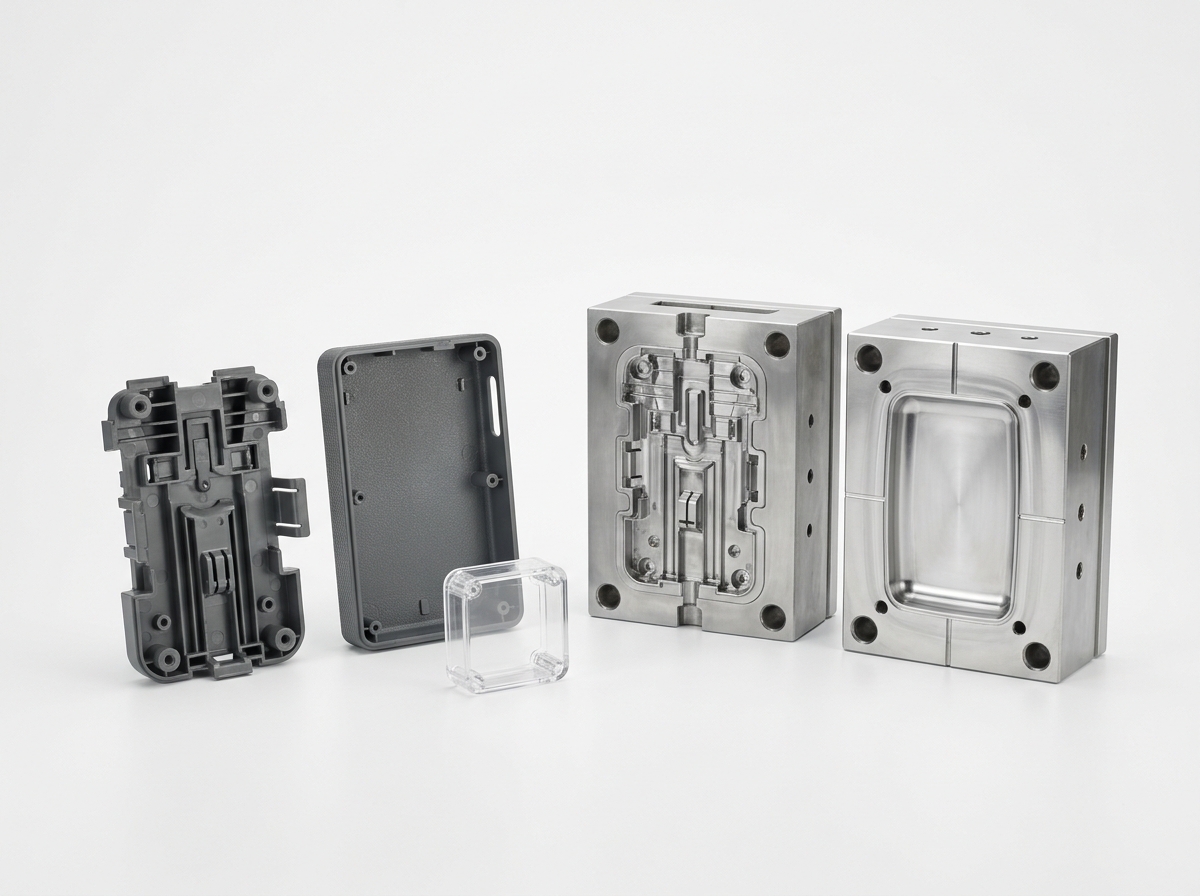 Where Quality Standards and Testing Affect the Quote
Inspection requirements can change the quote as much as the part geometry.
Low-risk commodity parts may need only basic dimensional checks, while cosmetic or functional housings may require first article inspection, in-process checks, and lot traceability. Buyers should ask what inspection tools are used, whether critical dimensions are measured with CMM or gauges, and whether the supplier can provide material certificates or test reports.
For dimensional discussions, it is useful to anchor expectations to a known standard. ISO 2768-1 provides general tolerances for linear and angular dimensions when drawings do not specify tighter values. That does not replace project-specific requirements, but it gives both sides a shared language for quoting.
| Quality Topic | Typical Buyer Request | Quote Effect |
|---|---|---|
| First article inspection | 1 full set before production | Extra time and documentation |
| Material certification | Lot traceability and resin data | Higher control and paperwork |
| Critical dimension report | CMM or gauge verification | Additional inspection cost |
| Appearance standard | Cosmetic A/B/C classification | More rejection sensitivity |
| Packaging test | Drop or transit resistance | Packaging engineering may be added |
For buyers in appliance or electronics markets, this is especially important because a visually small defect can create a major commercial problem. A scratch, sink mark, or color shift may not affect function, but it can still affect retail acceptance and brand reputation.
How to Compare Quotes from Different Plastic Manufacturers
Comparing only the headline price is one of the most common procurement mistakes.
Two quotes with the same part price may hide very different assumptions about mold life, shipping terms, inspection scope, and resin grade. One supplier may quote a lower tool price but use a softer steel insert, while another may include better steel, faster lead time, and more stable production. The right comparison is total value, not just the first number on the page.
- Compare tool steel, cavity count, and expected mold life.
- Check whether samples, revisions, and minor edits are included.
- Ask if the part price is based on forecast volume or trial volume.
- Confirm whether secondary operations such as painting or assembly are included.
- Review packing method, shipping terms, and destination duties.
For buyers with multiple SKUs, it can also help to look at precision plastic components if the project includes tighter fit features or repeatable assembly targets. That page is useful when you need a more controlled manufacturing path than a generic commodity quote.
Practical Lead Times, Sampling, and Production Expectations
Lead time matters because the quote is only useful if it matches the launch schedule.
In a typical OEM plastic product manufacturing workflow, the supplier first reviews files, then confirms feasibility, then quotes tooling and unit pricing, then starts mold design after PO approval. Sampling usually follows tooling completion, with revisions if needed, and mass production begins after sample approval. If the part is complex or cosmetic, the sampling loop can add time; if the design is mature and the requirements are clear, the process is much faster.
Buyers should also ask how the supplier handles revisions. In practical terms, one extra sample round can cost more time than a small tooling adjustment, so it is better to flag uncertainties early. If the supplier is also managing packaging and export logistics, the quote should specify whether those services are included or billed separately.
A well-prepared RFQ does more than get a number. It reduces engineering risk, improves response speed, and makes the final selection of a plastic manufacturer easier to justify internally.
Answering the Real Buyer Question Behind the Quote Request
The real question is not just how to request a quote, but how to request one that is actionable.
Most buyers want three things at once: a price they can trust, a lead time they can plan around, and a supplier that can support volume without repeated surprises. That is why the best RFQs are specific, visual, and measurable. They describe the part, the function, the tolerance, the resin, the volume, and the deadline in one package.
If you prepare the brief this way, the supplier can respond with a more accurate mold estimate, a realistic part price, and a clearer view of manufacturing risk. That is the difference between a rough inquiry and a professional OEM sourcing project.
FAQ
What files should I send for an OEM plastic manufacturing quote?
Send a 3D model, a 2D drawing, target quantity, material preference, surface finish notes, and any critical dimensions or assembly requirements.
Can I request a quote with only a sample or photo?
Yes, but the quote will usually be rough until the supplier receives drawings or a 3D file with measurable dimensions.
Why do two plastic manufacturers give very different prices?
They may be using different steel grades, cavity counts, tolerance assumptions, inspection levels, or shipping terms.
How detailed should my tolerance request be?
Mark only the dimensions that truly matter. Over-specifying every feature can raise cost without improving product performance.
What is the biggest driver of mold cost?
Mold complexity is usually the biggest driver, especially undercuts, slides, cavity count, and cosmetic finish requirements.
Should I ask for tooling and unit price separately?
Yes. Separating them helps you understand amortization, compare suppliers fairly, and estimate total project cost.
What should I check before approving a quote?
Confirm material grade, tool scope, sample policy, lead time, quality checks, packaging, and whether post-processing is included.
Post time: Aug-25-2026