
Plastic mold development projects stay on schedule when the scope, design, and trial process are controlled from the start. This article explains where delays happen, how to reduce them, and how buyers can evaluate a supplier before tooling begins.
Outline
- Why mold projects slip behind schedule
- How to define requirements before design starts
- How DFM and moldflow reduce rework
- How to manage trial, revision, and approval gates
- How to choose a supplier for faster delivery
Why Plastic Mold Development Delays Happen
Most schedule overruns come from unclear inputs, not from machining alone. In plastic mold development, the project often slows when part drawings are incomplete, tolerances are vague, or the buyer changes the design after tooling starts.
Late decisions also create hidden delays. If gate location, wall thickness, surface finish, or assembly targets are not confirmed early, the injection mold may need redesign after the first trial. Autodesk notes that DFM is intended to identify manufacturability issues before production, which is why early review matters so much. Autodesk Design for Manufacturing overview
Another common cause is weak communication between engineering and procurement. When the buyer, designer, and mold maker do not share one frozen specification set, each revision restarts the timeline. For that reason, project control should begin before the first CAD file is released.
Lock the Product Definition Before Tooling Starts
A clear product definition is the strongest delay-prevention tool. Before mold manufacturing begins, the team should confirm dimensions, material, surface class, assembly method, expected annual volume, and critical-to-function features.
For electronic housings, that definition should also include fastening points, snap fits, connector openings, and cosmetic requirements. For consumer parts, it should include texture, color consistency, and acceptable sink marks. A precise brief reduces interpretation errors and shortens the approval cycle.
Use a simple pre-tooling checklist to avoid missing inputs:
- 2D drawing or 3D model with revision number
- Material grade and color target
- Tolerance zones for key dimensions
- Surface finish and appearance standard
- Assembly or mating requirements
- Sample, photo, or reference part if available
When these items are fixed early, the mold maker can design with fewer assumptions. That lowers the chance of redesign and keeps the project moving toward trial.
Use DFM and Moldflow Before Cutting Steel
DFM review is one of the most effective ways to prevent rework. It checks whether the part can be molded consistently, ejected cleanly, and cooled evenly before the tool is built.
Moldflow analysis adds another layer of risk control. It helps predict fill balance, weld lines, air traps, warpage, and shrinkage behavior. Autodesk’s Moldflow platform is widely used for this type of simulation, and its purpose is to improve part quality before tooling decisions are finalized. Autodesk Moldflow overview
For projects with tight tolerances, the simulation stage is not optional. It is especially important for PC case molds, thin-wall housings, and parts with long flow paths. A small analysis delay is far cheaper than a full steel modification later.
Comparison Table: DFM Review vs Moldflow Analysis
| Item | DFM Review | Moldflow Analysis |
|---|---|---|
| Main purpose | Check manufacturability and tooling risk | Predict filling, cooling, and warpage behavior |
| Best use | Early concept and drawing review | Detailed engineering validation before steel cutting |
| Typical delay prevented | Design errors and missing features | Trial failures and dimensional correction |
| Output | Design recommendations | Flow and deformation insights |
Control the Trial Mold Stage With Clear Gates
The trial stage should be treated as a formal decision gate, not an informal test. In plastic mold development, the first sample is used to verify filling, demolding, appearance, shrinkage, and assembly fit.
To avoid schedule drift, each trial should have a written pass-fail list. That list should define which dimensions are critical, which cosmetic defects are acceptable, and what must be corrected before the next run. Without this structure, trial feedback becomes subjective and slow.
FDA guidance on process validation is not specific to every consumer part, but its core principle is relevant: process understanding and documented control improve repeatability. FDA process validation guidance The same logic applies to mold trials, where documented results reduce repeated mistakes.
Use a disciplined trial workflow:
- Confirm trial date, machine, and material before the run.
- Measure samples against the frozen drawing.
- Record defects with photos and dimension data.
- Approve only the changes tied to root causes.
- Release the next revision with a new version number.
This gate-based method keeps the project from looping through repeated, untracked modifications.
Choose the Right Mold Structure for the Product
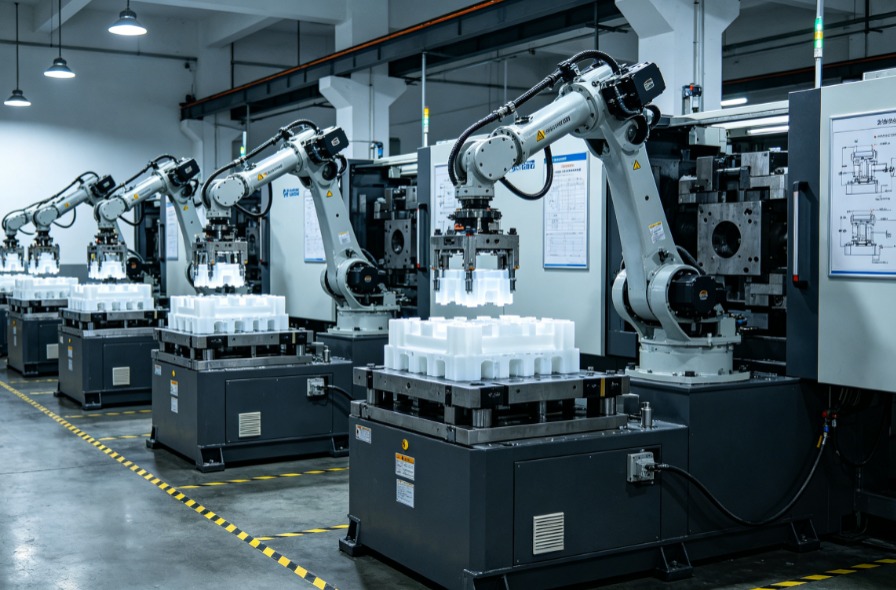
Tool complexity should match the part, because overengineering often causes delay. A simple housing may need a standard injection mold, while a complex cosmetic shell may require a more advanced structure and longer validation.
For example, plastic case molds and PC case molds usually demand tighter assembly control than storage boxes or cups. By contrast, 3D molds are often used when the geometry includes curved surfaces, deep ribs, or detailed exterior features. Matching the tool type to the product reduces unnecessary engineering time.
Comparison Table: Common Product Types and Delay Risks
| Product type | Main risk | Delay prevention focus |
|---|---|---|
| Plastic case mold | Cosmetic defects and fit issues | Appearance standard and tolerance control |
| PC case mold | Assembly mismatch and warpage | Snap-fit validation and cooling balance |
| 3D mold | Complex geometry and ejection difficulty | Draft angle and release strategy |
| Plastic box mold | Wall thickness imbalance | Uniform section design and gate planning |
When the structure is matched to the application, the project moves faster because the design team spends less time solving avoidable problems.
Work With a Supplier That Can Handle Design, Tooling, and Production
A one-stop supplier usually shortens the schedule because fewer handoffs are involved. When design, mold manufacturing, trial, and injection molding are managed by one team, revision cycles are easier to track and approve.
This matters most for OEM and ODM projects, where the buyer may need drawings, samples, and production support in parallel. P&M positions itself as a one-stop manufacturer for plastic injection molds and custom plastic parts, which fits projects that need both tooling and molded output. Relevant service pages include injection molding services, plastic product molds, and custom plastic products.
For buyers comparing suppliers, the best choice is usually the one that can show engineering discipline, not only low price. A capable partner should explain gate design, cooling strategy, trial correction, and production ramp-up in clear English. That is especially important for cross-border procurement, where communication delays can become project delays.
Supplier Selection Criteria That Reduce Schedule Risk
The right supplier is the one that can prove process control before the order is placed. Buyers should look for engineering response speed, clear revision management, and evidence of similar parts in the same product family.
Industry-standard quality systems also matter. NIST explains that measurement and traceability support consistent manufacturing outcomes, which is why inspection discipline is a practical indicator of schedule reliability. NIST official site In mold projects, stable measurement practices help avoid repeated sample disputes.
When evaluating a supplier, ask these questions:
- Can they review drawings before quoting?
- Do they provide DFM feedback before steel cutting?
- Can they support trial reports with measurements and photos?
- Do they manage revision history clearly?
- Can they move from sample approval to mass production without a new vendor?
If the answers are vague, the project risk is usually higher than the quotation suggests.
Where to Buy and How to Start Faster
Fast projects usually begin with a structured inquiry package. The most efficient way to start is to send the drawing, target quantity, material, surface requirement, and deadline together, then request a DFM review before steel cutting.
For buyers who need a broader view of available services, the most relevant internal pages are P&M’s main manufacturing site, featured products, and professional plastic mould solutions. These pages help identify whether the supplier can support the full path from concept to molded part.
In practice, the fastest projects are not the ones with the shortest design phase. They are the ones with the fewest surprises after design freeze. If your project is time-sensitive, request a DFM review before cutting steel and confirm the trial plan in writing.
FAQ
What is the biggest cause of delay in plastic mold development? The biggest cause is usually unclear requirements at the start. When drawings, tolerances, material, and appearance standards are not frozen early, the mold maker must guess. Those assumptions often lead to redesign, extra trials, and a longer delivery schedule.
How does DFM help prevent mold delays? DFM helps by identifying manufacturability problems before tooling begins. It can reveal draft issues, thin walls, poor rib placement, or ejection risks. Fixing those issues on a screen is much faster than correcting them after the mold has already been machined.
Why is moldflow useful for complex parts? Moldflow is useful because it predicts how plastic will fill and cool inside the cavity. That makes it easier to spot warpage, weld lines, and air traps before trial. For complex housings and thin-wall parts, this can prevent major schedule setbacks.
How many trial rounds should a mold project need? The number depends on part complexity, but fewer rounds are better. A well-prepared project may need only one or two trials. If the project needs many corrections, it usually means the initial definition, design review, or process planning was incomplete.
What should I send before requesting a quotation? Send the 3D file or drawing, material choice, expected annual volume, surface requirement, and target delivery date. If possible, include a sample or reference photo. A complete inquiry helps the supplier review feasibility early and reduces back-and-forth communication.
Post time: Jun-20-2026