
- Fast lead times come from front-end engineering clarity, not just higher machine speed.
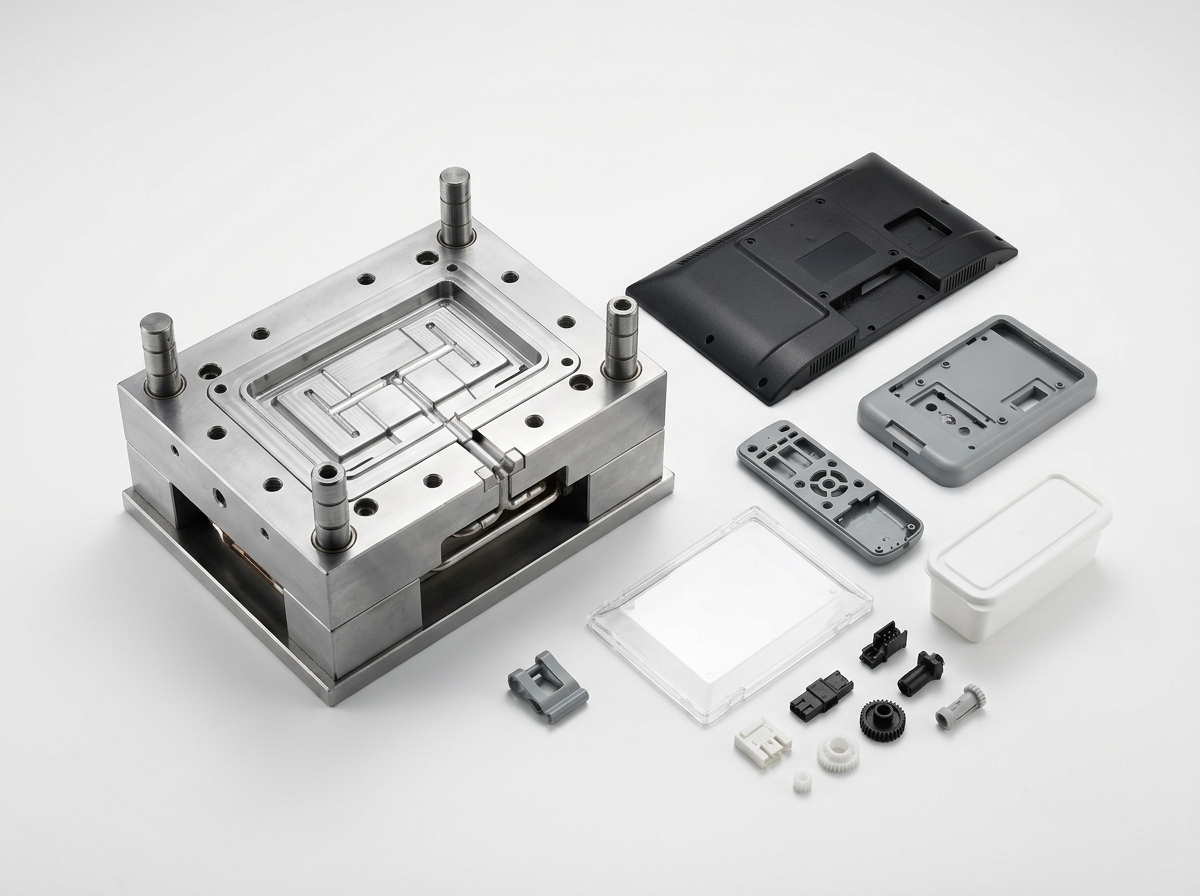
- Custom injection molds for electronics, home appliances, and industrial parts need different design priorities, especially on appearance, fit, and durability.
- Rapid mold manufacturing is usually fastest when the supplier controls DFM, machining, sampling, and correction in one workflow.
- Choosing the right mold steel, cavity count, and cooling strategy can shorten launch risk and improve stable production.
- Buyers should evaluate communication speed, sample turnaround, and export readiness alongside tooling capability.
Custom injection molds are the core tooling behind repeatable plastic part production, and the fastest projects are usually built on clear specifications, realistic tolerances, and disciplined mold design. For example, ISO 20457:2018 provides a tolerance classification system for injection-molded parts, while ISO 9001:2015 supports process consistency across development and production; that matters because a small delay in design approval can cascade into machining, trial, and shipment delays. If you are sourcing a plastic housing mold, a PC enclosure mold, or a 3D-shaped cosmetic part, the real question is not only how to make the mold, but how to make it ready for reliable production on time.
How Can You Get Custom Injection Molds Manufactured with Fast Lead Times?
Fast lead times are achievable when the project is treated as a controlled manufacturing process rather than a one-off purchase. That means the buyer, designer, and mold maker must align on geometry, material behavior, gate location, surface finish, and production volume before steel is cut. For buyers working on electronics housings, appliance covers, or industrial enclosures, early design decisions often determine whether the tool is ready in weeks or slips into repeated rework.
For context, the mold is only one part of the schedule. The hidden time sinks are incomplete drawings, unclear cosmetic standards, late engineering changes, and sample approval delays. A supplier that offers custom injection mold solutions, plastic housing molds, and 3D mold development can often move faster because the same team handles design review, tooling, and trial feedback.
What actually determines custom injection mold lead time?
Lead time is mostly determined by engineering complexity, not just factory capacity. A straightforward two-plate mold for a simple shell can move quickly, while a highly cosmetic enclosure with undercuts, sliders, polished surfaces, and tight fit requirements needs more iterations.
The key schedule drivers are part geometry, steel selection, cavitation, cooling layout, machining method, and trial correction cycles. Buyers often underestimate how much time is lost when the initial data package is incomplete. If the supplier must infer functional requirements from only photos or a rough sample, the project may slow down before tooling even starts.
| Lead Time Driver | Typical Impact on Schedule | Why It Matters |
|---|---|---|
| Complete 3D + 2D data | Can save 3 to 10 days | Reduces clarification loops and rework |
| Standard mold base | Can save 5 to 15 days | Speeds procurement and machining setup |
| Simple parting line | Can save 3 to 7 days | Reduces EDM and fitting work |
| Early material selection | Can save 2 to 5 days | Prevents late design changes |
| Single-vendor workflow | Can save 5 to 12 days | Eliminates handoff delays |
The table above reflects practical scheduling logic used across tooling projects, and the biggest variable is usually decision speed on the buyer side. When approval cycles are short, the mold maker can keep machining, fitting, and trial work continuous instead of waiting for revised instructions.
Which parts are best suited to rapid mold manufacturing?
Simple and well-defined parts are the easiest candidates for rapid mold manufacturing. Products with stable wall thickness, limited undercuts, and standard cosmetic requirements usually move fastest through design and machining.
PC materials are common in transparent or impact-resistant housings because they balance toughness and dimensional stability. This makes them useful in consumer electronics and protective covers. For more complex visual products, PC housing molds are often selected when clarity, impact resistance, and structural reliability must all be preserved.
| Part Type | Common Use | Lead Time Risk | Typical Complexity Factors |
|---|---|---|---|
| Electronic housing | Consumer devices | Medium | Cosmetic finish, snap fits, tight assembly |
| Home appliance cover | Panels, shells | Medium | Large size, deformation control, texture |
| Industrial enclosure | Equipment protection | Medium to high | Strength, inserts, cable interfaces |
| 3D-shaped decorative part | Brand-driven products | High | Curved surfaces, polishing, aesthetic consistency |
| Standard utility part | Daily-use items | Low | Simple tooling and faster validation |
In general, parts with heavy aesthetics or functional locking features take longer because they require more sampling and fitting. Buyers who want shorter schedules should simplify the part structure before asking for the mold to be accelerated.
How do DFM and early engineering reviews shorten injection mold schedules?
DFM is the single most effective way to shorten injection mold lead time without sacrificing quality. A strong design-for-manufacturability review catches problems before they become expensive steel changes.
The best DFM reviews examine wall thickness consistency, draft angle, rib height, gate position, ejector pin layout, cooling feasibility, and material shrinkage. For molded parts, ISO 20457:2018 is helpful because it reminds teams that dimensional performance should be defined against a formal tolerance framework rather than guesswork. For broader process discipline, ISO 9001:2015 supports documented review and approval steps.
- Confirm product function and annual quantity first.
- Review wall thickness, ribs, bosses, and undercuts next.
- Validate draft angles, especially on deep cosmetic surfaces.
- Check gate location against appearance and flow requirements.
- Approve material grade and surface finish before machining starts.
This sequence matters because each unresolved issue can trigger a loop. A gate moved after steel machining is much slower and more expensive than a gate adjusted during design review. That is why experienced buyers ask for DFM feedback before paying the full tooling commitment.
What mold design choices are most important for fast delivery?
Tool design decisions can either compress or expand the schedule. The fastest molds usually rely on simple layouts, standard components, and conservative engineering choices that minimize correction cycles.
For example, a two-plate mold is often faster to build than a more complex family mold with multiple cavities and differential fill behavior. Likewise, standard mold bases shorten sourcing time compared with fully custom bases. In many projects, a practical compromise between cycle time and tooling speed is more valuable than chasing maximum cavitation.
| Design Choice | Speed Benefit | Tradeoff |
|---|---|---|
| Two-plate construction | Faster build and simpler maintenance | Less suitable for complex undercuts |
| Standard mold base | Shorter procurement timeline | Less design freedom |
| Single-cavity start | Fastest validation path | Lower initial output |
| Balanced cooling layout | Fewer trial corrections | May require more upfront planning |
| Conservative wall thickness | Lower warp risk | May increase resin usage |
When the goal is fast market entry, starting with a simpler tool and expanding later is often smarter than overengineering the first mold. This is especially true for new product launches where design stability is still evolving.
 How do material choice and tolerance targets affect rapid mold manufacturing?
Material choice directly affects both moldability and delivery risk. PC, ABS, PP, and PA-based materials behave differently in shrinkage, heat resistance, and cosmetic quality, so the mold maker must tune gate, vent, and cooling strategies accordingly.
For precision context, ISO 20457:2018 classifies tolerances for molded parts, and that matters because tighter tolerance expectations usually require better tool steel, more stable temperature control, and more trial cycles. In practical production, many molded housings are designed around fit requirements rather than extreme precision, because over-tight tolerances can slow both tool approval and mass production.
| Material | Common Strength | Lead Time Influence | Typical Use |
|---|---|---|---|
| PC | Impact resistance and transparency | Medium | Electronic covers, protective shells |
| ABS | Good balance of processability and appearance | Low to medium | Consumer housings, appliance parts |
| PP | Low density and chemical resistance | Low | Utility items, clips, general-purpose parts |
| PA | Higher mechanical strength | Medium | Structural or wear-prone components |
A fast project usually starts with a realistic tolerance target. If a cosmetic cover can function correctly with standard assembly clearance, it should not be over-specified like a precision mechanical interface. That single decision can save both time and cost.
What should buyers ask before placing a custom injection mold order?
Buyers should ask questions that reveal whether the supplier can control the full launch process. The right questions are less about promises and more about production discipline.
- Can the supplier provide DFM feedback before final quotation?
- Will the same team handle design, machining, trial, and correction?
- How many sample rounds are included before final acceptance?
- What information is needed to start without delay?
- How is export packing, documentation, and shipment coordinated?
For export-oriented projects, communication speed matters as much as tooling skill. A manufacturer that responds quickly in English, keeps change requests documented, and manages logistics properly is often a better fit than a technically capable supplier that creates administrative friction.
If the project also includes finished parts, a one-stop supplier can reduce handoff costs and speed up launch. That is why many buyers compare OEM plastic parts and mold components as part of the same sourcing strategy, not as separate purchasing decisions.
How can you reduce trial iterations and sample delays?
Sample delay is one of the most common causes of late mold delivery. The fastest projects are those where the first trial has a high chance of being close to final approval.
To improve first-shot success, buyers should provide a complete package: 3D model, 2D drawing, material requirement, cosmetic standard, assembly target, expected quantity, and any special test conditions. The more complete the brief, the fewer the correction loops.
- Freeze dimensions before steel cutting.
- Lock surface texture and color expectations early.
- Define allowable flash, sink, and weld-line limits.
- Confirm whether the part must pass drop, fit, or heat tests.
- Approve sample criteria before the first trial.
In real sourcing situations, the biggest delay is often not machining but decision latency. A supplier may finish trial samples in a few days, yet wait much longer for feedback if the buyer has no internal approval process. Fast lead times therefore depend on both parties.
What standards and external references matter when sourcing injection molds?
Reliable sourcing decisions are easier when they are tied to standards instead of vague quality claims. Standards help buyers define measurable expectations for both mold and molded part performance.
Useful references include ISO 20457:2018 for tolerances in molded parts, ISO 9001:2015 for quality management systems, and ASTM D2651 for the standard practice for preparation of rigid thermoplastic specimens. For process monitoring and machine validation, NIST provides metrology and measurement guidance widely used in manufacturing control.
These references do not replace project-specific drawings, but they do help buyers ask better questions. If a supplier cannot explain how its process supports dimensional control, sampling repeatability, and documentation discipline, then fast lead time may simply mean fast risk.
How should different industries evaluate rapid mold manufacturing?
Different industries care about different failure modes, so the best mold supplier is the one aligned with the end use.
Consumer electronics usually prioritize fit, tactile quality, and visual consistency. Home appliances often need larger parts with better warp control and reliable assembly. Industrial equipment may accept a rougher aesthetic but demand stronger long-term dimensional stability and dependable replenishment. Daily-use products often need fast SKU switching and lower unit cost, while toys and leisure goods need stable appearance across large volumes.
For this reason, a home appliance mold or electronic device mold should not be evaluated using the same criteria as a general utility part. The right tool strategy depends on the market requirement, not just the resin or cavity count.
What is the practical sourcing strategy for fast lead times?
The best sourcing strategy is to reduce uncertainty before the quotation stage. Fast molds are usually the result of disciplined preparation, not urgent messages.
Start with a complete technical package, choose a supplier that can support design and manufacturing in one workflow, and keep the first mold as simple as possible. If the launch is urgent, consider a single-cavity or limited-cavity starting point and expand later after validation. That approach often protects the schedule better than trying to maximize output from day one.
In short, rapid mold manufacturing is a coordination problem. If the buyer defines the product clearly and the supplier manages engineering, machining, trial, and shipping in a single system, custom injection molds can move from concept to production with far less delay.
FAQ
How fast can custom injection molds usually be made?
It depends on part complexity, but simpler molds can move significantly faster when drawings are complete, the mold base is standard, and approvals are quick. Complex cosmetic or multi-slide tools naturally take longer.
What information should I send first for a fast quotation?
Send 3D files, 2D drawings, target material, annual quantity, appearance requirements, tolerance needs, and expected delivery timing. A complete data package reduces clarification delays.
Is PC a good material for rapid mold projects?
Yes, PC is common for transparent or impact-resistant housings, but it requires careful control of gate design, cooling, and dimensional stability.
Why do some molds take longer even when the design looks simple?
Hidden complexity often comes from cosmetic requirements, tight assembly fit, uncertain dimensions, or repeated sample revisions rather than from visible shape alone.
Can one supplier handle both molds and finished parts?
Yes, and one-stop sourcing often shortens communication loops, reduces vendor switching costs, and improves coordination between tooling and production.
How do I know if a supplier is good for export projects?
Look for English communication speed, clear documentation, trial management, and logistics support. Export projects usually fail on coordination before they fail on machining.
What is the biggest mistake buyers make when chasing fast lead times?
The biggest mistake is changing requirements after the mold is already in machining or trial. Freezing the specification early is the most reliable way to avoid delay.

David Chen
Post time: Sep-14-2026