
- Custom injection mold projects succeed faster when the RFQ includes 2D drawings, 3D files, resin choice, annual volume, and cosmetic requirements.
- A China mold factory is most valuable when it offers mold design, prototyping, tooling, and trial support under one roof.
- For consumer and industrial housings, part design, shrinkage control, and gate strategy matter as much as machining accuracy.
- Request evidence of DFM, sampling reports, and steel traceability before awarding the project.
- Supplier selection should balance cost, lead time, communication, and long-term spare-part support.
Custom injection mold sourcing in China works best when the buyer treats the project as an engineering process, not a price request. In high-volume plastic molding, dimensional repeatability is often tied to tool quality, process stability, and standards such as ISO 20457:2018, which gives guidance for tolerances in molded parts. For suppliers serving electronics, home appliances, and industrial housings, the practical goal is not only a competitive mold quote, but also a tool that can support stable production, fast sampling, and reliable delivery across multiple SKUs.
How custom injection mold design and manufacturing services in China actually work
The best China mold factory workflow starts with manufacturability, not machining.
Buyers often assume the process begins with steel cutting, but the real value is earlier: part review, gate planning, cooling layout, ejection strategy, and resin shrinkage analysis. That is why mold design matters so much for custom injection mold projects. If a supplier can identify warpage risk, weld-line sensitivity, or undercut complications before steel is cut, the project usually saves both time and cost.
In practical terms, the process usually follows six stages:
- RFQ and file review: drawings, 3D models, sample parts, target quantity, surface finish, and resin requirements.
- DFM and mold design: wall thickness, draft angle, ribs, bosses, parting line, gate type, and cooling strategy.
- Tool fabrication: CNC, EDM, grinding, polishing, and fit-up.
- T1 sampling: first trials to confirm dimensions, appearance, and ejection behavior.
- Revision and approval: adjustments for shrinkage, flash, or warpage.
- Production and support: spare parts, maintenance, and stable repeat runs.
For buyers, the key question is whether the supplier can explain each stage clearly and connect it to the final part requirement.
What to look for in a China mold factory for custom injection mold projects
A serious mold supplier should be judged by engineering depth, not only by machine count.
Many procurement teams search for a China mold factory, but the stronger filter is whether the factory can support the product from concept to mass production. A supplier that understands mold design for plastic housings, consumer electronics, and industrial parts is more likely to catch risks early. That is especially important for cosmetic components, where sink marks, gate vestiges, and surface mismatch can damage product perception.
One useful benchmark is whether the team asks about annual volume, resin grade, assembly tolerance, and cosmetic class before quoting. Another sign of maturity is a documented response to tolerance expectations. In molded parts, dimensional control is influenced by resin shrinkage, tool steel stability, mold temperature, and process window. For general guidance on metrology and tolerancing language, many manufacturers align their internal inspection with ISO principles and calibrated measurement routines; for example, NIST Calibration Services supports traceable measurement infrastructure used across industrial quality systems.
| Supplier capability | What it means for buyers | Typical project impact |
|---|---|---|
| DFM support | Reduces part redesign risk before tooling | Fewer trial loops and fewer late changes |
| Mold design review | Confirms gate, cooling, and ejection strategy | Lower warpage and better cycle stability |
| Sampling feedback | Connects trial results to corrections | Faster T1 to approval cycle |
| Spare part support | Protects long-term tool uptime | Less downtime during production |
If the supplier cannot explain these items in writing, the buyer should treat the quotation as incomplete.
Mold design decisions that affect cost, quality, and lead time
Mold design is where most hidden costs are created or prevented.
In custom injection mold development, the tooling price is only the visible part of the total cost. The real economics come from cavity count, cooling efficiency, steel grade, slide complexity, and maintenance frequency. A simple two-plate mold may be faster and cheaper to build, but a complex 3D mold can be necessary for products with deep ribs, asymmetrical geometry, or distinctive exterior surfaces.
For transparent or impact-resistant housings, PC is often selected because it offers good clarity, impact resistance, and dimensional stability. That makes it useful for electronic covers, protective components, and visual-appearance parts. However, PC is also sensitive to moisture and process conditions, so mold design must account for drying, venting, and gate placement.
A useful way to compare design choices is shown below.
| Design factor | Lower-risk option | Higher-risk option | Why it matters |
|---|---|---|---|
| Parting line | Simple and hidden | Visible on cosmetic surface | Visible lines affect appearance and brand perception |
| Gate type | Edge or sub gate | Hot tip on sensitive face | Gate marks and flow balance affect finish |
| Cooling layout | Uniform water channels | Uneven cooling around thick zones | Cooling imbalance drives warpage |
| Steel selection | Pre-hardened tool steel | Soft steel without wear planning | Wear resistance affects tool life |
Design choices also shape lead time. A part with slides, lifters, or deep undercuts requires more machining and adjustment than a straightforward housing. Buyers who approve the design stage carefully often avoid costly late-stage corrections.
How to evaluate mold design for electronics, appliance, and industrial parts
Different industries care about different mold design priorities.
For consumer electronics, the most common concerns are snap-fit strength, visible surfaces, and wall consistency. For home appliances, dimensional accuracy and assembly fit usually dominate because multiple plastic parts must work together across repeated production runs. For industrial components, structural reliability and long-term supply stability are often more important than ultra-fine surface cosmetics.
That means a supplier should not present one generic solution for every product category. Instead, the mold design should reflect the application. For example, a decorative front cover may need tighter cosmetic control and gate hiding, while a load-bearing bracket may need rib optimization and fatigue-aware geometry. The same factory may make both, but the engineering logic should be different.
The table below shows how priorities typically change by application.
| Application | Main design priority | Common risk | Buyer focus |
|---|---|---|---|
| Consumer electronics | Appearance and snap-fit precision | Gate marks and warp | Surface quality and assembly feel |
| Home appliances | Dimensional fit and repeatability | Part mismatch across batches | Stable assembly and low rework |
| Industrial parts | Strength and durability | Crack initiation and wear | Long service life and supply continuity |
| Daily goods | Cost and cycle efficiency | Over-engineered tool cost | Fast ROI and multi-cavity potential |
According to ASTM D1505, density measurement is a standard way to characterize some plastics, and that matters because material behavior influences shrinkage and final fit. While the mold maker does not control the resin formulation, it does control how well the tool accommodates it.
What to include in an RFQ for custom injection mold manufacturing
A complete RFQ usually gets better mold quotes and fewer misunderstandings.
Many sourcing problems begin because the buyer sends only a product image and asks for a price. For custom injection mold work, that is not enough. A supplier needs both geometry and business context. The geometry defines how the mold should be built. The business context defines whether the tool should be optimized for speed, cosmetic quality, long life, or low initial investment.
At minimum, a strong RFQ should include these items:
- 3D CAD file and 2D drawing with critical dimensions
- Material requirement, such as PC, ABS, PA, or PP
- Annual demand, target batch size, and expected tool life
- Surface finish expectations and cosmetic standards
- Assembly conditions, such as snap-fit, screw boss, or gasket fit
- Packaging, labeling, and shipping requirements
When buyers provide these details, the mold design team can answer more precisely and recommend the correct tooling strategy. For example, a part with a target annual demand of 500,000 units may justify a different cavity count than a low-volume engineering enclosure. Likewise, a cosmetic front shell may need a different gate position than an internal support bracket.
Clear RFQs also improve communication with overseas suppliers, especially when time zones and language differences are involved. That is one reason experienced export-oriented factories are often easier to work with than low-cost shops that only quote from drawings.
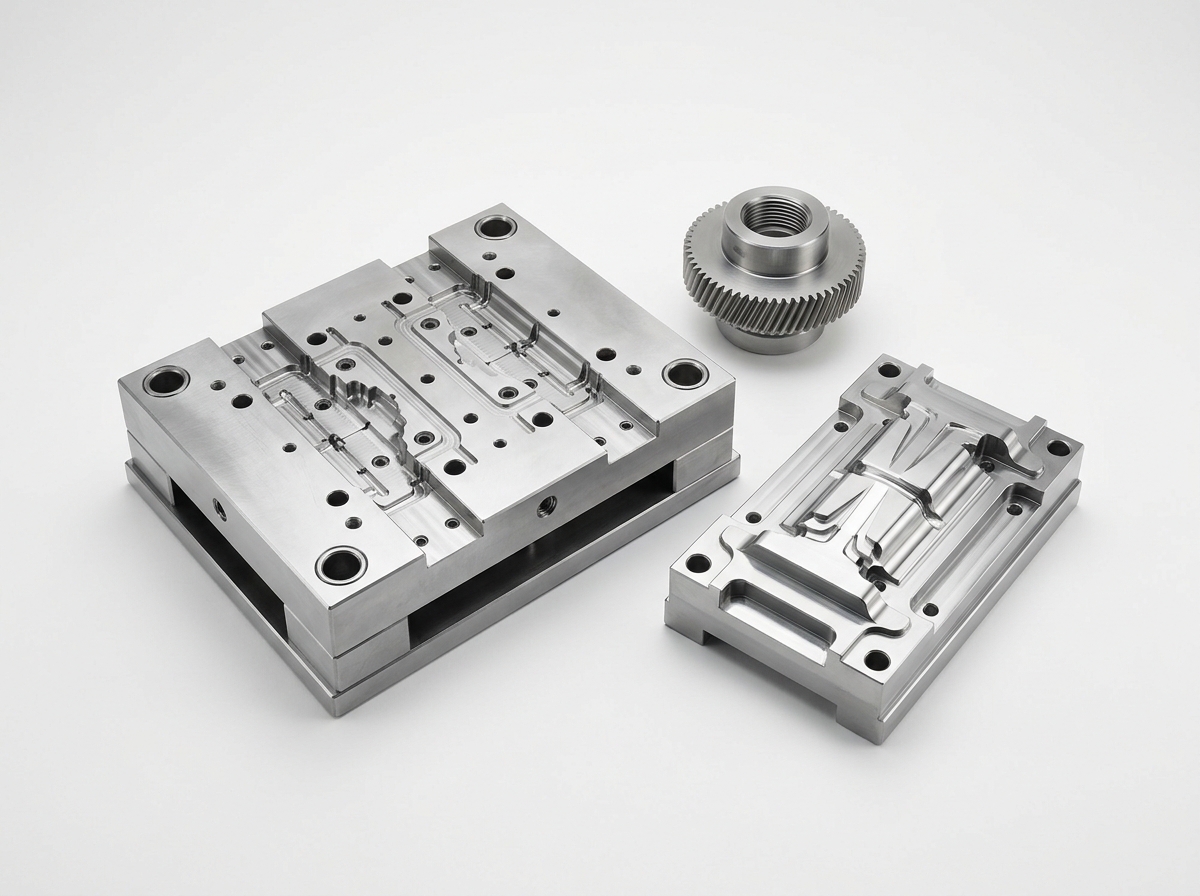 Why quality control and standards matter in mold design and sampling
Quality control is what turns a good tool into a reliable production asset.
In molded parts, first-shot success is not enough. The real test is whether the part can repeat within tolerance across many cycles. This is why mold design should always be paired with measurable quality control. In inspection practice, buyers should ask how the supplier checks cavity consistency, gate vestige, flash, sink, warp, and dimensional drift during sampling.
For dimensional terminology, ISO 286-1 remains a useful reference for tolerance concepts in engineering fits, even though molded plastics are often managed through product-specific specifications rather than metalworking fits alone. The important point is that the supplier should define acceptance criteria before trial runs begin.
Common sampling checkpoints include:
- Critical dimensions with calibrated measurement tools
- Appearance under agreed lighting and viewing distance
- Assembly test with mating components
- Gate, flash, and ejector mark inspection
- Cycle stability after repeated shots
For buyers in regulated or high-traceability industries, documentation matters. A supplier with traceable measurements, revision records, and sample approval reports is easier to audit and easier to scale.
Cost drivers, lead time, and practical budgeting for China mold factory sourcing
Tool cost is driven by complexity, not just size.
Buyers often focus on the lowest quotation, but low mold price can hide higher risks in maintenance, long sampling loops, or unstable output. The main drivers of cost are cavity count, steel type, surface finish, slider quantity, part geometry, and expected production life. A tool for a simple daily-good shell will not have the same economics as a precision housing with multiple undercuts and cosmetic requirements.
Lead time also varies by complexity. A straightforward mold may move from design approval to trial in a relatively short cycle, while a complex 3D mold with multiple slides and stringent cosmetic requirements may need more iterations. The buyer’s best strategy is to optimize the total project schedule, not just the machine shop schedule.
| Cost driver | Low complexity case | High complexity case | Budget implication |
|---|---|---|---|
| Cavities | 1 cavity | 4 to 16 cavities | More steel, more machining, more validation |
| Slides | 0 to 1 | Multiple slides and lifters | More design hours and adjustment time |
| Surface finish | Standard texture | High-gloss or fine polish | More polishing and cosmetic control |
| Material | General-purpose resin | High-performance resin | Greater sensitivity to process window |
According to the U.S. Small Business Administration, manufacturing projects should be evaluated on total cost of ownership rather than purchase price alone; that principle applies well to tooling decisions because a slightly higher-quality mold can reduce downtime and rework over the production life cycle. See U.S. SBA manufacturing guidance for general business planning context.
How to compare suppliers beyond price in custom injection mold sourcing
The best supplier comparison method is a scorecard, not a gut feeling.
When several China mold factory options are available, buyers should compare them on the same criteria. Price matters, but so do engineering response, communication speed, sampling quality, and spare-part support. A supplier that replies quickly but cannot explain mold design risks is less reliable than one that asks good technical questions and documents the trade-offs.
A practical scorecard may include:
- DFM quality and design clarity
- Sampling turnaround and corrective action speed
- Tool steel choice and traceability
- English communication and file management
- Production readiness and spare-part availability
This approach is especially useful for OEM and ODM programs, where the project often needs revision before launch. Buyers who want long-term sourcing stability should also ask whether the supplier can support follow-on tooling, insert changes, and future part variants without reworking the entire project.
When a supplier can support design, tooling, and mass production together, the procurement process becomes more predictable and easier to scale.
Practical sourcing checklist for custom injection mold projects in China
A disciplined checklist reduces sourcing mistakes.
Before awarding a project, buyers should verify technical, commercial, and logistical readiness. That does not mean the supplier must be perfect. It means the supplier should be transparent about what it can and cannot do, with proof. The strongest partners are usually the ones that show process discipline rather than making broad promises.
- Confirm that the supplier can read 2D and 3D files accurately.
- Request a DFM review before mold fabrication.
- Ask how the factory handles mold design revisions.
- Verify sample approval and rework procedure.
- Check spare-part policy and maintenance support.
- Review export communication, packing, and shipment capability.
In many projects, this checklist is the difference between a smooth launch and a costly delay. It is also the most direct way to compare a true engineering partner with a simple machining vendor.
FAQ
What is the first step to get custom injection mold design and manufacturing services in China?
The first step is to prepare a complete RFQ package with 2D drawings, 3D files, material requirements, annual volume, and cosmetic or assembly targets. That gives the China mold factory enough information to provide a meaningful design and cost review.
How do I know if a mold factory has strong mold design capability?
A strong supplier can explain parting line, gate location, cooling, venting, and ejection choices in plain English. It should also provide a DFM report or design comments before steel cutting.
Why is PC often used for plastic housings?
PC is often chosen because it combines transparency, impact resistance, and dimensional stability, which makes it useful for electronics, protective covers, and visible structural parts.
How long does a custom injection mold project usually take?
Lead time depends on complexity, but the schedule is mainly shaped by design approval, steel machining, sampling, and revision loops. Simpler tools move faster than multi-slide or high-cosmetic molds.
What should I check during mold sampling?
Check critical dimensions, appearance, flash, sink, gate marks, ejection behavior, and assembly fit. If possible, review repeated shots rather than only the first sample.
Is a cheaper mold always the better choice?
No. A lower-priced tool can become expensive if it causes long sampling cycles, unstable output, frequent maintenance, or higher scrap risk during production.
Can one factory handle both mold design and production?
Yes, and that is often the most efficient option. A factory that supports both stages can reduce communication gaps and make design feedback easier to apply during tool building and mass production.
Post time: Sep-18-2026