
Introduction
Choosing an injection molding service partner for OEM plastic parts affects far more than unit price. The right supplier shapes tooling strategy, production quality, lead times, scalability, and the long-term reliability of your supply chain. A poor fit can lock a project into avoidable delays, quality issues, and higher total costs after launch. This article explains the practical criteria that matter most, from technical capability and material expertise to tooling management, quality systems, communication, and capacity planning. By the end, you will have a clear framework for comparing providers and selecting a partner that supports both current production goals and future growth.
Why the Right Injection Molding Partner Matters
Selecting the ideal manufacturing partner is a critical decision that determines the commercial viability and market success of any hardware project. For original equipment manufacturers (OEMs), the injection molding process is often the most capital-intensive phase of product development, requiring significant upfront investment and establishing long-term supply chain dependencies.
Impact on cost, lead time, and quality
The choice of a molding partner directly influences the fundamental pillars of production: cost, lead time, and quality. Tooling investments alone can range from $5,000 for simple, single-cavity aluminum prototype molds to well over $100,000 for complex, multi-cavity hardened steel production tools. Furthermore, typical tooling lead times span from 4 to 12 weeks. A partner with robust capabilities will minimize these lead times while maintaining strict quality controls, often targeting a reject rate of less than 1% to ensure consistent yields.
Key commercial and operational pressures
Manufacturers face intense commercial and operational pressures, including shrinking product lifecycles and the need for rapid scalability. A project may launch with initial production runs of 10,000 units per year but require rapid scaling to 500,000 units annually if market adoption accelerates. An inadequate partner will struggle with this transition, leading to stockouts, compromised part quality, and lost revenue. Therefore, aligning with a partner capable of absorbing these volume fluctuations is essential for mitigating operational risk.
Technical and Manufacturing Capabilities to Evaluate
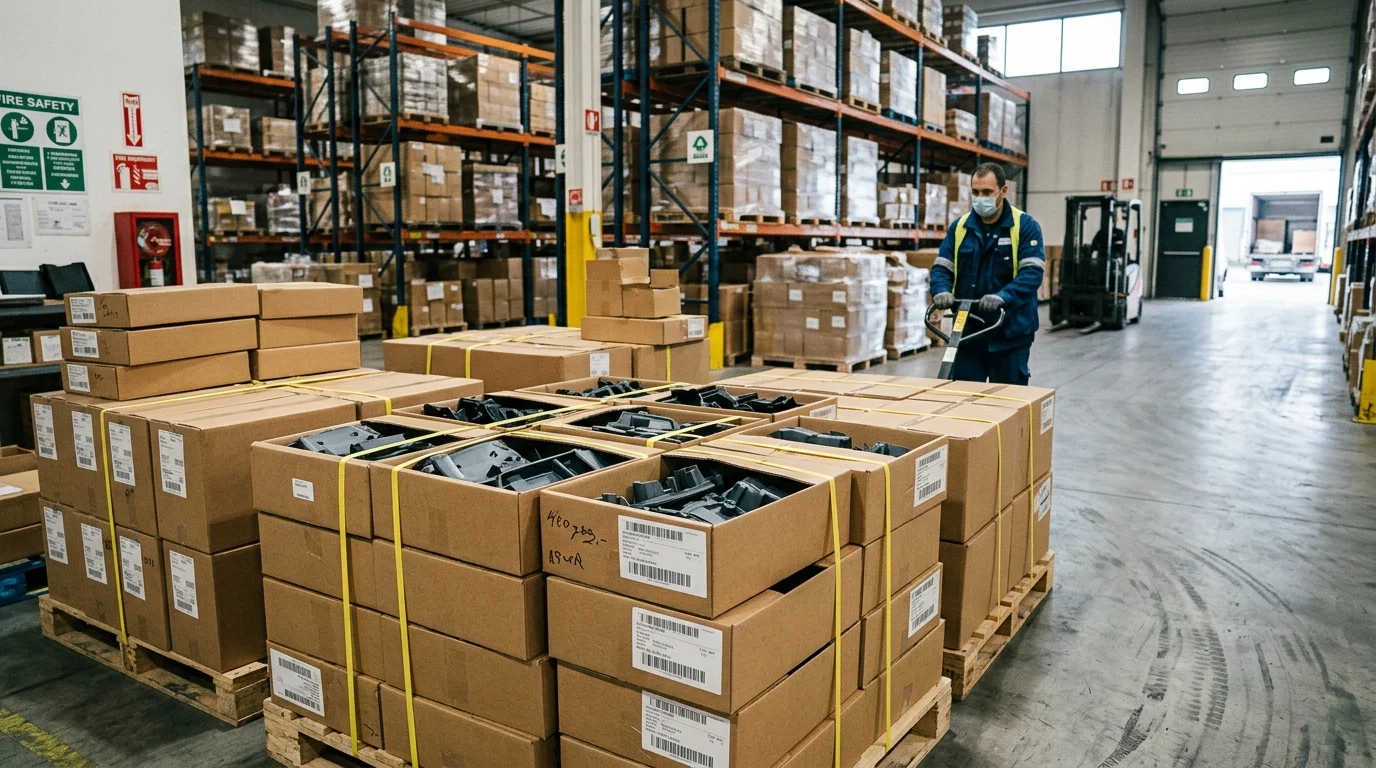
Evaluating a partner’s technical capabilities requires a deep dive into the specific requirements of your OEM plastic parts. A mismatch in technical expertise can lead to suboptimal part performance, excessive scrap, and frequent production delays.
Fit for OEM plastic part requirements
The fundamental measure of a molder’s capability is their equipment profile, specifically press tonnage and shot size. Injection molding machines typically range from 50 tons for small, precise components to over 1,500 tons for large automotive or industrial panels. A qualified partner must possess the appropriate machinery to match the physical dimensions and resin characteristics of the product. Additionally, expertise in handling advanced engineering resins, such as glass-filled polyamides or PEEK, is crucial for applications requiring high thermal or mechanical resistance.
Prototyping, DFM, and validation support
Early involvement through Design for Manufacturability (DFM) is a hallmark of a sophisticated molding partner. Capable suppliers utilize mold flow analysis software to predict fill patterns, identify potential knit lines, and optimize gate locations before cutting steel. This proactive engineering support helps maintain critical wall thickness tolerances, which are often required to be within ±0.002 inches. Effective prototyping and validation support ultimately reduce the number of costly tooling iterations and accelerate time to market.
Process controls and secondary services
Beyond basic molding, advanced process controls and secondary operations distinguish top-tier suppliers. Implementing scientific molding principles ensures that the process is decoupled and optimized for consistent part weight and dimensions, targeting a Process Capability Index (Cpk) greater than 1.33. Furthermore, value-added secondary services such as overmolding, ultrasonic welding, and automated assembly reduce the need to manage multiple vendors.
| Machine Tonnage | Typical Part Size | Example Applications |
|---|---|---|
| 50 – 200 Tons | Small (< 500g) | Medical devices, electronic housings |
| 250 – 500 Tons | Medium (500g – 2kg) | Consumer appliances, power tools |
| 600 – 1,500+ Tons | Large (> 2kg) | Automotive bumpers, industrial bins |
Quality, Compliance, and Supply Chain Reliability
A structurally sound injection-molded part is only valuable if it is delivered consistently and meets all regulatory standards. Assessing a supplier’s quality management systems and supply chain resilience is non-negotiable for mitigating downstream risks.
Quality systems, inspection, and traceability
A reliable partner must operate under recognized quality management systems, such as ISO 9001:2015, or industry-specific standards like IATF 16949 for automotive and ISO 13485 for medical devices. Inspection protocols should incorporate automated vision systems and Coordinate Measuring Machines (CMMs) to ensure dimensional accuracy. World-class injection molding facilities track their defect rates in Parts Per Million (PPM), frequently maintaining levels below 50 PPM. Comprehensive lot traceability is also required to swiftly isolate material batches in the event of a product recall.
Compliance and documentation requirements
Depending on the target market, plastic components must adhere to strict environmental and safety regulations. Suppliers must provide documentation verifying compliance with RoHS and REACH directives, ensuring the absence of restricted hazardous substances. For electronic enclosures, material certifications proving UL 94 V-0 flammability ratings are often mandatory. During the onboarding phase, the supplier should seamlessly execute First Article Inspection (FAI) and provide Production Part Approval Process (PPAP) documentation, typically at Level 3, to validate the stability of the manufacturing process.
Capacity, logistics, and contingency planning
Supply chain reliability hinges on a molder’s capacity management and logistics planning. Buyers should evaluate the supplier’s Overall Equipment Effectiveness (OEE), with leading manufacturers achieving benchmarks of 85% or higher. High OEE indicates minimal unplanned downtime and highly efficient changeovers. Furthermore, contingency planning is vital; a robust partner will maintain safety stock levels of 30 to 60 days for critical resins and have established protocols for tool transfers or alternative production sites to mitigate regional disruptions.
Commercial Terms and Supplier Comparison Criteria
Reviewing the background of a supplier who manufactures OEM plastic parts is essential to understanding their commercial stability. Transparent pricing and clear contractual boundaries prevent hidden costs from eroding profit margins over the product lifecycle.
Tooling ownership and pricing structure
The structure of tooling costs and ownership rights is a primary commercial consideration. Buyers must ensure contracts explicitly state that the OEM retains full ownership of the mold once it is paid for. Tooling longevity should be guaranteed based on Society of Plastics Industry (SPI) classifications. For example, an SPI Class 101 mold should be guaranteed for 1,000,000 or more cycles, whereas a Class 103 mold is suitable for under 500,000 cycles. Pricing structures may involve upfront payments, milestone-based installments, or part-price amortization, each impacting corporate cash flow differently.
Supplier scorecards and comparison methods
Implementing a standardized supplier scorecard enables objective comparisons across multiple quotes. This methodology prevents buyers from making decisions based solely on the lowest piece price, which can be highly deceptive.
| Evaluation Category | Weighting | Key Metrics Evaluated |
|---|---|---|
| Technical Capability | 30% | Press tonnage range, secondary operations, DFM expertise |
| Quality Assurance | 25% | ISO certifications, historical PPM, inspection equipment |
| Commercial Terms | 25% | Tooling cost, piece price, payment terms, MOQ flexibility |
| Supply Chain | 20% | Lead times, on-time delivery rate, raw material sourcing |
Warning signs of a poor-fit supplier
Identifying red flags early in the negotiation phase can save OEMs from disastrous partnerships. Warning signs include inflexible or excessively high Minimum Order Quantities (MOQs)—such as demanding 100,000 units when annual demand is only 15,000. Another major red flag is a supplier’s refusal to share native CAD files of the mold design, which effectively holds the OEM hostage if a tool transfer becomes necessary. Additionally, unusually fast lead times combined with tooling prices 30% below the market average often indicate the use of substandard tool steel or compromised cooling channel designs.
How to Finalize the Best Supplier
When finalizing the agreement for OEM plastic parts, clear communication, methodical evaluation, and site audits are paramount. The final decision must balance immediate budgetary constraints with long-term operational stability.
Step-by-step supplier selection process
The selection process should follow a disciplined, step-by-step approach. It begins with a broad Request for Information (RFI) to screen potential candidates, followed by a detailed Request for Proposal (RFP) sent to a shortlisted group of three to five suppliers. The RFP must include comprehensive 3D CAD models, 2D drawings with critical-to-quality (CTQ) dimensions, and material specifications. Before awarding the business, conducting an on-site or rigorous virtual facility audit is highly recommended to verify production capacity, housekeeping standards, and actual equipment conditions.
Balancing quote savings with long-term value
Ultimately, the goal is to optimize the Total Cost of Ownership (TCO) rather than simply securing the lowest initial quote. A supplier offering a 10% lower piece price may end up costing the OEM 15% more annually due to hidden costs associated with poor quality, increased sorting requirements, or expedited freight to cover late deliveries. By prioritizing a partner with robust engineering support, transparent commercial terms, and stringent quality controls, OEMs can establish a resilient manufacturing foundation that drives continuous improvement and long-term market success.
Further reading:
Key Takeaways
- The most important conclusions and rationale for OEM plastic parts
- Specs, compliance, and risk checks worth validating before you commit
- Practical next steps and caveats readers can apply immediately
Frequently Asked Questions
What should I check first when choosing an OEM plastic parts molding partner?
Start with fit: machine tonnage, shot size, resin experience, and part complexity. Confirm they have made similar OEM plastic parts and can support your target volumes.
Why is DFM support important for OEM plastic parts?
DFM helps catch wall thickness, gate, draft, and warpage issues before tooling starts. This reduces mold changes, lowers scrap, and shortens launch time.
How can I verify a supplier’s quality system?
Ask for ISO 9001 or relevant certifications, inspection plans, CMM reports, and lot traceability methods. Also request typical reject rate or PPM performance data.
Can Plastic Metal Mold support prototyping and mass production?
Review whether Plastic Metal Mold offers prototype molds, mold flow analysis, validation, and scalable production capacity. A partner that handles both stages reduces handoff risk.
What secondary services should an injection molding partner provide?
Look for services like overmolding, ultrasonic welding, insert molding, surface finishing, and assembly. These can simplify your supply chain and reduce total project cost.
Post time: Jun-19-2026