
Introduction
Turning a product idea into something manufacturable often depends on more than design alone. Custom plastic product manufacturing gives startups and established brands a practical way to shape product appearance, function, cost, and production timing without being limited to generic parts. It can support faster prototyping, smoother testing, lower-risk tooling decisions, and a clearer path from early samples to scalable production. This article explains where custom plastic products create the most value, which business models benefit most, and how tailored manufacturing services can help companies launch more distinctive products with better control over quality, branding, and speed to market.
How Startups and Brands Use Custom Plastic Products
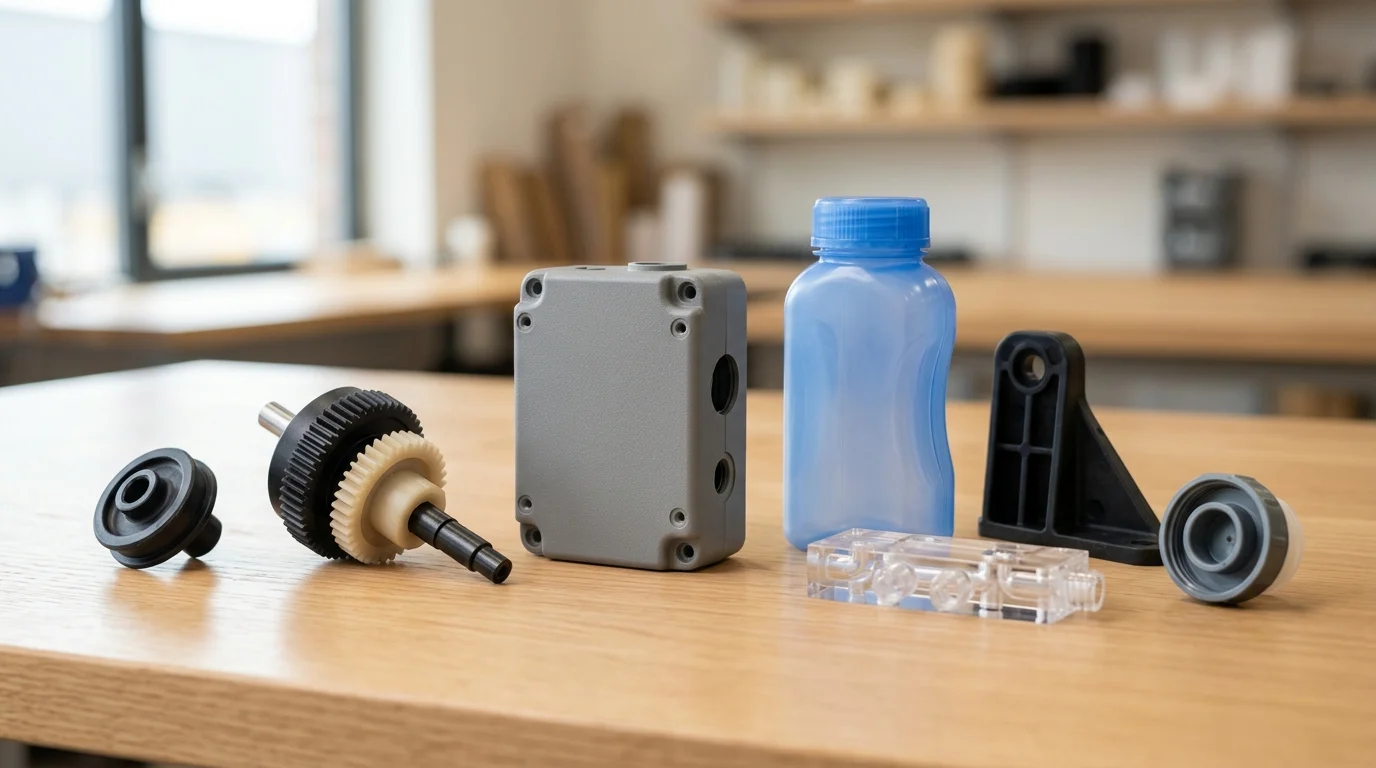
Developing hardware or physical consumer goods requires reliable manufacturing partnerships. For modern startups and established brands, leveraging custom plastic products is often the most effective way to transition from a digital concept to a scalable physical item. Instead of relying entirely on off-the-shelf components that compromise brand identity, companies utilize custom manufacturing to achieve precise aesthetic and functional requirements.
Why custom plastic products matter for speed to market
Speed to market dictates the success or failure of many consumer product launches. When brands invest in custom plastic products, they gain control over the entire production timeline. Modern manufacturers utilize rapid prototyping techniques such as 3D printing and CNC machining to deliver initial physical iterations in as little as 3 to 5 days. Once the design is validated, bridging the gap to mass production involves creating prototype molds or soft tooling.
Soft aluminum tooling can typically be machined and ready for first-article inspection within 2 to 4 weeks, a fraction of the time required for hardened steel molds. This accelerated timeline allows startups to launch beta products, gather user feedback, and iterate before committing to the heavy capital expenditure of high-volume production.
Which business models benefit most
Different business models extract varying levels of value from custom manufacturing. Direct-to-Consumer (D2C) brands rely on unique packaging and proprietary product designs to justify premium pricing and stand out in crowded e-commerce marketplaces. For these brands, custom plastic products provide a distinct visual identity that off-the-shelf white-label goods cannot offer.
Business-to-Business (B2B) hardware and medical device startups also benefit immensely, but for different reasons. These sectors often require strict adherence to ergonomic profiles or integration with complex internal electronics. Many manufacturing services accommodate these models by offering flexible Minimum Order Quantities (MOQs). Startups can often negotiate initial production runs of 500 to 1,000 units, allowing them to test market viability without holding excessive inventory.
What Custom Plastic Product Manufacturing Services Cover

A comprehensive manufacturing partner does much more than simply inject resin into a mold. Full-service providers offer an end-to-end ecosystem that transforms raw ideas into finished, market-ready goods. To see examples of how extensive these capabilities can be, brands often review a supplier’s custom plastic products portfolio to ensure alignment with their specific industry needs.
How design, prototyping, tooling, and production work
The journey begins with Design for Manufacturability (DFM). During this phase, engineers analyze CAD files to identify potential defects like sink marks, warping, or inadequate draft angles. Addressing these issues early prevents costly mold modifications later. Once the design is optimized, prototyping verifies the form and fit.
Tooling is the next critical phase. The choice of mold material directly impacts both cost and longevity. For instance, P20 steel is commonly used for medium-volume production, reliably yielding up to 100,000 shots before requiring significant maintenance. Production then involves dialing in the injection parameters—temperature, pressure, and cooling time—to ensure consistent part dimensions within strict tolerances, often as tight as +/- 0.05mm.
Which manufacturing methods fit different needs
Selecting the correct manufacturing method is vital for optimizing unit economics. Injection molding is the industry standard for high-volume, repeatable parts, but it requires significant upfront tooling investment. CNC machining is ideal for low-volume, high-precision components, while vacuum forming suits large, thin-walled parts like packaging trays or equipment housings.
| Manufacturing Method | Best For | Typical Setup Cost | Cost Per Part (at Volume) |
|---|---|---|---|
| Injection Molding | High volume, complex geometries | High ($3k – $50k+) | Very Low |
| CNC Machining | Low volume, tight tolerances | Low | High |
| Vacuum Forming | Large, thin-walled parts | Medium | Low to Medium |
| 3D Printing (SLA/FDM) | Prototyping, extreme complexity | Very Low | Very High |
How to compare stock, semi-custom, and fully custom options
Brands must navigate the spectrum of customization. Stock products are readily available and require zero tooling investment, but they offer no competitive differentiation. Semi-custom options allow brands to modify existing molds—such as changing the color, adding a logo insert, or slightly altering a surface texture—striking a balance between uniqueness and speed.
Fully custom options require building molds from scratch. While this path demands the highest capital and longest lead time, it provides complete intellectual property ownership and total design freedom. Startups must weigh these options against their runway and market entry strategy.
How to Evaluate Cost, Quality, and Compliance
Evaluating a manufacturing partner requires looking beyond the initial quote. The true cost of production encompasses tooling, per-unit pricing, quality control, and regulatory compliance. Understanding these variables ensures that brands do not sacrifice long-term reliability for short-term savings.
What drives custom plastic product costs
The primary cost driver in custom plastic products is the tooling. A simple, single-cavity mold for a small part might cost $3,000, while a complex, multi-cavity hardened steel mold with hot runners can easily exceed $50,000. Beyond tooling, the material selection heavily influences the unit price. Standard resins like Polypropylene (PP) or ABS are highly cost-effective, whereas engineering-grade plastics like PEEK or Polycarbonate (PC) command a premium.
Cycle time—the duration required to inject, cool, and eject a part—also dictates cost. A cycle time reduction of just 5 seconds can yield massive savings over a production run of 100,000 units. Efficient mold design, particularly optimized cooling channels, is essential for minimizing this metric.
Which quality standards and compliance requirements matter
Depending on the application, specific quality and compliance standards are non-negotiable. For consumer electronics, plastics must often meet UL 94 flame retardant standards and RoHS compliance to ensure no hazardous substances are present. Medical and food-contact products require FDA CFR 21 compliant facilities and ISO 13485 or ISO 9001 certifications.
Quality control is typically measured using Acceptable Quality Limit (AQL) standards. A reputable manufacturer should consistently maintain defect rates below a 1.5% AQL threshold for major defects. Establishing these metrics in the initial contract prevents disputes and ensures consistent batch-to-batch quality.
What to include in a supplier comparison
When comparing suppliers, brands should utilize a structured evaluation matrix rather than relying solely on the lowest bid. To understand what documentation and certifications a supplier might provide, buyers can often download technical spec sheets and facility overviews directly from the manufacturer.
| Evaluation Criteria | Supplier A (Domestic) | Supplier B (Overseas) | Weighting |
|---|---|---|---|
| Tooling Cost | $15,000 | $6,500 | High |
| Unit Price (10k units) | $1.20 | $0.45 | High |
| Lead Time (T1 Samples) | 3 Weeks | 6 Weeks | Medium |
| ISO 9001 Certified | Yes | Yes | Mandatory |
| Payment Terms | Net 30 | 50% Upfront, 50% BOL | Medium |
How to Source Custom Plastic Product Manufacturing Services
Sourcing the right manufacturing partner is a critical step that dictates the trajectory of a physical product launch. A thorough vetting process minimizes the risk of delayed shipments, substandard materials, or intellectual property theft. Brands can learn more about a supplier’s history, facility size, and core competencies to gauge their reliability.
How to assess supplier capabilities and communication
Assessing a supplier requires evaluating both their technical capabilities and their communication infrastructure. Technically, brands should look for in-house tooling capabilities, which significantly reduce lead times compared to suppliers who outsource mold making. Equipment tonnage is another metric; a facility with injection machines ranging from 50 to 1,000 tons can handle both small, intricate components and large housings.
Communication is equally critical. Startups should test response times during the quoting phase. A supplier that takes more than 48 hours to reply to a standard RFQ (Request for Quote) is likely to cause communication bottlenecks during high-stress production phases. Dedicated English-speaking project managers and transparent weekly progress reports are strong indicators of a reliable partner.
What steps reduce risk in sampling, pilot runs, and scale-up
Transitioning from design to mass production is inherently risky. To mitigate this, brands rely on a structured sampling process. The first off-tool samples, known as T1 samples, are rarely perfect. They are used to identify necessary adjustments in the mold or injection parameters. T1 samples are typically expected within 15 to 30 days after mold design approval.
Once T1 samples are refined and approved (often reaching T2 or T3 iterations), brands should insist on a pilot run. A pilot run of 100 to 200 units tests the stability of the manufacturing process and provides functional units for final field testing. Only after the pilot run yields a consistent defect rate below the agreed AQL should the brand authorize full-scale production.
How to Choose the Right Custom Plastic Product Strategy
Committing to custom manufacturing requires a strategic alignment of product goals, budget constraints, and market timing. Brands must objectively evaluate whether the benefits of bespoke components outweigh the inherent capital and time investments.
When custom manufacturing is the right choice
Custom manufacturing becomes the definitive choice when product differentiation is central to the value proposition. If a product requires unique ergonomics, integrates proprietary electronics, or demands specific material properties (like extreme UV resistance or flexibility), custom tooling is unavoidable. Furthermore, custom designs offer inherent intellectual property protection, as proprietary molds prevent competitors from easily replicating the exact form factor.
Financially, custom tooling makes sense when the projected volume justifies the upfront cost. Brands should calculate the tooling payback period. If the unit cost savings of a custom part compared to a modified off-the-shelf alternative covers the tooling cost within the first 12 months of projected sales, the investment is generally considered sound.
Which criteria help balance customization, cost, and speed
Balancing customization, cost, and speed often involves a phased strategy. For unproven markets, brands might launch using a bridge tooling approach. Soft aluminum molds, which cost significantly less and can be produced in weeks rather than months, are used to manufacture the first 5,000 to 10,000 units. This gets the product to market quickly and minimizes upfront capital risk.
Once market demand is validated and design flaws are ironed out, the brand can invest the profits from the initial run into multi-cavity, hardened steel molds for high-volume, low-cost production. This phased approach allows startups to leverage the benefits of custom plastic products without overextending their initial funding runway.
Further reading:
Key Takeaways
- The most important conclusions and rationale for custom plastic products
- Specs, compliance, and risk checks worth validating before you commit
- Practical next steps and caveats readers can apply immediately
Frequently Asked Questions
How quickly can custom plastic products move from concept to prototype?
With rapid prototyping, many parts can be reviewed in 3 to 5 days. Soft tooling for first-article samples often takes about 2 to 4 weeks.
What MOQ works for startups testing a new product?
A practical starting run is often 500 to 1,000 units. This helps validate demand without tying up too much cash in inventory.
Which manufacturing method is best for custom plastic products?
Use injection molding for volume, CNC machining for tight-tolerance low-volume parts, and 3D printing for fast prototypes. The best choice depends on budget, geometry, and launch volume.
Why is DFM important before tooling starts?
DFM catches issues like warping, sink marks, and poor draft angles early. Fixing them before mold cutting reduces delays, tooling changes, and unnecessary cost.
How can I evaluate a supplier like NBPM Plastic for a custom project?
Check whether they offer DFM, prototyping, tooling, and production in one workflow. Also review their product portfolio and ability to meet your tolerance, material, and volume needs.
Post time: Jun-13-2026