
- Reliable custom plastic products sourcing starts with design review, not price negotiation.
- Plastic supplier credibility is strongest when sample quality, process control, and delivery data are documented.
- OEM plastic manufacturing works best when the supplier can support DFM, trial runs, and scalable production.
- International buyers should verify communication, export handling, and after-sales responsiveness before placing orders.
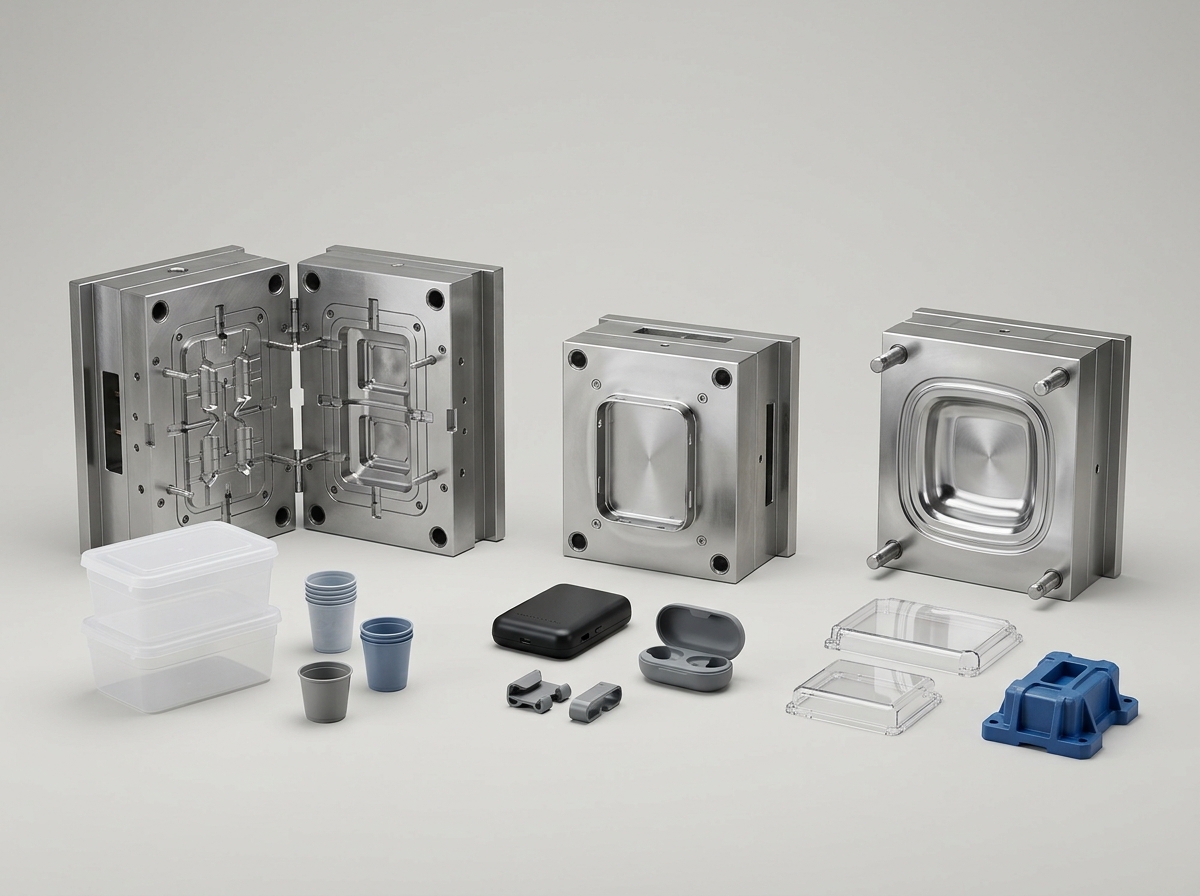
Finding a dependable custom plastic product supplier is easier when you evaluate measurable manufacturing capability: for example, injection molding can hold tight dimensional control when the mold, material, and process are aligned, and ISO 20457:2018 defines tolerance classes for molded parts; for comparison, ISO GPS concepts also emphasize that fit and function must be defined before production begins, not after. Buyers sourcing plastic injection molds, plastic housing molds, or 3D molds should expect a supplier to discuss material selection, gate design, cooling, and assembly tolerances in concrete terms rather than vague promises.
How to Evaluate a Custom Plastic Product Supplier for OEM Plastic Manufacturing
The best supplier is the one that can prove process control across the full project lifecycle.
International buyers often start with a product photo or drawing, but a reliable plastic supplier will immediately ask about resin, surface finish, annual volume, expected lifetime, and critical dimensions. That early questioning matters because custom plastic products are not only a fabrication task; they are a manufacturability problem. A part that looks simple may require a complex mold, controlled shrinkage, or texture management to meet the final use case.
For electronics and appliance projects, dimensional consistency is usually more important than a low unit price. Households and industrial equipment often need parts that assemble without forcing, warping, or cosmetic mismatch. That is why many buyers prefer suppliers with experience in electronic enclosures and appliance parts, where fit, finish, and repeatability determine whether the final product passes QA or gets rejected at assembly.
Core Search Intent: What Buyers Really Mean by Reliable Plastic Supplier
Buyers asking how to find a reliable plastic supplier usually want lower project risk, not just a vendor list.
Behind the search query are several concerns: Can the factory understand English drawings? Will the supplier give engineering feedback before mold cutting? Can it support OEM plastic manufacturing with stable lead times and enough production capacity? Will sample approval match mass production? Can it handle logistics and rework if issues appear? These questions matter more than glossy brochures because custom plastic products often fail at the handoff between design intent and toolmaking reality.
A useful way to think about supplier reliability is to separate it into four risk layers: technical, operational, commercial, and communication. A supplier may have great machines but weak project management. Another may quote fast but struggle with mold debugging. Buyers should score all four layers before committing to tooling.
| Evaluation Area | What to Verify | Practical Evidence | Why It Matters |
|---|---|---|---|
| Technical capability | DFM review, mold flow knowledge, resin selection | Sample reports, mold photos, process notes | Reduces design errors and rework |
| Quality control | Incoming, in-process, final inspection | Inspection records, CMM or gauge data | Protects consistency in custom plastic products |
| Delivery performance | Tooling lead time, production capacity | Project schedule, shipment history | Supports launch dates and replenishment |
| Communication | English response speed, file handling | Quotation turnaround, technical feedback | Critical for international buyers |
Materials, Molds, and Product Fit in Custom Plastic Products
Material choice is the fastest way to predict whether a plastic project will succeed.
For transparent or impact-resistant housings, PC is widely used because it combines optical clarity with toughness and dimensional stability. For many consumer and industrial enclosures, that makes PC a practical choice when the part must survive handling and still look clean. In contrast, products that need lower cost or easier flow may use other resins depending on structural and cosmetic requirements.
The mold design must match the product category. A plastic housing mold needs attention to parting lines, snap-fit features, rib placement, and surface consistency. A 3D mold is often chosen for curved or asymmetric products where brand identity and visual complexity matter. In each case, the mold is not just a cavity; it is the system that converts a digital design into a repeatable physical part.
Buyers who compare OEM plastic parts with finished product options should confirm whether the supplier can support both tooling and mass production. One-stop supply often reduces coordination loss because the engineering, mold, and production teams work from the same data set instead of passing files between separate vendors.
| Product Type | Common Resin | Typical Strength Focus | Supplier Priority |
|---|---|---|---|
| Electronic enclosure | PC | Impact resistance, appearance, dimensional stability | Cosmetic consistency |
| Appliance part | ABS / PC blend | Assembly fit, structural rigidity | Repeatability |
| Industrial component | Engineering plastic | Load-bearing reliability | Long-term supply stability |
| Toy or leisure item | PP / ABS | Color, safety, scale production | Batch stability |
What Quality Data a Plastic Supplier Should Share Before Tooling
Reliable suppliers prove capability with documents, not slogans.
Before approving a mold, buyers should ask for a manufacturability review, dimensional risk points, and a clear sampling plan. If the project involves tight fit or visible surfaces, the supplier should explain which dimensions are critical, which features may shrink differently, and how the trial will be judged. This approach is standard practice in serious OEM plastic manufacturing because it prevents the common trap of approving a visually acceptable sample that later fails in production.
A good rule is to request three kinds of evidence: engineering evidence, process evidence, and inspection evidence. Engineering evidence includes drawings marked with critical dimensions and gate strategy. Process evidence includes trial conditions, machine settings, and material lot data. Inspection evidence includes measurement results and photos of defects if any. If a supplier cannot provide this information, risk increases significantly.
- Ask for a DFM review before mold cutting.
- Confirm whether the sample is a soft tool sample, pilot run sample, or production sample.
- Request inspection reports for critical dimensions, not only overall appearance.
- Verify who owns engineering change management after approval.
- Check whether the supplier can keep records for future reorder consistency.
How to Compare Suppliers for Cost, Speed, and Long-Term Stability
The lowest quote can become the highest total cost if the project is unstable.
International buyers often compare quotes line by line, but custom plastic products need a total-cost view. A slightly higher mold price may still be cheaper if the supplier avoids design errors, shortens trial cycles, and reduces scrap. In injection molding, scrap reduction is especially valuable because rejected parts consume resin, labor, energy, and time. For buyers scaling from sample order to regular replenishment, stability is often worth more than a small initial discount.
Lead time should be evaluated at two levels: tooling lead time and production lead time. Tooling speed matters for launch timing, while production reliability matters for replenishment. Buyers should ask whether the factory can absorb rush orders, multi-SKU changes, and packaging adjustments. Suppliers experienced in custom plastic products and plastic mold parts are often better prepared to handle both new development and ongoing spare-part supply.
| Decision Factor | Low-Risk Supplier | High-Risk Supplier | Buyer Impact |
|---|---|---|---|
| Quotation detail | Tooling, samples, revisions separated | One-line lump sum | Hidden cost risk |
| Sampling process | Trial records and measured data | Only cosmetic photos | Approval uncertainty |
| Delivery planning | Milestones and confirmation points | Vague promised dates | Launch delay risk |
| After-sales support | Documented response path | Informal communication only | Long-term supply risk |
 Standards and Quantitative Benchmarks Buyers Can Use
Quantitative benchmarks make supplier comparison more objective.
For molded parts, dimensional tolerance should be discussed against recognized standards and not guesswork. ISO 20457:2018 provides guidance for tolerance classes of molded parts, while ISO 286-1 is widely used in the broader fit-and-tolerance system for engineering fits. For surface or inspection planning, buyers can also reference formal standards instead of inventing their own acceptance language. That is especially important when multiple factories quote the same product, because the same drawing can be interpreted differently without a common benchmark.
In practical sourcing, some performance numbers are also widely used as reference points. For example, a standard industrial injection molding machine can operate with screw speeds in the range of several tens to more than 100 RPM depending on material and machine design, while clamping force can range from tens to thousands of tons for different part sizes. Buyers do not need to specify machine theory in detail, but they should ask whether the supplier has equipment suited to part geometry and yearly volume. If the supplier cannot explain why a given machine is selected, the process may not be mature enough.
For testing and material verification, international references from NIST can help buyers understand measurement traceability, while ASTM standards are commonly used for plastics property testing and material classification. If a supplier claims a material or performance level, ask how it was measured and under which standard. That is the difference between a marketing claim and a usable engineering claim.
Why Communication Matters as Much as Mold Quality
Communication failures often damage projects more than machine failures.
For international buyers, a supplier’s English response speed and technical clarity are not soft skills; they are operational controls. A good plastic supplier can explain why a draft angle, weld line, or gate location affects appearance or strength. A poor supplier may agree to everything early and later say the part cannot be produced as approved. That gap is expensive because it appears only after tooling investment has already started.
Buyers should pay attention to how fast the supplier replies to questions about drawings, samples, and packaging. If answers are delayed or inconsistent before an order, they are unlikely to improve after the order is placed. Reliable OEM plastic manufacturing depends on disciplined file handling, version control, and predictable feedback loops.
Common Mistakes International Buyers Make
Most supplier problems begin with incomplete sourcing criteria.
- Choosing based only on the lowest quotation.
- Skipping DFM review and assuming the drawing is production-ready.
- Ignoring surface finish and cosmetic acceptance criteria.
- Not separating sample approval from mass production approval.
- Failing to confirm reorder stability for long-term projects.
- Assuming a factory that makes one product type can handle every plastic category well.
Buyers who avoid these mistakes usually move faster because they reduce back-and-forth during mold development. In complex projects, a strong supplier is the one that surfaces risks early, even if that means recommending design changes before the first sample is made.
Buying Checklist for Custom Plastic Products
A short checklist can prevent expensive supplier mistakes.
- Confirm the exact product function and target application.
- Share drawings, samples, material preferences, and annual volume.
- Request DFM feedback and critical tolerance review.
- Ask for tooling timeline, sample plan, and inspection method.
- Check communication speed and technical clarity.
- Verify whether the supplier supports both tooling and finished parts.
- Review reorder consistency, packaging, and shipping support.
If a supplier passes this checklist, the relationship is usually strong enough for deeper commercial negotiation. If it fails early, the buyer saves time by moving on before tooling investment starts.
FAQ About Finding a Reliable Plastic Supplier
What is the first thing to check when selecting a custom plastic product supplier?
The first thing to check is whether the supplier can review your drawing or sample and identify manufacturability risks before quoting. That shows real OEM plastic manufacturing capability, not just sales ability.
How do I know if a plastic supplier is reliable for export projects?
A reliable export supplier responds clearly in English, provides file control, confirms timelines in writing, and can support packaging and shipping coordination without constant chasing.
Should I choose a factory that offers both molds and finished parts?
Yes, if you need faster coordination and fewer handoff risks. One-stop support often helps custom plastic products move from concept to production more smoothly.
What documents should I request before approving tooling?
Request a DFM review, tolerance discussion, material confirmation, trial plan, and measurement method. These documents reduce misunderstanding during development.
How important is sample quality compared with mass production quality?
Both matter, but mass production quality is more important. A sample that looks good is not enough unless the supplier can show stable repeatability during production.
Why do some plastic projects fail even when the supplier has good machines?
Because machine capability alone does not guarantee success. Mold design, process control, material selection, and communication discipline all affect the final result.
What is the safest way to compare multiple suppliers?
Compare them using the same checklist: technical review, quality evidence, timing, communication, and after-sales support. That creates a fair comparison for custom plastic products.
For buyers who want a broader view of manufacturing capability, reviewing the company profile and product categories can help identify whether the supplier’s experience matches the project type before any RFQ is sent.
Post time: Jul-30-2026