
- OEM injection molding is best when the buyer already has a defined design, tolerance target, and bill of materials.
- ODM manufacturing is stronger when the buyer needs design assistance, cost-down engineering, and faster time to market.
- Successful China injection molding factory partnerships depend on DFM review, sample approval, and stable production validation.
- For buyers, the best supplier is the one that can balance tooling precision, communication speed, and long-term delivery reliability.
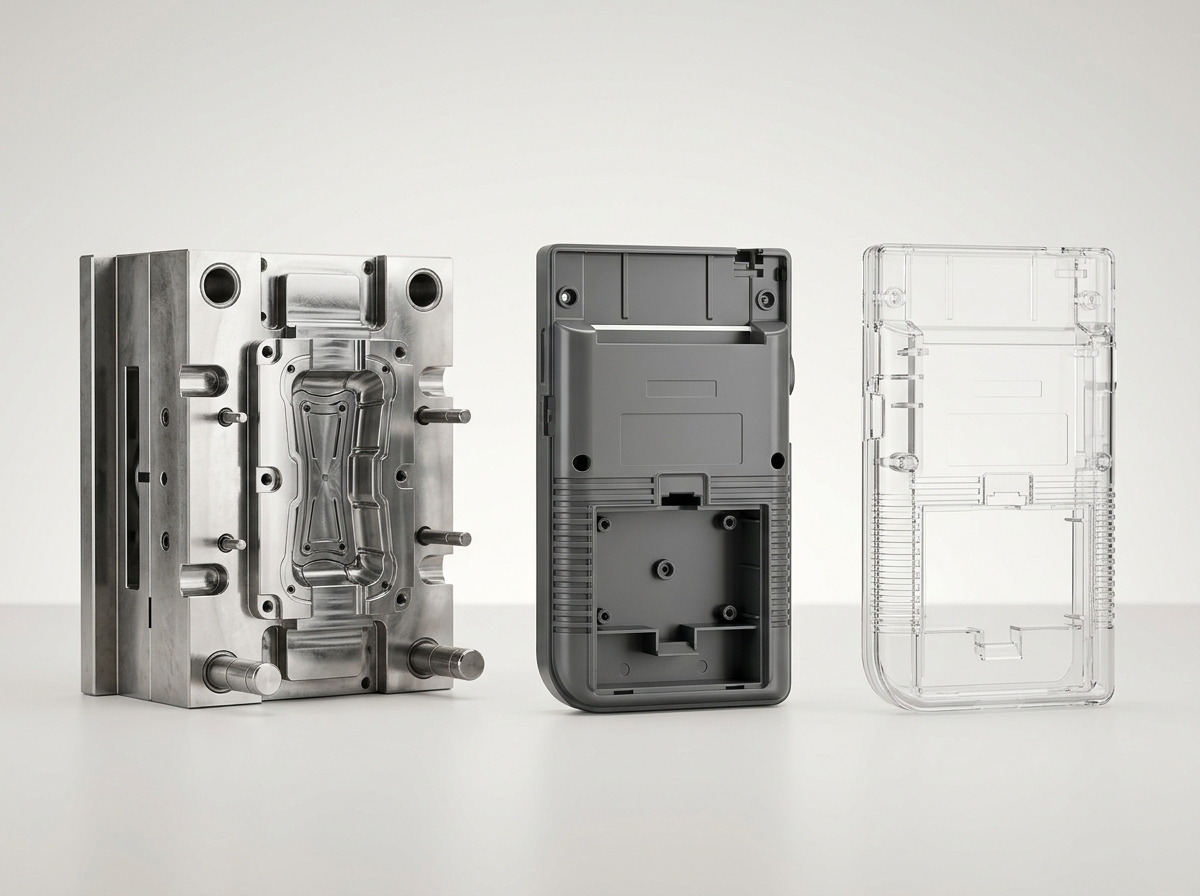
A reliable China injection molding factory can turn a product idea into a production-ready plastic part with tolerances as tight as ±0.005 mm in precision machining contexts, while mold quality and process control still determine whether those tolerances are maintained in real mass production, as reflected in ISO 20457:2018 for plastics molding tolerances and ISO 9001:2015 for quality management systems. For buyers searching for OEM injection molding or ODM manufacturing, the main question is not simply whether a factory can make a part, but whether it can support design review, tooling, sampling, production stability, and export documentation from one workflow. If you are comparing suppliers, useful entry points include injection molding service, custom plastic parts, and plastic injection molds.
How OEM Injection Molding Works in a China Injection Molding Factory
OEM injection molding starts with your specifications, not with the factory’s assumptions. In a true OEM workflow, the buyer provides drawings, samples, functional requirements, material targets, and target volume, and the factory translates those inputs into mold design, trial shots, and production control.
That matters because many part failures are not caused by bad molding alone. They begin earlier, in the handoff between product design and manufacturability. A good factory will review wall thickness, rib structure, undercuts, gate location, ejector strategy, and shrinkage risk before steel is cut.
| OEM stage | Buyer input | Factory output | Typical decision focus |
|---|---|---|---|
| Concept review | 2D drawing, sample, target price | DFM feedback, mold feasibility notes | Geometry, draft angle, undercuts |
| Tooling | Approved design | Mold build, steel selection, runner plan | Cycle time, durability, cavity count |
| Sampling | Acceptance criteria | T0/T1 samples, dimensional report | Tolerance, appearance, fit |
| Mass production | Forecast and release plan | Stable output with inspection records | Yield, consistency, lead time |
For many buyers, the key benefit of an OEM factory is control. You keep ownership of the product concept while using the factory’s tooling and process capability to reduce risk. This is especially important in consumer electronics, home appliances, and industrial accessories, where a small dimensional drift can cause visible assembly gaps or clip failure.
When ODM Manufacturing Makes More Sense Than OEM
ODM manufacturing is the faster route when the buyer needs a market-ready product rather than a blank-sheet design. In an ODM project, the factory often provides an existing structure, a proven mold platform, or a semi-custom design that can be adjusted for branding, color, surface texture, accessory fit, or package size.
This model fits buyers who want speed, lower development cost, or a faster test of market demand. It is common in daily goods, small appliances, accessories, and retail-ready products where the visual identity matters, but full custom engineering would slow launch.
| Model | Main advantage | Main trade-off | Best use case |
|---|---|---|---|
| OEM | Full design control | Longer development cycle | Proprietary products, protected geometry |
| ODM | Faster launch | Less uniqueness | Fast-moving consumer goods, pilot SKUs |
| Hybrid | Balanced cost and speed | Needs tighter coordination | Brand-led products with moderate customization |
In practice, many importers use a hybrid path. They begin with an ODM base to verify market response, then move into OEM tooling once demand is proven. This reduces upfront risk and avoids locking inventory into a slow-selling design.
What a Good China Injection Molding Factory Actually Delivers
The best factories sell process reliability, not just machine time. A capable China injection molding factory should support engineering review, mold development, sample validation, production planning, and after-sales tooling maintenance.
For buyers of plastic housings, the factory should understand appearance classes, assembly fit, screw boss durability, and surface quality. For technical parts, the factory should also check shrinkage, warpage, gate vestige, and weld line placement. For export projects, it should handle English communication, document response, and shipment coordination without forcing the buyer to manage every detail.
That is why a supplier with a broader category range is often more useful than a narrow subcontractor. For example, buyers often evaluate plastic injection mold solutions together with mold components and plastic parts manufacturing so that tooling, spares, and finished parts can be managed in one supply chain.
| Capability | Why it matters | Buyer risk if missing | Typical evidence |
|---|---|---|---|
| DFM review | Prevents expensive mold changes | Late redesign, schedule slip | Annotated drawings, feasibility notes |
| Sampling control | Confirms part fit before mass production | Defective first batch | Dimensional report, sample approval |
| Process stability | Supports consistent output | Color drift, warpage, flash | Inspection records, process sheets |
| Tool maintenance | Extends mold life | Unexpected downtime | Spare parts list, maintenance schedule |
Which Industries Benefit Most from OEM Injection Molding
OEM injection molding is most valuable when the product must fit a defined use case and repeat reliably at scale. The strongest demand usually comes from electronics, home appliances, industrial equipment, toys, daily goods, shoes, and functional accessories.
In electronics, the buyer usually cares about shell alignment, snap-fit strength, and appearance consistency. In home appliances, dimensional fit and assembly accuracy matter because the plastic part must mate with metal or electrical components. In industrial products, long-term supply stability and durability often outweigh cosmetic perfection.
PC material is a common choice for transparent or impact-resistant housings because it offers good toughness and dimensional stability for protective and electronic applications. In many product lines, it is selected when appearance and impact performance must be balanced rather than optimized separately.
| Industry | Primary concern | Common part type | Material tendency |
|---|---|---|---|
| Consumer electronics | Fit, clip strength, appearance | Housing, cover, bezel | PC, ABS, PC-ABS |
| Home appliances | Assembly accuracy, heat behavior | Panel, enclosure, knob | ABS, PP, PC blends |
| Industrial equipment | Reliability, repeat supply | Bracket, guard, case | PA, PBT, reinforced grades |
| Daily goods | Cost control, fast turnover | Container, shell, accessory | PP, PS, ABS |
How Material Choice Changes OEM and ODM Results
Material choice is one of the biggest hidden drivers of mold performance and end-use quality. A factory can make the same shape look successful or unstable depending on whether the material matches the product’s functional load, temperature, transparency, or surface target.
For example, polycarbonate is often chosen when impact resistance and optical clarity matter, but it also requires careful drying and process control to avoid splay, haze, or stress cracking. In contrast, polypropylene may be lower cost and easier for some daily goods, but it behaves differently in shrinkage and stiffness.
For industrial or export buyers, a reputable factory should reference recognized material standards and test methods rather than relying on vague terms like “strong plastic” or “good quality plastic.” This is where standards such as ASTM D638 for tensile properties and ASTM D790 for flexural properties help create an objective acceptance process.
| Material | Typical strength profile | Common use | Processing note |
|---|---|---|---|
| PC | High impact, good clarity | Transparent covers, protective housings | Needs drying control |
| ABS | Balanced stiffness and toughness | Electronics shells, consumer products | Good surface finish potential |
| PP | Lightweight, chemical resistant | Containers, daily goods | Watch shrinkage and warpage |
| PA | Higher mechanical performance | Functional brackets, loaded parts | Moisture sensitivity matters |
How to Evaluate a Factory for OEM Injection Molding Projects
The right factory should be judged by evidence, not by promises. Buyers should assess engineering response, sample quality, communication speed, tooling transparency, and production discipline before placing a serious order.
A practical evaluation process usually starts with a technical package. If the supplier asks the right questions about part function, annual volume, finish, assembly interface, and acceptable tolerances, that is a strong signal. If it answers every request with a generic yes, the risk rises.
- Ask for a DFM review before mold commitment.
- Check whether the supplier can explain gate location and shrinkage implications.
- Request sample approval criteria in writing.
- Confirm who owns the mold and how maintenance is handled.
- Verify export documentation and shipping coordination early.
For buyers comparing service depth, a useful signal is whether the factory can also supply related items such as custom mold design and mold making service. That combination usually indicates the supplier can move from concept to tooling without excessive handoffs.
What Quantitative Benchmarks Matter in OEM and ODM Manufacturing
Quantitative targets make project decisions much easier. Without numbers, OEM and ODM discussions become subjective and delay approval.
Useful benchmarks include tolerance class, cycle time, first-pass yield, and inspection sampling method. While every project differs, the factory should be able to state measurable targets and explain how those targets will be verified. For plastics manufacturing, ISO 20457 provides a tolerance framework for injection molded parts, while NIST measurement guidance reinforces the importance of traceable measurement systems in production control.
| Benchmark | Why it matters | Typical question to ask | Evidence to request |
|---|---|---|---|
| Tolerance target | Controls fit and function | What is the allowable deviation? | Dimensional report |
| Cycle time | Impacts unit cost | What is the expected seconds per shot? | Process sheet, sample cycle data |
| Yield | Reflects process stability | How many parts pass first inspection? | Inspection records |
| Tool life | Affects long-term cost | How many shots before major maintenance? | Maintenance plan, spare list |
Industry buyers often also want to know whether the factory follows recognized quality systems and inspection discipline. ISO 2859-1 is widely used for acceptance sampling by attributes, which helps buyers and suppliers agree on an objective inspection method rather than debating subjective appearance judgments after delivery.
 Common Risks in China Injection Molding Factory Projects and How to Reduce Them
Most project failures come from preventable coordination gaps. Buyers often underestimate how much time is lost when drawing revisions, material changes, or sample approvals are not controlled through a clear process.
The most common risks include unclear product requirements, under-specified cosmetic standards, unrealistic lead-time expectations, and weak change control after tooling begins. Another frequent problem is assuming that a good sample automatically guarantees stable mass production. In reality, sample approval is only one checkpoint; process control and inspection discipline are what protect the launch.
- Freeze the design before mold steel is cut.
- Document finish, color, and cosmetic defect limits in writing.
- Align on packaging and shipping method before final approval.
- Confirm replacement parts and mold maintenance expectations early.
For international buyers, the strongest project managers usually treat the factory as a technical partner, not a black box. That means sharing forecast changes, market launch dates, and acceptance criteria early enough for the supplier to prepare properly.
Why One-Stop Mold and Finished Part Supply Can Improve Project Efficiency
One-stop supply reduces handoff loss across the product lifecycle. When mold design, tooling, sampling, production, and shipment are coordinated by one supplier family, the buyer avoids time loss between separate vendors.
This is especially useful when a project has a tight launch window or multiple SKUs. Instead of managing one vendor for tooling and another for molding, the buyer can consolidate communication, reduce responsibility gaps, and simplify quality tracking. That is why many sourcing teams prefer suppliers that can support molds, parts, and maintenance under one project structure.
For buyers who need both development and repeat supply, a useful model is to start with a pilot mold, verify fit and demand, then expand into higher-cavity tooling or parallel SKU tooling once the product is stable.
How to Decide Between OEM and ODM for Your Next Project
The choice depends on how much design control you need versus how fast you need to launch. OEM is usually the better fit when product uniqueness, IP control, or technical fit are priorities. ODM is usually better when speed, lower initial investment, and market testing matter more.
A simple decision rule works well. If you already have a finalized design, choose OEM injection molding. If you have a market idea but not a locked structure, start with ODM manufacturing or a hybrid path. If your product must evolve across several versions, choose a factory that can support both.
- Choose OEM when your design is already validated.
- Choose ODM when speed to market is the highest priority.
- Choose hybrid development when you want controlled customization with reduced engineering cost.
- Choose a one-stop factory when communication efficiency is critical.
For buyers researching suppliers, a product-oriented page such as custom plastic mold can be more useful than a generic company overview because it shows how the factory handles actual project structure, not just general capabilities.
FAQ
What is the difference between OEM injection molding and ODM manufacturing?
OEM injection molding follows the buyer’s design and specifications, while ODM manufacturing starts from a supplier-provided or supplier-assisted product concept that can be customized and branded.
How does a China injection molding factory support new product development?
It supports new product development by reviewing drawings, improving manufacturability, building tooling, making samples, validating dimensions, and preparing stable production.
What industries use custom injection molded parts most often?
Electronics, home appliances, industrial equipment, toys, daily goods, and accessory products are among the most common users of custom injection molded parts.
Why is DFM review important before mold making?
DFM review helps identify thickness imbalance, undercuts, draft issues, and gate risks before tooling starts, which reduces redesign cost and schedule delay.
What should buyers check before choosing an injection molding supplier?
Buyers should check engineering response quality, sampling process, tolerance control, mold ownership terms, communication speed, and export support capability.
Why is PC material common for housings?
PC is widely used for housings because it combines transparency, impact resistance, and dimensional stability, making it suitable for protective and electronic applications.
Can one factory handle both molds and finished parts?
Yes. A one-stop factory can handle tooling, sample validation, production, and shipment, which often improves coordination and reduces supplier management effort.
Post time: Sep-18-2026