
Introduction
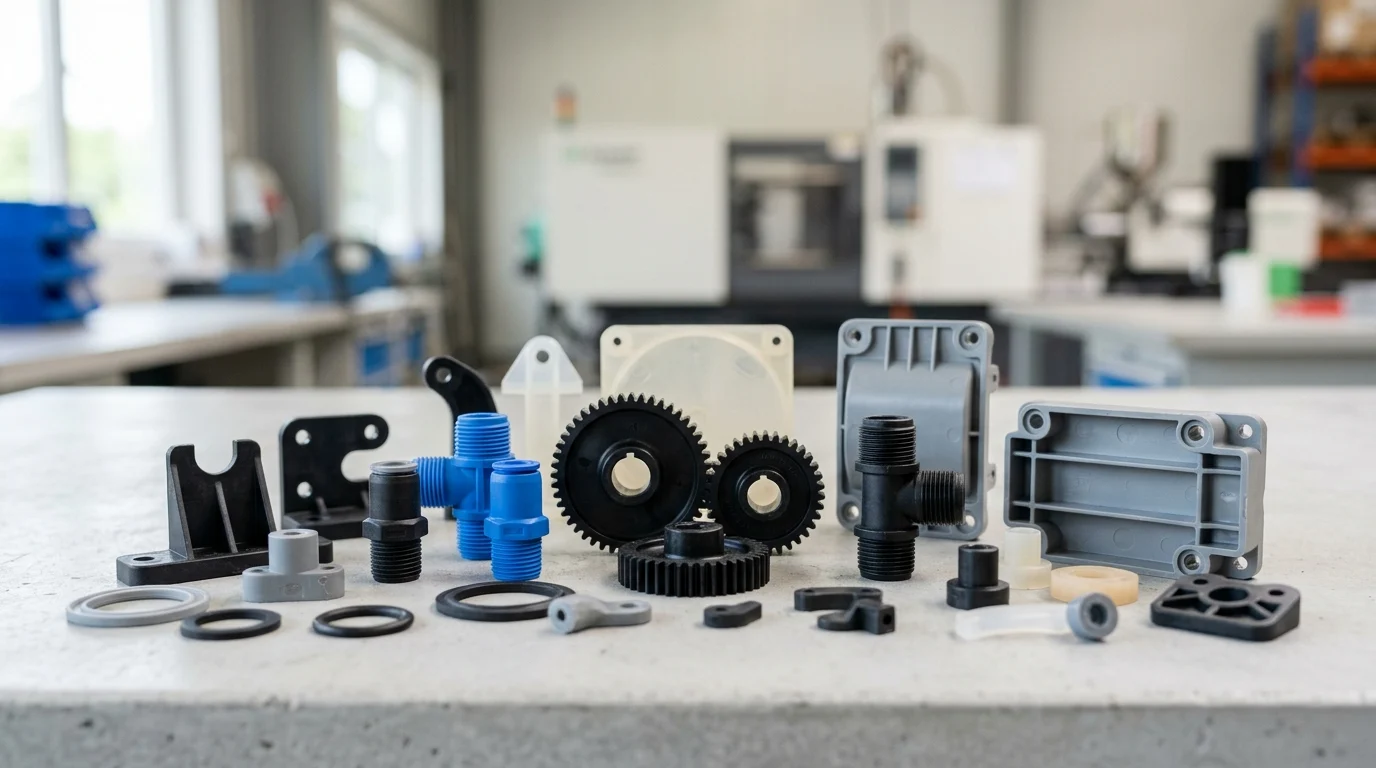
Custom plastic parts have become a practical design choice in industrial equipment manufacturing because they let engineers match material performance to the exact demands of a machine. Instead of relying on standard metal components, manufacturers can use tailored polymers to reduce weight, resist chemicals and wear, lower noise, and combine multiple functions into a single part. These changes often improve efficiency while cutting maintenance and production costs over the equipment’s lifecycle. The discussion ahead explains where industrial plastic parts are used, why OEMs specify them for demanding applications, and how material selection and part design influence reliability, performance, and overall manufacturing value.
Why industrial plastic parts affect performance and cost
The transition from traditional metals to advanced polymers in industrial manufacturing has fundamentally altered how original equipment manufacturers (OEMs) approach machinery design. By integrating custom plastic parts, engineers can fine-tune the physical properties of their equipment, optimizing both operational performance and lifecycle costs.
Unlike off-the-shelf components, custom-engineered plastics allow for exact tailoring to specific environmental stresses, friction requirements, and structural loads. This shift is largely driven by the need to reduce weight, minimize maintenance interventions, and consolidate multi-part assemblies into single, efficient units.
Why custom plastic parts matter in equipment
The integration of custom plastic components plays a critical role in enhancing the functionality of heavy-duty machinery. One of the primary advantages is weight reduction; replacing metal components with advanced polymers can reduce part weight by 30% to 50%. This lower mass directly translates to reduced inertia in moving parts, which lowers energy consumption and minimizes wear on motors and drive systems.
Furthermore, custom plastics inherently offer superior vibration dampening and noise reduction compared to their metal counterparts. For instance, replacing a steel gear with a custom nylon equivalent can decrease operational noise by 10 to 20 decibels. Additionally, the ability to mold complex geometries allows manufacturers to consolidate assemblies—reducing a five-part metal sub-assembly into a single molded plastic part, thereby cutting assembly time by up to 40% and eliminating multiple potential failure points.
How industrial plastic parts are defined
In the context of heavy machinery and manufacturing equipment, industrial plastic parts are defined by their ability to withstand extreme operational environments that would quickly degrade consumer-grade plastics. These are not standard commodity resins like basic polystyrene or PVC; rather, they are engineering-grade and high-performance polymers designed to meet precise mechanical and thermal specifications.
Materials such as Polyetheretherketone (PEEK), Polyphenylenesulfide (PPS), and Polyoxymethylene (POM or Acetal) define this category. Industrial plastic components are characterized by their high tensile strengths—often exceeding 10,000 psi—and their ability to maintain structural integrity at continuous operating temperatures above 150°C (and up to 250°C for materials like PEEK). They are also strictly defined by their chemical resistance profiles, ensuring they do not degrade when exposed to the harsh industrial lubricants, solvents, and hydraulic fluids common in factory settings.
What types of industrial plastic parts are used
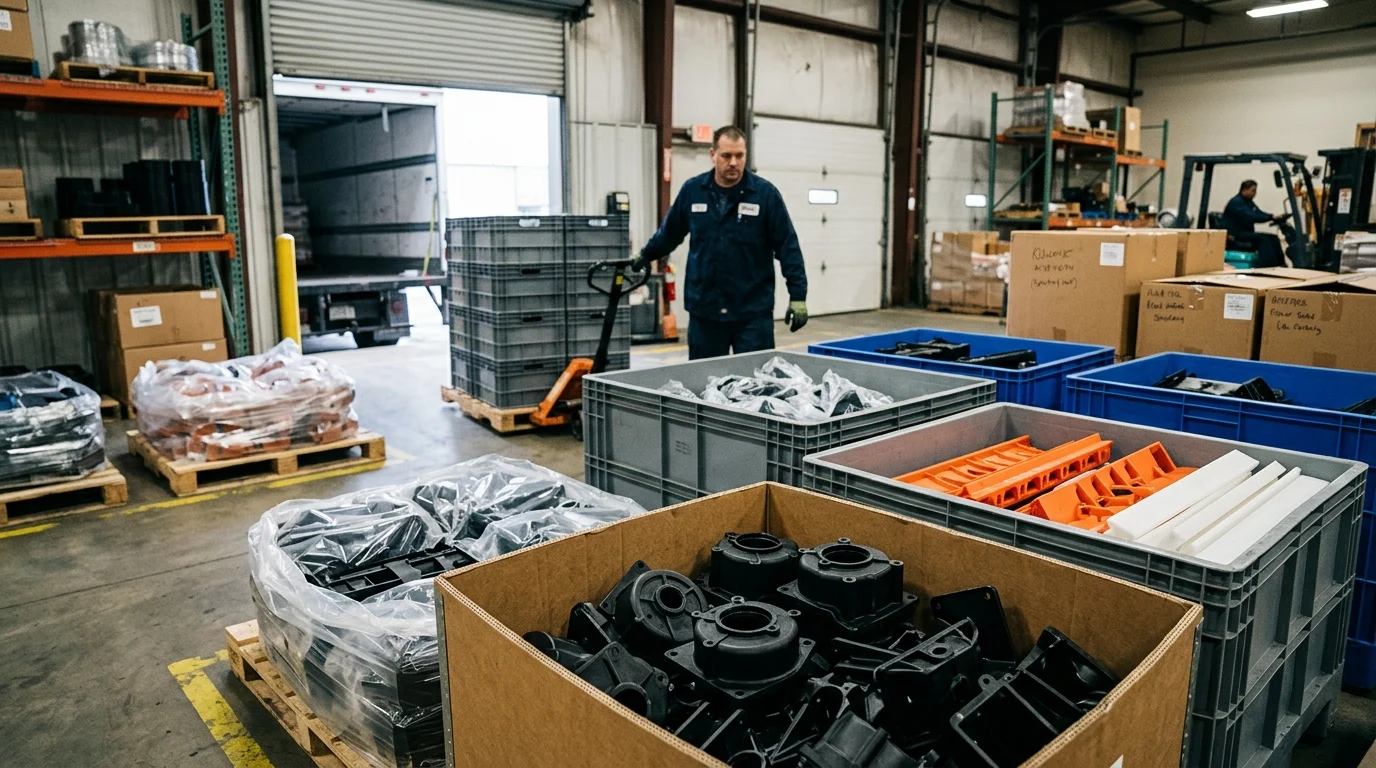
The versatility of modern polymers means that plastic components can be engineered to fulfill a vast array of mechanical functions. From load-bearing structural elements to dynamic moving parts, the selection of the right industrial plastic depends heavily on the specific application within the equipment.
Common custom plastic parts in industrial equipment
Industrial equipment relies on a variety of custom-molded and machined plastic components to function efficiently. Common examples include wear pads, bushings, and bearings made from self-lubricating plastics like UHMWPE (Ultra-High-Molecular-Weight Polyethylene) or PTFE (Polytetrafluoroethylene). These parts eliminate the need for external grease, significantly reducing maintenance schedules.
Other frequent applications include custom housings, sensor enclosures, and protective guarding. These components must often meet strict impact resistance standards, requiring materials like Polycarbonate, which offers an impact strength up to 250 times greater than glass. Specialized gears, sprockets, and seals are also heavily utilized, taking advantage of the fatigue resistance and dimensional stability offered by engineering resins.
How engineering plastics compare with metals and elastomers
Understanding how engineering plastics stack up against traditional metals and flexible elastomers is vital for part optimization. Metals typically offer superior absolute tensile strength and thermal conductivity, but they are heavy and prone to corrosion. Elastomers, such as polyurethane or silicone, provide excellent flexibility and sealing properties but lack the rigidity required for structural components. High-performance plastics bridge this gap, offering a high strength-to-weight ratio alongside excellent corrosion resistance.
| Material Category | Typical Density (g/cm³) | Tensile Strength (MPa) | Max Continuous Operating Temp (°C) |
|---|---|---|---|
| Aluminum (6061 Alloy) | 2.70 | 310 | 150 |
| PEEK (Engineering Plastic) | 1.32 | 100 | 250+ |
| Polyurethane (Elastomer) | 1.20 | 35 | 90 |
As shown in the comparison, while aluminum possesses higher tensile strength, PEEK delivers nearly a third of the weight while surviving significantly higher continuous temperatures. This makes high-performance plastics ideal for aerospace and high-heat industrial applications where weight savings are paramount.
Key material and process selection factors
Choosing the correct material and manufacturing process involves evaluating a complex matrix of operational demands. Engineers must first assess the mechanical loads, including continuous stress, peak impact forces, and cyclical fatigue. Thermal environments dictate the required Glass Transition Temperature (Tg) and Heat Deflection Temperature (HDT) of the chosen polymer.
Environmental exposure is another critical selection factor. Parts subjected to outdoor industrial environments require UV stabilization to prevent embrittlement, while components in chemical processing equipment demand specific resistance profiles against acids or bases. To navigate these variables effectively, OEMs often collaborate with specialized suppliers to source the exact industrial plastic parts that align with both their performance specifications and production budgets.
How custom industrial plastic parts are designed and manufactured
Transforming a conceptual design into a functional, mass-produced industrial plastic component requires rigorous engineering and an understanding of specific manufacturing constraints. The principles of Design for Manufacturability (DFM) must be applied early to ensure the part performs reliably while remaining cost-effective to produce.
Design inputs that determine part performance
The performance of a plastic part is heavily dictated by its initial geometric design. Uniform wall thickness is arguably the most critical input; variations in thickness can lead to differential cooling rates during molding, resulting in warpage, sink marks, or internal voids. For most industrial injection-molded parts, a standard wall thickness between 1.5mm and 3.0mm is recommended.
Additionally, proper draft angles (typically 1 to 2 degrees per side) must be incorporated to ensure the part can be ejected from the mold without surface damage or excessive mechanical stress. To increase structural rigidity without thickening the walls, engineers utilize strategic ribbing. Ribs should generally be designed at 60% of the nominal wall thickness to prevent cosmetic and structural defects on the opposing surface.
How manufacturing methods compare
The choice of manufacturing method dictates the production volume, upfront costs, and achievable precision. Injection molding is the standard for high-volume production, offering extreme repeatability and low per-part costs, though it requires significant upfront capital for steel tooling. Conversely, CNC machining is ideal for low-volume, high-precision industrial parts where tooling costs cannot be justified.
| Manufacturing Method | Typical MOQ | Lead Time (Weeks) | Standard Tolerance (mm) | Primary Cost Driver |
|---|---|---|---|---|
| Injection Molding | 5,000+ | 4 – 8 | ±0.05 | Upfront Tooling (Mold) |
| CNC Machining | 1 – 500 | 1 – 3 | ±0.01 | Machine Time & Material |
| 3D Printing (SLS/FDM) | 1 – 100 | < 1 | ±0.20 | Print Time & Volume |
While 3D printing has made strides in producing end-use parts, its tolerances and material properties often relegate it to prototyping or highly customized, low-stress applications. Injection molding remains the dominant force for scalable, high-strength industrial components.
Development steps that reduce risk
Mitigating risk during the development of custom plastic parts requires a phased approach. The process typically begins with rapid prototyping (using SLA or FDM 3D printing) to validate form and fit. Once the physical geometry is confirmed, engineers utilize mold flow analysis software to simulate how molten plastic will fill the tool, predicting and resolving potential air traps or weld lines before steel is ever cut.
Following tooling creation, manufacturers execute a pilot run, typically producing 50 to 100 First Article Inspection (FAI) parts. These parts undergo rigorous dimensional and functional testing to ensure they meet exact specifications. Only after FAI approval does full-scale production commence, drastically reducing the likelihood of costly mass-production errors.
What quality, compliance, and supply chain factors matter
In industrial equipment manufacturing, component failure can lead to catastrophic downtime or safety hazards. Consequently, the quality assurance protocols, regulatory compliance, and supply chain logistics surrounding custom plastic parts are just as critical as the engineering behind them.
How manufacturers evaluate quality assurance
Top-tier manufacturers employ a multi-layered approach to quality assurance. Dimensional accuracy is typically verified using Coordinate Measuring Machines (CMM) and optical comparators, ensuring parts meet strict tolerances (often down to ±0.05mm). Advanced facilities also use Statistical Process Control (SPC) to monitor production trends in real-time, allowing operators to adjust molding parameters before parts fall out of spec.
Defect rates in industrial plastic manufacturing are strictly monitored, with many OEMs demanding a Parts Per Million (PPM) defect rate of under 500. Material verification is equally important; incoming resin batches are tested for melt flow index and moisture content, ensuring the raw material matches the certified specifications before processing begins.
Which compliance standards can affect plastic parts
Industrial plastic parts must often adhere to stringent international compliance standards depending on their end-use. For electronic and electrical equipment, parts must comply with the RoHS (Restriction of Hazardous Substances) directive, ensuring the absence of heavy metals like lead and cadmium. Similarly, REACH compliance is mandatory for parts entering the European market, regulating the use of chemical substances.
Flammability is a major concern in industrial machinery. The UL 94 standard dictates how plastics behave when exposed to a flame. For instance, a UL 94 V-0 rating requires the plastic part to self-extinguish within 10 seconds without dripping flaming particles. Navigating these standards often requires consulting experts who specialize in compliant industrial plastic parts to ensure all legal and safety benchmarks are met.
Sourcing and logistics trade-offs to compare
Supply chain resilience is a major factor when sourcing custom plastics. OEMs must weigh the trade-offs between domestic and offshore manufacturing. Offshore tooling can reduce initial mold costs by 30% to 50%, but it extends tooling lead times by several weeks due to international shipping and customs clearance.
Inventory management also plays a critical role. Buyers must balance Minimum Order Quantities (MOQs) with warehousing costs. While larger production runs reduce the per-part cost, they tie up capital and require storage space. Many modern industrial suppliers offer blanket orders or safety stock programs, holding a 15% to 20% inventory buffer to support Just-in-Time (JIT) manufacturing schedules and protect against sudden demand spikes or logistics disruptions.
How to decide when custom industrial plastic parts are the
Determining whether a custom plastic part is the optimal solution for a specific industrial application requires a holistic evaluation of economics, performance requirements, and long-term operational goals. OEMs must move beyond unit-cost comparisons and analyze the total impact on the machinery’s lifecycle.
A decision framework for comparing options
The decision to invest in custom industrial plastic parts usually hinges on a break-even analysis comparing different manufacturing methodologies and materials. Engineers must calculate the Total Cost of Ownership (TCO). For example, while a custom injection mold might cost $15,000 upfront, the unit cost might drop to $2.00 compared to a $25.00 CNC machined metal part. In this scenario, the break-even point is reached at approximately 650 units.
Beyond direct costs, the framework must account for secondary benefits. If a custom plastic part eliminates the need for manual lubrication, the saved maintenance labor and reduced machine downtime over a 10-year lifespan can far outweigh the initial engineering and tooling investments. Assessing weight savings, corrosion resistance, and part consolidation potential provides a clearer picture of the true ROI.
Key selection takeaways
Ultimately, the successful implementation of custom plastic components relies on early collaboration between the OEM and the molding partner. By prioritizing Design for Manufacturability, selecting the appropriate high-performance resins, and establishing rigorous quality control parameters, manufacturers can significantly enhance equipment reliability.
The shift toward advanced polymers is not merely a cost-cutting measure; it is a strategic engineering choice. As industrial machinery becomes more complex and efficiency standards grow stricter, custom plastic parts will continue to serve as critical enablers of innovation, offering a balance of durability, precision, and economic scalability that traditional materials struggle to match.
Further reading:
Key Takeaways
- The most important conclusions and rationale for industrial plastic parts
- Specs, compliance, and risk checks worth validating before you commit
- Practical next steps and caveats readers can apply immediately
Frequently Asked Questions
What custom plastic parts are commonly used in industrial equipment?
Typical parts include bushings, bearings, wear pads, gears, housings, sensor enclosures, seals, and guards made from engineering plastics.
Why choose custom plastic parts instead of metal parts?
They can cut weight by 30–50%, reduce noise and vibration, resist corrosion, and combine multiple metal parts into one molded component.
Which plastics are suitable for harsh industrial environments?
PEEK, PPS, POM, UHMWPE, PTFE, and polycarbonate are common choices, selected based on temperature, chemical exposure, load, and wear needs.
Can PlasticMetalMold help with custom industrial plastic part production?
Yes. PlasticMetalMold can support custom plastic part development, including material selection, molding, and production for industrial equipment applications.
How do I choose the right industrial plastic for my equipment?
Match the material to operating temperature, load, friction, chemicals, and dimensional tolerance. A supplier can review drawings and recommend the best resin.
Post time: Jun-17-2026