
- Domestic suppliers reduce coordination friction, especially during design changes and first article approval.
- China mold supplier options often improve unit economics when the program is stable and volume is predictable.
- Quality is not defined by geography alone; it depends on DFM discipline, steel selection, process control, and inspection standards.
- For OEM mold manufacturing, the strongest supplier is the one that can support design review, trial validation, and repeatable production output.
- Total cost should include tooling, sampling, shipping, rework, customs, and downtime risk, not just the mold quote.
Domestic vs China injection mold suppliers is a cost-and-quality decision that should start with measurable requirements such as tolerance, surface finish, resin behavior, and validation method. In precision tooling, dimensional verification is often tied to standards such as ISO 20457:2018, while geometric tolerance interpretation follows ISO 1101:2017. For a molded housing that must hold tight assembly fits, a supplier that can consistently control cavity machining, venting, and mold temperature can matter more than the country on the quotation. In practice, the best answer usually comes from comparing engineering support, inspection records, and total landed cost rather than assuming domestic is always better or China is always cheaper.
Domestic vs China Injection Mold Suppliers: What Buyers Really Need to Compare
The first comparison should be lead time, communication speed, and how quickly the supplier can convert your drawing into a production-ready tool. A strong domestic injection mold supplier often shortens early-stage decision cycles because engineering meetings, sample reviews, and corrective actions happen in the same time zone and language. A strong China mold supplier may offset longer logistics by offering more integrated OEM mold manufacturing, in-house machining, and lower recurring production costs.
For buyers, the hidden variable is not the mold price alone. It is the cost of iteration. If a program requires multiple drawing revisions, complex side actions, or cosmetic approval rounds, the supplier with the fastest engineering feedback loop often saves more money than the lowest initial quote.
| Comparison Factor | Domestic Supplier | China Mold Supplier | Buyer Impact |
|---|---|---|---|
| Communication cycle | Same-day to 24 hours | Often 12 to 48 hours | Faster issue closure during DFM and sampling |
| Tooling cost position | Typically higher labor cost | Typically lower labor cost | Better quote competitiveness for repeat programs |
| Engineering access | Easy in-person review | Remote review plus video/3D files | Important for complex cosmetic or fit issues |
| Logistics complexity | Lower cross-border risk | Higher shipping and customs planning need | Needs buffer time and clear incoterms |
Tooling quality should be measured with inspection data, not assumptions. Industry metrology commonly uses coordinate measurement systems and ISO geometric tolerancing; for reference, NIST guidance on coordinate measuring machines explains why repeatable measurement methods matter in dimensional verification. If a supplier cannot show how it checks cavity accuracy, parting lines, and critical-to-function dimensions, the quote should be treated as incomplete.
Cost Breakdown: Why the Lowest Mold Quote Can Become the Highest Total Cost
The lowest tooling quote is not always the lowest project cost. A cheaper mold can become expensive if it causes long sampling loops, unstable dimensions, or high scrap at start of production. For injection molding, process capability and repeatability are often more important than one-time tool price, especially on structural housings, appliance covers, and consumer electronics enclosures.
A practical way to compare domestic and China injection mold suppliers is to calculate total landed cost across tooling, sampling, freight, customs, rework, and expected downtime. If a project ships 20,000 parts per month, even a small defect reduction can outweigh a higher mold price within a few production cycles. That is why OEM mold manufacturing decisions should be based on lifecycle economics, not quote headlines.
| Cost Element | What to Check | Typical Risk if Ignored |
|---|---|---|
| Tooling | Steel grade, cavity count, hot runner type | Short tool life, poor polish retention |
| Sampling | T0, T1, T2 trial budget | Unexpected redesign delays |
| Shipping | Air vs sea, packaging, insurance | Lead-time slip and damage risk |
| Quality loss | Scrap, rework, line stoppage | Hidden cost that can exceed tooling savings |
According to the U.S. Department of Energy, efficiency gains in manufacturing often come from process control rather than material changes alone, and that logic applies directly to molding. You are paying for process repeatability, not just steel and machining hours. A supplier that can stabilize mold temperature, gate balance, and venting can lower scrap more effectively than a supplier that only quotes a cheaper tool.
For resin-sensitive parts, material behavior should also be part of the cost model. PC, for example, is widely used for housings that need impact resistance and dimensional stability, but it is sensitive to moisture and process window control. A supplier experienced with PC housings will usually ask for drying conditions, surface requirements, and assembly load points before giving a reliable quote.
Quality in OEM Mold Manufacturing: What Actually Determines Part Stability
Quality in OEM mold manufacturing is determined by design discipline, machining precision, trial control, and production consistency. Geography does not create quality; process discipline does. A domestic plant and a China mold supplier can both produce excellent tools if they use controlled engineering reviews, proper steel selection, and disciplined sampling.
For molded housings, the most important quality risks are flash, sink marks, short shots, warp, knit lines, and cosmetic inconsistency. These defects are often tied to gate position, venting, wall thickness variation, and cooling balance. When buyers focus only on mold price, they often underweight these defect modes, yet they are the main drivers of customer complaints in electronics, appliances, and industrial enclosures.
| Common Defect | Typical Root Cause | Supplier Capability Needed |
|---|---|---|
| Flash | Parting line mismatch, clamp mismatch | Precision machining and mold fit control |
| Warp | Uneven cooling or resin shrinkage | Cooling layout and process tuning |
| Sink mark | Thick wall sections or poor packing | DFM review and gate optimization |
| Short shot | Flow restriction or insufficient venting | Runner design and trial adjustment |
Surface and dimensional acceptance should be tied to standards, not subjective judgment alone. The ISO system for general tolerances and GPS principles helps buyers and suppliers speak the same language during acceptance. If your project requires clearly defined fits, use drawings that specify tolerances, datum structure, and inspection method before cutting steel.
For buyers sourcing outdoor, medical-adjacent, or electrical housings, ASTM D848 is not the right example for molding tolerances, but ASTM and ISO standards are commonly used in polymer testing and acceptance workflows. The key point is that measurable test methods should be selected before mold construction begins, so the supplier knows what “good” means.
When Domestic Injection Mold Suppliers Make More Sense
Domestic suppliers make the most sense when speed, communication, and engineering collaboration matter more than raw tooling price. If your part is still evolving, your drawings are incomplete, or your team expects multiple fit checks, a domestic injection mold supplier can reduce the cost of miscommunication. That is especially true for complex assemblies, tight cosmetic requirements, and programs where tooling changes are likely after the first trials.
Domestic sourcing is also helpful when IP sensitivity is high or when onsite troubleshooting is required. For example, if the product involves a proprietary latch mechanism or visible surface texture that must align across multiple parts, face-to-face review can prevent costly mistakes. The premium paid for domestic support can be justified if it avoids one tooling revision cycle.
- Choose domestic sourcing when engineering changes are likely.
- Choose domestic sourcing when first article approval must be fast.
- Choose domestic sourcing when IP exposure risk is a major concern.
- Choose domestic sourcing when logistics disruptions would stop production.
Domestic suppliers can also be stronger for pilot runs and bridge tooling. Small-batch launch programs often need rapid correction after the first test build, and an accessible supplier can shorten the path from problem to solution. In those cases, time-to-fix can matter more than the mold quotation itself.
When a China Mold Supplier Offers Better Value
A China mold supplier often offers better value when the product is mature, the annual volume is visible, and the design is locked. Stable OEM mold manufacturing programs benefit from integrated machining, toolmaking scale, and competitive labor structures. This is where China typically performs well in cost-sensitive consumer goods, appliance parts, and high-volume housings.
The key is to avoid treating China sourcing as a passive purchase decision. The best results come from structured input: complete drawings, material specifications, target cycle time, gate preference, and inspection criteria. If those inputs are clear, a capable China supplier can deliver highly competitive economics without sacrificing consistency.
| Program Type | Better Fit | Why |
|---|---|---|
| Early prototype to pilot | Domestic supplier | Faster iteration and local troubleshooting |
| Stable mass production | China mold supplier | Stronger cost position for repeat output |
| High-IP product | Domestic supplier | Easier access control and review |
| Multi-SKU family | China mold supplier | Scale advantages across related tools |
For many buyers, the right China partner is not just a mold shop; it is a project coordinator for toolmaking, sampling, and production readiness. That is why many sourcing teams prefer a supplier that can also support parts production, spares, and long-term maintenance. Integrated support can reduce the operational burden of managing separate vendors for tooling and molded parts.
One practical signal of value is whether the supplier can explain how it controls mold wear, insert replacement, and spare part planning. Suppliers that think beyond the initial tool often produce better life-cycle value, especially for multi-year product programs.
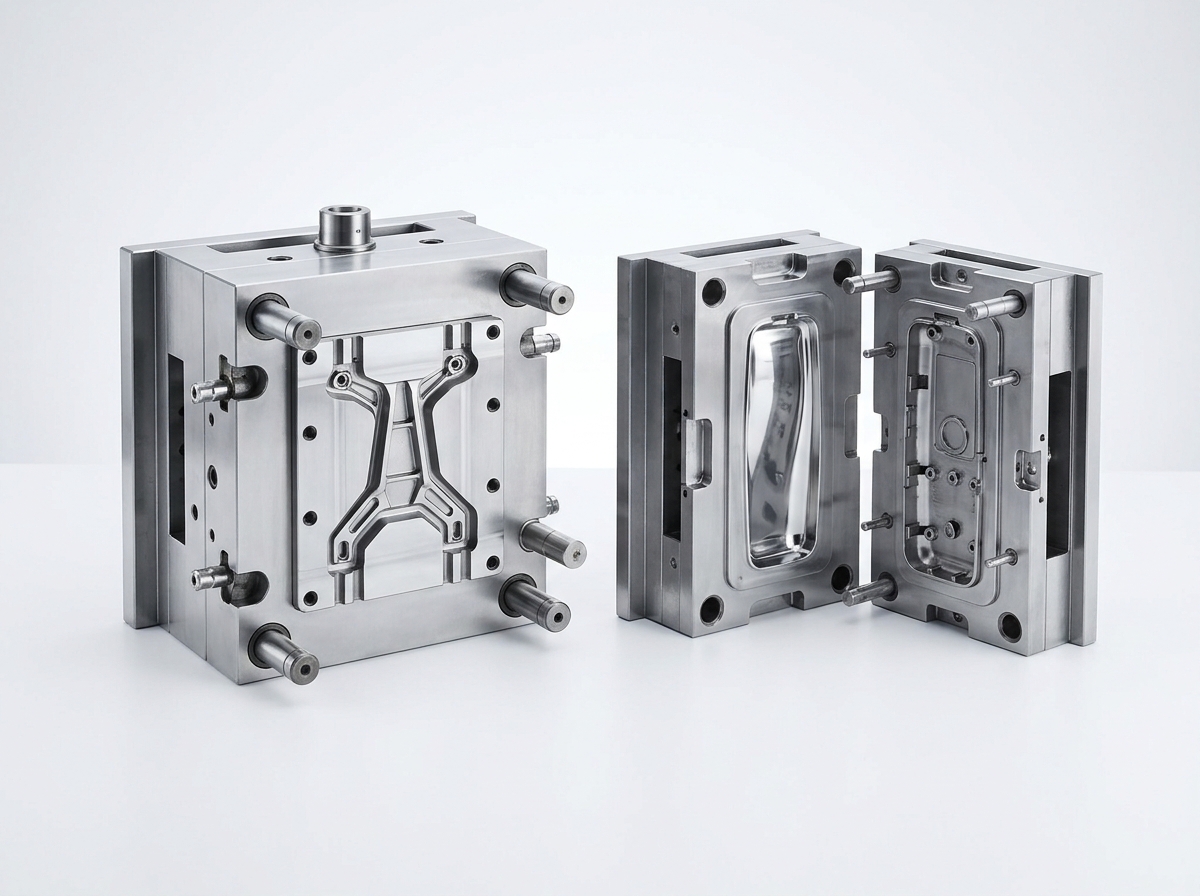 How to Evaluate an Injection Mold Supplier Before You Place the Order
The best supplier is the one that proves capability before steel is cut. Buyers should evaluate engineering review quality, response speed, sampling discipline, and dimensional documentation. This is true whether you are comparing a domestic plant or a China mold supplier.
Start with the DFM package. A serious supplier should comment on wall thickness, draft angle, gate location, ejection strategy, cooling layout, and expected shrinkage behavior. If the supplier only returns a quote without technical notes, the project risk is higher.
- Ask for a DFM review with proposed gating and parting line logic.
- Request the steel grade, hardness plan, and expected tool life range.
- Confirm sampling milestones such as T0, T1, and final approval.
- Require inspection reports for critical dimensions and cosmetic areas.
- Clarify spare parts, maintenance plan, and communication owner.
Supplier due diligence should also include measurement capability. NIST’s metrology resources show why calibration, repeatability, and traceable measurement matter when dimensions are business-critical. If a supplier cannot explain its measurement system, the likely outcome is inconsistent acceptance decisions during launch.
If possible, compare sample parts from two suppliers using the same resin, same drawing, and same acceptance checklist. That comparison often reveals more than a sales call. Look at parting lines, gate vestige, gloss consistency, edge sharpness, and fit behavior in the real assembly.
Material, Tool Steel, and Cycle Time: The Real Engineering Variables Behind Price
Material and tool design affect both cost and quality more than many buyers realize. For example, PC parts need careful drying and controlled melt conditions, while filled materials may increase wear on runners and cavities. A supplier that understands material behavior can often reduce scrap and stabilize cycle time more effectively than a supplier that only quotes generic mold construction.
Cycle time is another major cost driver. In high-volume molding, even a small reduction in cooling time can have a large impact over a yearly run. Because cooling often dominates the cycle, a supplier’s cooling design and process tuning can materially affect your landed part cost.
| Variable | Typical Buyer Question | Supplier Answer Should Include |
|---|---|---|
| Tool steel | How long will the mold last? | Steel type, hardness, wear strategy |
| Resin | Will the part warp or crack? | Drying, shrinkage, gate control |
| Cooling | Can cycle time be reduced? | Cooling channel layout and limits |
| Surface finish | Will the cosmetic level match brand needs? | Polish grade and texture method |
In tooling practice, hardened steels are often selected for durability, while pre-hardened steels can reduce lead time and machining burden. The correct choice depends on expected shots, resin abrasiveness, and cosmetic requirements. This is why a supplier with real engineering depth is usually more valuable than one that offers the lowest immediate quote.
Decision Framework: Domestic vs China Injection Mold Suppliers
The right sourcing decision comes from matching supplier strengths to project risk. If the project is new, sensitive, or likely to change, domestic sourcing is often safer. If the project is stable, volume-driven, and cost-pressured, China sourcing often wins.
Use a weighted scorecard rather than intuition. Score each supplier on engineering support, quality documentation, communication, lead time, total cost, and after-sales response. This method helps buyers compare both domestic and China mold supplier options objectively.
| Scorecard Item | Weight | What Good Looks Like |
|---|---|---|
| Engineering support | 25% | Clear DFM notes and corrective proposals |
| Quality control | 25% | Inspection reports and traceable samples |
| Lead time | 20% | Realistic milestones and update cadence |
| Total landed cost | 20% | Includes freight, duties, and rework risk |
| After-sales support | 10% | Spare parts and maintenance response |
If you need a broad product partner with tooling and finished parts support, a supplier that can bridge moldmaking and production can simplify procurement. For buyers comparing product families and tooling capabilities, pages such as products, plastic injection molds, plastic housings, and about can help you understand how one vendor structures its capabilities across different part types.
In practice, the winning supplier is the one that aligns with your current phase. For prototype validation, prioritize responsiveness. For mass production, prioritize repeatability. For multi-year supply, prioritize maintenance and documentation. That is the most reliable way to compare domestic vs China injection mold suppliers without being misled by price alone.
FAQ: Domestic vs China Injection Mold Suppliers
1. Is a domestic injection mold supplier always better for quality?
No. Quality depends on engineering discipline, machining control, process stability, and inspection standards, not geography. A capable China mold supplier can outperform a weak domestic shop if it has better DFM review and tighter production control.
2. Is China mold supplier sourcing always cheaper?
Not always. The mold quote may be lower, but total cost can rise if shipping, sampling, redesign, or downtime increase. Compare landed cost and launch risk, not just initial tooling price.
3. What matters most in OEM mold manufacturing?
DFM quality, tool design, material control, trial discipline, and repeatable measurements matter most. A supplier that can explain gate logic, cooling balance, and acceptance criteria is usually safer than one that only quotes quickly.
4. How do I reduce risk when working with an overseas mold supplier?
Use complete drawings, clear tolerances, a signed DFM review, milestone sampling, and a documented inspection plan. If possible, validate first samples against the same checklist used for production approval.
5. What products are best suited to China sourcing?
Stable, repeat-volume products such as appliance components, consumer electronics housings, and standardized industrial parts are often a strong fit because the economics improve when demand is predictable.
6. What products are better suited to domestic sourcing?
Complex, evolving, high-IP, or launch-critical products are often better handled domestically because communication speed and fast troubleshooting reduce risk during development.
7. How can I tell if a supplier is truly capable?
Ask for DFM comments, sample reports, measurement methods, material recommendations, and maintenance planning. Capability becomes visible when the supplier can explain why the tool will work, not only how much it costs.
Post time: Sep-10-2026