
- China suppliers often deliver stronger value when the project needs OEM manufacturing, multi-cavity tooling, or integrated molding and assembly.
- Local suppliers can be the better choice when engineering changes are frequent, launch speed is critical, or on-site collaboration reduces risk.
- The real comparison should include tooling cost, sample iterations, logistics, defect risk, and post-launch support, not just the quoted mold price.
- For external buyers, communication, documentation, and export readiness can be as important as machining capability.
China plastic mold supplier decisions should be made on measurable outcomes: tool life, cavity stability, dimensional repeatability, and lead-time reliability. ISO 20457:2018 gives a framework for tolerances in injection-molded parts, while typical engineering-grade PC parts may require tight control of shrinkage and warp because even small variation can affect snap-fit performance and cosmetic quality. In practical OEM manufacturing, a mold that reaches stable trial results faster can save weeks of launch delay, especially for electronics housings, appliance covers, and industrial enclosures. If your project also needs downstream production, a plastic injection mold program paired with a plastic shell mould can reduce handoff friction.
China Plastic Mold Suppliers vs Local Suppliers: Which Offers Better Value?
The best-value supplier is the one that delivers the lowest total landed cost for your part, not the lowest tooling quote.
For buyers sourcing a plastic mold for OEM manufacturing, the decision usually comes down to five variables: design support, tooling precision, cycle-time efficiency, quality consistency, and communication speed. A local partner may look cheaper at the quotation stage because shipping, time-zone coordination, and overseas supervision are lower. But a China plastic mold supplier can become more economical when the job needs complex geometry, multiple revisions, integrated molding, or high-volume production spread over many months. That is especially true for consumer electronics, home appliances, and industrial housings where tooling amortization matters more than a one-time quote.
China Plastic Mold Supplier vs Local Supplier: the real cost structure
The quoted mold price is only one part of the cost equation.
In injection molding, the hidden costs often decide the final value. These include design rework, sample rounds, material waste, inspection labor, freight, customs handling, and downtime caused by late changes. A supplier with stronger DFM feedback can lower risk before steel is cut, which is often worth more than a small discount on tooling. For many parts, saving one sample iteration can recover a meaningful portion of the project budget.
| Cost Factor | China Plastic Mold Supplier | Local Supplier | Why It Matters |
|---|---|---|---|
| Tooling quotation | Often lower for complex multi-cavity programs | Often higher in high-cost labor markets | Initial budget impact |
| Engineering iteration | May be slower if communication is weak; strong suppliers can respond quickly | Usually faster due to proximity | Launch speed and change control |
| Logistics | Longer transit, customs required | Shorter shipping and easier site visits | Total landed cost |
| Production scaling | Strong for high-volume OEM manufacturing | Strong for local replenishment | Unit economics at scale |
| Documentation | Needs export-ready files and English clarity | Usually easier for domestic buyers | Risk of misunderstanding |
If your program needs stable recurring output, it may be worth comparing a plastic parts supply model with a custom molded plastics package so you can see whether tooling, molding, and assembly are being priced separately or as one integrated service.
What China plastic mold suppliers do better in OEM manufacturing
China suppliers often create better value when the program benefits from scale, flexibility, and integrated manufacturing.
Many buyers search for a China plastic mold supplier because they need a factory that can handle design, toolmaking, trial, production, and export coordination under one roof. That is valuable when the project has an aggressive launch date, multiple SKUs, or repeated engineering updates. In those cases, a supplier that can move from CAD review to tool build and then to molded parts without changing vendors can reduce delays and coordination errors.
China also tends to be attractive for high-mix programs because one supplier can support mold development for appliance covers, consumer device enclosures, and industrial housings with similar project workflows. This matters in OEM manufacturing, where the buyer often needs not only a mold, but also repeatable part delivery, packaging, labeling, and spare parts support.
| Value Driver | China Supplier Advantage | Local Supplier Advantage | Best Fit |
|---|---|---|---|
| Complex tooling | Strong for multi-cavity and multi-feature tools | Strong for simple tools with fast reviews | Complex product platforms |
| One-stop delivery | Tooling, molding, assembly, export | Domestic delivery, easier site control | Cross-border OEM programs |
| Cost per part | Often lower at volume | Can be competitive at low volume | Long-run production |
| Process breadth | Wide material and finish options | Better for local compliance workflows | Varied product lines |
For buyers who need a broader supplier base, a plastic moulds page can help you compare tooling scope, while a mould and plastic injection parts package is useful when you want one vendor accountable for both the mold and the molded output.
When local suppliers deliver better value
Local suppliers are often the better value when schedule risk is more expensive than tooling cost.
If your project has frequent design changes, uncertain volume, or a very short launch window, a local partner may save more money overall. Face-to-face reviews can cut the time spent on fit issues, gate adjustments, or cosmetic defects. That can be especially important for first-time products where marketing, packaging, and mechanical design are still changing together.
Local sourcing can also be better when the business depends on rapid replenishment. If your stock-out cost is high, shorter shipping and easier emergency response may outweigh a lower mold quotation from abroad. In addition, local suppliers can simplify compliance checks when the part must meet domestic certifications, lab testing schedules, or customer audits.
- Choose local when design volatility is high.
- Choose local when launch timing matters more than tooling savings.
- Choose local when a site visit can prevent costly miscommunication.
- Choose local when after-sales troubleshooting must be immediate.
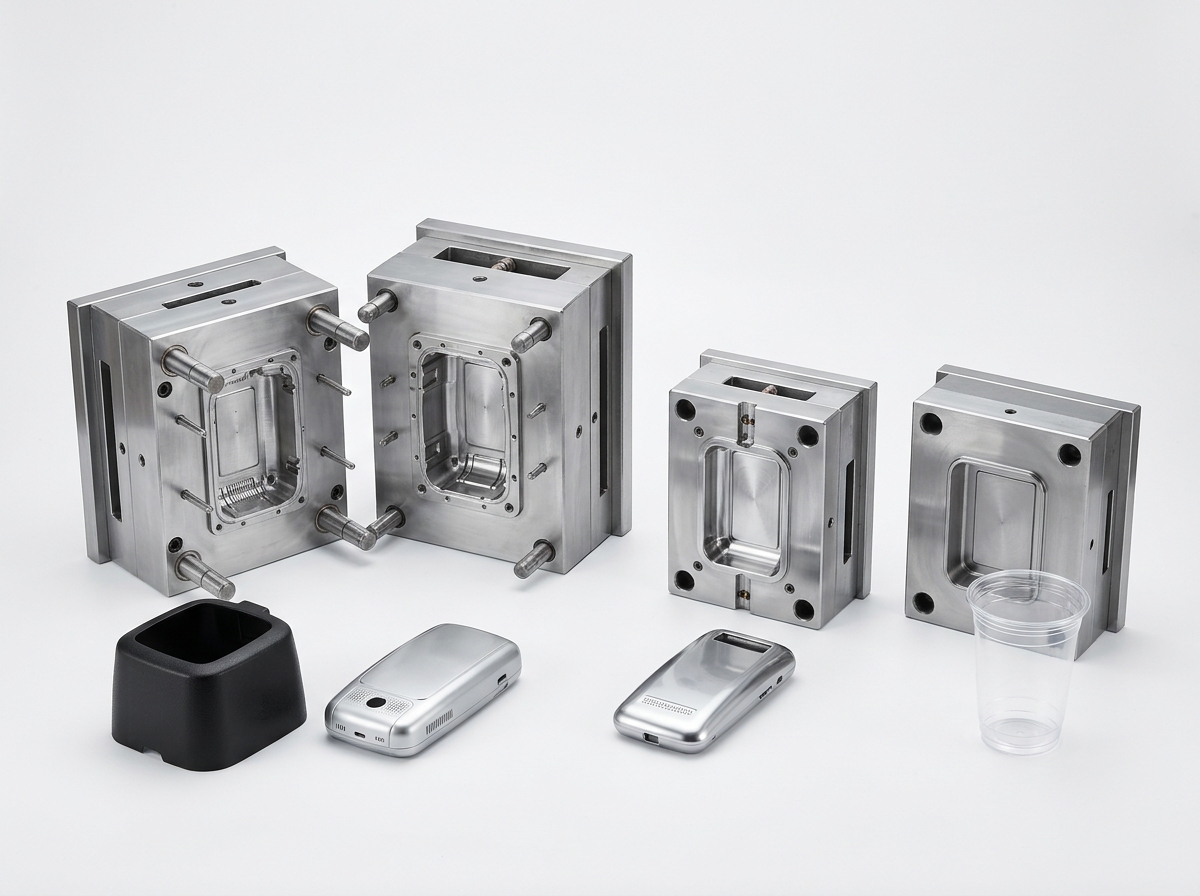 Technical comparison for plastic mold procurement
The engineering details often reveal which supplier offers the real value.
A strong supplier should explain gate type, cooling strategy, venting, steel selection, and expected mold life in clear language. For plastic housings, especially in PC or PC/ABS, dimensional stability and surface quality are sensitive to mold temperature, resin drying, and packing pressure. ASTM D256 impact performance testing is commonly used to evaluate toughness, which matters for products exposed to drop risk or handling stress. For part verification, ISO 20457:2018 helps buyers discuss tolerances in a more structured way.
| Technical Item | Typical Value Range | Why It Matters | Validation Reference |
|---|---|---|---|
| Injection-molded tolerance discussion | Defined by part function and process capability | Prevents over-specification | ISO 20457:2018 |
| Impact testing for plastics | Report in J/m or ft-lb/in | Checks toughness for enclosures | ASTM D256 |
| Moisture-sensitive resin drying | Material-specific, often mandatory before molding | Reduces splay and brittleness | Material supplier data sheet |
| Tool cooling balance | Uniform circuit design, verified by trial | Controls warp and cycle time | Process validation |
For more complex housings, such as devices with deep ribs or decorative surfaces, a 3D moulds option can be relevant when the geometry is not friendly to standard tooling layouts.
How to compare quality beyond the mold quote
Quality becomes visible only after the first samples and trial runs.
When buyers compare a China plastic mold supplier to a local one, they should ask for the same proof from both sides: 2D drawings, 3D model review, mold-flow feedback if available, steel grade confirmation, sample approval plan, and defect-response procedure. A lower quote is not better value if the supplier cannot keep samples within the assembly envelope or if cosmetic defects create repeated rework.
For consumer-facing products, especially electronics housings and appliance covers, appearance defects can be more expensive than dimensional defects because they directly affect sell-through. Scratches, sink marks, weld lines, and color variation are often the deciding factors in acceptance. In practice, the most valuable supplier is the one that reduces the number of rejected samples and improves first-pass approval.
- Check whether the supplier provides DFM comments before tool build.
- Confirm how many sample rounds are included in the quotation.
- Ask how defects are logged and corrected.
- Verify whether spare parts and maintenance support are available.
Lead time, communication, and export readiness
For international buyers, communication quality can be worth more than a small tooling discount.
Export-oriented projects need accurate English communication, file control, shipping coordination, and document discipline. A supplier that responds quickly but inconsistently can create more risk than a slower but structured partner. The same is true for drawings and revision control. A good China plastic mold supplier should be able to manage file versions, trial reports, and sample approval records in a way that supports remote procurement decisions.
Lead time also affects value in ways that are easy to overlook. If a local supplier can start faster but has limited toolroom capacity, and a China supplier can deliver a more capable mold with predictable output, the second option may still produce better ROI across the product life cycle. For a program that lasts 12 to 36 months, stable output usually matters more than first-week speed.
Decision framework for plastic mold buyers
The best supplier is the one matched to your product’s risk profile.
Use a simple decision framework instead of focusing on country of origin alone. If your part is a cosmetic housing, a functional enclosure, or a repeated OEM product, value usually comes from engineering support and process stability. If the project is a short-run launch or a local compliance-sensitive item, proximity may be more important.
- Define the part function: cosmetic, structural, or both.
- Estimate annual volume and likely lifetime volume.
- List critical dimensions, assembly interfaces, and finish requirements.
- Compare sample speed, communication clarity, and revision handling.
- Include shipping, customs, and spare-part risk in the cost model.
For buyers looking to reduce handoff risk, a supplier that can supply a plastic cover moulds solution and downstream molded parts is often easier to manage than splitting the project across multiple vendors.
Common buying mistakes that distort value
Many procurement teams underestimate the cost of poor specification discipline.
The most common mistake is choosing the cheapest mold without reviewing wall thickness, draft angles, gate location, venting, or assembly requirements. Another mistake is failing to separate tooling cost from production cost, which makes one supplier look cheaper even when shipping and yield losses erase the difference. Buyers also sometimes ignore maintenance access and spare-part planning, which shortens tool life and raises downtime risk.
| Mistake | Typical Consequence | How to Avoid It |
|---|---|---|
| Price-only comparison | Hidden rework and delays | Use total cost of ownership |
| No tolerance definition | Fit failures during assembly | Specify critical dimensions early |
| No sample approval plan | Repeated trial cycles | Agree acceptance criteria before build |
| No spare-part strategy | Longer downtime | Confirm wear-item availability |
Conclusion: which supplier offers better value?
A China plastic mold supplier offers better value when your priority is scalable OEM manufacturing, integrated tooling-to-production service, and lower unit cost across a longer run.
A local supplier offers better value when the project needs rapid collaboration, frequent design changes, or lower logistics risk. The most reliable buying approach is to compare suppliers using the same scorecard: technical capability, process transparency, communication quality, lead time, and total landed cost. If you want a supplier that can support housing projects, custom parts, and repeat production in one workflow, start by evaluating the exact product page that matches your part type and then test the supplier’s response quality before placing the full order.
FAQ
Is a China plastic mold supplier always cheaper?
No. China is often cheaper on tooling and scale, but the final value depends on freight, communication, rework, and launch risk.
When should I choose a local plastic mold supplier?
Choose local when engineering changes are likely, face-to-face review matters, or the cost of delay is higher than the tooling premium.
What should I ask before approving a plastic mold quote?
Ask about mold life, cavity count, steel grade, sample rounds, tolerance control, lead time, and spare-part support.
How do I compare OEM manufacturing suppliers fairly?
Use the same drawing, same material, same finish requirement, and same acceptance criteria for every supplier.
Why do cosmetic plastic parts need stricter supplier control?
Because appearance defects such as sink marks, weld lines, flash, and color variation can directly affect sales and brand perception.
What standards help define molded part quality?
ISO 20457:2018 is useful for tolerance discussion, while ASTM D256 is commonly used for impact testing.
How can I reduce risk when sourcing overseas?
Use clear drawings, version control, sample approval rules, and a supplier that can document every change in writing.
Post time: Jul-20-2026