
- China outsourcing works best when the part is repeatable, specification-driven, and ready for scaled production.
- Good OEM plastic manufacturing depends on DFM support, mold trial feedback, quality control, and export-ready communication.
- Buyers should compare tooling capability, dimensional control, lead time, and long-term supply stability, not price alone.
- Material choice, gate design, and process control can affect appearance, warpage, and assembly fit more than the country of origin.
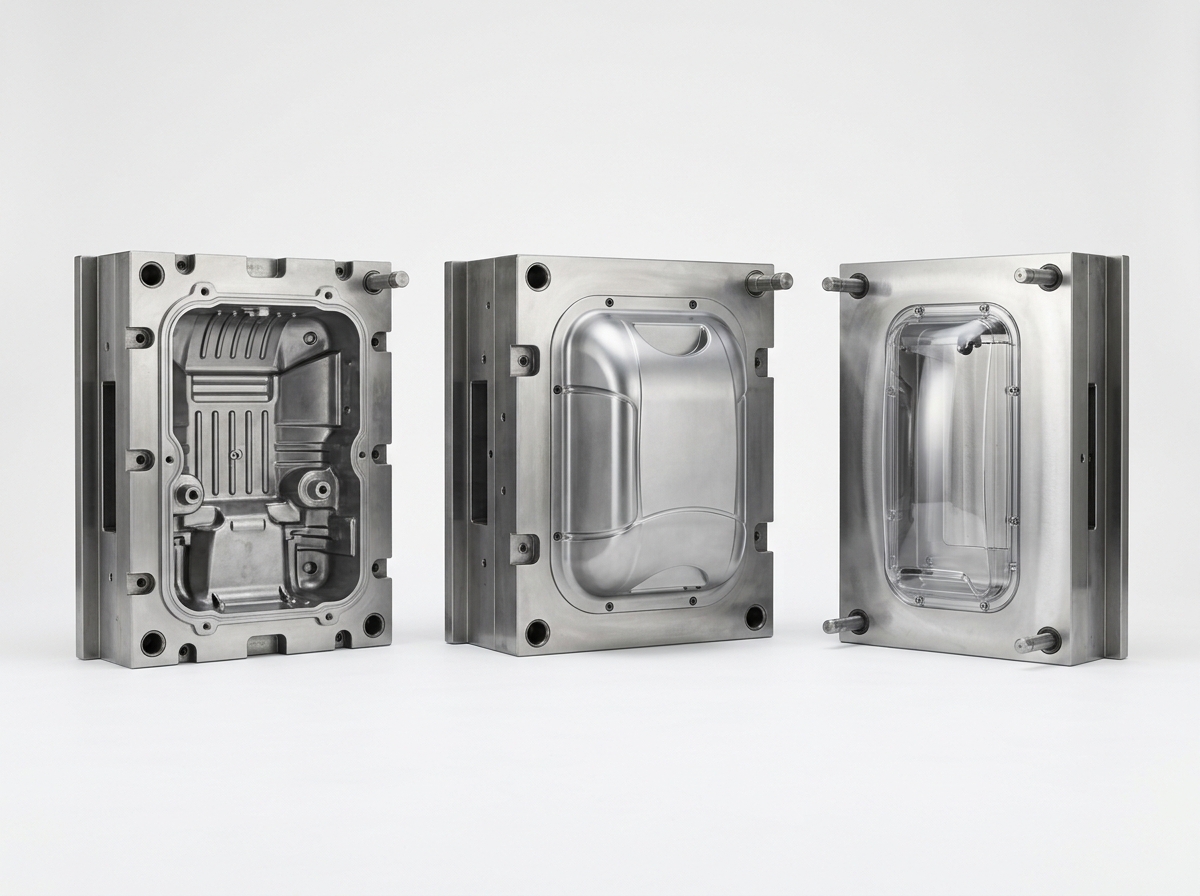
Plastic injection molding, China plastic manufacturer, and OEM plastic manufacturing are often searched together because buyers want a sourcing answer that balances cost, quality, and launch timing. The technical benchmark is not vague: in precision moldmaking, ISO 20457:2018 defines tolerances for injection-molded plastic parts, while ISO 294-1:2017 specifies standard test conditions for molding test specimens. For procurement teams, that matters because parts with tight assembly fit, visible surfaces, or snap features are judged by measurable outcomes, not marketing claims. If your project involves housings, covers, or multi-SKU programs, it helps to start with a supplier that can support both mold development and production, such as a plastic injection mold page, a plastic shell mold page, and a 3D mold solution page.
Why plastic injection molding outsourcing to China fits high-volume OEM plastic manufacturing
The strongest reason companies outsource plastic injection molding to China is manufacturing scalability. When a part reaches stable demand, the economics of tooling amortization and repeat production often favor a supplier that can run long production campaigns with consistent process control.
In injection molding, the same cavity can produce thousands to millions of parts, so the decision is less about one part and more about the full product lifecycle. Buyers who only compare quote prices often miss the larger picture: tooling robustness, maintenance access, resin sourcing, and process repeatability determine real unit cost.
China also offers a broad supply base for mold bases, hot runner systems, steel grades, finishing, assembly, and packaging. That density reduces handoff friction for OEM plastic manufacturing, especially when a project needs design revision, faster sampling, and export packaging in a single supply chain.
| Decision factor | Typical buyer need | Why China is often chosen | What to verify |
|---|---|---|---|
| Tooling cost | Lower upfront CAPEX | Large competitive supplier base | Steel grade, mold life, trial support |
| Lead time | Faster launch support | Integrated fabrication and sampling | DFM response time, T0/T1 schedule |
| Volume scaling | Stable mass production | High-capacity molding clusters | Machine list, spare cavity plan |
| Documentation | Export-ready files | Experience with cross-border projects | PPAP, inspection report, packing spec |
What buyers really want from a China plastic manufacturer
The buyer’s real problem is not finding a factory; it is finding a supplier that can turn a concept into a stable, shippable part. A reliable China plastic manufacturer must support design review, moldability checks, sampling, and production control.
For consumer electronics and home appliance parts, appearance is as important as function. Surface gloss, weld line location, sink control, and clip retention can decide whether a part passes internal approval. For industrial housings, the priorities shift toward rigidity, assembly accuracy, and long-term supply continuity.
This is why the best sourcing conversations start with the part, not the factory. If the project uses PC material for transparent or impact-resistant housings, the supplier should discuss drying, wall thickness, flow behavior, and stress-related cracking before quoting. That is especially important for protective covers and instrument windows, where ASTM D3935 and related test methods are often used in material qualification workflows for plastic film and sheet performance, while the material selection itself must match the functional load, not just visual preference.
How material, mold design, and cycle time affect plastic injection molding results
Material choice can influence the final economics more than many buyers expect. PC is widely used for transparent housings because it combines impact resistance and dimensional stability, but it requires controlled drying and careful processing to avoid haze or stress marks.
Design decisions also affect cost. A part with uniform wall thickness, proper draft, and rational gate placement is easier to mold than a visually similar part with undercuts or uneven mass distribution. In practical sourcing terms, a better DFM review can reduce trial loops, lower scrap, and shorten launch time.
Cycle time is another direct cost driver. Shorter cycles increase throughput, but only if the part remains stable in warp, fit, and surface finish. Buyers should not ask only, “How fast can you run?” They should ask, “Can you run fast without losing dimensional consistency?”
| Parameter | Example value | Why it matters | Buyer check |
|---|---|---|---|
| Dimensional tolerance benchmark | ±0.005 mm to ±0.05 mm depending on feature and mold class | Assembly fit and interchangeability | Ask for inspection method and sampling plan |
| Spindle or machine speed reference | Up to 10,000 RPM on some tooling processes | Relevant in mold finishing and detail machining | Verify actual machine capability by process |
| Drying temperature for PC | Typically 110-120 C before processing | Prevents moisture-related defects | Confirm resin datasheet and shop practice |
| Heat deflection test reference | ASTM D648 | Supports thermal performance validation | Match test load and temperature conditions |
Those figures are not interchangeable across every product, but they show why engineering detail matters. A supplier that can explain them clearly is usually better prepared for OEM plastic manufacturing than one that only quotes a price per part.
When outsourcing to China reduces project risk instead of adding it
Outsourcing reduces risk when the supplier can absorb complexity that the buyer does not want to manage in-house. That usually includes mold design feedback, trial corrections, process tuning, and multi-step logistics.
For startups and product teams, the main risk is often not production itself, but iteration speed. A factory that responds quickly to drawing changes, sampling comments, and packaging updates can compress launch timelines materially. In contrast, a low-cost supplier with slow communication can delay revenue even if the unit price looks attractive.
For established brands, the key risk is supply continuity. A qualified China plastic manufacturer can help reduce single-point failure by planning spare inserts, preventive maintenance, and documented process windows. That is especially useful for seasonal products, replacement parts, and programs with multiple forecast revisions.
- Confirm part function, appearance grade, and annual demand before requesting quotes.
- Ask for DFM feedback on wall thickness, draft, gate location, and ejection.
- Review mold steel, cavity count, and expected tool life.
- Define inspection criteria for critical dimensions, color, and surface finish.
- Agree on packaging, labeling, and export documents before sampling approval.
Why one-stop mold and finished-part supply is valuable for OEM plastic manufacturing
One-stop supply is valuable because it reduces coordination losses. When mold making, molding, trimming, inspection, and packing are handled by different vendors, every transfer adds time, ambiguity, and quality risk.
A unified supplier can also improve accountability. If the cavity dimension drifts, the same team that built the tool can adjust the process. If a cosmetic defect appears, the same team can trace whether it comes from venting, temperature, or resin batch variation.
This model is particularly helpful for buyers who source multiple SKUs or plan product line expansion. It simplifies supplier management, shortens the feedback loop, and makes it easier to standardize packaging, labeling, and QC criteria across different products.
| Supply model | Coordination steps | Common risk | Best fit |
|---|---|---|---|
| Split vendors | 3-5 handoffs | Delay and mismatch in responsibility | Large firms with in-house engineering |
| One-stop supplier | 1-2 core contacts | Supplier dependency | Fast-launch OEM programs |
| Hybrid model | 2-3 handoffs | Partial interface loss | Brands with internal QC teams |
For many buyers, the best option is not the cheapest vendor but the one that can own the full workflow with clear documentation. That is where supplier capability and company background become useful in due diligence, because process maturity is often reflected in how well a team handles trial reports, corrective actions, and export paperwork.
How to evaluate a China plastic manufacturer before placing an OEM order
The best supplier evaluation starts with evidence, not promises. Buyers should ask for machine lists, sample reports, mold trial records, and references from similar industries.
It also helps to compare how the supplier talks about failure modes. A capable team will discuss flash, short shot, weld line, sink mark, burn mark, and warpage in plain language. A weak team will only say the part is “good quality” without explaining the process window.
A practical due-diligence review should cover engineering, quality, commercial, and logistics performance. That approach is especially important for export projects where English communication, document response time, and shipment coordination can affect the launch window as much as molding capability.
- Request a DFM review before signing the tooling contract.
- Check whether the supplier supports mold trials, corrective actions, and final sample approval.
- Verify whether critical dimensions are measured with CMM, projectors, or calibrated gauges.
- Ask about resin traceability, batch control, and nonconforming part handling.
- Review lead time for mold completion, sample delivery, and mass production start.
Industry standards that shape plastic injection molding decisions
Standards give buyers a way to compare suppliers using shared criteria. Without standards, “good quality” becomes subjective and hard to audit.
ISO 294-1:2017 is important for establishing consistent test conditions for plastics molding, while ISO 20457:2018 helps define tolerance expectations for molded plastic parts. For thermal and mechanical validation, ASTM methods such as ASTM D638 for tensile properties and ASTM D790 for flexural properties are widely referenced in material qualification.
From a procurement standpoint, the useful question is simple: can the supplier map the part’s function to the correct test method? If not, the project may pass first article inspection but fail in real use, especially on clip-fit housings or load-bearing structural pieces.
Common product scenarios for outsourcing plastic injection molding to China
The best outsourcing fit depends on product scenario, not industry label. Some parts are cost-driven, others are appearance-driven, and some require both.
Consumer electronics often need high cosmetic consistency and tight assembly fit. Home appliances often need large-volume production and stable color matching. Industrial equipment usually demands structural durability and long-term supply continuity. Toys and lifestyle products place extra weight on shape, surface feel, and multi-SKU flexibility.
That is why a supplier portfolio matters. A company that handles plastic shell molds, injection molds, and mold accessories is better positioned to support full product lifecycles, from first sample to spare-part supply.
| Application | Primary buying criterion | Typical material focus | Key inspection point |
|---|---|---|---|
| Consumer electronics | Appearance and fit | PC, ABS, PC/ABS | Gap, flushness, gloss |
| Home appliances | Volume and consistency | PP, ABS, HIPS | Warpage, color, snap fit |
| Industrial housings | Strength and durability | PA, PC, reinforced grades | Wall integrity, screw boss strength |
| Daily-use products | Cost and changeover speed | PP, PE, ABS | Cycle stability, shrinkage |
What procurement teams should watch before scaling production
Scaling production is where many sourcing projects succeed or fail. A part that looks perfect in sampling can still drift during mass production if the process window is too narrow or the mold is not stable enough.
Procurement teams should confirm the supplier’s control plan, maintenance schedule, and requalification triggers. If a mold has interchangeable inserts or high-wear cavities, ask how often those components are inspected and replaced.
It is also wise to define acceptable variation before volume starts. Clear rules for color delta, gate vestige, surface marks, and critical dimension drift prevent disputes later. For fast-moving consumer programs, this can save weeks of back-and-forth and reduce the hidden cost of rework.
- Lock the approved sample and retain a master reference.
- Define critical-to-function and critical-to-appearance dimensions.
- Set acceptance criteria for appearance, packaging, and labeling.
- Agree on corrective-action response time for defects.
- Review spare-part and mold-maintenance planning for long programs.
Conclusion: outsourcing plastic injection molding to China is a process decision, not just a price decision
Companies outsource plastic injection molding to China when they need more than a cheap quote. They need a supplier that can support design iteration, tooling precision, production stability, and export execution at the same time.
The strongest sourcing outcomes happen when the buyer defines the part clearly, chooses the right resin, validates the test method, and selects a manufacturer with proven OEM plastic manufacturing discipline. If you are comparing suppliers, focus on engineering depth, standard awareness, and communication speed before unit price. That approach is more likely to produce stable parts, fewer launch delays, and a supply chain that can grow with your product line.
FAQ
Why do companies outsource plastic injection molding to China?
They usually outsource to China to combine tooling efficiency, scalable production, engineering support, and export-ready communication in one supply chain.
Is China always the cheapest option for plastic injection molding?
No. China is often cost-competitive, but the real value depends on tooling quality, communication speed, and long-term part stability.
What should buyers check before choosing a China plastic manufacturer?
Buyers should check DFM support, mold trial records, inspection capability, material traceability, and experience with similar part types.
Which materials are common for OEM plastic manufacturing?
Common materials include ABS, PP, PC, PC/ABS, PA, and reinforced engineering grades depending on strength, appearance, and thermal needs.
Why is plastic shell mold experience important?
Plastic shell molds often require better cosmetic control, tighter assembly fit, and stronger attention to weld lines and ejection marks.
What standards matter in injection molding quality control?
Frequently used references include ISO 20457:2018, ISO 294-1:2017, ASTM D638, ASTM D790, and ASTM D648.
When does outsourcing to China make the most sense?
It makes the most sense when demand is repeatable, the part is suitable for molding, and the project benefits from coordinated tooling and production support.
Post time: Jul-18-2026