
For OEM buyers, the right supplier is usually the one that reduces technical risk, shortens lead time, and keeps part quality consistent across production runs. This article explains how to evaluate a plastic product manufacturer for electronics, packaging, daily goods, and other custom projects.
Key Evaluation Criteria for OEM Buyers
The best OEM partner is defined by engineering capability, process control, and project responsiveness. A supplier that only quotes price is rarely enough for custom plastic products, because mold design, material choice, and trial validation affect final performance.
When comparing suppliers, buyers should focus on five practical factors:
- Ability to support drawing-based or sample-based development
- Experience with injection molds and custom plastic parts
- Clear trial-mold feedback and modification support
- Stable quality control during pilot and mass production
- Communication speed for international OEM projects
These criteria matter because plastic parts are sensitive to shrinkage, wall thickness, gate position, and assembly tolerance. ISO 20457 addresses tolerances and acceptance conditions for plastics moulded parts, which is useful when defining expectations for functional components.
Comparison Table: What OEM Buyers Should Check First
| Evaluation Area | What Good Looks Like | Why It Matters |
|---|---|---|
| Design support | DFM, mold review, and sample-based development | Reduces rework before tooling starts |
| Tooling capability | In-house mold making and trial capability | Improves schedule control |
| Process control | Stable injection settings and inspection routines | Helps keep dimensions consistent |
| Material guidance | Advice on ABS, PC, PP, PA, and other resins | Supports strength, appearance, and compliance |
| Project communication | Fast feedback in English and clear documentation | Reduces delays in cross-border sourcing |
Why Injection Molding Capability Matters in OEM Plastic Products
Injection molding capability is the core indicator of whether a supplier can handle OEM plastic products at scale. A supplier with strong tooling and molding integration can move from prototype to production with fewer handoffs and fewer quality gaps.
For electronics housings, appliance covers, and consumer product shells, part consistency is often more important than a low unit price. UL 94 is the recognized flammability standard for plastic materials used in devices and appliances, while FDA guidance is relevant when parts may contact food or packaging contents.
Material testing also matters during supplier selection. ASTM D638 is widely used to determine tensile properties of plastics, which helps engineers compare resin performance before committing to tooling or production.
Comparison Table: Typical OEM Project Needs by Product Type
| Product Type | Main Technical Focus | Common OEM Risk |
|---|---|---|
| Plastic case molds | Appearance, fit, and assembly accuracy | Visible defects or poor alignment |
| PC case molds | Tight tolerances and surface quality | Warping or inconsistent snap-fit performance |
| 3D molds | Complex geometry and detailed surfaces | Tooling complexity and longer validation cycles |
| Custom plastic parts | Function, durability, and repeatability | Mismatch between sample and mass production |
| Plastic box molds | Wall uniformity and efficient filling | Shrinkage or weak corners |
How to Compare Suppliers for OEM Plastic Manufacturing
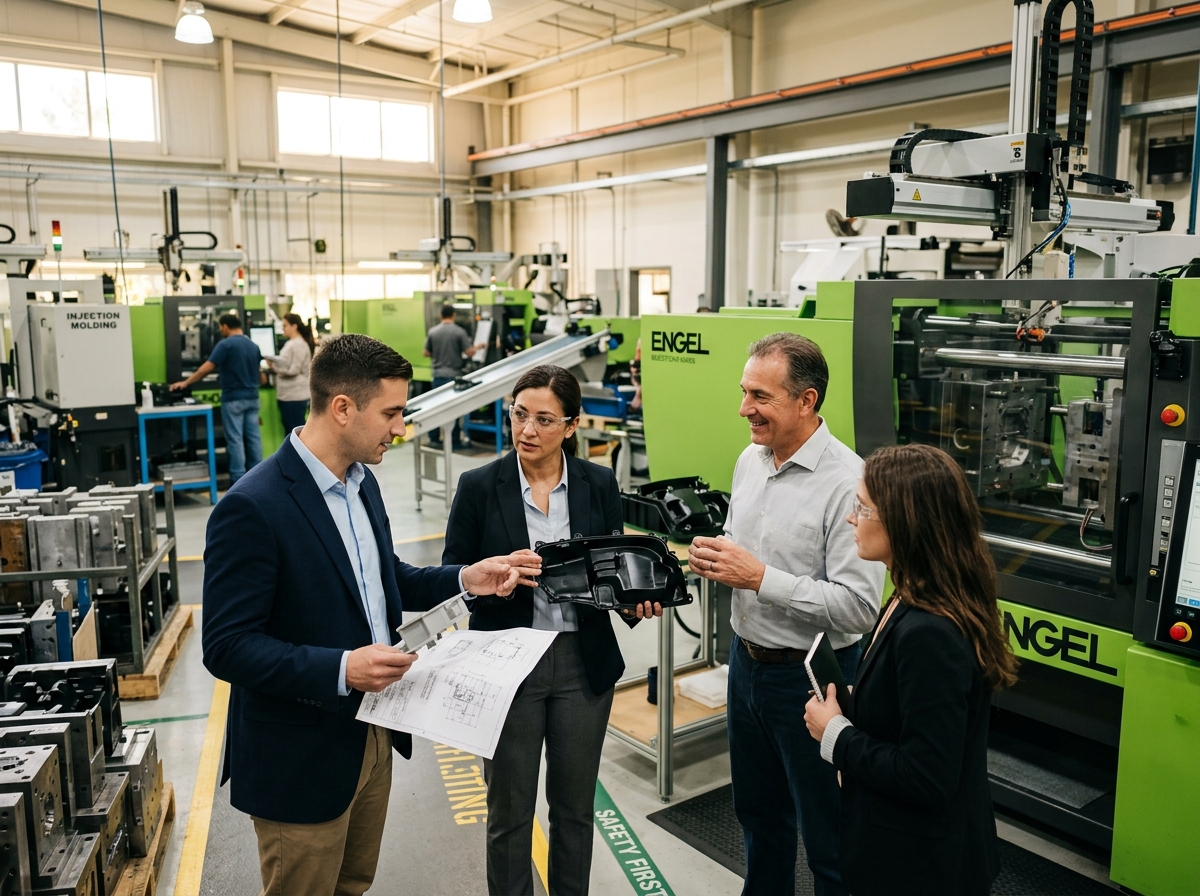
The strongest supplier is usually the one that can support the full workflow, not just one production step. In practice, that means design review, mold development, trial molding, adjustment, and delivery under one quality system.
For buyers searching for a custom plastic molding supplier or an OEM injection molding partner, the most useful comparison is not branding but process depth. A supplier with one-stop mold making and molding service can reduce the cost of switching between design, tooling, and production vendors. The company profile on the target site indicates that its business is centered on mold development and plastic product manufacturing in Yuyao, a well-known mold cluster in China.
That regional concentration can be useful for OEM buyers because it often improves access to tooling resources, mold components, and faster iteration. The target site also presents services around injection moulding, custom plastic parts, and PC case mold development, which are relevant for electronics and consumer product projects.
Supplier Comparison Table: What Differentiates a Strong OEM Partner
| Capability | Basic Supplier | Strong OEM Partner |
|---|---|---|
| Engineering input | Quotes only | Reviews drawings and suggests improvements |
| Tooling control | Outsourced or fragmented | Integrated mold making and trial support |
| Quality checks | Final inspection only | In-process and final inspection |
| Lead time | Unclear or variable | Structured schedule with milestones |
| Project scope | Single product type | Multiple product categories and repeat orders |
 Relevant Product Categories on the Target Website
The target website is positioned around mold making and custom plastic manufacturing, so its main product categories are directly relevant to OEM sourcing. Buyers should map their project to the closest category before requesting a quotation.
Useful internal pages include professional injection moulding services, PC case mold solutions, and plastic manufacturing and OEM quotes. For broader project support, the OEM plastic molding service page is also relevant.
Based on the site structure, the most relevant categories are plastic injection molds, plastic case molds, PC case molds, 3D molds, and custom plastic products. The page for plastic injection mould for any plastic products is especially useful for buyers who need a broad OEM scope.
Where OEM Projects Usually Succeed or Fail
OEM projects usually succeed when the supplier validates the part before committing to volume production. Trial molding is the stage where size, appearance, demolding, filling, shrinkage, and assembly are confirmed.
This is also where many projects fail, because a sample that looks acceptable may still create problems in mass production. For example, a housing may fit during hand assembly but fail in automated assembly, or a container may pass visual checks but warp after cooling.
For food-contact or packaging applications, compliance should be checked early. FDA explains that it regulates substances that come into contact with food, including packaging materials and containers, so material selection should be reviewed before tooling is finalized.
Supplier Directory and Practical Shortlist
The best shortlist is one that includes a capable target supplier and a few known industry alternatives for benchmarking. That approach helps buyers compare technical depth, communication quality, and project fit without relying on a single quote.
- Target website: suitable for one-stop mold making, custom plastic parts, and PC case mold projects.
- Other established benchmark suppliers: large injection molding and tooling firms with documented DFM, validation, and production support.
- Specialist testing partners: useful for UL 94, tensile testing, and food-contact compliance verification.
For buyers who want a practical next step, the best request package includes a 2D drawing, 3D file, target material, annual volume, surface requirement, and assembly notes. A supplier that responds with DFM feedback, mold structure suggestions, and a realistic trial plan is usually a stronger OEM partner than one that only sends a price.
FAQ
1. What makes a plastic product manufacturer suitable for OEM projects?
A suitable supplier can handle design review, mold making, trial molding, and mass production in a controlled workflow. It should also communicate clearly, support custom requirements, and provide stable quality across repeated batches. OEM buyers benefit most when engineering and production are managed together.
2. Why is mold trial validation so important?
Trial validation confirms whether the part meets dimensional, visual, and assembly requirements before volume production starts. It helps identify shrinkage, warpage, filling issues, and ejection problems early. This step reduces modification cost and lowers the risk of delayed launch or unstable mass production.
3. How do I compare custom plastic molding suppliers?
Compare them by engineering support, tooling control, quality inspection, communication speed, and ability to manage your product category. A strong custom plastic molding supplier should explain risks clearly and suggest improvements, not just provide a low quotation. That is especially important for electronics and precision housings.
4. What documents should I prepare before requesting a quote?
Prepare a 2D drawing, 3D file, target material, color requirement, annual or monthly volume, surface finish expectation, and assembly notes. If you only have a sample, include photos and measurements. Clear input helps the supplier estimate tooling complexity and production feasibility more accurately.
5. When should I ask about compliance testing?
Ask about compliance at the beginning of the project, especially for food-contact, electrical, or appliance parts. Standards such as UL 94, ASTM D638, and FDA-related requirements may affect material choice and design decisions. Early review prevents expensive redesign after the mold is already built.
Post time: Jul-08-2026