
Multi-cavity tooling is a production strategy, not just a larger mold. It helps manufacturers scale injection mold output while keeping part geometry, surface finish, and process stability under control.
Outline
- What multi-cavity mold design means in plastic mold design
- Key benefits for cost, output, and consistency
- Technical factors that affect performance
- When multi-cavity tooling is the right choice
- Supplier selection and practical procurement guidance
What Is Multi-Cavity Mold Design in Plastic Mold Design?
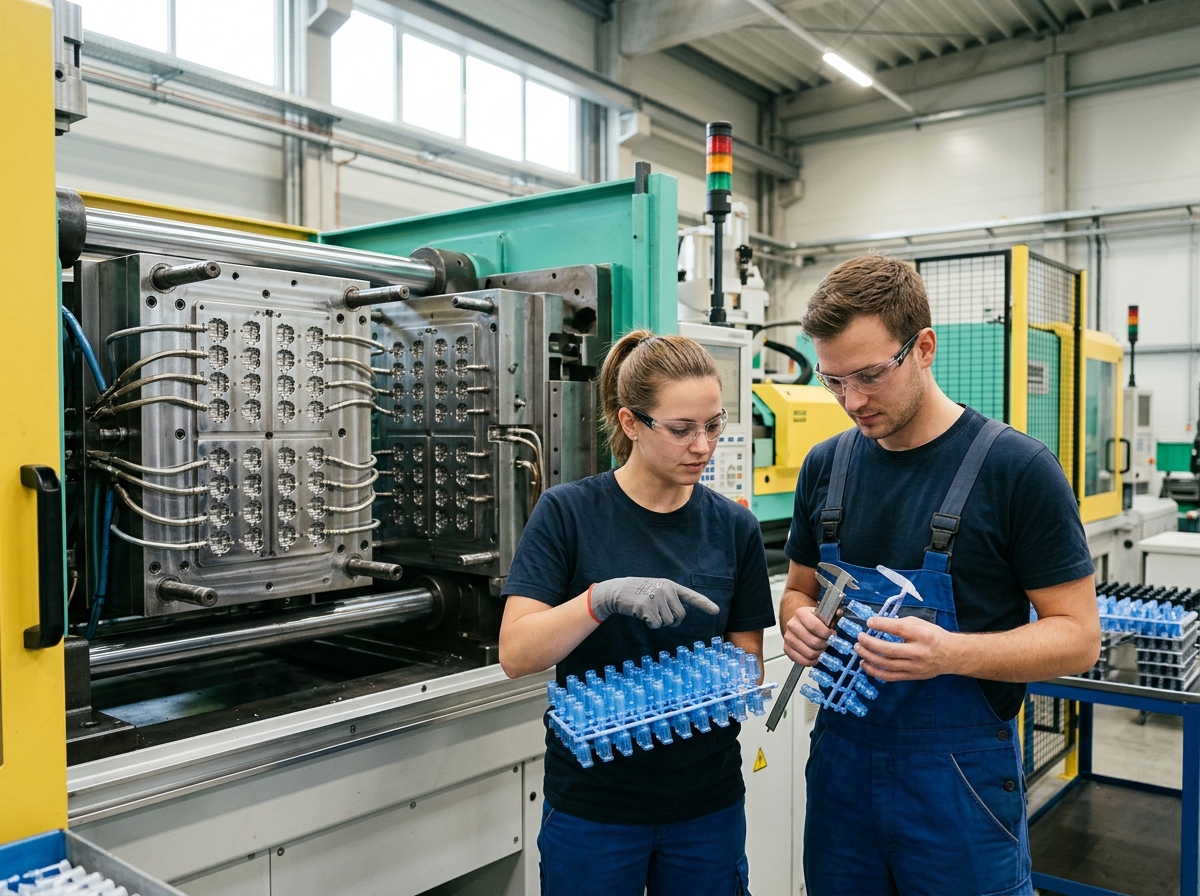
Multi-cavity mold design means one injection mold produces several identical parts in a single cycle. This approach is common in plastic mold design for high-volume components, where repeatability and throughput are critical.
Compared with a single-cavity tool, a multi-cavity mold uses more cavities, runners, and balancing control. The result is higher output per shot, but the design must manage filling, cooling, venting, and ejection more carefully.
For a broader view of mold manufacturing capabilities, many buyers review the main product categories on the official homepage, including injection mold services and custom plastic parts. The site’s structure also shows how mold development and finished plastic products are connected in one workflow.
Comparison Table: Single-Cavity vs Multi-Cavity Mold
Comparison Table: Single-Cavity vs Multi-Cavity Mold
| Factor | Single-Cavity Mold | Multi-Cavity Mold |
|---|---|---|
| Output per cycle | One part | Several parts |
| Unit cost | Usually higher | Usually lower at scale |
| Tool complexity | Lower | Higher |
| Process balance | Easier to control | Requires careful balancing |
| Best use case | Low volume or complex parts | High-volume standard parts |
What Are the Key Benefits of Multi-Cavity Mold Design?
The main benefit of multi-cavity mold design is higher productivity. One molding cycle produces multiple parts, which improves machine utilization and reduces the number of cycles needed to reach a target order quantity.
Lower unit cost is another major advantage. Because molding time, labor, and machine overhead are spread across more parts, the cost per piece usually drops as volume rises. This is especially important for commodity parts and repeat orders.
Consistent quality is also easier to achieve when the tool is well balanced. A properly engineered multi-cavity mold can deliver stable dimensions, similar shrinkage behavior, and more predictable appearance across all cavities.
According to the National Institute of Standards and Technology, measurement consistency and process control are central to manufacturing quality. In injection molding, that principle directly supports cavity-to-cavity repeatability and inspection reliability.
Key Benefits Table: Why Buyers Choose Multi-Cavity Tooling
Key Benefits Table: Why Buyers Choose Multi-Cavity Tooling
| Benefit | Operational Impact | Business Result |
|---|---|---|
| Higher throughput | More parts per shot | Shorter lead time for large orders |
| Lower piece cost | Shared cycle overhead | Better margin at scale |
| Stable repeatability | Balanced cavity filling | Fewer rejects and less rework |
| Better machine efficiency | More output per clamp cycle | Improved capacity planning |
Design efficiency is another benefit that is often overlooked. When a product has a stable geometry and predictable demand, a multi-cavity tool can reduce the number of molds needed for the same annual output.
That advantage matters in electronics, packaging, and consumer goods. These sectors often need a steady supply of identical parts, and they benefit from a tool that supports long production runs with limited intervention.
Technical Factors That Determine Success
Balanced runner design is the foundation of a successful multi-cavity mold. If melt flow reaches each cavity at different times or pressures, part weight, dimensions, and surface quality can vary.
Cooling design is equally important. Uneven cooling can create warpage, sink marks, or cycle-time differences between cavities, which reduces consistency and can increase scrap rates.
Venting, gate placement, and ejection layout also affect performance. These details determine whether the mold can release air, fill cleanly, and eject parts without deformation or sticking.
For engineering teams, the injection molding engineering literature is useful for understanding flow balance, shrinkage, and thermal effects. In practice, these factors explain why a multi-cavity mold needs more upfront design work than a simple tool.
Technical Checklist for Multi-Cavity Mold Design
Technical Checklist for Multi-Cavity Mold Design
- Confirm part geometry and allowable tolerance range
- Evaluate runner balance and gate strategy
- Design uniform cooling channels
- Plan venting for each cavity
- Verify ejection strength and part release
- Review material shrinkage and warpage risk
- Test mold flow before cutting steel
Material selection also changes the design outcome. Engineering resins, filled materials, and high-shrinkage polymers may require different gate sizes, cooling layouts, and cavity compensation strategies.
For this reason, multi-cavity mold design is not only about cavity count. It is about matching the tool architecture to the resin, part size, and target production rate.
When Is a Multi-Cavity Mold the Right Choice?
A multi-cavity mold is the right choice when demand is stable and part geometry is repeatable. It is especially suitable for caps, housings, small containers, clips, and other parts with predictable annual volume.
It is less suitable for highly complex parts with tight cosmetic requirements and frequent design changes. In those cases, a single-cavity tool or a smaller cavity count may reduce risk during development and trial runs.
Buyers who need custom development often compare product categories such as plastic case molds, PC case molds, and 3D molds to match the part structure with the right tooling strategy. These categories reflect different levels of complexity and appearance control.
Supplier Directory: Where Buyers Usually Start
Supplier selection should focus on engineering capability, not just price. A capable mold maker should be able to explain cavity balance, trial results, dimensional control, and expected maintenance needs.
For buyers comparing one-stop options, the products overview and plastic products pages can help identify whether a supplier supports both tooling and downstream molding. That matters when a project needs faster handoff from mold build to production.
Industry buyers also evaluate whether the supplier can support custom plastic parts, trial molding, and volume ramp-up. In many OEM and ODM projects, that integrated capability reduces communication loss and shortens launch schedules.
How Multi-Cavity Mold Design Supports Procurement Decisions
Multi-cavity tooling supports procurement decisions by making cost and output easier to forecast. Once the mold is validated, buyers can estimate monthly capacity, piece cost, and replenishment timing with greater confidence.
This predictability is valuable in electronics, packaging, and daily goods. In those sectors, delayed supply can disrupt assembly lines, retail launches, or seasonal inventory plans.
According to the U.S. Food and Drug Administration, food-contact packaging and related materials require careful control of safety and suitability. For cup and tableware projects, that means tooling decisions must align with both production efficiency and compliance needs.
Practical Limits and Trade-Offs
Multi-cavity mold design is not automatically better for every project. The initial tooling cost is usually higher, and the engineering effort is greater because every cavity must perform consistently.
Maintenance can also be more demanding. If one cavity wears faster than the others, the mold may need more frequent inspection, polishing, or component replacement to preserve part uniformity.
That is why experienced teams often compare expected order volume against tool complexity before approving the design. The best choice is the one that fits the product lifecycle, not the one with the highest cavity count.
FAQ
1. What is the biggest advantage of a multi-cavity mold?
The biggest advantage is higher output per cycle. A single molding shot produces multiple identical parts, which lowers piece cost and improves machine efficiency. This makes the tool especially useful for stable, high-volume products with repeat orders and limited design changes.
2. Does a multi-cavity mold always reduce cost?
Not always. It usually lowers unit cost at scale, but the initial tooling investment is higher. If demand is low or the design changes often, the added engineering and maintenance burden may outweigh the savings from higher cavity count.
3. Why is balancing important in multi-cavity mold design?
Balancing ensures each cavity fills under similar pressure and timing. Without it, parts may vary in weight, shrinkage, or appearance. Good balance improves consistency, reduces scrap, and makes downstream inspection more reliable for production teams.
4. Which products are best suited to multi-cavity tooling?
Small to medium parts with stable geometry are usually the best fit. Common examples include caps, clips, housings, containers, and tableware parts. These products benefit from high output, repeatable quality, and predictable demand over long production runs.
5. What should buyers ask before ordering a multi-cavity mold?
Buyers should ask about runner balance, cooling design, expected cycle time, cavity tolerance control, and trial validation. They should also confirm whether the supplier can support mold flow analysis, sample approval, and production ramp-up after the first tooling test.
Post time: Jul-07-2026