
Introduction
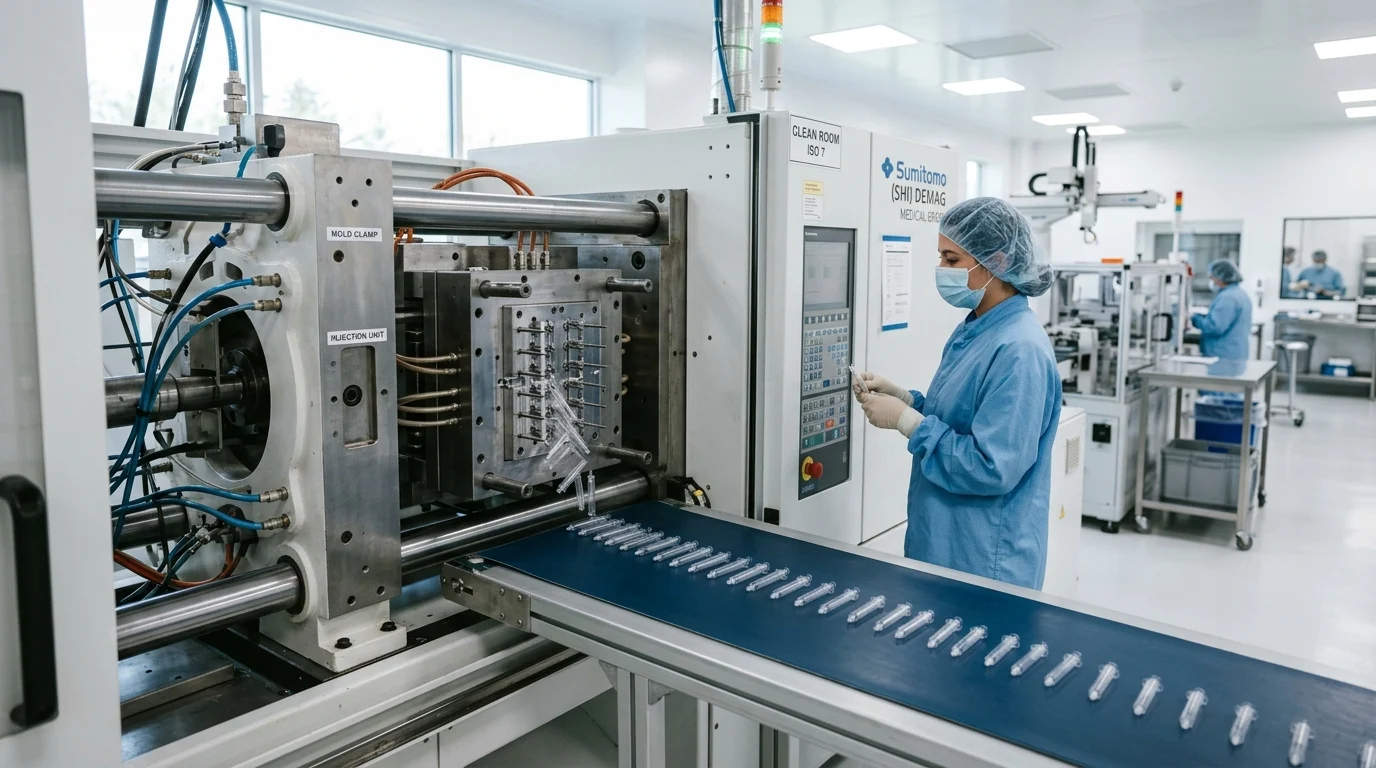
Choosing a resin for medical injection molding in 2026 is no longer a simple tradeoff between cost and strength. Material choice now determines how well a device meets biocompatibility standards, survives sterilization, maintains dimensional stability, and performs throughout its intended use. The best options depend on whether the application demands clarity, chemical resistance, flexibility, fatigue life, or high-temperature durability. This article outlines the leading medical-grade plastics used in injection molding, explains where each material fits best, and highlights the key selection factors that influence manufacturing efficiency, regulatory readiness, and long-term product reliability.
Why material selection defines medical injection molding performance
The stakes in medical device manufacturing have never been higher, and as the industry moves toward 2026, material selection remains the most critical variable in determining the success or failure of a program. Selecting the appropriate polymer dictates not only the mechanical viability of the final device but also its compliance with stringent international health standards. A misalignment between the chosen resin and the device’s operational environment can lead to catastrophic field failures, costly regulatory delays, or inefficient production cycles.
How regulatory, sterilization, and device demands shape material choice
Navigating the intersection of regulatory compliance, sterilization protocols, and end-user device demands requires a profound understanding of polymer science. Medical plastics must adhere to strict biocompatibility standards, primarily ISO 10993 and USP Class VI, which dictate how a material interacts with human tissue and bodily fluids. Sterilization further complicates this landscape. Single-use devices frequently undergo gamma irradiation or ethylene oxide (EtO) gas sterilization. Gamma irradiation doses typically range from 15 to 35 kGy, a level of ionizing radiation capable of causing chain scission or cross-linking in susceptible polymers like standard polytetrafluoroethylene (PTFE), leading to embrittlement and discoloration. Partnering with a specialized facility for medical injection molding ensures that these sterilization-induced material shifts are accounted for during the initial design phase.
Which performance criteria matter most
Beyond compliance, engineers must evaluate the mechanical and rheological performance criteria that matter most for the specific application. Tensile strength, flexural modulus, and impact resistance dictate the physical robustness of surgical instruments or drug delivery mechanisms. For complex, thin-walled geometries, the melt flow index (MFI) becomes a paramount metric. Medical-grade resins often require an MFI ranging from 5 to 30 g/10 min to ensure complete cavity filling without inducing excessive shear stress. Additionally, optical clarity is non-negotiable for fluid management systems and diagnostic cuvettes, where light transmittance must remain consistently high even after sterilization.
Best material options for medical injection molding
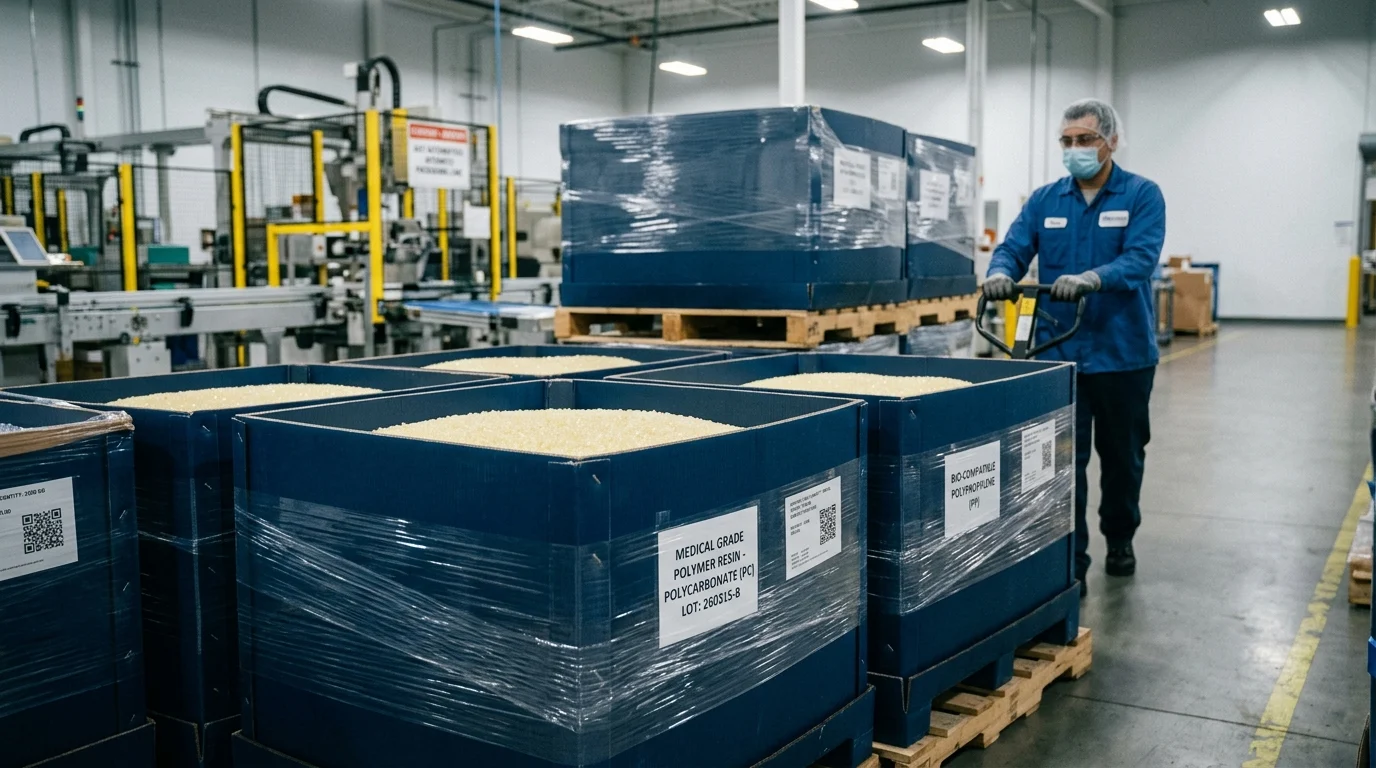
The spectrum of available polymers for medical applications is broad, categorized generally into commodity resins, engineering plastics, and high-performance thermoplastics. Each tier offers a distinct balance of thermal stability, chemical resistance, and raw material cost.
How polypropylene, polyethylene, and polycarbonate compare
Polypropylene (PP), polyethylene (PE), and polycarbonate (PC) represent the foundational pillars of commodity and lower-tier engineering medical plastics. Polypropylene is highly valued for its exceptional fatigue resistance, making it the default choice for living hinges in specimen containers, while offering a low density of approximately 0.90 g/cm³. Polyethylene, particularly high-density polyethylene (HDPE), provides excellent chemical resistance and is heavily utilized in medical packaging and non-implantable tubing. Polycarbonate stands out when optical clarity and impact resistance are essential. Medical-grade PC achieves light transmission rates exceeding 89% and maintains dimensional stability under stress, making it ideal for clear dialyzers, syringes, and surgical trocars.
When to use engineering and high-performance resins
As device requirements transition from single-use disposables to reusable surgical instruments and implantables, engineers must pivot to high-performance resins. Polyetheretherketone (PEEK), polyetherimide (PEI), and polysulfone (PSU) dominate this category. PEEK, for example, exhibits exceptional thermal stability with a melting point around 343°C and a continuous use temperature of 250°C. Its mechanical strength and radiolucency make it an excellent substitute for metal in orthopedic implants and load-bearing surgical tools. PEI (commonly known by the trade name Ultem) and PSU offer excellent hydrolytic stability, allowing them to endure hundreds of high-temperature steam sterilization cycles without degrading.
Key trade-offs in sterilization, strength, and cost
Material selection inevitably demands a careful balancing act between sterilization compatibility, mechanical robustness, and economic feasibility. High-performance resins like PEEK can withstand nearly all sterilization methods but carry a premium price tag, whereas commodity resins like PP are cost-effective but limited in thermal endurance.
| Material | Typical Cost ($/kg) | Autoclave Compatibility | Gamma Compatibility | Tensile Strength (MPa) |
|---|---|---|---|---|
| Polypropylene (PP) | 2 – 4 | Poor to Fair | Fair (requires stabilization) | 30 – 40 |
| Polycarbonate (PC) | 6 – 10 | Fair (limited cycles) | Good (may yellow) | 60 – 70 |
| Polyetherimide (PEI) | 35 – 50 | Excellent | Excellent | 100 – 110 |
| PEEK | 100+ | Excellent | Excellent | 95 – 115 |
Selecting the right tier requires a rigorous analysis of the device’s intended lifecycle to avoid over-engineering a disposable component or under-engineering a reusable instrument.
How to compare materials for medical injection molding
Comparing materials effectively requires moving beyond isolated datasheet values and adopting a comprehensive evaluation framework. Real-world injection molding introduces variables such as shear rates, cooling times, and mold shrinkage that can alter the final properties of the molded part.
What a practical material comparison framework should include
A practical material comparison framework must evaluate candidate resins across five primary domains: biocompatibility, sterilization resilience, mechanical performance, chemical resistance, and manufacturability. Engineers often utilize weighted decision matrices to score materials against these domains based on the specific risk profile of the device. For instance, a fluid pathway component will heavily weight chemical resistance and extractables/leachables profiling, while a surgical handle will prioritize impact strength and ergonomic over-molding compatibility. Reviewing diverse medical injection molding portfolios can provide empirical data on how specific resins perform across these functional domains in commercialized products.
| Evaluation Domain | Key Metrics to Compare | Threshold Example |
|---|---|---|
| Biocompatibility | ISO 10993 cytotoxicity, USP Class VI | Pass/Fail certification |
| Thermal / Sterilization | Heat Deflection Temp (HDT), Glass Transition (Tg) | HDT > 134°C for Autoclave |
| Mechanical | Flexural Modulus, Notched Izod Impact | Impact > 50 J/m for drop resistance |
| Manufacturability | Melt Volume Rate (MVR), Shrinkage | Shrinkage variance < 0.2% |
How tooling, geometry, and resin availability affect selection
Theoretical material properties are frequently constrained by the physical realities of tooling, part geometry, and supply chain logistics. Volumetric shrinkage rates differ drastically between polymer families; semi-crystalline materials like PP typically exhibit high shrinkage rates between 1.5% and 2.0%, whereas amorphous resins like PC shrink only 0.5% to 0.7%. This discrepancy means that a mold cut for polycarbonate cannot be seamlessly repurposed for polypropylene without severe dimensional inaccuracies. Furthermore, resin availability and minimum order quantities (MOQ) dictate procurement strategies. Custom-compounded medical grades or specific radiopaque color matches often command MOQs exceeding 1,000 kg. For niche devices or clinical trial prototypes, this high barrier to entry necessitates selecting off-the-shelf medical grades that align with lower volume production runs.
Material selection process for OEMs and molders
The ultimate success of a medical device program hinges on a structured material selection and validation process executed collaboratively between Original Equipment Manufacturers (OEMs) and their molding partners. This process must mitigate risk at every phase, from initial prototyping to full-scale commercialization.
How to align application requirements, risk class, and sterilization needs
The first phase of the selection process involves aligning the resin choice with the specific application requirements, the FDA or CE MDR risk classification, and the anticipated sterilization regimen. A Class I non-invasive device, such as a bedpan or basic surgical tray, allows for broader material tolerances and the use of cost-effective commodity plastics. Conversely, a Class III life-sustaining implant demands exhaustive traceability and premium implant-grade resins. If a reusable orthopedic instrument requires 500 autoclave cycles at 134°C over its lifespan, the material matrix instantly narrows to ultra-polymers like Radel (PPSU) or PEEK. Accurately defining these environmental and regulatory boundaries prevents the costly mistake of selecting a material that degrades prematurely in the field.
Which qualification steps reduce failure risk
To systematically reduce failure risk, molders and OEMs must execute stringent qualification steps, universally recognized as Installation Qualification (IQ), Operational Qualification (OQ), and Performance Qualification (PQ). During the OQ phase, molders conduct Design of Experiments (DoE) to establish the optimal processing window for the selected resin, ensuring that variations in melt temperature or injection pressure do not compromise the part’s mechanical integrity. Furthermore, utilizing medical resins supported by an FDA Master File (MAF) significantly streamlines the regulatory submission process by allowing the OEM to reference the material manufacturer’s existing biological safety data. To maintain rigorous quality standards, top-tier molders target a defect rate of less than 50 Defects Per Million Opportunities (DPMO) for critical components. Accessing comprehensive medical injection molding documentation and validation protocols is essential for OEMs aiming to maintain tight process controls and ensure seamless regulatory clearance in 2026.
Further reading:
Key Takeaways
- The most important conclusions and rationale for medical injection molding
- Specs, compliance, and risk checks worth validating before you commit
- Practical next steps and caveats readers can apply immediately
Frequently Asked Questions
Which plastic is best for low-cost medical disposable parts?
Polypropylene is usually the first choice for disposable medical components because it is low cost, fatigue-resistant, and molds well for caps, containers, and simple housings.
What material works best for clear medical molded parts?
Medical-grade polycarbonate is a strong option when high clarity and impact resistance are needed, such as for fluid visibility parts, housings, and transparent diagnostic components.
Which materials handle repeated autoclave sterilization?
PEI, PSU, and PEEK are better for repeated steam sterilization. They maintain strength and dimensions far better than commodity resins like PP or standard PC.
How should sterilization method affect material selection?
Match the resin to the sterilization process early. Gamma can embrittle some plastics, while autoclave heat can deform lower-grade resins. This avoids redesigns and compliance delays.
Can NBPM help choose the right medical injection molding material?
Yes. NBPM can help evaluate biocompatibility, clarity, strength, flow, and sterilization needs so the selected resin fits both device performance and manufacturing requirements.
Post time: Jun-10-2026