
- ABS injection molding works best when cosmetic quality, impact resistance, and stable cycle production all matter at the same time.
- Custom injection molding should start with DFM, tolerance review, and material selection, not with tooling alone.
- Consumer plastic products often fail on fit, surface defects, or warpage, so mold design and process control are as important as resin choice.
- For buyer teams, the strongest supplier is usually the one that can support prototyping, tooling, trial runs, and volume production in one workflow.
- In many consumer applications, ABS is competitive because it combines processability with a predictable appearance under high-volume production.
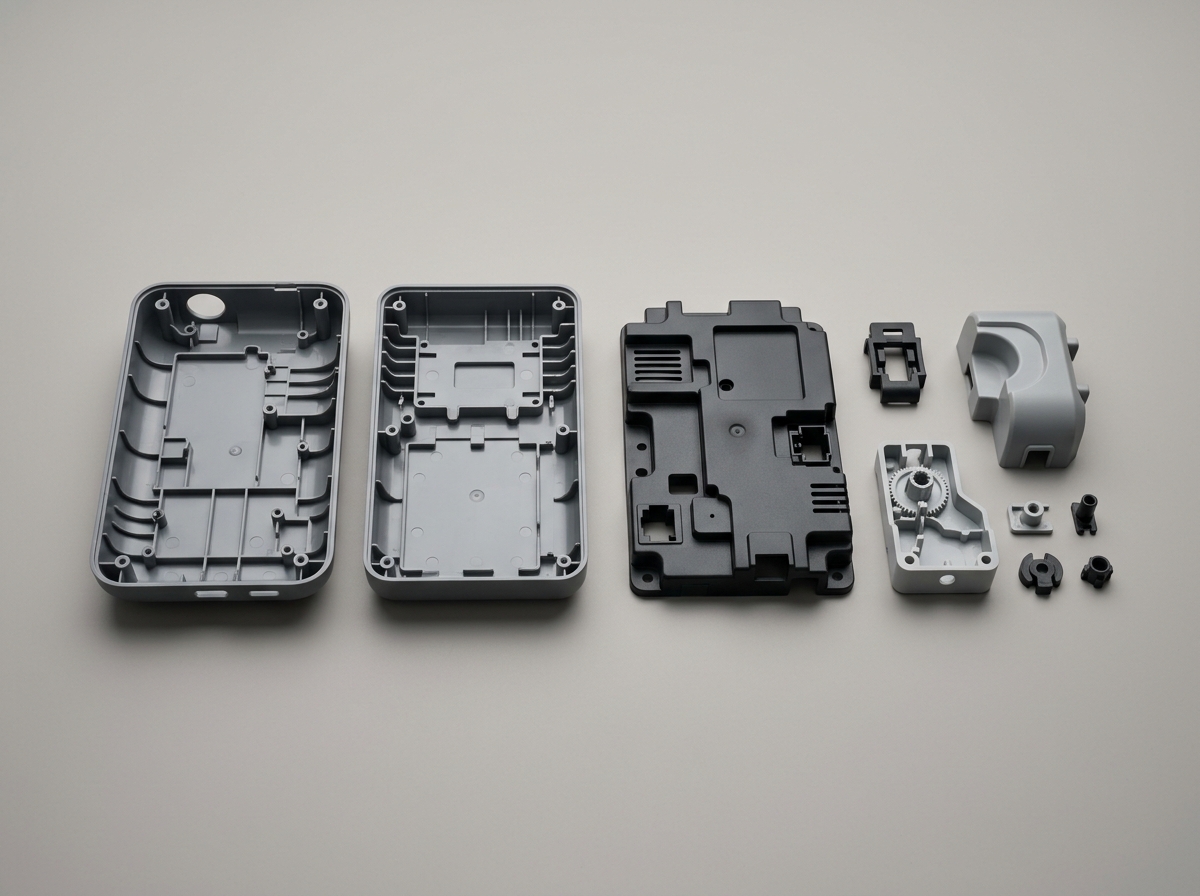
ABS injection molding is widely used for consumer plastic products because it can support wall thicknesses, ribs, snaps, and decorative surfaces with practical dimensional repeatability; in precision manufacturing, mold and machine capability are often evaluated against standards such as ISO 20457:2018 for plastics molding machine performance and ISO 294-1:2017 for specimen preparation, while part-level tolerances must be defined in the product drawing rather than assumed. For buying teams, the real question is not whether ABS can be molded, but whether the supplier can turn a design into a stable, repeatable production process without cosmetic rework, fit issues, or preventable scrap. If your sourcing plan includes different part families, you can review injection mold solutions, plastic household products, and plastic electronic housings as separate production paths with different quality and cost priorities.
Why ABS Injection Molding Is a Strong Fit for Consumer Plastic Products
ABS remains a practical material for consumer goods because it is easy to process, visually consistent, and suitable for high-repeat production.
For consumer plastic products, ABS is often selected when the part needs an attractive shell, dependable snap features, and a balanced cost structure. The resin is valued for its combination of rigidity, toughness, and surface finish, which is why it appears in appliances, electronic housings, toys, tool accessories, and many home-use parts. From a procurement perspective, ABS is attractive because the material is familiar to molders, widely available, and easier to launch than many engineering resins that require narrower process windows.
The practical advantage is not just material performance. It is also manufacturing predictability. When a buyer is comparing custom injection molding options, the best solution is usually the one that reduces tool rework, shortens trial iterations, and keeps stable output after ramp-up. That matters because consumer product launches often have narrow windows for sampling, packaging, retail onboarding, and replenishment.
| Material | Typical strengths | Common concerns | Best consumer use |
|---|---|---|---|
| ABS | Good impact resistance, good surface finish, easy processing | Can warp if design is unbalanced | Housings, covers, trims, handles |
| PC | Higher impact resistance, better transparency options | Higher cost, more moisture sensitivity | Clear parts, protective covers |
| ABS-PC blend | Improved heat resistance and toughness balance | May cost more than standard ABS | Premium housings, visible front shells |
| PP | Low density, chemical resistance, low cost | Lower rigidity and cosmetic limitations | Utility parts, internal components |
According to NIOSH guidance for styrene, styrene is a key exposure consideration in plastics processing, and ABS molding operations typically manage fume, ventilation, and thermal control as part of production hygiene. That is one reason why process discipline matters: a supplier that controls barrel temperature, mold temperature, and cooling balance can usually protect both part quality and operator safety better than a supplier that treats the job as a simple commodity run.
How to Choose the Best Custom Injection Molding Solution for ABS Parts
The best custom injection molding solution is the one that matches the product’s function, finish level, and forecast volume.
Consumer products are not all built the same. A glossy electronics front shell, a rugged appliance knob, and a low-cost household clip may all use ABS, but each one demands a different tooling and process strategy. That is why supplier evaluation should begin with part function, annual demand, cosmetic class, assembly interfaces, and target defect limits. The right molding partner should ask about use case before quoting steel.
A strong custom injection molding workflow normally starts with a design review, then moves to material selection, gate placement, wall uniformity checks, and mold flow risk assessment. For ABS, this is especially important because uneven wall thickness can create sink marks, weld line weakness, or warpage that affects snap-fit assembly. A good supplier should be able to explain why a rib should usually stay thinner than the main wall and how draft angle supports ejection without scuffing the surface.
| Buyer question | Why it matters | What to ask the supplier |
|---|---|---|
| What is the part function? | Determines material, structure, and tolerance priority | Will the part carry load, seal, or only decorate? |
| What is the annual volume? | Changes mold cavity count and tooling ROI | Is the forecast 10,000, 100,000, or 1,000,000 units? |
| What surface quality is required? | Impacts steel polish, texture, and gate position | Is the finish visible Class A, textured, or hidden? |
| How is the part assembled? | Determines snap-fit, screw boss, or insert needs | Are there mating parts, clips, or sealing lines? |
For metal-and-plastic integration projects, it is also useful to review overmolding services and custom plastic parts as different sourcing routes, because some consumer products are better solved with multi-material construction than with a single resin shell. In practice, the “best” option is often the one that reduces assembly steps, lowers part count, and avoids unnecessary secondary operations.
ABS Injection Molding Design Rules That Protect Quality
ABS part quality is usually determined by geometry discipline before the first mold trial ever starts.
Wall thickness consistency is one of the most important design rules in ABS injection molding. If a shell has thick and thin zones that change too abruptly, the melt front cools unevenly, which can create sink marks or visible distortion. For consumer plastic products, that means the product may still function but fail cosmetic inspection, which is often far more expensive than a simple structural defect because the issue appears on the retail-facing surface.
Draft angle, rib design, gate location, and venting are all part of the same quality system. The more complex the consumer product, the more important it becomes to plan these details in advance. A snap-fit clip that is too stiff may crack during assembly; a boss that is too thick may shrink and create a surface blemish; a hidden weld line may become visible after painting or texture application.
| Design feature | Typical guidance | Common failure if ignored |
|---|---|---|
| Wall thickness | Keep sections as uniform as possible | Sink marks, warpage, long cooling time |
| Draft angle | Add draft to support clean ejection | Drag marks, scratches, sticking |
| Rib thickness | Keep ribs thinner than the main wall | Sink marks and localized stress |
| Gate location | Place to balance fill and hide vestige | Weld lines, flow hesitation, visible marks |
| Venting | Allow trapped gas to escape | Short shots, burn marks, poor surface |
In real sourcing work, this is where a supplier’s engineering support matters. If a customer sends only a sketch, the supplier should still be able to flag risk points and recommend changes before tooling. That kind of early intervention often saves more time than a lower mold quote ever could, because design changes after steel cutting are always more expensive than design changes on paper.
What Technical Data Buyers Should Request Before Tooling
Tooling should never start until the buyer has enough technical data to define the acceptance target.
For custom ABS injection molding, the minimum input set should include a 3D model, 2D drawing, target material, annual volume, cosmetic standard, assembly condition, and any packaging or shipping constraints. Without those inputs, the supplier may quote a mold that can technically produce the shape but not the quality level the consumer product needs.
One reason projects fail is that “fit” and “finish” are treated as general goals instead of measurable requirements. For example, if a front cover must align with a mating part, the team should define the tolerance stack, visible line limits, and any critical datum surfaces. If the product is a household device, the buyer should also define cleaning resistance, UV exposure, and color stability expectations, because consumer products are often judged first by appearance and only later by mechanical durability.
| Input item | Why it is required | Example of a measurable requirement |
|---|---|---|
| 3D CAD file | Defines geometry and parting strategy | STEP or IGES model |
| 2D drawing | Defines tolerance and inspection points | Critical dimension tolerance on mating face |
| Material spec | Locks resin selection and performance target | ABS grade for cosmetic housing |
| Annual volume | Determines cavity count and machine size | 50,000, 200,000, or 1,000,000 units |
| Cosmetic requirement | Defines polish, texture, and defect limits | Front-side no sink mark visible at 1 m |
For inspection discipline, many teams reference general metrology practices from NIST length metrology resources to understand how measurement traceability supports repeatable quality control. In a consumer product project, the lesson is simple: if the drawing does not specify what matters, the shop floor will optimize for cost, not for the buyer’s real acceptance criteria.
Production Process: From Mold Trial to Stable ABS Injection Molding
Stable production usually comes from a controlled trial process, not from a single perfect first shot.
After tooling is completed, the first mold trial should be treated as a learning step, not a final approval step. The team should verify fill pattern, gate balance, ejection behavior, cosmetic defects, and dimensional drift across repeated cycles. ABS often processes at a practical molding window that depends on grade, part geometry, and machine setup, so the best supplier is the one that documents trial conditions carefully and builds a repeatable process sheet rather than relying on operator memory.
For consumer plastic products, trial validation should include multiple shots under steady-state conditions. That allows the team to see whether defects are random or systemic. If a sink mark appears only on the first few shots, it may be a thermal stabilization issue. If it appears every cycle in the same area, the part design or gate strategy is probably the root cause. This distinction is critical because it prevents the wrong fix from being applied.
- Review the design for wall balance, gate position, and ejection risk.
- Run the first trial and record fill, pressure, and cooling behavior.
- Check dimensions and visual quality after thermal stabilization.
- Adjust process settings before changing steel if possible.
- Confirm repeatability across a stable production sample.
According to ISO-based molding practice, process capability and dimensional control matter more than a single sample part. That is why buyers should ask for trial reports, process parameters, and sample approval records. A supplier that can explain how it controls melt temperature, mold temperature, packing pressure, and cooling time is usually better prepared for volume production than a supplier that only promises “fast delivery.”
 Where ABS Beats Other Consumer Plastics
ABS is often the best answer when the product needs balanced performance rather than a single extreme property.
In consumer applications, material choice is rarely about one number. It is about balancing impact resistance, appearance, rigidity, cycle time, and cost. ABS tends to outperform low-cost polyolefins when a part must look refined and feel solid in the hand. It may also be easier to specify than more specialized engineering materials when the product is still in development and the buyer wants a low-risk launch.
The right comparison is not “which resin is strongest,” but “which resin supports the finished product’s total requirements.” For a visible appliance bezel, ABS may be the safest commercial choice. For a transparent protective component, PC may be more suitable. For a flexible utility part, PP may win on cost. A good supplier should be able to explain these tradeoffs without pushing one material for every project.
| Application | ABS suitability | Better alternative when… | Typical buyer priority |
|---|---|---|---|
| Electronics housing | High | Need transparency or extra heat resistance | Appearance and fit |
| Appliance cover | High | Need chemical or thermal extremes | Surface quality and rigidity |
| Toy shell | High | Need very high impact or soft-touch behavior | Safety and color consistency |
| Utility clip | Medium | Need very low cost and flexibility | Cost and snap performance |
For many procurement teams, the deciding factor is downstream assembly. If the consumer product has a painted finish, printed logo, or secondary assembly, ABS can be easier to manage than a resin that causes more surface preparation issues. That is why “best” should always be defined in the context of the full product lifecycle, not only by the raw resin data sheet.
Cost, Lead Time, and Quality Tradeoffs in Custom Injection Molding
The lowest mold price is often the most expensive option once quality losses are counted.
Custom injection molding economics are shaped by tooling complexity, cavity count, finishing requirements, trial cycles, and expected lifetime volume. For consumer plastic products, a simple mold may reduce upfront investment, but if it produces cosmetic defects or slows cycle time, the total landed cost can rise quickly. Buyers should evaluate cost per good part, not only tooling quote.
Lead time also deserves equal attention. If the product is tied to a launch window or seasonal demand, a slightly more expensive supplier that can manage engineering feedback quickly may deliver a better business result than a cheaper vendor that responds slowly. In consumer categories, time-to-market often matters as much as unit cost.
| Cost driver | Effect on project | Buyer decision point |
|---|---|---|
| Tool complexity | Raises design and machining effort | Is a simpler part split possible? |
| Cavity count | Affects output and mold price | Is the forecast high enough for multi-cavity tooling? |
| Surface finish | Impacts polishing and texture work | Is a premium look actually required? |
| Trial iterations | Adds time and engineering cost | Can DFM reduce risk before cutting steel? |
For a more complete sourcing setup, some buyers also review plastic parts accessories and about the company pages to understand whether the supplier can support not only molding, but also part matching, after-sales support, and project communication across the full lifecycle. That broader view often reveals whether the relationship is truly production-ready.
Common ABS Injection Molding Problems and How to Reduce Them
Most ABS molding defects are predictable and can be reduced with the right process and design controls.
Sink marks are usually linked to localized thickness buildup, especially around ribs, bosses, and decorative features. Warpage usually results from uneven cooling, unbalanced wall layout, or residual stress. Weld lines often appear where two melt fronts meet, and they become more visible when the part has a glossy cosmetic requirement. Short shots can indicate poor venting, insufficient injection pressure, or gate design that does not support complete fill.
The practical response is not to accept these issues as normal. A disciplined supplier can often move from diagnosis to correction by checking part geometry, mold temperature, packing profile, and cooling uniformity. For consumer products with visible surfaces, that discipline protects brand perception as much as it protects yield.
- Check wall thickness transitions first.
- Inspect gate position and venting quality.
- Review cooling balance across the cavity.
- Measure dimensional drift over repeated cycles.
- Validate cosmetic quality under real lighting.
When buyers understand these defect patterns, they can ask better questions during sourcing. That often leads to faster approval, fewer surprises in mass production, and more reliable shelf-ready parts.
How to Evaluate a Custom ABS Injection Molding Supplier
The best supplier is the one that reduces technical risk before it becomes a delivery problem.
Supplier selection should be based on engineering capability, response speed, communication quality, and production consistency. A factory that can only quote is not enough for consumer products. The team should look for evidence of DFM support, trial reporting, measurement discipline, and stable follow-up after the first shipment. For export projects, English communication and document clarity also matter because misunderstandings around tolerances or visual standards can delay release.
Buyers should ask for real examples of similar products, the types of defects the team has solved, and how the supplier handles sample approval and production change control. If the project includes multiple SKUs or family molds, it is especially important to understand how the factory manages scheduling and tooling maintenance so that one product does not disrupt another.
| Supplier capability | What good looks like | Why it matters |
|---|---|---|
| DFM support | Clear comments before tooling | Reduces redesign cost |
| Trial reporting | Documented parameters and sample records | Improves approval traceability |
| Quality control | Repeatable inspection and feedback | Protects mass-production stability |
| Communication | Fast and specific technical replies | Shortens launch timeline |
| After-sales support | Tool maintenance and issue response | Protects long-term supply continuity |
For a buyer, the most useful question is often simple: can this supplier help me move from concept to stable consumer plastic products without forcing me to manage every technical detail alone? If the answer is yes, the project is usually in safer hands.
FAQ About ABS Injection Molding for Consumer Products
1. Is ABS the best material for consumer plastic products?
ABS is one of the best all-around choices when a product needs impact resistance, a clean surface, and cost-effective volume production. It is not always the best for transparent parts or extreme heat, but it is often a strong default for housings and covers.
2. What should I prepare before requesting custom injection molding?
You should prepare a 3D model, 2D drawing, target volume, material preference, cosmetic requirement, and assembly conditions. The more measurable your requirements are, the easier it is for the supplier to quote accurately and avoid redesign.
3. Why do ABS parts sometimes show sink marks?
Sink marks usually come from local thickness buildup, especially near ribs, bosses, or heavy sections. They can often be reduced by improving geometry, adjusting gate placement, or balancing packing and cooling.
4. How do I compare different custom injection molding suppliers?
Compare them on DFM support, trial transparency, response speed, quality control, and ability to solve issues during ramp-up. Price matters, but cost per good part is the more useful metric.
5. Can ABS be used for visible front-shell consumer products?
Yes. ABS is commonly used for visible front shells because it can take texture, polish well, and maintain a consistent look when the mold and process are controlled properly.
6. When should I choose PC instead of ABS?
PC is often better when transparency, higher impact resistance, or added heat resistance is needed. If appearance and general toughness matter more than transparency, ABS may still be the better commercial choice.
7. What makes a molding solution truly custom?
A truly custom solution includes design review, material matching, mold engineering, trial validation, and production planning tailored to the buyer’s part function and market target.
Post time: Sep-20-2026