
- Contract manufacturing reduces tooling and factory setup burden for custom plastic products.
- OEM plastic manufacturing improves speed, repeatability, and cost control once the design is validated.
- The best suppliers combine mold design, trial sampling, production, and logistics support in one workflow.
- Quality outcomes depend on material selection, draft angles, wall thickness, and process stability.
- For electronics, appliances, and industrial parts, stable tolerances and appearance consistency are often more valuable than the lowest unit price.
Custom plastic products are easiest to scale when the supplier understands both the product and the process, because injection molding tolerances, material behavior, and tooling design directly affect lead time and quality. In precision molding, ISO 20457:2018 defines a framework for tolerances and process capability, while ISO 20457:2018 is often used as a reference point when buyers discuss achievable dimensions with manufacturers. For many consumer and industrial parts, that conversation matters more than a generic factory promise. If you are sourcing plastic injection molds, plastic housings, or OEM plastic parts, the real question is not only who can mold the part, but who can help you launch it with fewer revisions and lower total project risk.
Why contract manufacturing for custom plastic products changes the buying equation
Contract manufacturing shifts the buyer’s focus from factory ownership to product outcomes. That is the first and most important advantage for custom plastic products.
Instead of investing in injection molding machines, tooling specialists, process engineers, and quality systems internally, the buyer transfers those fixed burdens to a specialized OEM plastic manufacturing partner. This is especially valuable for brands with seasonal demand, limited engineering staff, or multi-SKU product portfolios. The supplier’s role is not just to produce parts, but to translate drawings, samples, and material targets into repeatable output.
For buyers, this often means fewer capital expenses, lower staffing pressure, and a faster path to first article approval. It also means the project can be tested before it is scaled, which reduces the risk of building inventory around an unproven design.
| Decision factor | In-house production | Contract manufacturing | Business impact |
|---|---|---|---|
| Initial capital | High | Lower | Less financial exposure |
| Tooling expertise | Must be built internally | Provided by supplier | Shorter development cycle |
| Scale-up speed | Depends on internal capacity | Can be expanded by order volume | Better launch flexibility |
| Quality system | Requires internal setup | Often already established | Lower operational overhead |
The most practical benefit is not abstract efficiency. It is that a validated design can move from sample to production without the buyer having to build the entire manufacturing stack first.
How OEM plastic manufacturing lowers project risk for custom plastic products
OEM plastic manufacturing lowers risk because it front-loads engineering review before full production begins.
In custom plastic products, the most expensive mistakes usually happen early: incorrect draft angle, uneven wall thickness, poor gate position, weak weld line location, or material mismatch. A contract manufacturer that supports mold design and trial analysis can catch these issues before they become recurring scrap. That is why mold development is not just a fabrication step; it is a risk-control process.
Plastic housings for electronics and appliances are a good example. These parts often need stable assembly fit, a clean appearance, and enough structural strength to survive snapping, screw fastening, and shipping vibration. A supplier that understands electronic housings and appliance plastic parts can recommend better rib layout, gate placement, and surface treatment before tooling is finalized.
For buyers, that kind of support reduces the chance of rework after the first trial. It also reduces the likelihood of repeated engineering change orders, which can quietly destroy lead time and margin.
| Common risk point | What goes wrong | Typical supplier response | Buyer benefit |
|---|---|---|---|
| Wall thickness | Shrinkage or warpage | Adjust geometry and process window | More stable dimensions |
| Gate position | Visible marks or weak fill | Optimize mold flow | Better appearance |
| Material choice | Brittleness or poor fit | Match resin to load and temperature | Longer part life |
| Assembly interface | Poor snap fit or gap | Refine tolerance stack-up | Less field failure |
That engineering support is often what separates a simple molding vendor from a long-term OEM plastic manufacturing partner.
Why custom plastic products benefit from tooling and process expertise
Tooling expertise is the hidden value in contract manufacturing because the mold determines the part’s repeatability.
Plastic injection molding is a high-repetition process, so small tooling decisions create large downstream effects. A proper mold design can improve cycle stability, reduce flashing, and make the cavity fill more consistently. For custom plastic products, this matters more than many first-time buyers expect, because a part that looks acceptable in the first sample may still fail in mass production if the tool is not robust.
In complex parts, especially 3D-shaped housings and differentiated consumer products, the supplier’s ability to balance aesthetics with manufacturability becomes critical. This is where a 3D mold solution can help when the product includes deep curves, undercuts, or visual features that need sharper brand identity.
For transparent or impact-resistant parts, PC material is often selected because it combines clarity, toughness, and dimensional stability. That is why many protective covers and visual housings use polycarbonate rather than lower-performance resin choices. When the application demands both form and function, the mold maker must understand resin behavior, not only steel machining.
According to ASTM D4000, plastic materials are classified by standard designations and properties, which helps buyers and suppliers speak a common technical language during material selection. That matters because the wrong resin choice can create cracking, sink marks, or poor surface quality even if the mold itself is well built.
- Use contract manufacturing when part geometry is still being refined.
- Use OEM plastic manufacturing when process repeatability matters more than one-off experimentation.
- Ask for mold-flow-informed design review before tooling release.
- Confirm resin choice against load, temperature, and appearance requirements.
Cost control in custom plastic products starts with design for manufacturability
Cost control is strongest when the design is made easier to mold, not when the supplier simply quotes a lower number.
Many buyers focus on unit price, but custom plastic products are influenced by far more than the mold quote. Wall thickness consistency, part orientation, cavity count, and cycle time all affect total landed cost. A design that runs smoothly at scale can outperform a cheaper-looking quote that requires constant tuning and higher scrap.
A useful benchmark comes from standard injection molding practice: a typical cycle includes filling, packing, cooling, and ejection, and cooling often dominates the total time. In practical production planning, even a reduction of a few seconds per cycle can significantly change annual throughput, especially for multi-cavity molds. That is why experienced contract manufacturing partners spend time on gating, cooling layout, and part design review before launch.
The buyer also benefits from volume planning. If demand is uncertain, contract manufacturing lets the project start with pilot quantities and then increase orders once market response is clear. This avoids overcommitting to inventory before the product has proven demand.
| Cost lever | Engineering decision | Production effect | Buyer outcome |
|---|---|---|---|
| Cycle time | Cooling and gate design | Higher hourly output | Lower unit cost |
| Scrap rate | Material and process stability | Less rework | Better margin |
| Cavity count | Mold architecture | More parts per shot | Higher capacity |
| Assembly fit | Tolerance control | Fewer rejects | Lower total cost |
The strongest contract manufacturing relationships are built around design efficiency, not price pressure alone.
How custom plastic products gain speed from one-stop mold and production support
One-stop support shortens lead time because it reduces handoffs between design, tooling, sampling, and production.
When a buyer manages molds, samples, production, packaging, and shipping through multiple vendors, every transition creates delay risk. Files can be misread, revisions can be lost, and responsibility can become unclear. A single-source partner with mold component support and production services can reduce that friction because the same team is responsible for the outcome across the full workflow.
This is especially important for project-based procurement. New product launches often have fixed marketing dates, retailer deadlines, or seasonal shipment windows. If the prototype phase drifts, the entire commercial plan can slip. In that situation, speed is not a luxury; it is part of the product strategy.
For export-oriented buyers, communication speed also matters. Suppliers that can respond in English, manage documents clearly, and coordinate logistics reduce hidden administrative cost. That is a real advantage in OEM plastic manufacturing because international projects fail as much from communication gaps as from technical problems.
- Confirm drawings, materials, and annual volume targets before tooling starts.
- Review moldability and tolerance stack-up with the supplier.
- Approve sample parts after functional and visual checks.
- Scale to production only after the process window is stable.
- Lock packaging and logistics requirements before shipment.
What quality stability means in custom plastic products
Quality stability means the same part can be made again and again without drifting in fit, appearance, or function.
In custom plastic products, this is often the difference between a one-time sample success and a sustainable business program. Exterior parts for appliances, consumer elec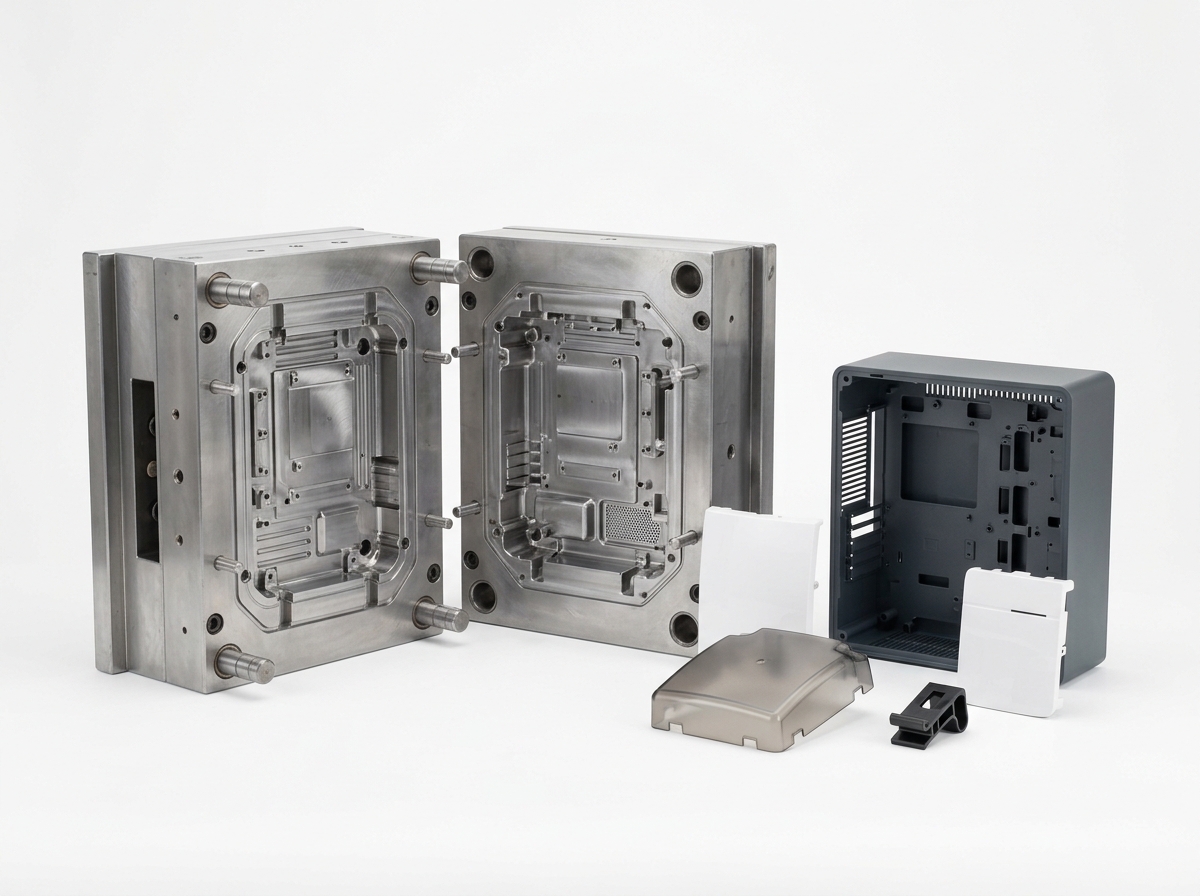
tronics, toys, and industrial accessories may all pass a visual inspection on day one, but only a stable process produces consistent output across multiple lots. That consistency protects brand reputation and reduces downstream assembly problems.
ISO 20457:2018 is relevant here because it helps frame achievable tolerances and the relationship between design intent and manufacturing capability. At the same time, the supplier’s own process discipline matters: material drying, mold temperature control, holding pressure, and inspection routines all influence repeatability. For example, polycarbonate used in transparent housings often requires careful moisture control before molding to prevent surface defects and property loss.
For buyers, the practical question is simple: can the supplier hold the same standard across 500 parts and 50,000 parts? That is where contract manufacturing with mature quality systems becomes valuable, because the supplier is already structured to monitor and correct drift.
| Quality checkpoint | Why it matters | What to ask the supplier |
|---|---|---|
| Incoming material control | Prevents resin variation | How is resin lot traceability handled? |
| First article inspection | Confirms initial fit | What dimensions are measured? |
| In-process checks | Detects drift early | How often are samples checked? |
| Final inspection | Protects shipment quality | What is the acceptance criterion? |
Stable quality is not an abstract promise. It is a system of controls that protects production economics.
Which custom plastic products are best suited to contract manufacturing
Products with repeat demand, moderate-to-high complexity, or strict appearance requirements are usually the best fit for contract manufacturing.
That includes plastic housings, appliance trim, consumer device enclosures, industrial covers, toys, daily-use items, and light-duty functional components. The reason is simple: these products benefit from tooling expertise, production discipline, and scale leverage. When a product line contains multiple SKUs, a multi-category supplier can also improve purchasing efficiency by reducing the number of vendors involved.
Products with strong visual identity often benefit from a supplier that understands both structure and aesthetics. If the part must look clean on a retail shelf or fit tightly inside a device, design-for-manufacturability decisions become especially important. In those projects, contract manufacturing is not just about making parts; it is about protecting the product concept as it moves into real production.
- Best fit: repeatable parts with annual demand.
- Best fit: housings that need stable fit and appearance.
- Best fit: projects requiring tooling plus production under one roof.
- Less ideal: highly experimental concepts with no frozen design.
How to choose an OEM plastic manufacturing partner
The best OEM plastic manufacturing partner is the one that can reduce your total project risk, not just quote the lowest tool price.
Start by checking whether the supplier can support drawings, samples, material advice, mold structure, and trial feedback. Then ask how they handle schedule control, revision management, and production scaling. A supplier that serves industrial plastic parts and consumer products usually has broader experience with appearance, durability, and volume variation.
You should also test communication quality early. If a supplier cannot respond clearly before the order, it is unlikely to become easier after tooling begins. For export buyers, file discipline and response speed are part of manufacturing quality.
- Check whether the supplier offers design review before tooling release.
- Confirm whether the team understands your material and appearance requirements.
- Ask for sample, production, and inspection workflow details.
- Review how they handle schedule changes and shipment coordination.
What buyers usually miss when evaluating contract manufacturing
The biggest mistake is treating contract manufacturing like a commodity service instead of a project partnership.
Many buyers compare only tool price and piece price, then discover later that the lowest quote creates the highest total cost. Common hidden issues include weak communication, slow sample feedback, poor tolerance control, and limited support after launch. These problems matter most for custom plastic products because every design change interacts with tooling and process stability.
Another overlooked factor is lifecycle support. Mold maintenance, spare parts, and component replacement influence uptime and delivery reliability. A supplier that can support ongoing production will usually be more valuable than one that only focuses on first shipment. For brands building a long-term product line, that continuity is often a decisive advantage.
According to NIST, measurement traceability and consistent process control are central to manufacturing quality systems. That principle applies directly to plastic injection projects, where dimensional drift can accumulate quietly over time if the process is not monitored.
FAQ about contract manufacturing for custom plastic products
What are the main benefits of contract manufacturing for custom plastic products?
The main benefits are lower upfront investment, faster launch, better tooling expertise, and more stable mass production. Buyers also gain easier access to engineering support and process control.
Is OEM plastic manufacturing better than in-house production?
It depends on volume and internal capability, but OEM plastic manufacturing is usually better for brands that want to avoid factory investment and need flexible scaling.
Why is mold design so important in custom plastic products?
Mold design controls filling, cooling, appearance, and repeatability, so it directly affects part quality and unit cost.
How does contract manufacturing reduce product risk?
It reduces risk by moving engineering review, trial sampling, and process stabilization before full-volume production begins.
What types of products are best for contract manufacturing?
Products with recurring demand, stable specifications, or multiple SKUs are usually the best fit, especially housings and functional plastic components.
What should I ask a custom plastic products supplier before starting?
Ask about design review, material selection, tolerance capability, sample timing, and quality inspection methods.
How do I compare two OEM plastic manufacturing suppliers?
Compare engineering support, communication speed, sample quality, tooling strategy, quality control, and long-term support, not only price.
In summary, contract manufacturing for custom plastic products is most valuable when the buyer wants to turn a design into stable production with less capital risk and better technical control. The strongest suppliers help with tooling, material selection, trial feedback, and scale-up, which makes the path from concept to shipment much shorter and more reliable.
For buyers who care about launch speed, repeatability, and long-term supply stability, OEM plastic manufacturing is often the most practical route.
When the product must balance appearance, strength, and repeat production, the right partner can protect both performance and margin.
Post time: Jul-17-2026