
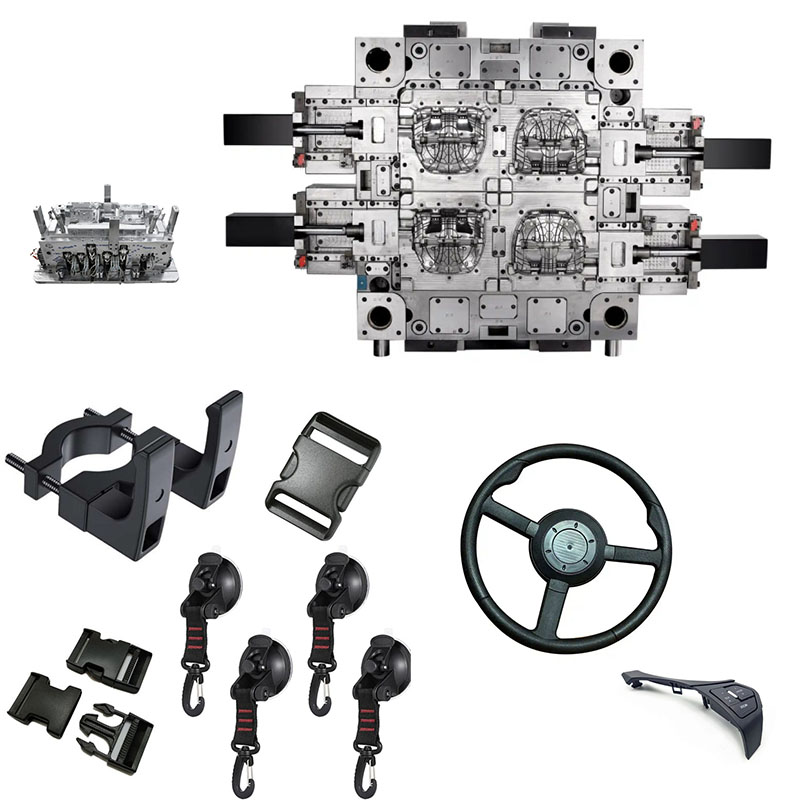
POM (Polyoxymethylene) is known as “steel-like material” due to its high rigidity, wear resistance and self-lubrication properties, making it highly suitable for manufacturing automotive gears, bearings, fuel system components, etc. The production process of POM revolves around “precision injection molding”, with the core being the control of its high thermal sensitivity and high crystalline shrinkage rate. Here are the key processes and points:
Step 1: Material Pre-treatment
POM has low hygroscopicity and usually does not require drying. However, for precision-engineered automotive parts, it is recommended to preheat at around 80°C. This can enhance the material’s stability and fluidity, facilitating subsequent molding.
Step 2: Injection Molding (Core Process)
This is the most crucial step and requires precise control of multiple parameters:
Die cylinder temperature: It needs to be precisely controlled. For homopolymer POM, it is approximately 180 – 230°C, and for copolymer POM, it is approximately 190 – 215°C. Absolutely avoid exceeding 220°C; otherwise, the material will decompose and produce irritating formaldehyde gas.
Injection and holding pressure: It is advisable to use a medium-pressure and medium-speed injection method. Due to the fast solidification of POM, the holding pressure should be relatively high (close to the injection pressure) to compensate for shrinkage and reduce the shrinkage marks on the product.
Mold temperature: A higher mold temperature is crucial. It is typically maintained at 80°C to 100°C. A high mold temperature can slow down cooling, reduce the internal stress and post-shrinkage deformation of the products, and is particularly important for precision automotive parts.
Step 3: Demolding and Post-Treatment
Demolding: When demolding POM products, the temperature is very high, so be careful to avoid burns. Due to the high rigidity of the material, the mold needs to have sufficient demolding inclination.
Post-processing: For extremely demanding automotive components, sometimes heat treatment (annealing) is carried out to relieve internal stresses and ensure long-term dimensional stability.
Step 4: Quality Control and Inspection
For the formed automotive parts, strict inspections are required for dimensional accuracy (especially the impact of high shrinkage rates), surface defects, and sampling tests for mechanical properties such as wear resistance and fatigue strength.
Post time: Jan-23-2026