
- OEM is buyer-led: your drawings, your specs, and your brand control.
- ODM is supplier-led: faster launch, fewer design steps, but less uniqueness.
- Tooling quality, tolerance control, and material selection matter more than the label on the contract.
- For plastic manufacturing, the right model depends on complexity, launch speed, and IP strategy.
- Clear DFM review and sample validation reduce rework, mold changes, and hidden costs.
OEM plastic manufacturing and ODM plastic manufacturing are not just procurement terms; they define how product ownership, engineering workload, and launch speed are divided across the project. In plastic manufacturing, even a small tolerance issue can affect assembly, and ISO 20457:2018 classifies molding tolerances for thermoplastic parts by process capability rather than marketing claims, which is why design control matters as much as tooling quality. Buyers evaluating plastic injection mold solutions often need to compare specification ownership, mold validation, and lifecycle support before choosing between OEM and ODM.
OEM plastic manufacturing vs ODM plastic manufacturing: the core difference
The core difference is who defines the product and who carries the design risk. OEM plastic manufacturing usually means the buyer owns the product idea, drawings, appearance, dimensions, and performance targets, while the factory executes mold making and production. ODM plastic manufacturing means the supplier already has a design framework, an existing mold platform, or a semi-finished concept that can be adapted for the buyer’s brand.
In practical procurement terms, OEM is closer to a custom manufacturing relationship, and ODM is closer to a ready-to-adapt solution. That difference affects lead time, tooling cost, unit economics, and intellectual property control.
| Item | OEM plastic manufacturing | ODM plastic manufacturing |
|---|---|---|
| Design ownership | Buyer-led | Supplier-led |
| Development time | Longer | Shorter |
| Tooling flexibility | High | Moderate |
| IP control | Stronger for buyer | Shared or limited |
| Typical use case | Custom, branded, differentiated products | Faster category entry, line extension |
For buyers comparing plastic injection parts across suppliers, the most important question is not whether the factory says OEM or ODM. The real question is whether the supplier can match the project’s precision, appearance, and volume targets without repeated mold changes.
How OEM plastic manufacturing works in real projects
OEM plastic manufacturing starts with a buyer-owned product brief, which may include 2D drawings, 3D CAD files, target materials, appearance requirements, and assembly conditions. The supplier then evaluates manufacturability, proposes gate positions, draft angles, rib thickness, wall thickness, and cooling strategy before mold fabrication begins.
This model is especially common when the buyer needs differentiated geometry, tight assembly fit, or a unique brand identity. For example, consumer electronics housings often need controlled cosmetic quality, internal snap-fit performance, and stable dimensions across repeated cycles.
In a typical OEM workflow, the supplier may support DFM review, sample trials, and pre-production validation. The purpose is to reduce defect risk before volume injection molding starts.
- Buyer defines product function, target cost, and market requirements.
- Supplier reviews drawings, samples, and material requirements.
- DFM and mold flow concerns are discussed before tooling.
- Prototype or T0 sample is tested and revised if needed.
- Pilot production confirms fit, finish, and repeatability.
For OEM buyers, a supplier with custom plastic mold capability is often preferred because the mold becomes a production asset aligned with the buyer’s product roadmap rather than a generic platform.
How ODM plastic manufacturing works and when it fits better
ODM plastic manufacturing is built around supplier-developed structures, existing molds, or pre-engineered product concepts. The buyer typically selects a base design, then changes branding, color, minor dimensions, packaging, or accessory features. That makes ODM useful when speed matters more than full customization.
ODM is common in fast-moving categories such as household accessories, promotional products, and low-complexity consumer goods. It can also work for buyers testing a new market before committing to a fully custom mold program.
Because the design burden is lower, ODM can shorten the time from concept to shipment. However, the tradeoff is less product exclusivity and sometimes less control over long-term modification.
| Decision factor | OEM | ODM |
|---|---|---|
| Launch speed | Slower due to custom development | Faster with existing structure |
| Customization depth | High | Low to medium |
| Brand differentiation | High | Moderate |
| Engineering effort from buyer | Higher | Lower |
For buyers who need market testing first, ODM may be the more practical entry point. For buyers whose sales depend on distinct appearance, fit, or performance, OEM usually offers better long-term value.
Plastic manufacturing standards, tolerances, and why they change the decision
Plastic manufacturing decisions become clearer when you look at measurable requirements rather than labels. Dimensional control, material choice, and surface quality can make an OEM project more suitable even if an ODM option exists.
According to ISO 20457:2018, injection molded parts are classified by tolerance expectations that depend on process capability, part size, and geometry. In real production, a tolerance such as ±0.005 mm is extremely demanding for plastic parts and usually requires careful mold design, controlled shrinkage, and stable process windows; many consumer-grade housings are instead designed around practical tolerances that reflect material behavior and assembly function.
Material selection also changes the equation. Polycarbonate, for example, is commonly used where transparency, impact resistance, and dimensional stability are important. For technical plastics, manufacturers often rely on datasheets and standards rather than appearance alone.
| Technical factor | Typical reference value | Why it matters |
|---|---|---|
| Injection molding tolerance reference | ISO 20457:2018 | Defines tolerance classes for molded thermoplastics |
| Polycarbonate tensile strength | About 55 to 75 MPa | Useful for impact-resistant housings |
| Polycarbonate heat deflection temperature | About 125 to 135 C at 1.8 MPa | Supports moderately demanding thermal environments |
| Common mold surface capability | SPI A to D finish ranges | Impacts cosmetic appearance and mold maintenance |
For supplier evaluation, these numbers matter more than whether the factory calls itself OEM or ODM. A reliable manufacturer should explain how material, wall thickness, and cooling design affect warpage, cycle time, and appearance consistency.
When OEM plastic manufacturing is the better choice
OEM plastic manufacturing is the stronger choice when product differentiation, proprietary structure, or strict assembly fit are central to the business case. That is especially true for electronics housings, appliance panels, industrial enclosures, and functional parts that interface with metal inserts or other precision components.
OEM is also better when the buyer expects multiple product revisions over time. Since the design remains buyer-owned, the product can evolve without depending on a supplier’s pre-existing platform.
- Choose OEM when the product needs a unique geometry or brand-specific look.
- Choose OEM when assembly tolerances affect downstream performance.
- Choose OEM when you want stronger IP control and product roadmap flexibility.
- Choose OEM when mold amortization will be spread across large or repeated volumes.
Buyers in consumer electronics often prefer OEM because cosmetic consistency, snap-fit strength, and assembly alignment directly influence returns and warranty risk. That is one reason a supplier with electronics housing manufacturing capability can be a better fit than a general-purpose supplier.
When ODM plastic manufacturing is the better choice
ODM plastic manufacturing is the better choice when time-to-market is the main constraint or when the buyer wants to validate demand before funding a full custom development cycle. It is also practical for private-label programs where design uniqueness is less critical than cost, availability, and packaging readiness.
In many cases, ODM reduces upfront engineering effort and shortens supplier qualification. The buyer can focus on brand positioning, channel setup, and marketing while the supplier handles a larger share of the product design work.
That said, ODM can create future constraints if the market becomes competitive. If several buyers source similar products from the same supplier, differentiation may be limited.
| Scenario | Better fit | Reason |
|---|---|---|
| New product with strong branding goal | OEM | Allows unique design and proprietary tooling |
| Fast entry into a mature category | ODM | Uses existing product architecture |
| Large-volume repeat orders | OEM | Lower unit cost after tooling amortization |
| Small test run or pilot market | ODM | Lower upfront complexity |
For buyers comparing manufacturing paths, the most useful metric is not only price per part. It is total project cost, including tooling, revision risk, sampling cycles, and the cost of delay.
 Hidden costs buyers should compare in plastic manufacturing
The cheapest quote is not always the lowest project cost. In plastic manufacturing, hidden cost usually appears in mold changes, delayed samples, unstable dimensions, or cosmetic rejects.
A mold that looks inexpensive at first can become costly if the supplier lacks DFM support, process stability, or post-tooling adjustment capability. This is why many procurement teams evaluate the whole lifecycle: design review, mold build, first article samples, pilot output, and mass production stability.
From an operational viewpoint, the major cost drivers are tooling complexity, cavity count, cycle time, scrap rate, and post-processing needs such as painting, ultrasonic welding, or pad printing.
- Mold complexity increases design and machining cost.
- Longer cycle time increases piece cost across the full order.
- High scrap rate reduces yield and affects delivery schedules.
- Secondary operations add time, labor, and quality risk.
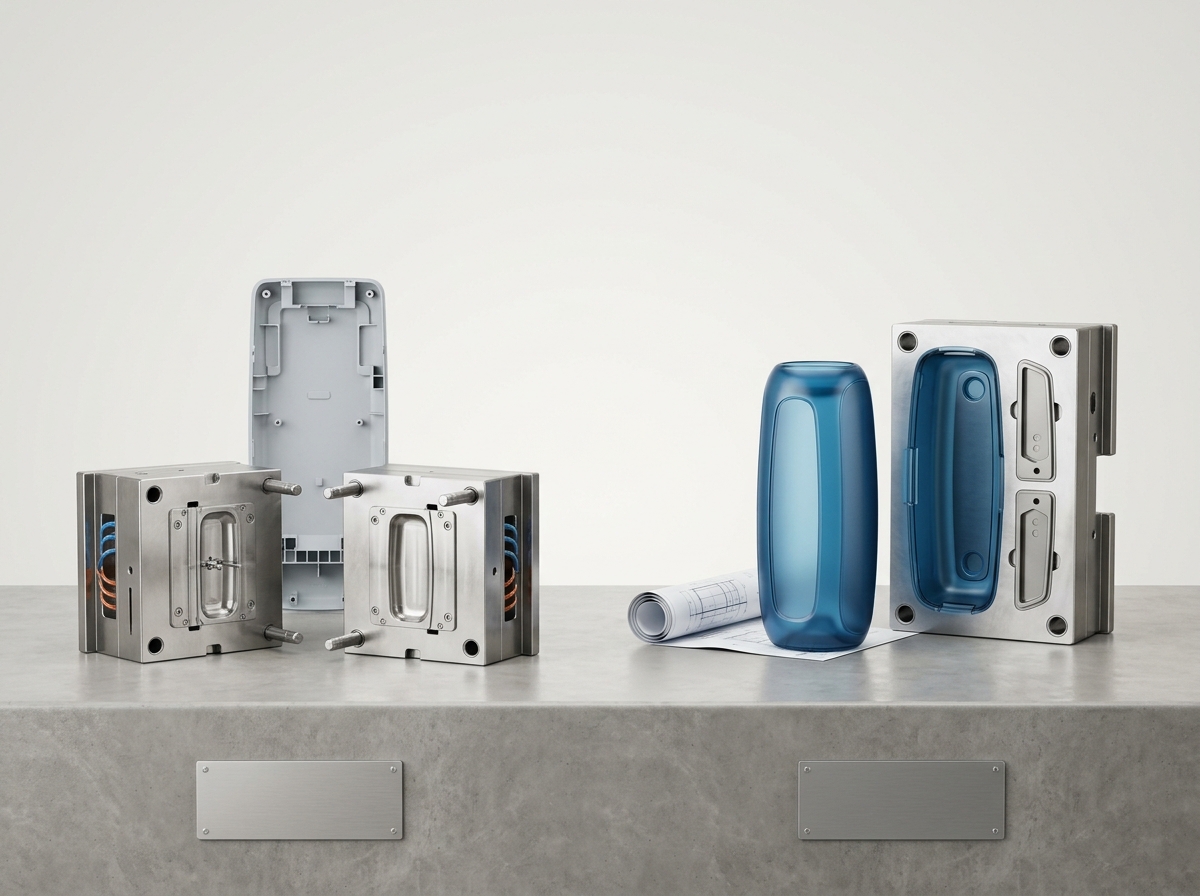
For product teams comparing plastic parts processing, a process map can reveal whether OEM or ODM is more economical after tooling, finishing, and inspection are included.
Quality control: what a serious supplier should document
Quality control is where OEM and ODM diverge most in practical execution. An OEM buyer usually wants tighter control over material lot traceability, sample approval, and change management, while an ODM buyer may accept a more standardized process if the base product is already validated.
In either case, a serious supplier should document incoming material verification, first article inspection, dimensional checks, and production sampling. For precision plastic parts, repeated verification during the run is essential because shrinkage, humidity, and temperature can shift part dimensions.
One useful reference is NIST plastics resources, which highlight measurement and material considerations that affect polymer processing and quality control. While NIST is not a mold-buying guide, its metrology-focused content reinforces the need for repeatable, measurable process control.
| Quality checkpoint | Common method | Typical measurable output |
|---|---|---|
| Incoming resin check | COA review, moisture verification | Moisture content, batch traceability |
| First article inspection | CMM or caliper sampling | Critical dimensions, fit features |
| Cosmetic inspection | Visual standard board | Scratch, sink mark, flow line limits |
| Run stability review | Process window monitoring | Reject rate, cycle variation, warpage trend |
If you are sourcing a product family instead of a single item, a supplier with custom plastic products capability can support tighter quality alignment across variants and packaging formats.
How to choose between OEM plastic manufacturing and ODM plastic manufacturing
The best choice depends on your business model, not just your budget. Buyers should decide based on product novelty, launch timeline, design ownership, and expected reorder volume.
For a simple framework, use the following decision checklist before requesting quotes.
- Do you need exclusive geometry or brand-specific appearance?
- Can you provide drawings and performance specs, or do you need supplier support?
- Is your launch timeline measured in weeks or months?
- Will the product need design revisions after market feedback?
- Do you expect stable, repeat orders that justify tooling investment?
If most answers point to control, customization, and long-term differentiation, OEM is usually the stronger model. If most answers point to speed, simplicity, and lower upfront effort, ODM may be enough.
Industry perspective: why plastic manufacturing projects fail or succeed
Plastic manufacturing projects usually fail for predictable reasons: incomplete requirements, weak communication, unrealistic tolerance targets, and poor sample validation. They succeed when the buyer and supplier align early on design intent, moldability, material behavior, and production volume.
In real sourcing situations, the difference between a good and bad result is often the quality of the pre-production discussion. Buyers that share end-use conditions, assembly loads, cosmetic standards, and expected annual volume usually get better outcomes than buyers who only ask for the lowest price.
This is especially true in projects involving home appliance parts, where appearance consistency, fit accuracy, and long-term supply stability are often more important than a short-term unit price advantage.
Practical summary for purchasing teams
OEM plastic manufacturing is best when your product depends on differentiation, IP control, and engineered performance. ODM plastic manufacturing is best when speed, lower development burden, and market testing matter more than uniqueness.
In both cases, the supplier’s real value comes from engineering support, tooling discipline, and stable production. The label matters less than the ability to turn a concept into repeatable plastic parts with measurable quality.
For buyers building a multi-SKU sourcing strategy, it is often sensible to use OEM for flagship products and ODM for accessory lines or market-entry items. That hybrid approach balances control and speed while reducing launch risk.
When evaluating industrial plastic parts, focus on the process capability, documentation quality, and response time rather than assuming a lower-cost ODM platform will always save money.
FAQ
What is the main difference between OEM plastic manufacturing and ODM plastic manufacturing?
OEM is buyer-led design and production, while ODM is supplier-led product development with buyer branding or minor customization.
Which is better for a new product launch?
OEM is better for differentiated products, but ODM is better when speed to market and lower development effort matter more.
Does OEM plastic manufacturing cost more than ODM?
Usually yes at the start, because custom tooling and engineering are higher, but OEM can be more cost-effective over large or repeated volumes.
Is ODM plastic manufacturing lower quality?
Not necessarily. Quality depends on the supplier’s tooling, resin control, inspection system, and process stability, not only on the business model.
How do I protect my product design in OEM projects?
Use clear drawings, NDA terms, tooling ownership clauses, and documentation that defines revision control and sample approval.
What industries use OEM plastic manufacturing most often?
Consumer electronics, home appliances, industrial equipment, medical accessories, and branded consumer goods commonly use OEM models.
What should I ask a plastic manufacturing supplier before choosing OEM or ODM?
Ask about mold lead time, material options, tolerance capability, sample revision process, annual capacity, and after-sales support.
Post time: Sep-01-2026