
In the field of engineering plastics, “PF” usually refers to phenolic resin (Phenolic resin), which is a thermosetting plastic and has specific requirements during injection molding. It is a completely different material from high-performance fluoropolymer PFA (perfluoroalkoxy resin), the latter being a type of thermoplastic.
In order to obtain products with better performance and higher production efficiency, the process optimization focuses on the following aspects:
Controlling the speed of curing and fluidity: This is a pair of conflicting factors that need to be balanced. High fluidity and rapid curing is an important optimization direction, as it enables the material to quickly fill complex or large molds while reducing the curing time. For example, an optimized phenolic injection plastic has a spiral flow length of ≥ 500mm, and the curing time (using the sheet method) can be shortened to 7-15 seconds per millimeter.
Precise control of temperature and pressure:
Temperature is the key: The temperature at the front section of the barrel needs to ensure that the resin is fully melted and plasticized, while the temperature of the mold directly determines the curing speed and degree. If the temperature is too high, it may cause premature curing or decomposition; if the temperature is too low, the curing will not be complete and the performance of the product will be poor.
Ensure sufficient pressure: The injection pressure and holding pressure must be high enough to overcome the flow resistance of the high-viscosity melt, ensuring that the product is dense and free of any missing materials.
Emphasis on mold and demolding: Since the cured product is neither soluble nor fusible, and may stick to the mold, the mold must have sufficient demolding inclination (usually ≥ 1°). The surface of the mold cavity should be smooth and wear-resistant. If necessary, treatment such as chrome plating should be carried out to facilitate demolding.
?? Material Properties and Applications
The optimized phenolic injection molded products have the following characteristics:
Excellent mechanical properties and heat resistance: The bending strength can reach ≥ 80 MPa, and the heat distortion temperature is ≥ 150 ℃.
Excellent electrical insulation properties: Insulation resistance ≥ 10⁹ Ω, dielectric strength ≥ 4 MV/m, low water absorption rate.
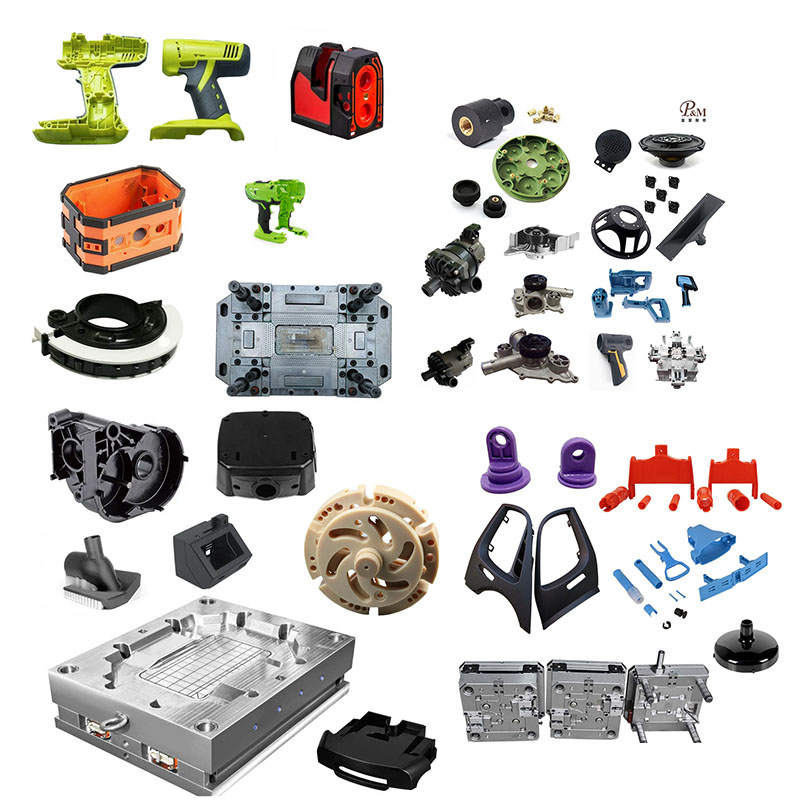
Main application fields: Due to its insulation, heat resistance, dimensional stability and cost advantages, it is widely used in low-voltage electrical insulation parts, structural components and daily products in industries such as electromechanical and instrumentation, especially for products with larger sizes.
In summary, the key to phenolic (PF) injection molding lies in the formulation design, precise control of the curing process (temperature, pressure, time), and the mold design tailored to its high viscosity and thermosetting properties.
Post time: Jan-23-2026