
- Standard ABS is strong and process-friendly, but it is not the most weather-resistant option for long-term outdoor exposure.
- Outdoor success depends on UV stabilization, part geometry, surface finish, and validation testing, not just resin choice.
- For exposed outdoor products, ASA, UV-stabilized PC/ABS, or coated ABS often perform better than basic ABS.
- Supplier capability matters: plastic injection mold, plastic shell mold, and 3D mold expertise can affect durability and appearance.
ABS injection molding remains popular for outdoor plastic products because it combines impact strength, good surface quality, and efficient molding performance, but outdoor performance must be judged against measurable requirements such as UV resistance, dimensional stability, and environmental stress testing. For example, ISO 4892-2 defines xenon-arc weathering exposure methods for plastics, while ASTM D4329 specifies fluorescent UV exposure testing for plastic materials. In practical product development, a part that looks perfect after molding can still fail after months of sunlight if the resin, colorant, and design were not selected for outdoor service from the start.
Is ABS Injection Molding Suitable for Outdoor Plastic Products?
The short answer is: sometimes, but not by default.
ABS injection molding is suitable for outdoor plastic products when the expected service life is moderate, the part is partially sheltered, or the material is upgraded with UV resistance. The same ABS that works well for appliance panels or indoor housings may chalk, yellow, or lose impact strength when exposed to direct sunlight over time. That is why outdoor applications require a project-by-project evaluation instead of a one-size-fits-all answer.
From a manufacturing point of view, ABS is attractive because it molds cleanly, supports high-detail surfaces, and is forgiving in processing. That is one reason it is widely used in plastic shell mold projects for consumer goods and equipment housings. But outdoor performance is governed by more than moldability. UV radiation, thermal expansion, impact at low temperature, humidity, and cleaning chemicals all influence the final result.
| Outdoor Use Factor | Standard ABS | UV-Stabilized ABS | ASA |
|---|---|---|---|
| Sunlight resistance | Low to moderate | Moderate | High |
| Typical visual stability | Can yellow or chalk | Improved | Better long-term retention |
| Impact performance | Good | Good | Good |
| Best use case | Semi-protected parts | Shorter outdoor life | Direct outdoor exposure |
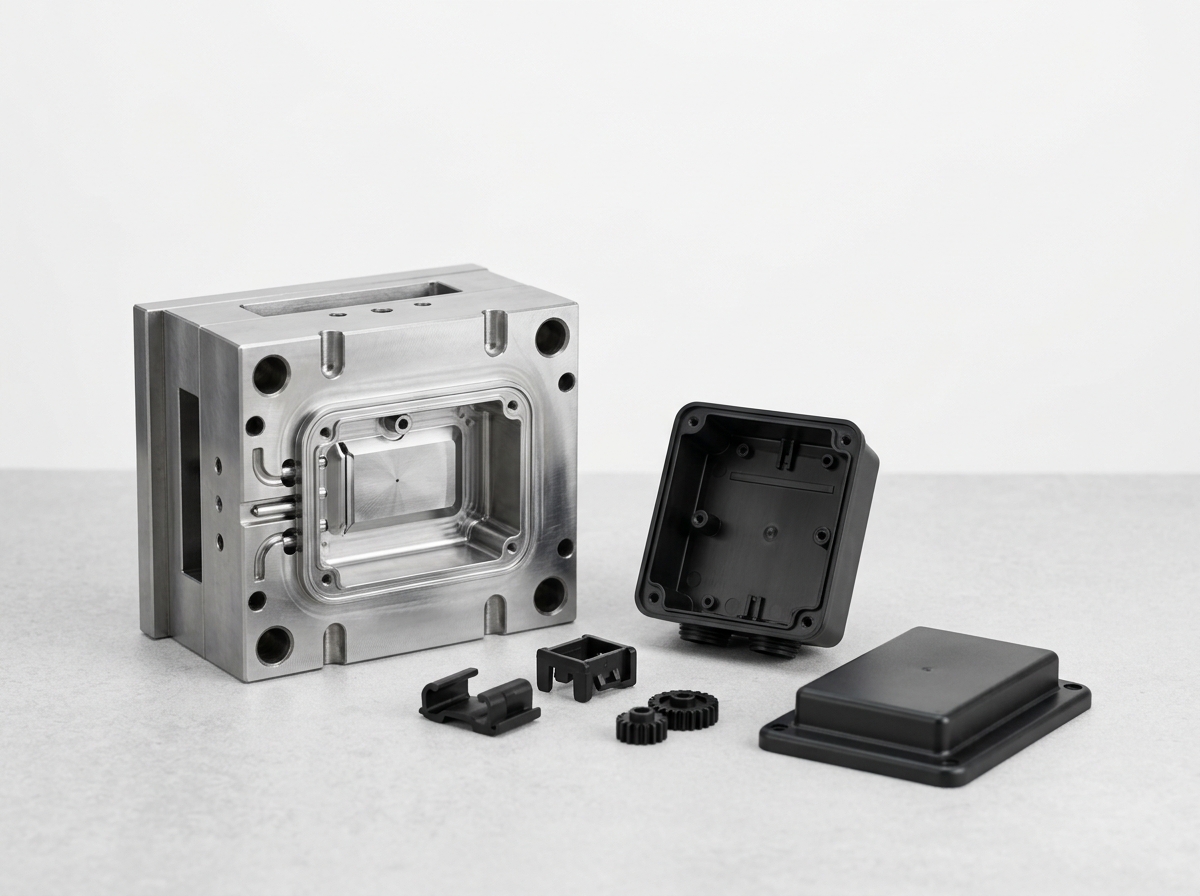 Why ABS Injection Molding Works Well for Many Plastic Injection Molding Projects
ABS remains a practical choice because it balances appearance, toughness, and cycle efficiency.
In plastic injection molding, ABS is valued for its stable processing window and strong cosmetic finish. It can replicate textures, logos, and fine details effectively, which is useful for products where the outer surface is part of the brand experience. For OEM and ODM projects, this is especially relevant because outdoor products often need both structural performance and a clean commercial appearance.
Material selection also has a direct production impact. ABS typically flows well in thin-walled designs compared with more demanding engineering resins, which can reduce filling issues and make it easier to achieve repeatable quality. In many industrial applications, this helps shorten development iterations and improve consistency during mass production. When paired with a well-designed plastic injection mold, ABS can support fast validation and stable output.
| Property | Typical ABS Value | Why It Matters Outdoors | Reference Context |
|---|---|---|---|
| Tensile strength | About 40 MPa to 50 MPa | Supports everyday structural loading | Common ABS datasheets |
| Heat deflection temperature | About 85 C to 100 C | Relevant for hot climates and dark colors | Grade dependent |
| Mold shrinkage | About 0.4% to 0.7% | Impacts fit and dimensional control | Process dependent |
| Surface finish | Good gloss and texture retention | Affects weathered appearance | Mold design dependent |
For parts that need stronger visual branding, a 3D mold strategy can help manage curvature, drainage, and product identity, but the geometry still needs to support outdoor durability.
Where Standard ABS Fails in Outdoor Plastic Products
Standard ABS is limited by ultraviolet degradation and surface aging.
Sunlight is the main reason basic ABS becomes risky outdoors. Under UV exposure, the butadiene phase in ABS is vulnerable to breakdown, which can lead to color shift, surface chalking, and reduced impact performance. Moisture and thermal cycling can accelerate visible aging, especially when the product has dark pigments or sharp corners that concentrate heat.
Outdoor failures often appear first as cosmetic issues rather than catastrophic breakage. That matters because consumer perception can treat fading, gloss loss, and micro-cracking as product failure even when the part still functions mechanically. In competitive categories such as outdoor enclosures, garden equipment, and mobility accessories, visual aging can be just as damaging as structural failure.
The safest way to think about standard ABS is that it is suitable for short exposure, indirect exposure, or cost-sensitive products where long-term weathering is not critical. If the product must look good after multiple summers, the project should be reassessed against more weather-resistant materials or modified ABS systems.
Outdoor Material Choices Beyond ABS Injection Molding
ASA is often the better default when direct sunlight is the main concern.
ASA was developed to improve weather resistance while keeping a similar molding workflow to ABS. It is commonly chosen for exterior automotive trims, outdoor housings, and equipment covers because it retains color and gloss better under UV exposure. PC/ABS is another common option when the product needs higher impact resistance and better heat performance, although it may still require UV protection for long outdoor service.
Material choice should follow the exposure scenario, not the habit of using a familiar resin. A shaded porch cover, for instance, may work with UV-stabilized ABS, while a fully exposed meter cover or equipment enclosure may justify ASA or a coated engineering plastic. The right answer often depends on service temperature, visibility requirements, and target warranty period.
| Material | Outdoor Strength | Typical Advantage | Trade-Off |
|---|---|---|---|
| ABS | Low to moderate | Low cost, good finish | Weak UV resistance |
| UV-stabilized ABS | Moderate | Better aging resistance | Still not best for harsh sun |
| ASA | High | Strong UV stability | Usually higher cost than ABS |
| PC/ABS | Moderate to high | Impact and heat balance | Often needs UV protection |
For purchasers comparing multiple options, it is useful to treat this as a total system decision rather than only a resin decision. A supplier experienced in custom plastic parts can often recommend material, surface, and mold changes together instead of treating them separately.
How to Make ABS Injection Molding More Suitable for Outdoor Plastic Products
ABS can be improved for outdoor use through formulation, design, and validation.
The most effective upgrades are usually additive package selection, color control, wall design, and protective finishing. UV absorbers and HALS-type stabilizers are common ways to slow photodegradation, while pigments with better lightfastness can reduce visible fading. Dark colors absorb more heat, so the thermal load on the part must also be considered.
Design choices matter just as much as resin choices. Sharp external corners, water traps, thin unsupported edges, and heavy-section transitions all increase the risk of stress concentration and weathering damage. Drainage, rib placement, wall thickness uniformity, and snap-fit design all influence how the part ages outdoors. Even a well-stabilized resin can perform poorly if the geometry holds water or creates localized heat buildup.
- Specify the actual outdoor exposure condition: full sun, partial shade, or sheltered use.
- Define the target service life in months or years before choosing the resin.
- Request UV stabilization data and lightfast pigments from the material supplier.
- Review wall thickness, draft, ribs, and drainage in the mold design stage.
- Validate with accelerated weathering and mechanical testing before mass production.
Testing Standards That Matter for Outdoor Plastic Products
Outdoor qualification should be based on standardized tests, not visual judgment alone.
Several widely used standards help teams compare materials and confirm durability. ISO 4892-2 covers xenon-arc weathering exposure for plastics, which is useful for simulating sunlight, heat, and moisture. ASTM D4329 describes fluorescent UV exposure for plastic materials, another common accelerated aging method. For outdoor applications where impact after aging matters, these tests should be paired with mechanical checks such as tensile, flexural, and impact performance.
Material qualification often also references NIST traceability principles when measuring performance, because repeatable test conditions improve decision quality across suppliers and labs. The key is not simply passing one test; the key is seeing whether the part retains acceptable appearance and function after the expected exposure dose.
| Test Standard | Purpose | Typical Use | Why It Helps |
|---|---|---|---|
| ISO 4892-2 | Xenon-arc weathering | Outdoor plastics | Simulates sunlight and moisture |
| ASTM D4329 | Fluorescent UV exposure | Plastic aging screening | Tracks discoloration and embrittlement |
| ASTM D256 | Impact resistance | Post-aging durability | Shows retained toughness |
| ASTM D638 | Tensile properties | Material baseline | Supports comparison of grades |
Choosing the Right ABS Injection Molding Supplier for Outdoor Plastic Products
Supplier capability can determine whether an outdoor ABS project succeeds or becomes a complaint cycle.
Outdoor products are more sensitive to process variation than many indoor parts because surface defects, weld lines, moisture pickup, and gate placement can become visible after weathering. A competent supplier should be able to discuss resin grade, mold venting, gate strategy, surface texture, and post-mold validation in one conversation. That is especially important in project-based procurement where schedule and quality are both under pressure.
When evaluating a supplier, look for evidence of design support, sample iteration speed, and communication clarity. For companies sourcing across categories, a multi-category supplier can simplify development if it can support plastic shell mold, 3D mold, and custom plastic parts work without fragmenting responsibility across vendors.
- Ask which UV-stabilized ABS grades or alternative materials were proposed and why.
- Request weathering test plans with clear pass-fail criteria.
- Confirm whether the mold design supports drainage and reduced stress concentration.
- Review color stability, gloss retention, and repairability after aging.
- Verify lead times for tooling, trials, and volume production.
When ABS Is the Right Choice and When It Is Not
ABS is the right choice when outdoor exposure is limited or the product can be protected by design.
If the product is shaded, intermittently used, or cost-sensitive, ABS injection molding can be a very rational choice. It provides a good balance of appearance and mechanical strength, and it is generally easier to process than some higher-performance engineering plastics. That makes it useful for enclosures, covers, handles, and many accessory parts.
ABS is usually not the right choice when the part faces direct, year-round sunlight and must maintain color and impact strength for years. In those cases, ASA, UV-rated PC/ABS, or a coated solution may deliver lower lifecycle risk even if the initial material cost is higher. The better answer is the one that reduces warranty, replacement, and brand-damage risk over the whole product life.
| Use Scenario | ABS Suitability | Best Practice | Main Risk |
|---|---|---|---|
| Indoor or sheltered outdoor use | Good | Standard or UV-stabilized ABS | Minor aging |
| Short-term outdoor exposure | Moderate | UV-stabilized ABS | Surface fading |
| Direct sunlight for long service life | Poor to moderate | ASA or protected design | Chalking and embrittlement |
| High-impact outdoor enclosure | Moderate | PC/ABS with UV protection | Heat and weather balance |
Practical Buying Checklist for Outdoor Plastic Products
A clear checklist prevents material mistakes that are expensive to fix after tooling.
Before approving ABS injection molding for an outdoor product, define the exposure level, warranty period, color target, and maintenance expectations. Then align the resin grade and mold design with those requirements. This approach is more reliable than asking only whether ABS is “good enough,” because suitability depends on the environment and the business case.
- Confirm the product will be shaded, semi-exposed, or fully exposed.
- Set the required outdoor life in months or years.
- Request the resin datasheet and UV stabilization details.
- Review the part for drainage, ribbing, and wall uniformity.
- Ask for accelerated weathering test results before volume release.
- Compare ABS against ASA and PC/ABS on total lifecycle cost.
FAQ
Is standard ABS good for outdoor use?
Standard ABS is generally not ideal for long-term direct outdoor exposure because UV light can cause yellowing, chalking, and embrittlement.
What is the best alternative to ABS for outdoor plastic products?
ASA is often the best direct alternative when UV resistance and color retention matter most.
Can UV-stabilized ABS be used outside?
Yes, UV-stabilized ABS can work for sheltered or moderate outdoor exposure, but it still may not match ASA for harsh sunlight.
Which test is most important for outdoor plastics?
Accelerated weathering tests such as ISO 4892-2 and ASTM D4329 are widely used to evaluate sunlight and aging resistance.
Does ABS injection molding reduce production cost?
Often yes, because ABS is easy to process and supports efficient molding cycles, but outdoor durability upgrades can increase total cost.
How can I improve the lifespan of outdoor ABS parts?
Use UV stabilization, choose lightfast pigments, improve drainage and wall design, and validate with weathering tests before launch.
Should I choose ABS or ASA for an outdoor enclosure?
If the enclosure will face direct sunlight for years, ASA is usually safer; if exposure is limited, UV-stabilized ABS may be sufficient.
Post time: Aug-11-2026