
Introduction
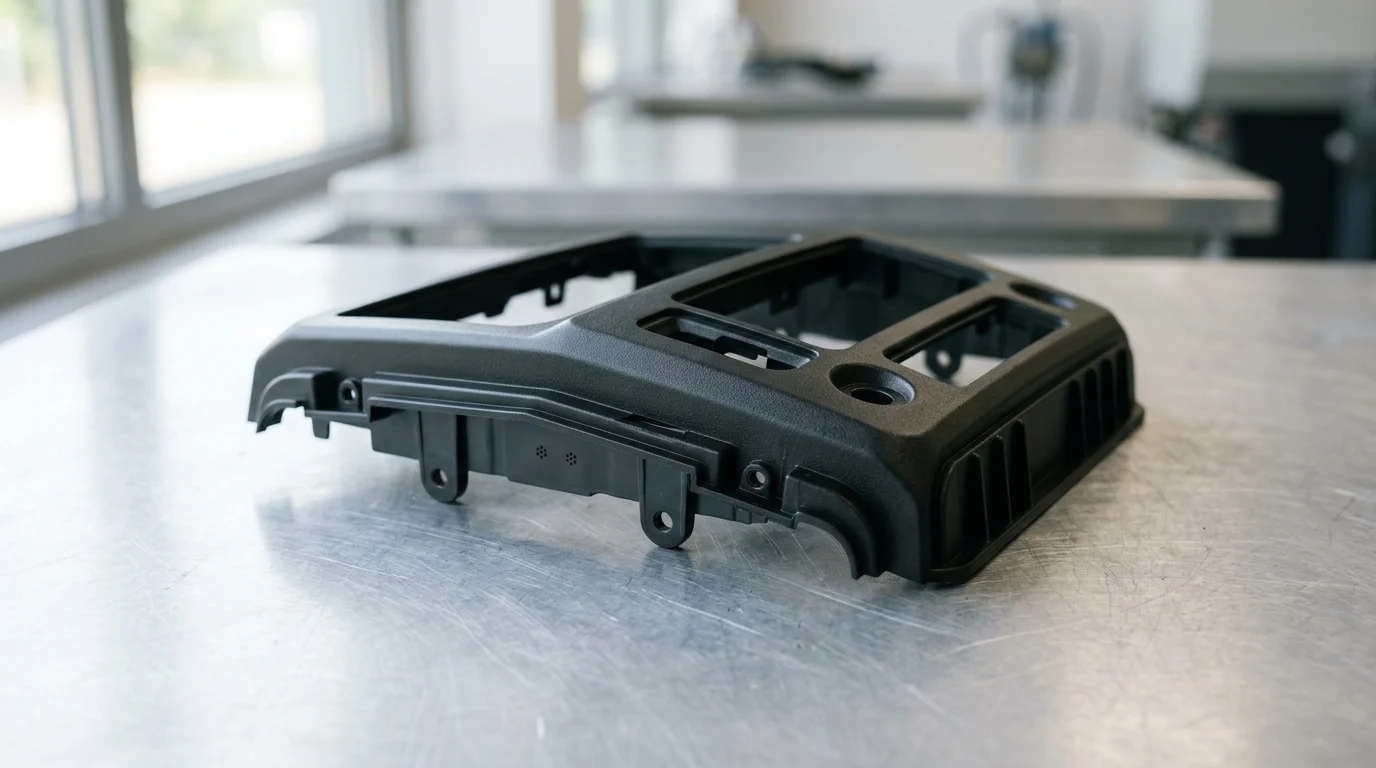
ABS injection molding improves more than production speed; it directly shapes how a plastic part looks, fits, and performs in real use. By combining the balanced properties of acrylonitrile, butadiene, and styrene with tightly controlled molding conditions, manufacturers can achieve better impact strength, dimensional accuracy, surface finish, and consistency from part to part. The process also allows material grades and processing parameters to be tuned for specific requirements such as heat resistance, toughness, or appearance. Understanding these links between resin behavior and molding outcomes helps explain why ABS remains a common choice for durable, high-quality components across consumer, industrial, and automotive applications.
How ABS Injection Molding Improves Product Quality
Material Properties That Make ABS Effective
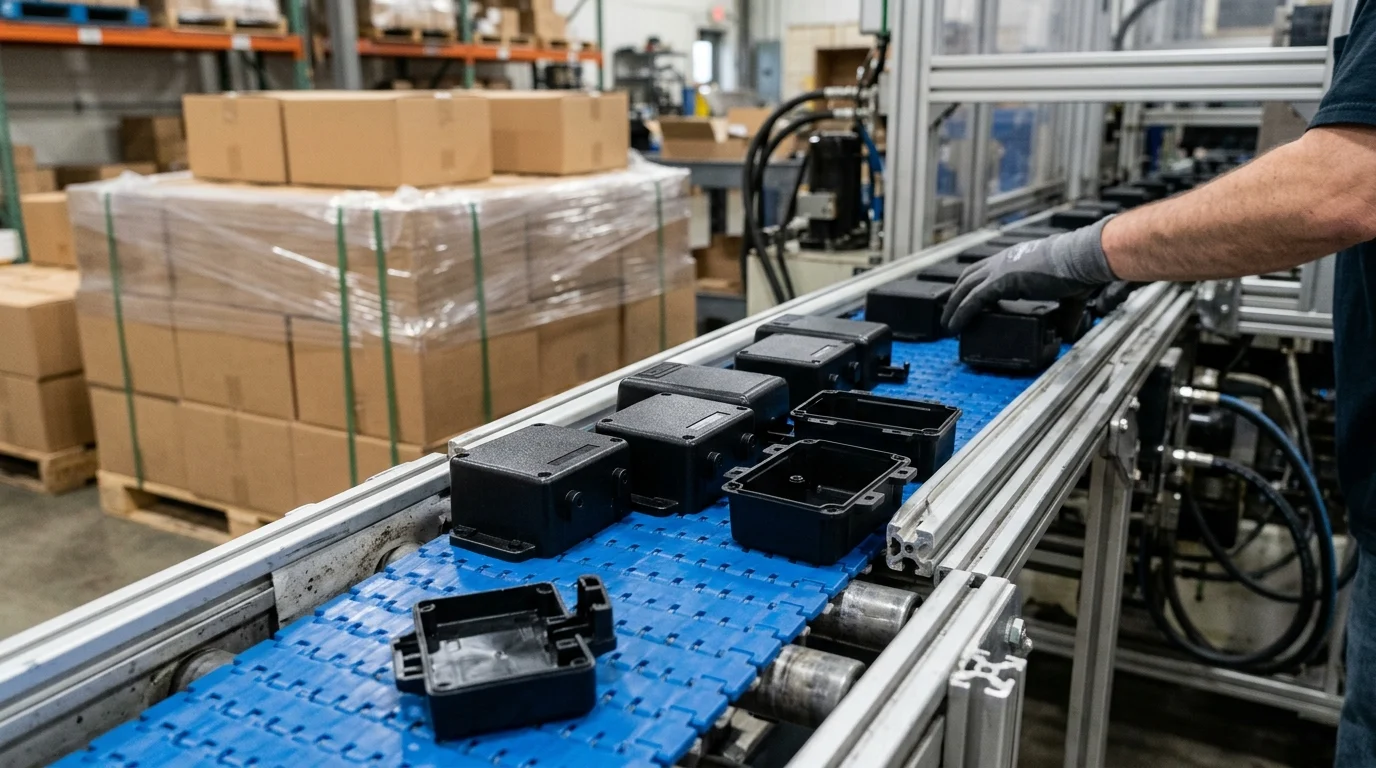
The performance of an ABS injection-molded part is intrinsically linked to its unique chemical structure. ABS is a terpolymer, meaning it is synthesized from three distinct monomers. The strategic formulation of these three components allows polymer chemists to tailor the resin for specific manufacturing and end-use requirements, including adjusting the Melt Flow Index (MFI), which typically ranges from 10 to 30 g/10 min (at 220°C/10kg).
Understanding how this chemical triad interacts is essential for engineers aiming to optimize product quality. By adjusting the ratios of the constituent monomers, material suppliers can create distinct grades of ABS that emphasize flowability, impact strength, or heat resistance.
How acrylonitrile, butadiene, and styrene affect performance
The three monomers in ABS contribute specific performance characteristics to the final molded part.
| Monomer | Typical Blend Ratio | Primary Property Contribution |
|---|---|---|
| Acrylonitrile | 15% – 35% | Chemical resistance, thermal stability, surface hardness |
| Butadiene | 5% – 30% | Impact toughness, shock absorption, low-temperature resilience |
| Styrene | 40% – 60% | Rigidity, glossy finish, processability (lowers melt viscosity) |
Acrylonitrile ensures the plastic resists degradation from environmental exposure and common household chemicals. Butadiene, a rubbery substance, acts as a shock absorber within the polymer matrix. Finally, styrene gives the plastic its rigidity and glossy finish while significantly lowering the melt viscosity, which is what makes ABS so exceptionally easy to injection mold.
Quality metrics influenced by ABS properties
Several critical quality metrics are directly influenced by these material properties. Tensile strength, which generally ranges from 40 to 50 MPa in unfilled ABS, dictates how much pulling stress the part can endure before failing. Flexural modulus, typically around 2.1 to 2.7 GPa, determines the part’s stiffness and resistance to bending, while Rockwell hardness (R-scale) typically measures between R100 and R115.
Thermal metrics are equally important. The Heat Deflection Temperature (HDT) for standard ABS is usually around 88°C to 105°C at 0.46 MPa. This metric defines the upper temperature limit at which the molded part can operate before it begins to warp or lose its structural form under a specific load.
Effects of grades, additives, and colorants
While base ABS is versatile, the injection molding process frequently utilizes specialized grades and additives to push performance boundaries. The introduction of glass fibers (typically 10% to 30% by weight), for example, can increase tensile strength to over 80 MPa, though it reduces the material’s natural impact resistance. For applications requiring strict safety compliance, flame-retardant additives are compounded into the resin to achieve a UL94 V-0 flammability rating.
Colorants and UV stabilizers (such as Hindered Amine Light Stabilizers, or HALS) also integrate seamlessly into the ABS matrix, extending outdoor lifespan by 2 to 5 years. Because the base resin is naturally opaque and light-colored, it accepts pigments exceptionally well, resulting in vibrant, uniform colors throughout the molded part. Engineers can review specific material property data by consulting technical data downloads to select the precise grade for their application.
ABS Injection Molding Compared with Other Manufacturing Options
Selecting the optimal manufacturing method and material requires a comparative analysis of available options. While ABS injection molding is a dominant force in plastics manufacturing, it is not the only solution. Engineers must weigh ABS against other common thermoplastics and alternative manufacturing technologies to ensure the best balance of cost, quality, and production speed (with tooling lead times typically ranging from 2 to 6 weeks).
By understanding where ABS excels and where it falls short compared to its peers, product developers can make data-driven decisions that align with their specific project constraints.
Comparison with polypropylene, polycarbonate, and nylon
When compared to polypropylene (PP), ABS offers significantly higher stiffness and better dimensional stability, though PP is generally 20% to 30% cheaper and offers superior fatigue resistance (ideal for living hinges). Against polycarbonate (PC), ABS is more cost-effective and easier to mold, but PC delivers much higher impact strength and optical clarity.
Nylon (polyamide), another common engineering plastic, outperforms ABS in wear resistance and low friction applications, making it better for gears and bearings. However, nylon is highly hygroscopic and prone to dimensional changes based on environmental moisture, whereas ABS maintains its dimensions reliably.
| Material | Typical Cost per kg | Tensile Strength | Heat Deflection Temp (HDT) | Key Advantage |
|---|---|---|---|---|
| ABS | $2.50 – $3.50 | 45 MPa | ~95°C | Balanced cost, impact, and finish |
| Polypropylene (PP) | $1.20 – $2.00 | 30 MPa | ~80°C | Chemical & fatigue resistance |
| Polycarbonate (PC) | $4.00 – $6.00 | 65 MPa | ~135°C | Extreme impact & transparency |
| Nylon 6/6 | $3.50 – $5.50 | 80 MPa | ~160°C (GF) | High wear & friction resistance |
Comparison with 3D printing and extrusion
In the context of manufacturing methods, 3D printing (specifically FDM) frequently uses ABS filament for prototyping. However, FDM creates anisotropic parts—meaning their strength varies depending on the layer direction, often suffering a 20% to 40% reduction in tensile strength along the Z-axis. Injection molded ABS is isotropic, delivering uniform strength across all axes, which is critical for end-use performance.
Extrusion is another alternative, typically used for continuous profiles like pipes or edge banding at speeds of 10 to 30 meters per minute. While extrusion is excellent for linear shapes, injection molding is the only viable method for producing complex, three-dimensional ABS geometries with internal features, bosses, and complex ribbing in a single manufacturing step.
Key selection factors for choosing ABS molding
The decision to proceed with ABS injection molding usually hinges on production volume and mechanical requirements. The primary selection factor is the volume threshold. Injection molding becomes economically viable—surpassing 3D printing or CNC machining—when production volumes exceed Minimum Order Quantities (MOQs) of 5,000 to 10,000 units, at which point the high initial tooling costs are effectively amortized.
Another key factor is the requirement for secondary operations. If a product requires a high-gloss finish, complex internal geometries, and strict dimensional tolerances straight out of the machine, ABS injection molding provides a lower cost-per-part at scale, with rapid cycle times typically ranging from 15 to 60 seconds per shot.
Process Controls That Affect ABS Part Quality
The intrinsic properties of ABS resin can only be fully realized if the injection molding process is meticulously controlled. Variations in temperature, pressure, and mold design can lead to severe defects, including sink marks, warpage, and compromised structural integrity, potentially driving scrap rates above 5% to 10% if left unchecked.
Modern injection molding relies on strict process controls and advanced engineering to ensure that every shot of molten ABS fills the mold cavity perfectly, cools at the correct rate, and ejects without damage.
Mold design, gate placement, and wall thickness
Proper mold design is the foundation of quality ABS parts. Wall thickness is a critical parameter; it should ideally be kept uniform and range between 1.5 mm and 3.0 mm. To prevent visible sink marks on the part’s surface, internal rib thickness should be kept to 60% to 70% of the nominal wall thickness.
Gate placement—the point where molten plastic enters the mold cavity—must be strategically located to ensure even flow and minimize weld lines. Additionally, because ABS is relatively rigid, molds must incorporate draft angles of at least 1 to 2 degrees (and up to 5 degrees for heavy textures) to facilitate smooth ejection without scratching the part’s surface.
Processing parameters that influence outcomes
Processing parameters must be tightly regulated to maintain product quality. ABS is hygroscopic, meaning it absorbs moisture from the air. Before molding, the resin must be dried at 80°C for 2 to 4 hours to reduce moisture content below 0.1%; failure to do so results in splay (silvery streaks) on the part surface and a reduction in mechanical strength.
During injection, the melt temperature is typically maintained between 210°C and 270°C. If the temperature is too low, the high viscosity will cause short shots (incomplete filling). If too high, the material can degrade, losing its impact resistance. Mold temperatures are usually kept between 40°C and 80°C to optimize the cooling cycle, with holding pressures typically set at 50% to 70% of the injection pressure to pack the mold and minimize shrinkage.
Quality control steps to reduce scrap
Implementing robust quality control (QC) steps is essential for reducing scrap rates and ensuring consistency. Advanced molding facilities utilize cavity pressure sensors to monitor the fill phase in real-time, instantly identifying deviations that could lead to voids or flash.
Post-production, parts are subjected to dimensional verification using Coordinate Measuring Machines (CMM) to ensure they fall within the tight 0.
Further reading:
When ABS Injection Molding Is the Right Choice
Key Takeaways
- The most important conclusions and rationale for ABS injection molding
- Specs, compliance, and risk checks worth validating before you commit
- Practical next steps and caveats readers can apply immediately
Frequently Asked Questions
Why is ABS injection molding a good choice for precision plastic parts?
ABS has predictable shrinkage of about 0.3%–0.8%, helping molders hold tight tolerances and consistent fit for mating or assembly parts.
How does ABS injection molding improve surface finish?
ABS molds cleanly into high-gloss, matte, or textured surfaces, often reducing or eliminating secondary painting and finishing steps.
What products are commonly made with ABS injection molding?
Typical ABS parts include automotive interior trim, appliance housings, power tool shells, and electronic enclosures requiring toughness and a clean appearance.
How durable are ABS injection molded parts?
ABS offers strong impact resistance, good stiffness, and reliable low-temperature performance, making parts less likely to crack or fail in daily use.
Can nbpm-plastic.com support custom ABS injection molding projects?
Yes. Based on the site’s ABS molding focus and product range, custom part development, finish options, and application-specific ABS solutions are available.
Post time: Jun-15-2026