
- Large-volume sourcing should prioritize process capability, not just tooling price.
- A dependable custom mold maker will show sample validation, tolerance control, and material traceability.
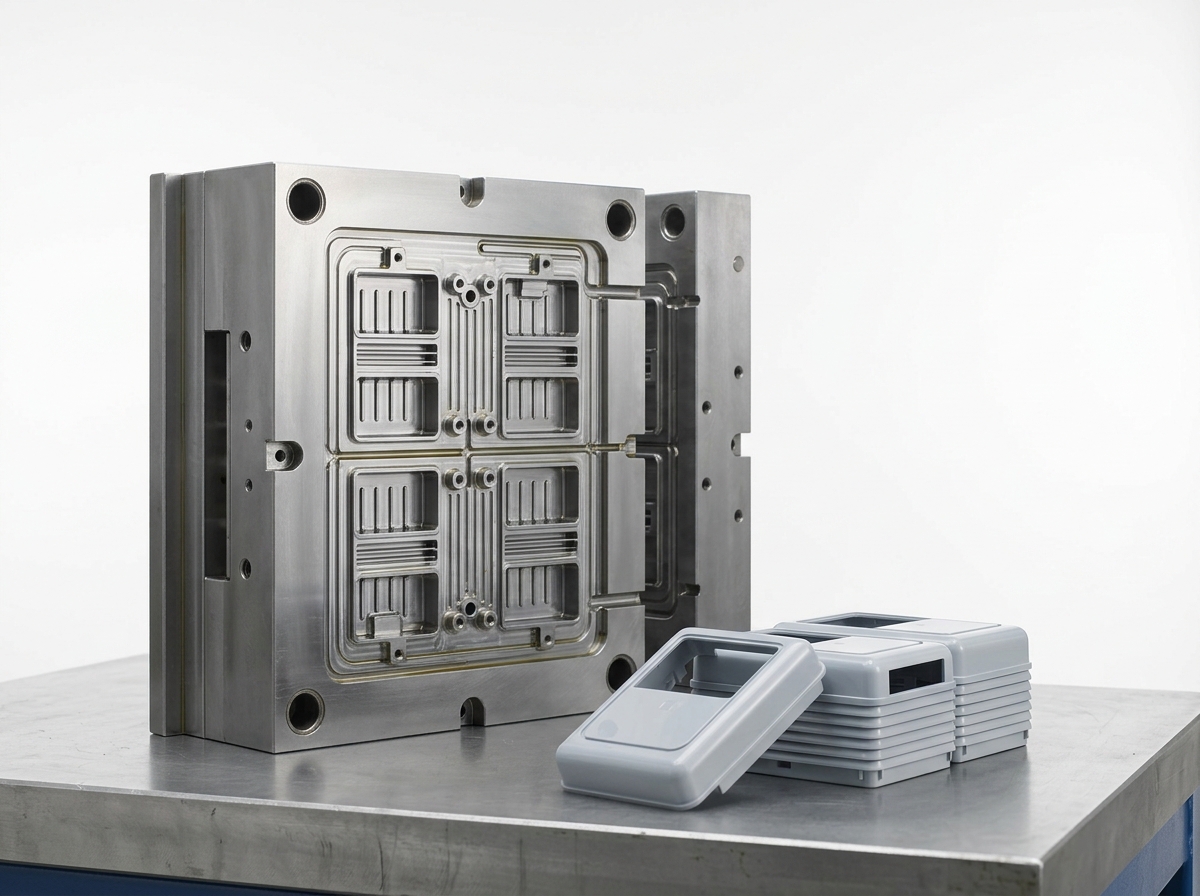
- For injection mold manufacturer comparisons, multi-cavity strategy and cooling design often determine unit cost and cycle time.
- Reliable suppliers reduce risk through structured DFM feedback, trial reports, and spare parts support.
- The best fit is usually a partner that can support both tooling development and long-run production stability.
When buyers search for a custom mold maker, they are usually trying to solve a procurement problem, not a technical curiosity: how to turn a product idea into repeatable large-volume production with acceptable cost, quality, and lead time. A practical benchmark is tolerance discipline, because injection molded parts often depend on tight fit and assembly consistency; in precision manufacturing, process capability is commonly evaluated against standards such as ISO 20457:2018 for plastics molding and ISO 20457-related validation concepts, while dimensional inspection is frequently tied to coordinate measurement methods used in production QA. For buyers of PC housing components, consumer electronics enclosures, or industrial covers, the real question is whether the supplier can keep the mold stable across thousands or millions of shots while protecting appearance, fit, and yield.
How to evaluate a custom mold maker for large-volume production
The strongest injection mold manufacturer is the one that can demonstrate repeatability under production pressure.
High-volume projects fail most often because buyers evaluate the mold, not the system around the mold. A good supplier should be able to explain runner balance, gate location, cooling layout, venting strategy, and expected cycle time before the first tool is cut. If a supplier cannot discuss those points clearly, it is difficult to trust them with large-volume production.
For plastics production, cycle time matters because it affects both unit cost and capacity planning. In injection molding, even a 2 second reduction per cycle can materially change annual output when a mold runs around the clock. For example, at 8 cavities and 20 seconds per cycle, a press can theoretically produce 1,440 parts per hour; reduce the cycle to 18 seconds and output rises to 1,600 parts per hour. That is why cooling efficiency and gate design are strategic, not cosmetic. The ASTM D790 and ASTM D638 test families are often used to validate material behavior, but the real production test is whether the mold can hold process windows without drift.
| Evaluation Area | What Good Looks Like | Why It Matters | Typical Quantitative Signal |
|---|---|---|---|
| DFM support | Clear feedback on wall thickness, ribs, draft, and gate position | Reduces tooling rework and sampling delays | Draft angles commonly 1 to 3 degrees depending on texture |
| Sampling discipline | Trial report, defect photos, and parameter record | Improves launch predictability | First-article approval before mass production |
| Process stability | Documented control of temperature, pressure, and cooling | Protects dimensional repeatability | Stable cavity balance across all cavities |
| Tool life support | Spare parts, maintenance plan, and wear tracking | Extends production uptime | Planned maintenance after defined shot count |
For a buyer comparing suppliers, the presence of a structured 3D mold solution or an injection mold capability is helpful, but the more important signal is whether the factory can translate that capability into stable, repeatable production. The difference between a prototype-friendly shop and a true large-volume partner often shows up in how they handle cavitation, gate vestige, cooling uniformity, and release consistency.
What a reliable injection mold manufacturer should prove before award
A reliable supplier proves capability with evidence, not promises.
Before awarding a large-volume project, ask for three proof points: material traceability, trial records, and inspection data. Material traceability matters because resin batch variation can affect shrinkage, warpage, and color consistency. Trial records matter because the first process window often reveals whether the tool was designed for manufacturability or merely for geometry. Inspection data matter because high-volume buyers need confirmation that critical dimensions are under control, not just visually acceptable.
The most useful quality reference point is not a sales brochure but a documented management system. ISO 9001 is widely used to frame quality control, while mold and part verification often uses a mix of dimensional inspection, visual standards, and functional fit tests. For exported projects, technical files should also be organized so that revisions, samples, and approvals can be traced quickly across time zones.
| Supplier Proof Item | Requested Document | What to Check | Risk If Missing |
|---|---|---|---|
| Material traceability | Resin certificate and batch record | Grade, lot, and supplier consistency | Color shift, shrink variation, compliance issues |
| Trial validation | Trial report with machine settings | Temperature, pressure, cooling time, and defects | Hidden process instability |
| Inspection results | FAI or dimensional report | Critical tolerances and measurement method | Assembly failure or high scrap |
| Maintenance plan | Tooling service schedule | Wear parts, polishing, vent cleaning | Unexpected downtime during production |
For suppliers serving electronics, appliance, and industrial applications, a well-documented plastic shell mold program is often a better indicator of maturity than a generic company profile. Shell parts are unforgiving because appearance, snap fit, and assembly all have to work together. If a supplier can hold those requirements on a large-volume order, it usually means their process control is real.
 Large-volume production economics: where cost is actually won or lost
Tooling price is only one part of the economics, and often not the biggest part.
In large-volume production, the cheapest quote can become the most expensive option if cycle time is long, scrap is high, or tool maintenance is weak. Buyers should look at total landed unit cost, which includes mold amortization, resin consumption, labor, machine time, rejects, packaging, and logistics. A mold that costs more upfront may still be cheaper per part if it shortens cycle time by several seconds or improves cavity balance.
Industry studies and plant benchmarking commonly show that scrap reduction has a direct economic effect because every percentage point of yield loss multiplies across high volume. If a line produces 500,000 parts and scrap falls from 4% to 2%, that is 10,000 fewer defective pieces. In procurement terms, that is not a small improvement; it is a recurring cost reduction. The most reliable custom mold maker will therefore discuss process window width and rejection control, not only tool steel and polishing.
For buyers sourcing household and consumer goods, a household mold or toy mold project may seem straightforward, but the same economics apply. High-volume consumer products often depend on quick color changes, simplified assembly, and low defect tolerance. A supplier that understands those variables can help reduce total cost even when the tooling price is not the lowest.
| Cost Driver | Low-Performance Tool | High-Performance Tool | Production Impact |
|---|---|---|---|
| Cycle time | 22 s | 18 s | About 18% more hourly output |
| Scrap rate | 4% | 1.5% | Less rework and lower material waste |
| Downtime | Frequent adjustment | Planned maintenance only | Better line utilization |
| Tool life | Early wear on inserts | Wear-tracked service plan | Longer stable production run |
Material selection, part design, and why PC often matters
Material choice can determine whether a mold succeeds in the field.
Many large-volume housing projects use PC because it combines transparency, impact resistance, and dimensional stability. According to commonly published resin datasheets from major suppliers, general-purpose PC typically has a tensile strength in the range of about 60 to 70 MPa and a heat deflection temperature that can exceed 120 C depending on grade and test condition. That makes PC useful for electronic covers, protective housings, and light-transmitting parts where appearance and toughness both matter.
This is also where design support becomes critical. A reliable supplier should advise on wall thickness consistency, rib layout, snap-fit geometry, and texture effects on demolding. For example, a rib that is too thick can create sink marks; a gate placed poorly can create weld lines in visible zones; and insufficient draft can increase ejection stress. Buyers often focus on the mold cavity, but the part geometry is just as important.
When a project involves multi-SKU expansion, a factory with a broader mill-turn or parts support ecosystem can reduce coordination overhead. That does not mean every supplier needs every process in-house, but it does mean the best partners understand how tooling, finishing, and downstream assembly affect final output.
- Confirm the target resin grade and its mechanical requirements.
- Review wall thickness, draft, and hidden undercuts before tooling starts.
- Ask for shrinkage assumptions and gate strategy in writing.
- Approve one stable sample before scaling to multi-cavity production.
- Lock the process window and inspection method before mass release.
How to judge communication, sampling, and export readiness
Communication quality is a production-control issue, not a soft skill.
For cross-border buyers, response speed, file clarity, and sample turnaround can be as important as machining capability. A supplier that replies quickly in English, tracks revisions carefully, and sends photos or trial reports on a fixed schedule usually creates fewer surprises. That matters especially for project-based sourcing, where one late clarification can delay a launch window by weeks.
Export-ready suppliers should also know how to package drawings, inspection reports, and customs documents in a way that supports procurement. When buyers compare options, they often underestimate the cost of ambiguity. A clear revision log and disciplined sample approval can prevent unnecessary tooling changes later.
For companies scaling from pilot to volume, a one-stop supplier can be valuable because fewer handoffs mean fewer opportunities for error. A supplier overview is useful for understanding company scope, but the real question is whether the team can manage communication, sample approval, and shipment timing under pressure.
| Communication Signal | Strong Supplier Behavior | Weak Supplier Behavior | Business Effect |
|---|---|---|---|
| Response time | Same-day technical replies | Delayed or vague answers | Faster engineering decisions |
| File control | Revision-numbered drawings and reports | Untracked file versions | Lower risk of wrong-tool builds |
| Sampling | Scheduled trials with documented changes | Informal updates only | Better launch predictability |
| Logistics | Clear packing and shipment coordination | Late shipping notice | Reduced supply disruption |
Common mistakes when choosing a custom mold maker
The most common sourcing mistake is treating the first quote as the final answer.
Buyers often compare tool price but ignore engineering depth, which leads to hidden cost later. Another mistake is skipping a formal sample approval process. Without an approved master sample, the production team may not know what to hold as the quality reference. A third mistake is failing to confirm mold maintenance responsibilities, especially for long-run programs where wear, vent buildup, and insert replacement are inevitable.
Large-volume programs also suffer when buyers ignore capacity planning. A supplier may be capable of building the mold, but not necessarily able to support a multi-month production schedule, spare parts, or packaging revisions. If the project has seasonal demand, that gap can become a supply problem very quickly.
- Do not buy tooling without a documented DFM review.
- Do not approve mass production without stable sample sign-off.
- Do not assume all cavity layouts deliver the same unit cost.
- Do not ignore maintenance, spares, and wear-prone inserts.
- Do not rely on vague delivery commitments without milestones.
FAQ: finding a reliable custom mold maker for large-volume orders
1. What is the first thing to check in a custom mold maker?
Check whether the supplier can provide DFM feedback, trial data, and measurable inspection records before tooling begins.
2. How do I compare injection mold manufacturer quotes fairly?
Compare cycle time assumptions, cavity count, steel grade, cooling design, and expected maintenance, not just the upfront mold price.
3. Why does cycle time matter so much in large-volume production?
Because even small cycle reductions compound across thousands of production hours and directly affect unit cost and capacity.
4. What documents should a reliable supplier provide?
Ask for material traceability, trial reports, dimensional inspection results, and a tooling maintenance plan.
5. Is a lower mold price always a better deal?
No. A lower price can hide higher scrap, slower cycles, weaker cooling, or shorter tool life.
6. What materials are common for plastic shell molds?
PC, ABS, and PC-ABS are common, with PC often chosen for impact resistance and dimensional stability.
7. How can I reduce risk in cross-border mold sourcing?
Use clear revision control, English technical communication, milestone approvals, and written acceptance criteria.
For buyers who need a reliable custom mold maker for large-volume orders, the safest choice is usually the supplier that combines engineering discipline, measurable process control, and clear communication. The right injection mold manufacturer will not just promise stable output; it will show how that stability is achieved, maintained, and verified over time.
In practice, that means checking the mold design logic, validating the sample process, confirming the inspection method, and reviewing how the supplier supports long-run production. If those four areas are strong, the odds of a successful high-volume program rise sharply.
Post time: Sep-02-2026