
Introduction
Selecting a dependable plastic mold factory in China is a strategic OEM decision that affects part quality, tooling life, lead times, and total production cost. The challenge is not simply finding a supplier with low quotes, but identifying a factory with proven engineering capability, disciplined project management, consistent quality control, and clear communication. This article explains the practical criteria buyers should use to evaluate potential partners, from mold standards and steel selection to production capacity, inspection processes, and delivery reliability. By the end, you will have a clearer framework for comparing factories and reducing the risks that often disrupt OEM manufacturing.
Why the Right Plastic Mold Factory in China Matters
Securing a reliable supply chain for original equipment manufacturing (OEM) begins with foundational tooling. When evaluating a plastic mold factory China, OEM manufacturers must prioritize long-term stability over short-term savings. The injection mold dictates the final quality, unit cost, and production scalability of plastic components. A poorly constructed mold can derail product launches, while a high-quality tool ensures consistent production yields over years of operation.
Choosing the right manufacturing partner involves navigating a complex landscape of varying technical capabilities, communication standards, and quality assurances. Manufacturers must look beyond marketing claims and assess the concrete operational metrics that define a factory’s true capacity to deliver complex tooling on schedule.
Tooling quality and project management
The caliber of the tooling directly impacts the lifecycle and defect rate of the final plastic parts. Top-tier factories adhere to stringent international standards, such as the Society of Plastics Industry (SPI) classifications. For high-volume OEM production, an SPI Class 101 mold is often required, guaranteeing a lifespan of 1,000,000 or more cycles. Achieving this longevity requires the use of premium hardened tool steels like H13 or S136, treated to hardness levels of 48-52 HRC.
Effective project management is equally critical to tooling quality. A reliable factory employs dedicated project managers who utilize structured tracking methodologies. Without rigorous oversight, minor deviations in CNC machining or EDM (Electrical Discharge Machining) can lead to dimensional inaccuracies, resulting in flash, short shots, or unacceptable sink marks during the injection phase.
Communication and delivery reliability
Geographic and cultural distance introduces inherent risks to OEM partnerships. A standard 12-hour time zone difference between North America and Asia means that a single miscommunication can stall production by 24 to 48 hours. Reliable suppliers mitigate this by implementing proactive communication protocols, providing weekly Gantt chart updates, and utilizing digital twin or 3D viewer software to clarify design queries.
Delivery reliability is the ultimate test of a factory’s operational maturity. Delays in tooling completion—often referred to as ‘T1′ (first trial) delays—cascade down the entire supply chain, jeopardizing time-to-market. A competent supplier will offer a historically backed on-time delivery rate exceeding 95% and will transparently outline contingency plans for machine downtime or material shortages.
Capabilities to Verify in a Plastic Mold Factory
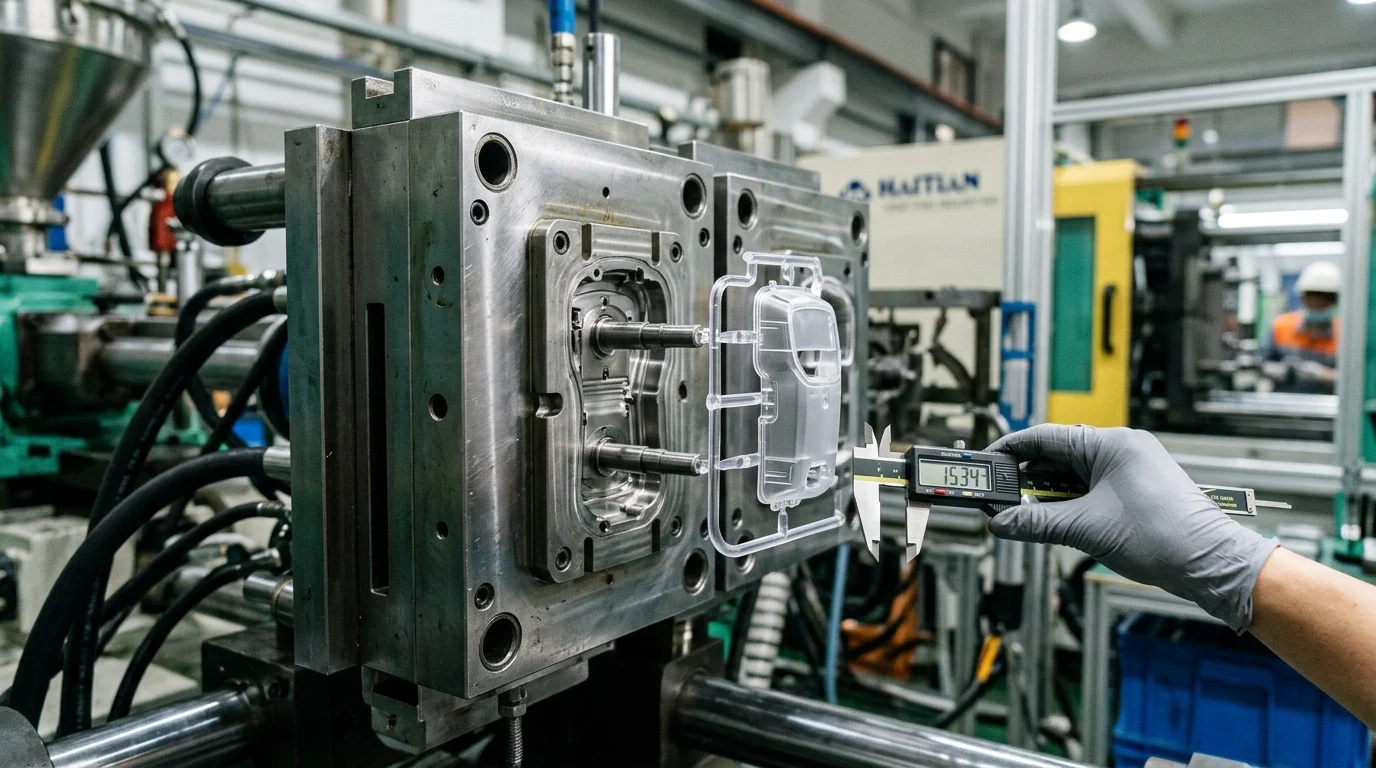
Verifying a factory’s technical capabilities requires a deep dive into their engineering resources, machinery precision, and quality assurance protocols. Examining a plastic mold factory China portfolio provides initial insight, but true capability is proven through the integration of advanced software, cutting-edge hardware, and rigorous inspection regimes.
Mold design and DFM support
Before any steel is cut, the factory’s engineering team must conduct a comprehensive Design for Manufacturability (DFM) analysis. This process identifies potential molding defects and optimizes the part geometry for efficient injection. Competent DFM support will explicitly address minimum draft angles (typically recommending 1.0 to 2.0 degrees), uniform wall thickness, and optimal gate locations.
Advanced factories utilize mold flow analysis software, such as Moldflow or Moldex3D, to simulate the injection process. This simulation predicts warping, cooling times, and weld lines, allowing engineers to modify the cooling channel design. Effective DFM can reduce cycle times by 10% to 20%, significantly lowering the per-unit cost over a production run of 100,000 parts.
Production capacity and equipment
The precision of the mold is entirely dependent on the factory’s machining equipment. High-end tooling requires 5-axis CNC machining centers capable of spindle speeds exceeding 20,000 RPM, ensuring smooth surface finishes that minimize the need for manual polishing. Additionally, precision wire EDM machines are necessary for creating intricate features with tolerances as tight as ±0.005mm.
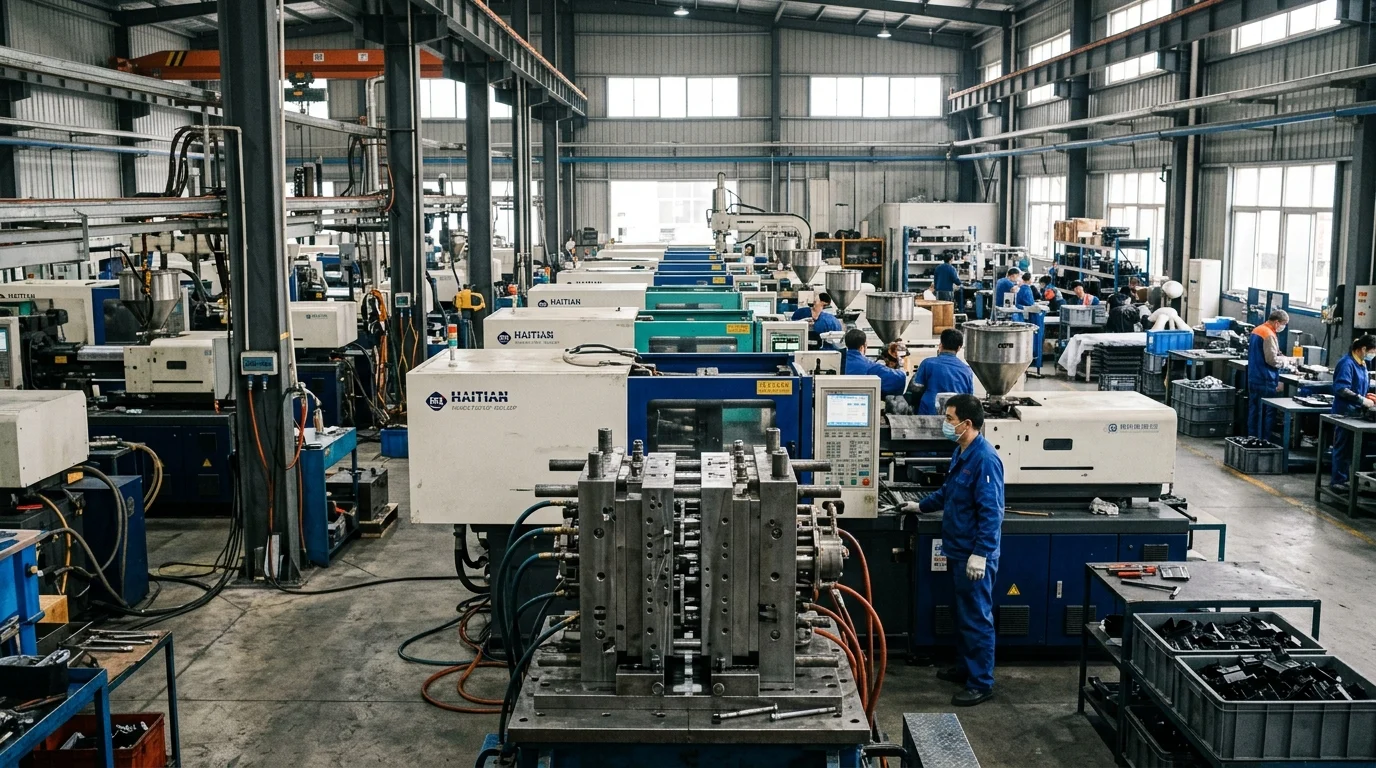
Beyond mold making, the factory’s injection molding capacity must align with the OEM’s volume requirements. A well-equipped facility will house a diverse range of injection molding machines, typically spanning from 50-ton to 1,500-ton clamping forces. This versatility allows the factory to handle everything from micro-precision medical components to large automotive fascia panels.
| SPI Mold Class | Minimum Cycles | Typical Steel Grade | Application Scope |
|---|---|---|---|
| Class 101 | 1,000,000+ | Hardened H13 / S136 | Extremely high volume, automated production |
| Class 102 | 500,000 – 1M | Pre-hardened P20 / NAK80 | Medium-to-high volume, standard OEM parts |
| Class 103 | Under 500,000 | P20 / Aluminum | Low volume production, market testing |
| Class 104 | Under 100,000 | Aluminum / Mild Steel | Prototyping, limited run components |
Quality control systems
Quality control (QC) cannot be an afterthought; it must be integrated into every phase of the tooling process. A reliable manufacturer will hold, at minimum, ISO 9001:2015 certification, with specialized facilities holding ISO 13485 for medical devices or IATF 16949 for automotive parts. These certifications mandate strict traceability of raw materials, ensuring that the certified steel grades purchased are actually used in the mold.
In-process inspection relies on advanced metrology equipment. Coordinate Measuring Machines (CMM) and optical profile projectors are used to verify the dimensions of the machined steel against the 3D CAD models. A robust QC system ensures that the first off-tool samples (T1) are dimensionally accurate, maintaining a defect rate of less than 1% during mass production.
How to Compare Plastic Mold Factory Options in China
Transitioning from technical verification to commercial evaluation involves dissecting cost structures and legal protections. Comparing different suppliers requires an understanding of hidden costs and the legal frameworks that safeguard intellectual property in cross-border manufacturing.
Pricing and total landed cost
Evaluating quotes based solely on the Ex-Works (EXW) tooling cost is a common pitfall. A simple prototype mold might cost $3,000, while a complex, multi-cavity hardened steel mold can easily exceed $50,000. However, the Total Landed Cost (TLC) provides a much more accurate financial picture. TLC encompasses the EXW price, export packaging, inland transportation, ocean or air freight, and import tariffs.
Depending on the destination country, import duties on plastic molds can range from 5% to over 25%. Furthermore, buyers must factor in the cost of maintenance and potential modifications. A quote that is 20% cheaper upfront may utilize inferior P20 steel instead of H13, leading to premature wear and ultimately higher maintenance costs over the tool’s lifecycle.
| Cost Component | Typical % of Total Landed Cost | Description & Risk Factors |
|---|---|---|
| Tooling Fabrication (EXW) | 65% – 75% | Core manufacturing cost; vulnerable to steel quality downgrades. |
| Logistics & Freight | 10% – 15% | Ocean/air transport; subject to seasonal rate fluctuations. |
| Tariffs & Duties | 5% – 25% | Import taxes; varies heavily by HS code and destination country. |
| Insurance & Misc. | 2% – 5% | Cargo insurance and port handling fees. |
Compliance and commercial risk
Protecting intellectual property (IP) is a paramount concern for OEM manufacturers. Standard Non-Disclosure Agreements (NDAs) drafted under Western legal systems are often unenforceable in Asia. Instead, buyers must insist on a region-specific NNN (Non-Disclosure, Non-Use, Non-Circumvention) agreement, written in both English and Chinese, and explicitly governed by Chinese law to ensure local enforceability.
Commercial risk also extends to material compliance. OEM products destined for European or North American markets must strictly adhere to environmental regulations. The factory must be capable of providing raw material certificates proving compliance with RoHS (Restriction of Hazardous Substances) and REACH directives, ensuring that the resins and colorants used contain no banned heavy metals or toxic compounds.
Supplier comparison criteria
To objectively evaluate multiple bids, procurement teams should utilize a weighted supplier comparison matrix. This matrix should score candidates across several dimensions: technical capability (30%), cost competitiveness (25%), communication and project management (20%), quality certifications (15%), and lead times (10%).
By assigning numerical values to these criteria, buyers can strip away marketing bias. For instance, a factory offering a 25-day lead time with vague DFM feedback should score lower than a factory offering a 35-day lead time but providing a comprehensive, 15-page DFM report detailing gate optimization and cooling strategies.
Due Diligence for Selecting a Reliable Supplier
Before issuing a purchase order or transferring a typical 30% to 40% tooling deposit, extensive due diligence is mandatory. Verifying the operational reality of a supplier separates legitimate manufacturers from trading companies acting as middlemen.
Supplier vetting steps
The first step in vetting is verifying the supplier’s legal standing. Buyers should request copies of the factory’s business license and export license. Checking the registered capital provides insight into the company’s size and financial stability; a legitimate mold manufacturer typically has a registered capital exceeding 1,000,000 RMB.
Additionally, buyers should request a plastic mold factory China equipment list to cross-reference the machinery claimed on their website with their actual inventory. Verifying the physical address through satellite imagery or local corporate registries helps confirm whether the entity is a dedicated manufacturing facility or merely an administrative office.
Factory audits and reference checks
Whenever feasible, an on-site factory audit should be conducted prior to final selection. If travel is impossible, hiring a reputable third-party inspection agency to perform an audit based on ISO 9001 or VDA 6.3 standards is a highly effective alternative. These audits assess floor organization, machine maintenance logs, and raw material storage conditions.
Reference checks offer invaluable real-world insights. Buyers should request the contact information of 3 to 5 current clients operating in similar industries. Speaking directly with these references can uncover recurring issues with T1 sample delays, post-sales support responsiveness, and the actual longevity of the molds produced.
Common sourcing mistakes
A pervasive sourcing mistake is the ‘race to the bottom’ on price. Selecting the absolute lowest bid often results in the factory cutting corners, such as substituting specified H13 steel with softer #45 steel, which can reduce the tool’s operational life by up to 50%. This false economy inevitably leads to production halts and expensive tool transfers.
Another common error is failing to clearly define mold ownership and transfer terms in the initial contract. If the OEM decides to move injection molding production to a different facility or country, the contract must explicitly state that the OEM owns the mold design, the physical tool, and all associated CAD files, free of any withholding liens.
Making the Final Supplier Decision
The culmination of the sourcing process is the synthesis of technical, commercial, and operational data to make a final award decision. This stage transitions the relationship from evaluation to active project execution, establishing the procedural groundwork for the tooling build.
Decision framework and shortlist
With the evaluation matrix complete, procurement teams should narrow the field to a shortlist of 2 to 3 highly qualified finalists. The defining differentiator at this stage is often the depth and proactivity of their engineering feedback. A supplier that returns a DFM report highlighting 3 to 4 specific design flaws—and offers actionable, cost-neutral solutions—demonstrates the technical partnership required for OEM success.
The final decision should balance risk against total landed cost. While a slightly higher upfront tooling cost might initially impact the budget, the assurance of a 99%+ production yield and a guaranteed 1,000,000-cycle tool life provides a vastly superior return on investment over a 3-to-5-year product lifecycle.
Next steps after selection
Once the supplier is selected, immediate next steps involve formalizing the legal and financial frameworks. Both parties must execute the localized NNN agreement before any final 3D CAD models are transferred. Subsequently, the Purchase Order (PO) is issued, detailing exact steel grades, hot runner specifications, and surface finish standards (e.g., SPI-A2).
Establishing a milestone-based payment schedule is crucial for maintaining leverage. A standard and fair structure is 40% upon PO issuance, 30% upon delivery and inspection of T1 samples (typically 25 to 35 days after design approval), and the final 30% only after the T1 samples are fully approved and the mold is validated for mass production.
Further reading:
Key Takeaways
- The most important conclusions and rationale for plastic mold factory China
- Specs, compliance, and risk checks worth validating before you commit
- Practical next steps and caveats readers can apply immediately
Frequently Asked Questions
What should I verify first in a plastic mold factory in China?
Check DFM capability, mold steel options, inspection process, and on-time delivery history. Ask for similar OEM case studies and T1 trial records before placing tooling.
Why does mold steel matter for OEM production?
Steel affects mold life, stability, and part consistency. For high-volume programs, ask whether the factory can build SPI Class 101 molds using hardened H13 or S136.
How can I judge a factory’s engineering support before tooling starts?
Request a DFM report with draft, wall thickness, gate location, and mold flow feedback. Reliable teams identify sink, warp, and weld-line risks before cutting steel.
What equipment should a reliable plastic mold factory have?
Look for 5-axis CNC, precision wire EDM, CMM inspection, and injection machines matched to your part size. Broad tonnage capacity helps support prototyping through mass production.
How does NBPM Plastic support OEM mold projects?
Based on its site, NBPM Plastic highlights mold manufacturing and product support. Ask its team for project timelines, weekly updates, material recommendations, and quality checkpoints for your specific part.
Post time: Jun-11-2026