
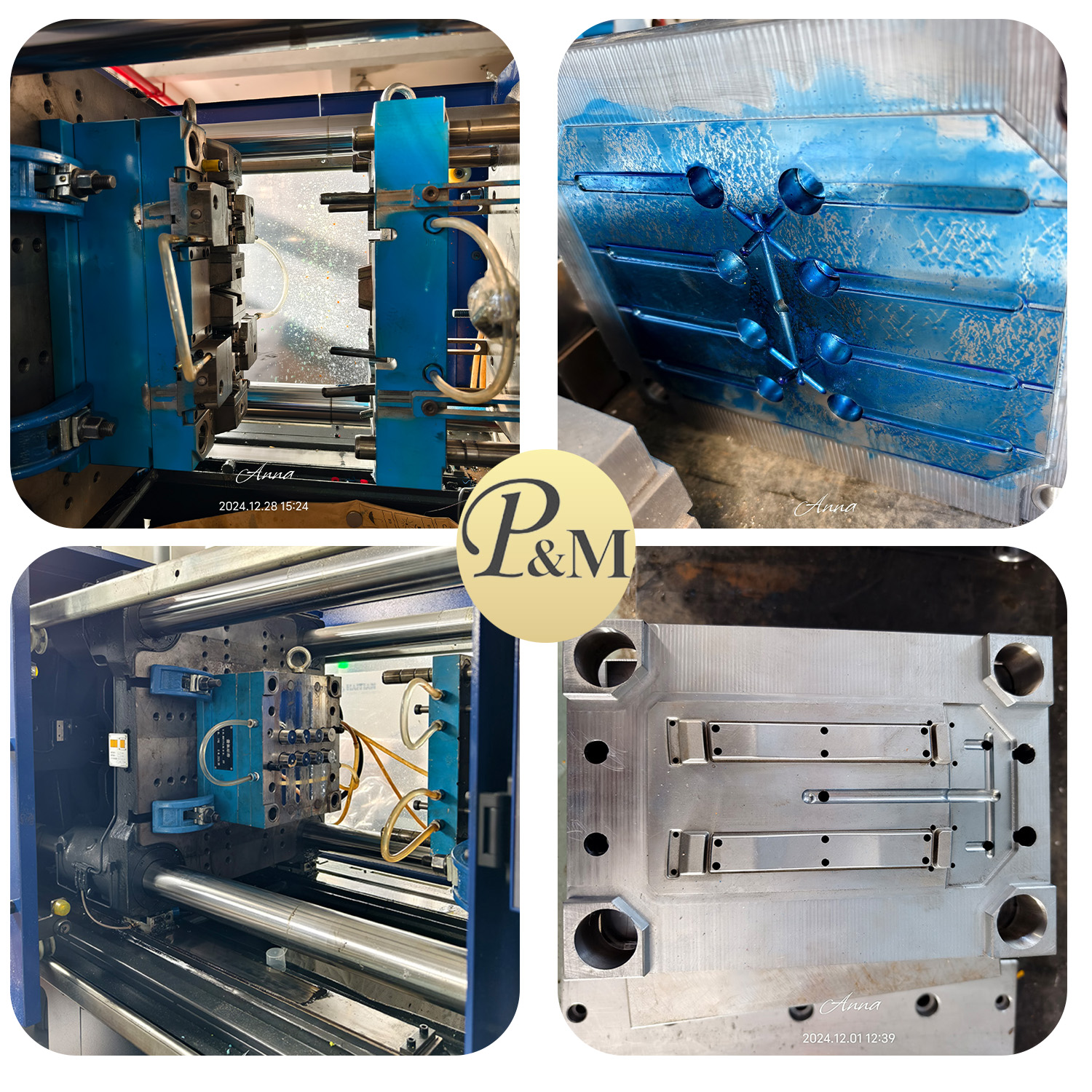
As the core foundation of plastic product manufacturing, injection molds are widely known as the “mother of industrial manufacturing”. With the rapid upgrading of downstream industries including new energy vehicles, medical devices, consumer electronics and green packaging, the global injection mold industry is undergoing comprehensive technological iteration and structural transformation in 2026. Traditional injection mold manufacturing, which relied heavily on manual experience and single-process production, can no longer meet the market’s dual demands for ultra-high precision, efficient mass production and low-carbon environmental protection. The integration of smart manufacturing, precision processing technology and sustainable material solutions has become the core driving force for the high-quality development of the global injection mold industry, reshaping the entire industrial chain and production standards.
Precision manufacturing has always been the core competitiveness of high-end injection molds, and its technical thresholds continue to rise in 2026. With the miniaturization and refinement of electronic components, medical consumables and automotive lightweight parts, the market has put forward stricter tolerance requirements for injection molded products. Modern high-precision injection molds can achieve a machining tolerance of less than ±5 microns, which is far beyond the accuracy range of traditional molds. To realize such ultra-high precision, mold manufacturers have adopted advanced processing equipment such as high-speed CNC milling machines, precision wire cutting machines and mirror EDM machines. Meanwhile, optimized mold runner systems, uniform cooling channel design and precise mold clamping control effectively eliminate product defects such as shrinkage, warpage and burrs. High-precision injection molds not only improve the dimensional consistency of batch products but also extend the service life of molds, reducing long-term production costs for enterprises significantly.
Smart manufacturing and Industry 4.0 technology integration is the most prominent development trend of injection mold industry in 2026. The traditional mold production process has problems such as long cycle time, unstable quality and excessive manual intervention. In contrast, modern smart injection mold factories realize full-process data-driven production through digital twin technology, AI quality control system and IIoT (Industrial Internet of Things) sensors. Digital twin simulation technology can complete mold flow analysis, cooling simulation and defect prediction in the design stage, accurately optimizing mold structure and process parameters, which shortens the mold development cycle by 30% to 50%. AI intelligent monitoring systems can realize real-time detection of product defects, reducing the defect response time from nearly one hour to less than five minutes, and the product scrap rate is reduced by more than 90%. In addition, predictive maintenance technology based on IIoT sensors can monitor mold wear, temperature and pressure changes in real time, effectively avoiding sudden equipment failure. Data shows that smart transformation can bring 200% to 400% return on investment for mold manufacturing enterprises within two to three years, greatly improving production efficiency and operational stability.
Sustainable and low-carbon manufacturing has become an indispensable development direction for the global injection mold industry, driven by international environmental regulations and market green consumption demands. In 2026, EU and global environmental policies have further restricted the use of traditional high-pollution raw materials and high-energy-consumption production processes, forcing mold manufacturers to accelerate green upgrading. On the one hand, the industry is widely promoting the application of post-consumer recycled (PCR) resins and bio-based environmentally friendly materials. Professional optimized injection molds are designed to adapt to the molding characteristics of recycled materials, solving the problems of poor fluidity and unstable molding of recycled plastics, and realizing the efficient reuse of plastic resources. On the other hand, green mold design concepts such as variable temperature cooling systems and energy-saving mold clamping structures are popularized, which effectively reduce energy consumption and carbon emissions in the injection molding process. At the same time, lightweight mold structure design not only reduces raw material consumption in mold manufacturing but also lowers the load of injection molding equipment, further realizing energy conservation and emission reduction in the whole production cycle.
The diversified innovation of mold processing technology also injects new vitality into the industry. Technologies such as micro-injection molding, overmolding, insert molding and gas-assisted injection molding have been continuously mature and applied in 2026. Micro-injection mold technology meets the production needs of tiny precision parts for medical devices and wearable electronic devices, breaking the technical bottleneck of micro-scale plastic molding. Overmolding and insert molding technologies integrate multiple materials and functional parts in one molding process, eliminating secondary assembly procedures, reducing production costs and improving product structural stability and waterproof and anti-drop performance. In addition, the combination of 3D printing technology and traditional mold manufacturing realizes rapid prototyping and small-batch customized production of molds, perfectly meeting the personalized and small-batch customized market demand in new product research and development stages.
From the perspective of global market development, the injection mold industry maintains a steady growth trend. The global injection molded plastic market is expected to reach USD 327.6 billion in 2026, with a compound annual growth rate of nearly 6% in the next few years. The Asia-Pacific region occupies the largest market share of the global injection mold industry, relying on complete industrial supporting facilities and mature manufacturing experience, and maintains the fastest growth rate. At the same time, the market demand for high-precision and smart molds in North America and European countries is constantly rising, promoting the continuous high-end upgrading of the global industrial chain.
In conclusion, the global injection mold industry in 2026 is moving towards high precision, intellectualization, greenization and diversification. Technological innovation has completely changed the traditional backward production mode of the industry, and the deep integration of digital technology, advanced material technology and environmental protection concepts has become the core competitiveness of mold enterprises. In the future, with the continuous development of downstream high-end manufacturing industries, injection mold technology will continue to iterate and upgrade, providing more efficient, precise and green molding solutions for global industrial manufacturing, and occupying an increasingly important core position in the global manufacturing system.
Post time: May-29-2026